
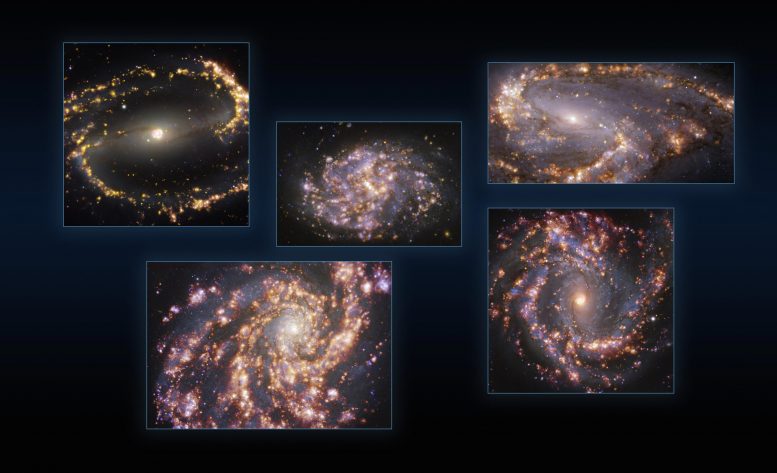
A team of astronomers has released new observations of nearby galaxies that resemble colorful cosmic fireworks. The images, obtained with the European Southern Observatory’s Very Large Telescope (ESO’s VLT), show different components of the galaxies in distinct colors, allowing astronomers to pinpoint the locations of young stars and the gas they warm up around them. By combining these new observations with data from the Atacama Large Millimeter/submillimeter Array (ALMA), in which ESO is a partner, the team is helping shed new light on what triggers gas to form stars.
Astronomers know that stars are born in clouds of gas, but what sets off star formation, and how galaxies as a whole play into it, remains a mystery. To understand this process, a team of researchers has observed various nearby galaxies with powerful telescopes on the ground and in space, scanning the different galactic regions involved in stellar births.
Emsellem, who is also affiliated with the University of Lyon, France, and his team have now released their latest set of galactic scans, taken with the Multi-Unit Spectroscopic Explorer (MUSE) instrument on ESO’s VLT in the Atacama Desert in Chile. They used MUSE to trace newborn stars and the warm gas around them, which is illuminated and heated up by the stars and acts as a smoking gun of ongoing star formation.
The new MUSE images are now being combined with observations of the same galaxies taken with ALMA and released earlier this year. ALMA, which is also located in Chile, is especially well suited to mapping cold gas clouds — the parts of galaxies that provide the raw material out of which stars form.
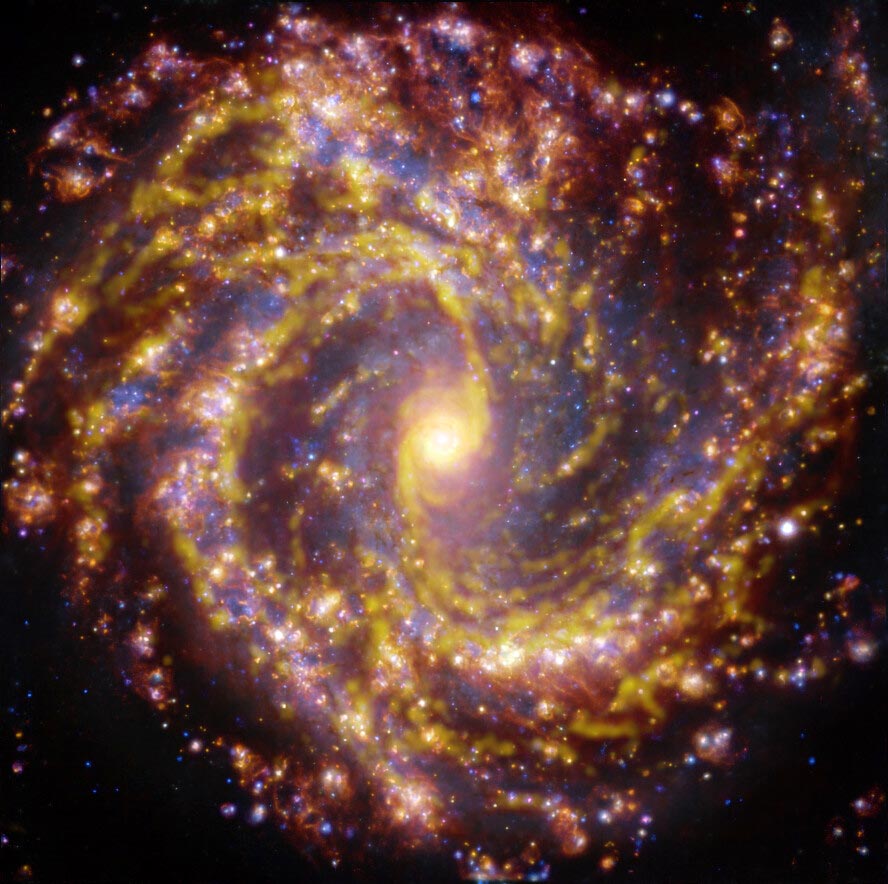
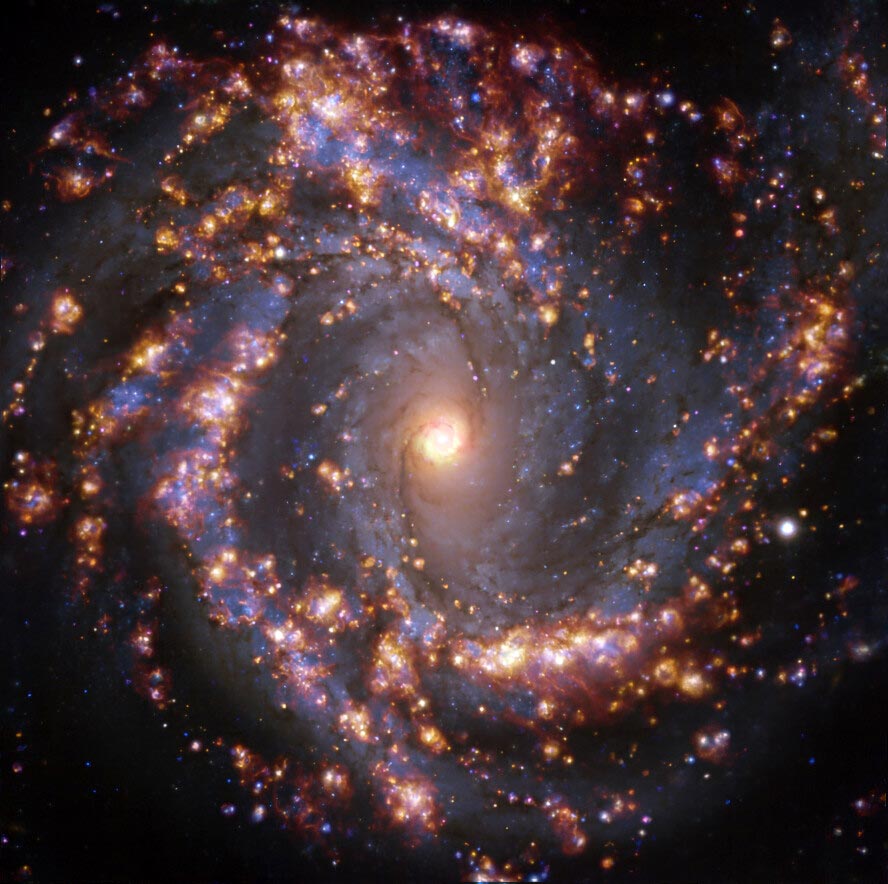
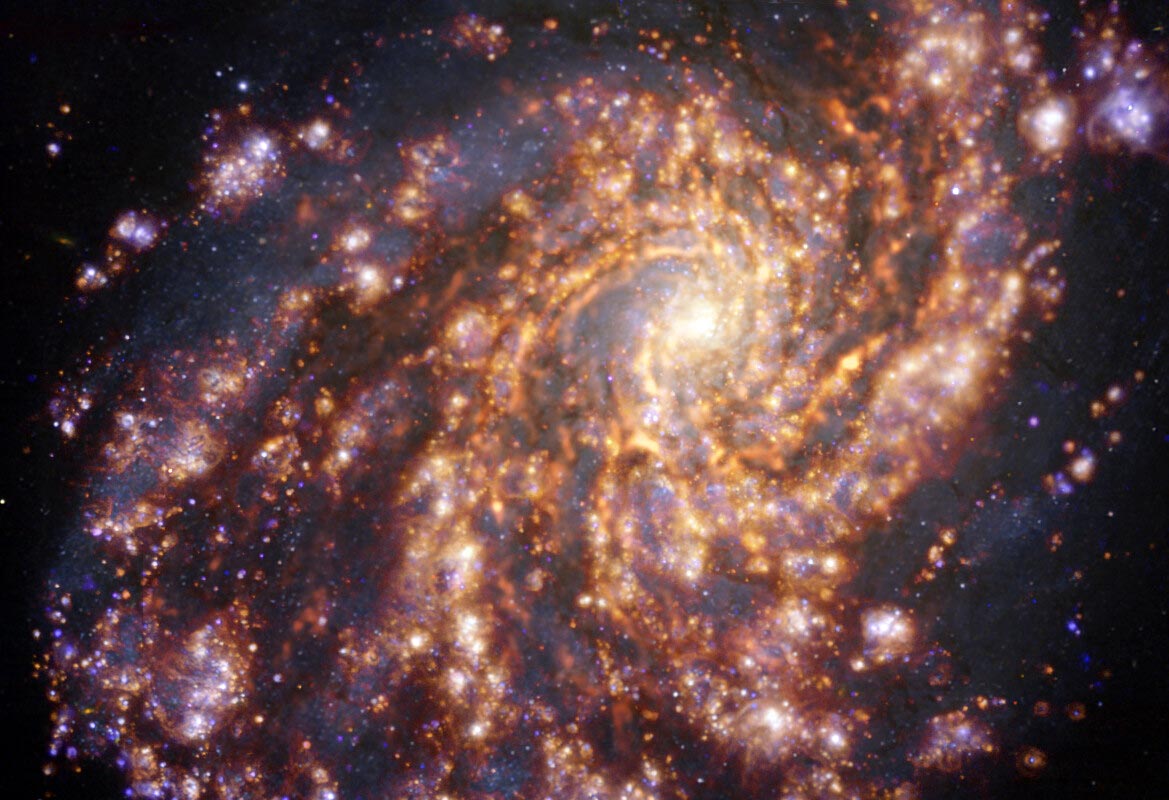
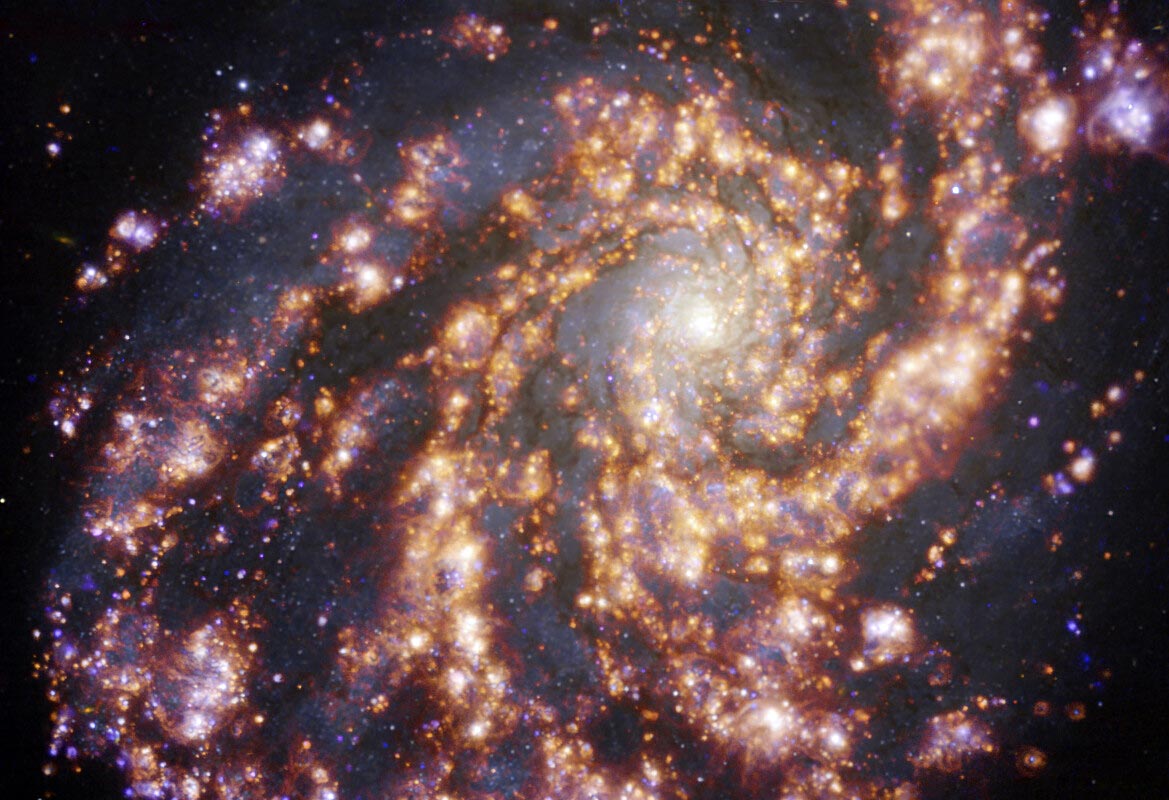
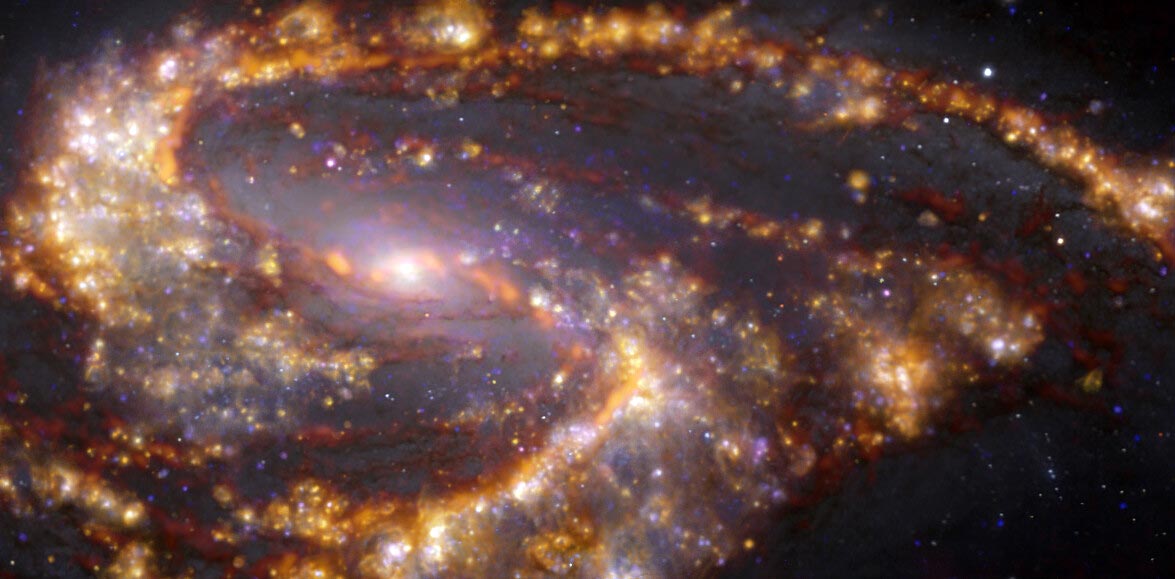

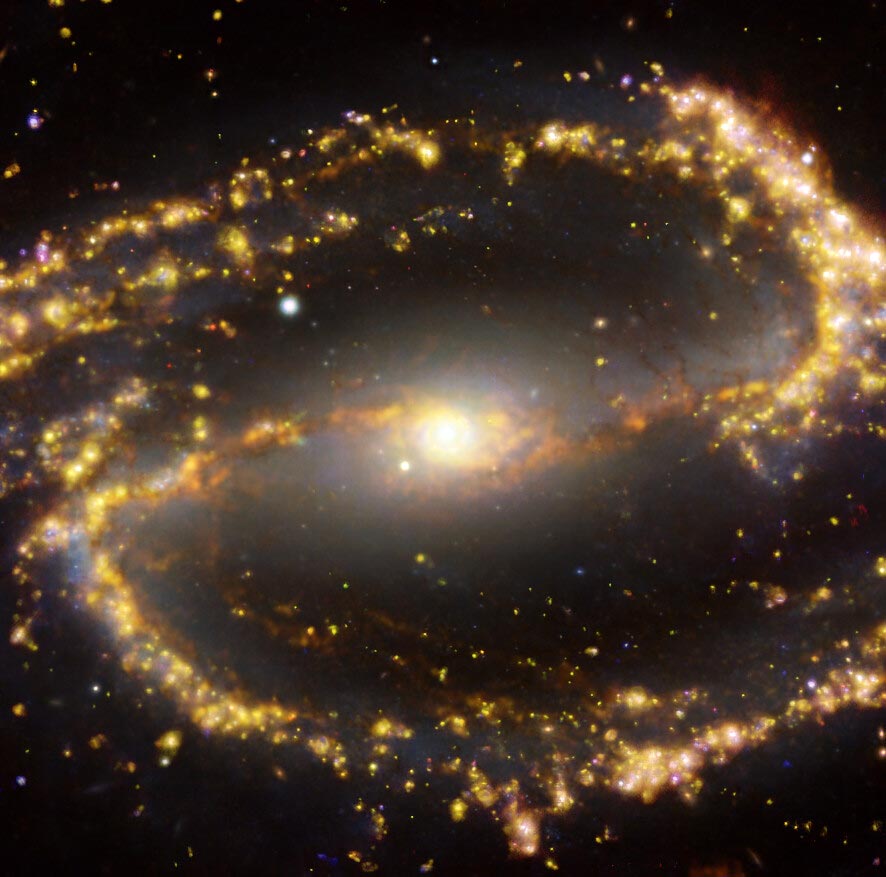
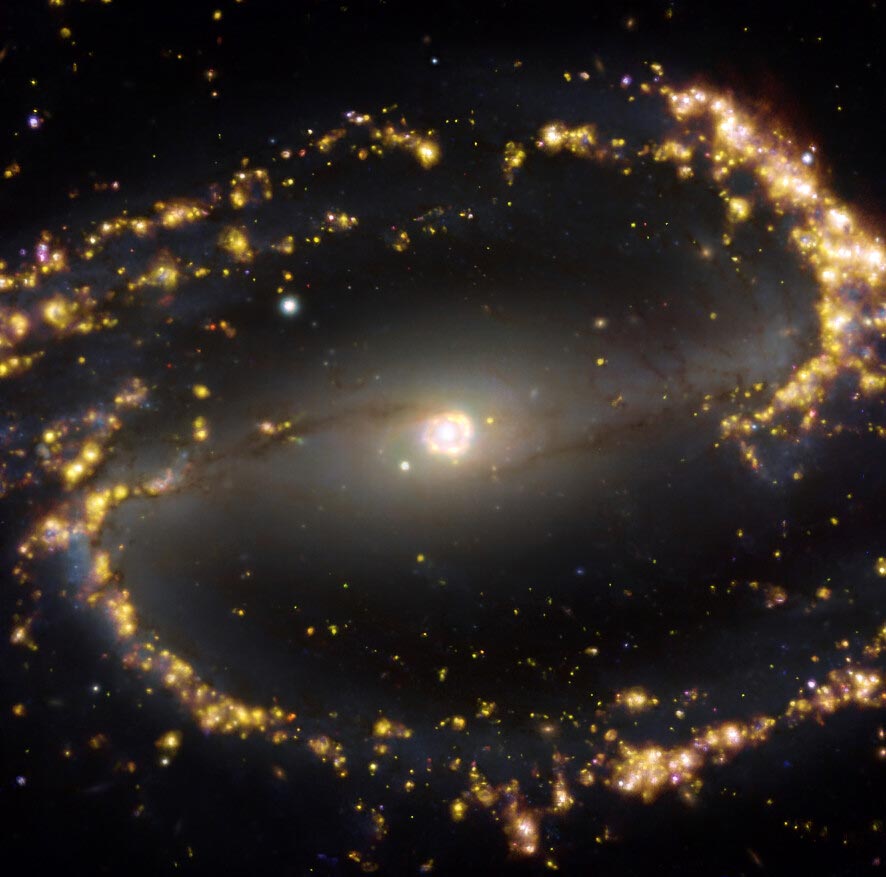
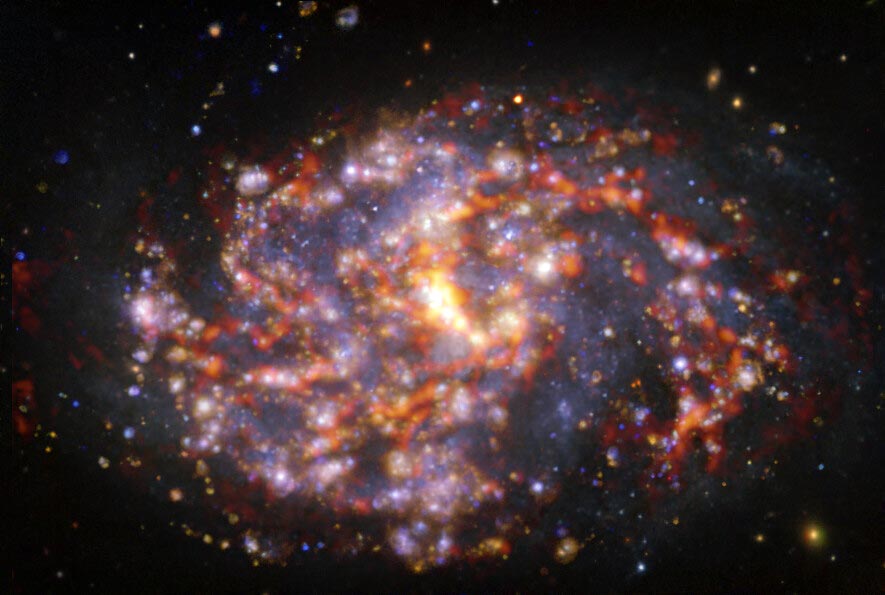

“For the first time we are resolving individual units of star formation over a wide range of locations and environments in a sample that well represents the different types of galaxies,” says Eric Emsellem, an astronomer at ESO in Germany and lead of the VLT-based observations conducted as part of the Physics at High Angular resolution in Nearby GalaxieS (PHANGS) project. “We can directly observe the gas that gives birth to stars, we see the young stars themselves, and we witness their evolution through various phases.”
By combining MUSE and ALMA images astronomers can examine the galactic regions where star formation is happening, compared to where it is expected to happen, so as to better understand what triggers, boosts or holds back the birth of new stars. The resulting images are stunning, offering a spectacularly colorful insight into stellar nurseries in our neighboring galaxies.
“There are many mysteries we want to unravel,” says Kathryn Kreckel from the University of Heidelberg in Germany and PHANGS team member. “Are stars more often born in specific regions of their host galaxies — and, if so, why? And after stars are born how does their evolution influence the formation of new generations of stars?”
Astronomers will now be able to answer these questions thanks to the wealth of MUSE and ALMA data the PHANGS team has obtained. MUSE collects spectra — the “bar codes” astronomers scan to unveil the properties and nature of cosmic objects — at every single location within its field of view, thus providing much richer information than traditional instruments. For the PHANGS project, MUSE observed 30,000 nebulae of warm gas and collected about 15 million spectra of different galactic regions. The ALMA observations, on the other hand, allowed astronomers to map around 100,000 cold-gas regions across 90 nearby galaxies, producing an unprecedentedly sharp atlas of stellar nurseries in the close Universe.
In addition to ALMA and MUSE, the PHANGS project also features observations from the NASA/ESA Hubble Space Telescope. The various observatories were selected to allow the team to scan our galactic neighbors at different wavelengths (visible, near-infrared, and radio), with each wavelength range unveiling distinct parts of the observed galaxies. “Their combination allows us to probe the various stages of stellar birth — from the formation of the stellar nurseries to the onset of star formation itself and the final destruction of the nurseries by the newly born stars — in more detail than is possible with individual observations,” says PHANGS team member Francesco Belfiore from INAF-Arcetri in Florence, Italy. “PHANGS is the first time we have been able to assemble such a complete view, taking images sharp enough to see the individual clouds, stars, and nebulae that signify forming stars.”
The work carried out by the PHANGS project will be further honed by upcoming telescopes and instruments, such as NASA’s James Webb Space Telescope. The data obtained in this way will lay further groundwork for observations with ESO’s future Extremely Large Telescope (ELT), which will start operating later this decade and will enable an even more detailed look at the structures of stellar nurseries.
“As amazing as PHANGS is, the resolution of the maps that we produce is just sufficient to identify and separate individual star-forming clouds, but not good enough to see what’s happening inside them in detail,” pointed out Eva Schinnerer, a research group leader at the Max Planck Institute for Astronomy in Germany and principal investigator of the PHANGS project, under which the new observations were conducted. “New observational efforts by our team and others are pushing the boundary in this direction, so we have decades of exciting discoveries ahead of us.”
The international PHANGS team is composed of over 90 scientists ranging from Master’s students to retirees working at 30 institutions across four continents. The MUSE data reduction working group within PHANGS is being led by Eric Emsellem (European Southern Observatory, Garching, Germany and Centre de Recherche Astrophysique de Lyon, Université de Lyon, ENS de Lyon, Saint-Genis Laval, France) and includes Francesco Belfiore (INAF Osservatorio Astrofisico di Arcetri, Florence, Italy), Guillermo Blanc (Carnegie Observatories, Pasadena, US), Enrico Congiu (Universidad de Chile, Santiago, Chile and Las Campanas Observatory, Carnegie Institution for Science, Atacama Region, Chile), Brent Groves (The University of Western Australia, Perth, Australia), I-Ting Ho (Max Planck Institute for Astronomy, Heidelberg, Germany [MPIA]), Kathryn Kreckel (Heidelberg University, Heidelberg, Germany), Rebecca McElroy (Sydney Institute for Astronomy, Sydney, Australia), Ismael Pessa (MPIA), Patricia Sanchez-Blazquez (Complutense University of Madrid, Madrid, Spain), Francesco Santoro (MPIA), Fabian Scheuermann (Heidelberg University, Heidelberg, Germany) and Eva Schinnerer (MPIA).
ESO is the foremost intergovernmental astronomy organization in Europe and the world’s most productive ground-based astronomical observatory by far. It has 16 Member States: Austria, Belgium, the Czech Republic, Denmark, France, Finland, Germany, Ireland, Italy, the Netherlands, Poland, Portugal, Spain, Sweden, Switzerland, and the United Kingdom, along with the host state of Chile and with Australia as a Strategic Partner. ESO carries out an ambitious program focused on the design, construction, and operation of powerful ground-based observing facilities enabling astronomers to make important scientific discoveries. ESO also plays a leading role in promoting and organizing cooperation in astronomical research. ESO operates three unique world-class observing sites in Chile: La Silla, Paranal, and Chajnantor. At Paranal, ESO operates the Very Large Telescope and its world-leading Very Large Telescope Interferometer as well as two survey telescopes, VISTA working in the infrared and the visible-light VLT Survey Telescope. Also at Paranal ESO will host and operate the Cherenkov Telescope Array South, the world’s largest and most sensitive gamma-ray observatory. ESO is also a major partner in two facilities on Chajnantor, APEX and ALMA, the largest astronomical project in existence. And on Cerro Armazones, close to Paranal, ESO is building the 39-meter Extremely Large Telescope, the ELT, which will become “the world’s biggest eye on the sky.”
Never miss a breakthrough: Join the SciTechDaily newsletter.
Follow us on Google and Google News.