
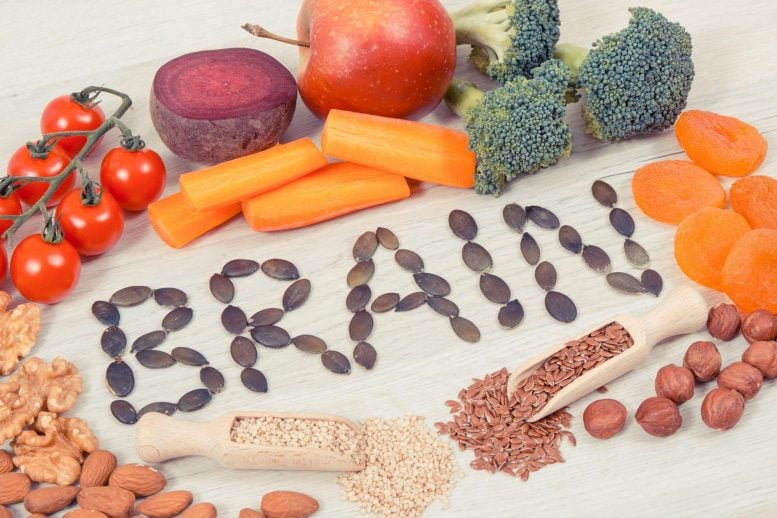
Three times greater risk of dementia linked to diet low in fruits, vegetables, beans, tea.
As people age, inflammation within their immune system increases, damaging cells. A new study shows that people who consumed an anti-inflammatory diet that includes more fruits, vegetables, beans, and tea or coffee, had a lower risk of developing dementia later in life. The research is published in the November 10, 2021, online issue of Neurology, the medical journal of the American Academy of Neurology.
“There may be some potent nutritional tools in your home to help fight the inflammation that could contribute to brain aging,” said study author Nikolaos Scarmeas, MD, PhD, of National and Kapodistrian University of Athens in Greece, and a Fellow of the American Academy of Neurology. “Diet is a lifestyle factor you can modify, and it might play a role in combating inflammation, one of the biological pathways contributing to risk for dementia and cognitive impairment later in life.”
The study looked at 1,059 people in Greece with an average age of 73 who did not have dementia.
Each person answered a food frequency questionnaire that is commonly used to determine the inflammatory potential of a person’s diet. The questionnaire sought information on the main food groups consumed during the previous month, including dairy products, cereals, fruits, vegetables, meat, fish, legumes, which include beans, lentils, and peas, added fats, alcoholic beverages, stimulants, and sweets. A possible dietary inflammatory score can range from -8.87 to 7.98, with higher scores indicating a more inflammatory diet, which includes fewer servings of fruits, vegetables, beans, and tea or coffee.
Scarmeas notes that multiple nutrients in all foods contribute to the inflammatory nature of a person’s diet.
Researchers divided the participants into three equal groups: those with the lowest dietary inflammatory scores, medium scores, and highest scores. Those in the group with the lowest scores of -1.76 and lower, indicating a more anti-inflammatory diet, ate an average per week of 20 servings of fruit, 19 of vegetables, four of beans or other legumes, and 11 of coffee or tea per week. Those in the group with the highest scores, 0.21 and above, indicating a more inflammatory diet, ate an average per week of nine servings of fruit, 10 of vegetables, two of legumes, and nine of coffee or tea.
Researchers followed up with each person for an average of three years. Over the course of the study, 62 people, or 6%, developed dementia. The people who developed dementia had average scores of -0.06, compared to average scores of -0.70 for those who did not develop dementia.
Higher Inflammatory Scores Linked to Dementia Risk
After adjusting for age, sex and education, researchers found that each one-point increase in dietary inflammatory score was associated with a 21% increase in dementia risk. Compared to the lowest third of participants who consumed the least inflammatory diet, those in the top third were three times more likely to develop dementia.
“Our results are getting us closer to characterizing and measuring the inflammatory potential of people’s diets,” Scarmeas said. “That, in turn, could help inform more tailored and precise dietary recommendations and other strategies to maintain cognitive health.”
The study was an observational one, not a clinical trial. It does not prove that eating an anti-inflammatory diet prevents brain aging and dementia, it only shows an association.
An additional limitation is the short follow-up time of three years. Longer studies are needed to confirm and replicate these findings.
Reference: “Diet Inflammatory Index and Dementia Incidence: A Population-Based Study” by Sokratis Charisis, Eva Ntanasi, Mary Yannakoulia, Costas A Anastasiou, Mary H Kosmidis, Efthimios Dardiotis, Antonios N Gargalionis, Kostas Patas, Stylianos Chatzipanagiotou, Ioannis Mourtzinos, Katerina Tzima, Georgios Hadjigeorgiou, Paraskevi Sakka, Dimitrios Kapogiannis and Nikolaos Scarmeas, 10 November 2021, Neurology.
DOI: 10.1212/WNL.0000000000012973
The study was supported by the Alzheimer’s Association, the European Social Fund, and the Greek Ministry of Health and Social Solidarity.
Never miss a breakthrough: Join the SciTechDaily newsletter.
Follow us on Google and Google News.