
Close Menu
    Facebook X (Twitter) Instagram
    SciTechDaily
    • Biology
    • Chemistry
    • Earth
    • Health
    • Physics
    • Science
    • Space
    • Technology
    Facebook X (Twitter) Pinterest YouTube RSS
    SciTechDaily
    Home»Science»Brain Scans Help Scientists Read Dreams
    Science

    Brain Scans Help Scientists Read Dreams

    By SciTechDailyOctober 22, 2012No Comments2 Mins Read
    Facebook Twitter Pinterest Telegram LinkedIn WhatsApp Email Reddit
    Share
    Facebook Twitter LinkedIn Pinterest Telegram Email Reddit
    brain-scan
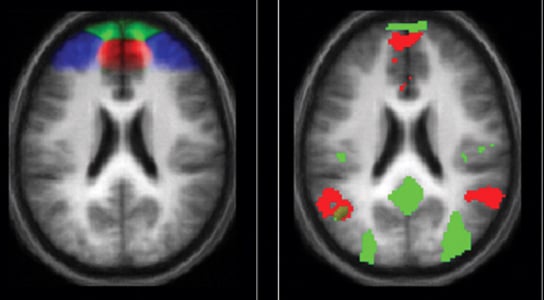
    A: functional subdivision of rostral PFC according to an earlier meta-analysis of functional neuroimaging studies, B: regions of activation for contrasts related to attention. Credit: Image by Oxford University Press

    A team of Japanese researchers has been working on using neuroimaging techniques to decode the dreams of people while they sleep. The researchers were led by Yukiyasu Kamitani of the ATR Computational Neuroscience Laboratory in Kyoto, Japan and they used functional neuroimaging to scan the brains of patients.

    This technique allowed scientists to learn how to decode what you are dreaming about while you sleep. The researchers presented their findings at the Society for Neuroscience in New Orleans, Louisiana, last week. They scanned three patients as they slept and recorded their brain activity using electroencephalography.
    functional-neuroimaging

    Whenever the scientists detected the pattern of brain waves associated with sleep onset, they woke the participants and asked them about their dreams. Then the patients went back to bed. This was done in three-hour blocks, and repeated on different days, 7 to 10 times for each participant. During the blocks, the participants were woken up ten times per hour. Each of these volunteers reported having visual dreams six or seven times every hour, giving the researchers a total of about 200 dream reports.

    The dreams reflected everyday experiences, but some contained unusual content. Key words were extracted from the participants’ verbal reports and 20 categories were picked from what appeared most frequently in the dream reports.

    Kamitani selected photos representing each category, and scanned the brains of the participants when they viewed the images. These were compared with activity patterns recorded just before the participants woke up. The scientists analyzed activity in the brain areas V1, V2, and V3, which are involved in the earliest stages of visual processing. There were also other regions analyzed for higher-order visual functions, such as object recognition.

    The activity in the higher-order brain regions could accurately predict the content of the patients’ dreams. Models were built to predict whether each category of content was present in the dreams. Once the brain activity was analyzed during the nine seconds before the subjects awoke, the scientists could predict the category of the dream with an accuracy of 75% to 80%.

    Dream decoding was most accurate within the tens of seconds before waking, suggesting that the recollection of dreams is based on short-term memory.

    Never miss a breakthrough: Join the SciTechDaily newsletter.
    Follow us on Google and Google News.

    Brain Dreams Neurology Neuroscience Scan Sleep Science
    Share. Facebook Twitter Pinterest LinkedIn Email Reddit

    Related Articles

    AI Accurately Predicts Brain Age From EEG Signals Recorded During Sleep Studies

    New AI-Inspired Theory of Dreaming: Our Dreams’ Weirdness Might Be Why We Have Them

    MIT Dream Research Interacts Directly With an Individual’s Dreaming Brain and Manipulates the Content

    DMT Creates Vivid Waking Dream State in the Brain – “It’s Like Dreaming but With Your Eyes Open”

    How the Anatomical Structure of the Brain Impacts Its Functioning

    Scientists Establish Functional Brain-to-Brain Interface between Human and Animal

    Researchers Find a Link between Poor Sleep, Memory Loss and Brain Deterioration

    Photos of Einstein’s Brain Show Unique Features

    Disrupted Sleep Patterns Linked to Alzheimer’s

    Leave A Reply Cancel Reply

    • Facebook
    • Twitter
    • Pinterest
    • YouTube

    Don't Miss a Discovery

    Subscribe for the Latest in Science & Tech!

    Trending News

    Long COVID Brain Scans Reveal Damage to Dopamine Neurons

    Scientists Warn a Silent Oxygen Crisis Is Spreading Through Earth’s Waters

    James Webb Telescope Discovers Hidden Giant Planet in Famous Star System

    Scientists Build the First 3D Cloak That Makes Objects Invisible To Heat

    Common Food Additive Linked To Gut Inflammation

    Black Hole Collisions May Follow a Surprisingly Simple Rule

    The Eye Has a Hidden Cleanup System and Scientists Just Discovered It

    The Truth About Vikings Is More Complicated Than Museums Admit

    Follow SciTechDaily
    • Facebook
    • Twitter
    • YouTube
    • Pinterest
    • Newsletter
    • RSS
    SciTech News
    • Biology News
    • Chemistry News
    • Earth News
    • Health News
    • Physics News
    • Science News
    • Space News
    • Technology News
    Recent Posts
    • A Rare and Deadly Cancer May Have an Unexpected New Vulnerability
    • Sleep Disorders Don’t Just Exhaust You. New Research Shows They Change Your Brain
    • THC-CBD Treatment Dramatically Reduces Agitation in Dementia Trial
    • Rare 8,000-Year-Old Rock Shelter Captures a Turning Point in Human History
    • The Lost “Golden Age” of Human Language
    Copyright © 1998 - 2026 SciTechDaily. All Rights Reserved.
    • Science News
    • About
    • Contact
    • Editorial Board
    • Privacy Policy
    • Terms of Use

    Type above and press Enter to search. Press Esc to cancel.