
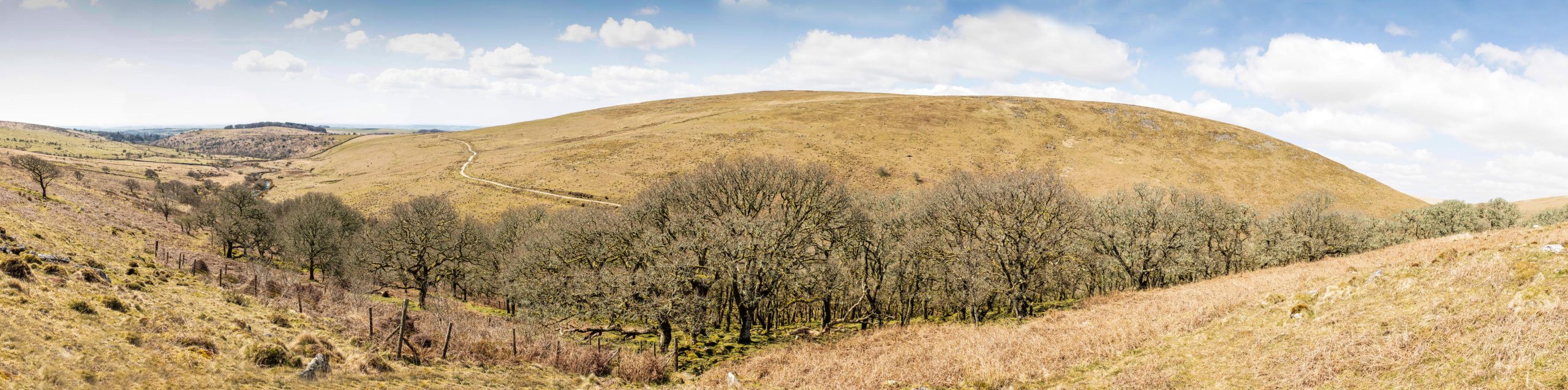
Research shows that natural tree regeneration in UK uplands is insufficient for climate goals, largely due to livestock impact. Strategic planting and grazing management are recommended to expand woodlands effectively.
There is global recognition that woodland expansion could be one of the most effective solutions in the fight against climate change.
However, new research has shown that the level of growth needed to produce the number of trees required by UK targets is unlikely to be achieved through natural means alone.
Impact of Livestock on Woodland Regeneration
Environmental scientists and ecologists at the University of Plymouth showed that browsing behavior by livestock is a major determinant of the expansion and connection of fragmented UK upland oak woodlands – so-called ‘temperate rainforests’.
The study, focused on Dartmoor in South West England, found the presence of livestock led to far fewer oak saplings surviving. When saplings did survive, they were smaller and in poorer condition, and seldom lived beyond eight years old without protection.
Interestingly, however, disturbance by grazing livestock may not be all bad and its precise impact may depend on surrounding plant species.
For example, although toxic bracken may help protect the youngest tree seedlings from grazing animals, too much bracken may reduce suitable conditions for oak sapling establishment due to increased competition for light.
If carefully managed, trampling by browsing livestock such as cattle and ponies can open up areas of bracken and so help support the conditions for temperate rainforests to expand.
Natural Regeneration Insufficient for Climate Goals
The study assessed the natural regeneration of oak saplings away from oak woodlands at multiple sites on Dartmoor and showed that native oak establishment was largely confined to within 20m of the nearest adult tree.
This level of natural expansion, the researchers say, is insufficient to adequately aid carbon storage, flood mitigation, and biodiversity provision at the pace or scale required in these upland landscapes.
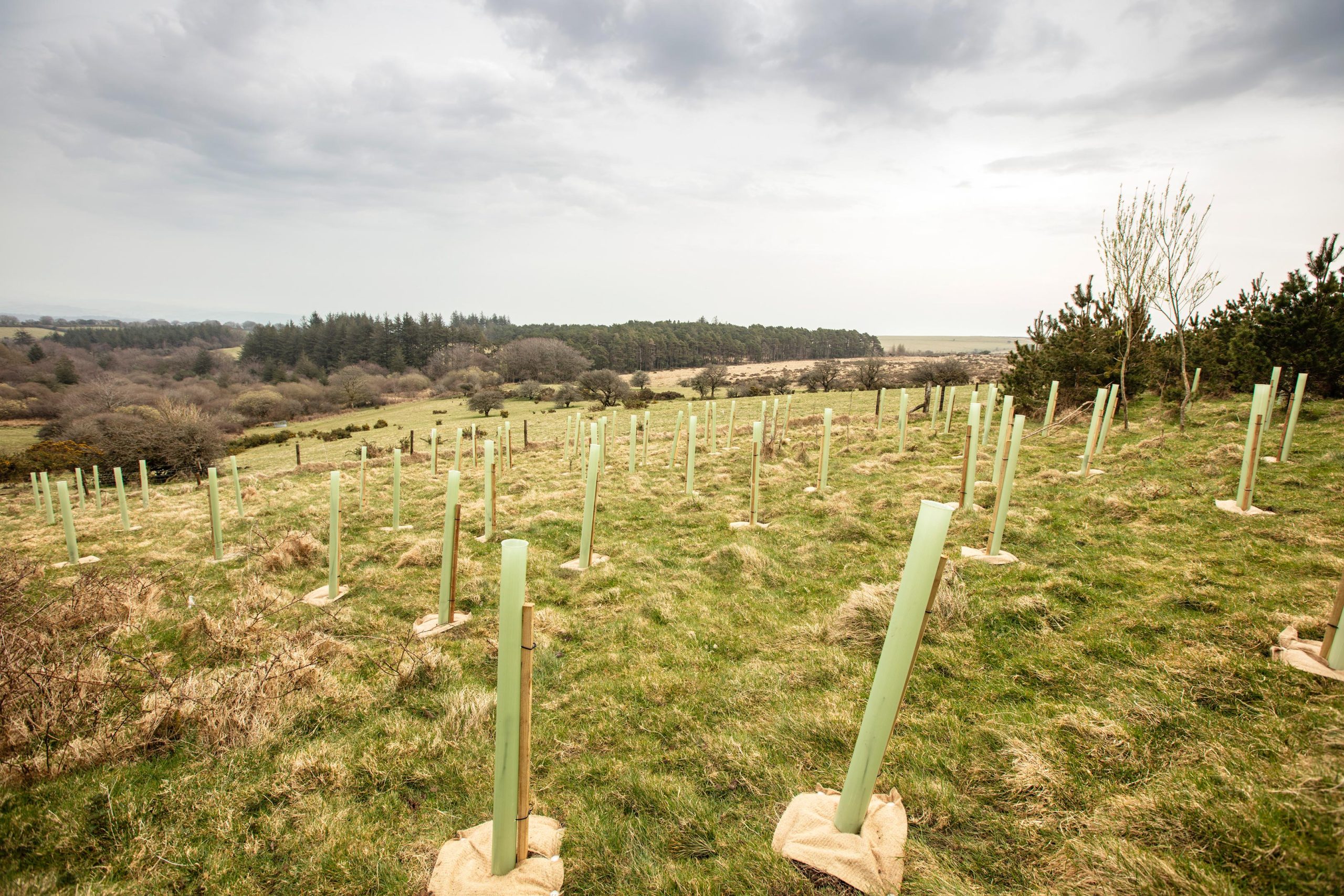
They suggest instead strategically targeted interventions and selective planting into certain vegetation types to test the need for tree guards and other protection such as fences.
This, they say, could be used to improve the environmental sensitivity of planting schemes in protected landscapes such as Dartmoor and other National Parks, while reducing their visual impact.
Dr. Thomas Murphy, currently an Industrial Research Fellow on the University’s Low Carbon Devon project, led the research as part of his PhD. He said: “The planting of trees and an end to deforestation are increasingly being highlighted as low-cost and environmentally sensitive mechanisms to combat climate change. These measures have been factored into the net-zero agendas of UK and other governments, with world leaders also pledging to address the issue during COP26 in Glasgow last year.
“Our findings however suggest the expansion of oak woodland into UK upland pasture systems is not a simple process. They may have a critical role to play, but these important temperate rainforests have been historically degraded and are now highly fragmented. “Reversing that trend is likely to require strategic planting and informed livestock management. Getting this right, however, will warrant a delicate balancing act and close cooperation with a range of stakeholders, including particularly landowners and graziers, at a time when upland farms are facing severe financial pressures and there are ongoing changes in incentives.”
Study Implications for Landowners and Policymakers
The research is published in Ecological Solutions and Evidence, a journal of the British Ecological Society, and makes a series of recommendations for landowners and policymakers:
- Livestock grazing (particularly cattle) should be encouraged close to adult native oak trees at the edge of woodlands as they reduce dense and competitive vegetation;
- On sites where oak seedlings and saplings (1-3 years) have colonized, livestock should be excluded for a minimum period of 12 years to increase sapling survival, growth and establishment;
- On upland valley slopes where current ecosystem services provision is low and woodland establishment is required for connecting woodland habitat and rapid soil hydrological recovery, strategic planting and grazing management schemes should be encouraged;
- Older and larger oak saplings (4-7 years) could be planted directly into areas where dense vegetation protects saplings from animal livestock.
This is the latest study by the University to examine the health and benefits of native trees on the upland slopes of Dartmoor.
The same research team has previously shown that the planting of native woodlands in upland areas could play a significant role in preventing the flash flooding which has increasingly affected communities across the UK in recent years.
They have also collaborated with creative agency Just Enough Brave on the Trees for Climate project, which created a set of resources designed to increase the accessibility of research for improved native woodland expansion.
Reference: “Optimising opportunities for oak woodland expansion into upland pastures” by Thomas R. Murphy, Mick E. Hanley, Jonathan S. Ellis, and Paul H. Lunt, 30 January 2022, Ecological Solutions and Evidence.
DOI: 10.1002/2688-8319.12126
Never miss a breakthrough: Join the SciTechDaily newsletter.
Follow us on Google and Google News.
1 Comment
gooooooooooooooooood