
Close Menu
    Facebook X (Twitter) Instagram
    SciTechDaily
    • Biology
    • Chemistry
    • Earth
    • Health
    • Physics
    • Science
    • Space
    • Technology
    Facebook X (Twitter) Pinterest YouTube RSS
    SciTechDaily
    Home»Biology»Ancestors of Legionella Bacteria – Which Causes Legionnaires’ Disease – Infected Cells Two Billion Years Ago
    Biology

    Ancestors of Legionella Bacteria – Which Causes Legionnaires’ Disease – Infected Cells Two Billion Years Ago

    By Uppsala UniversityFebruary 15, 20223 Comments3 Mins Read
    Facebook Twitter Pinterest Telegram LinkedIn WhatsApp Email Reddit
    Share
    Facebook Twitter LinkedIn Pinterest Telegram Email Reddit
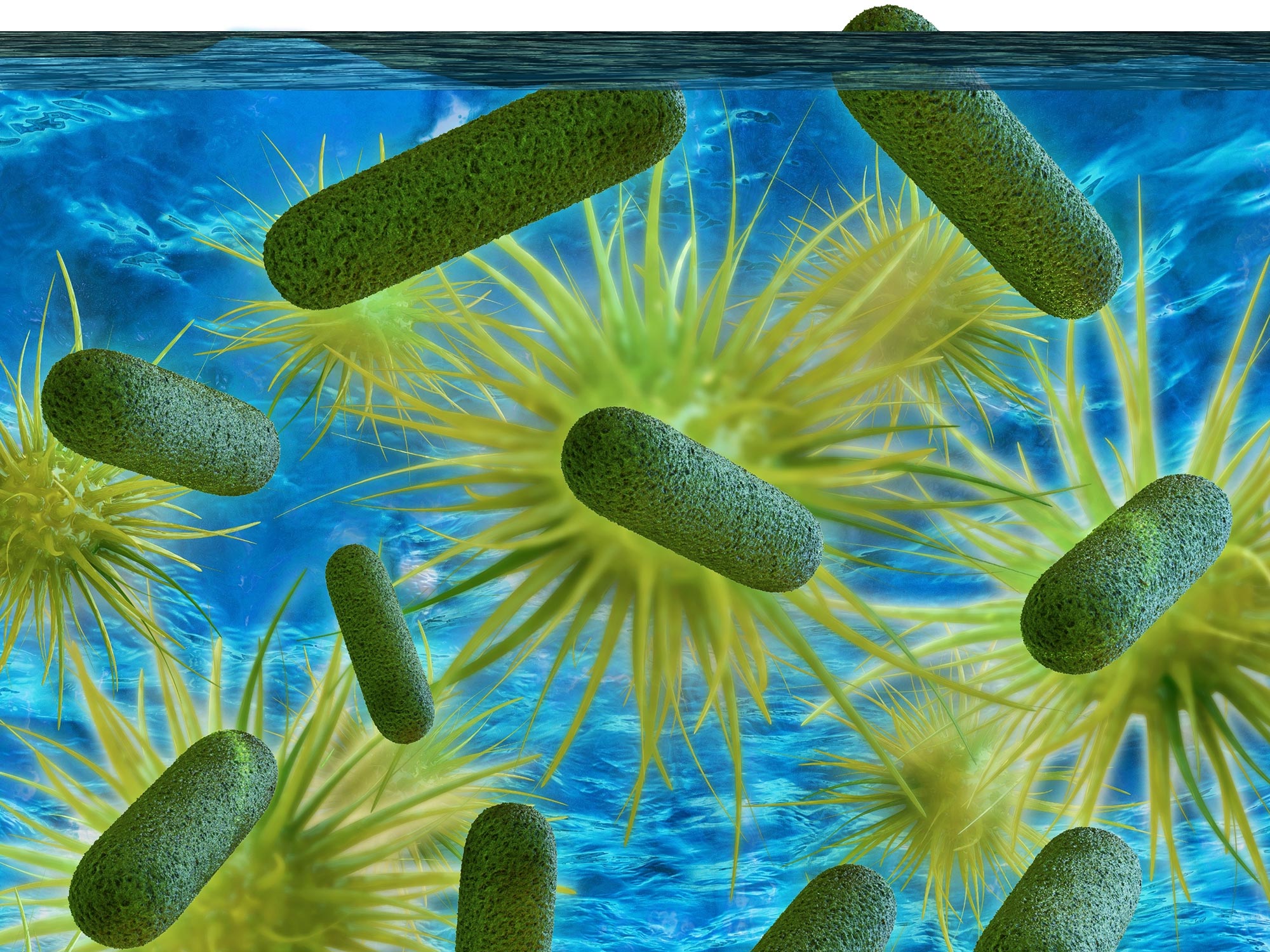
    Legionella Bacteria Illustration
    Legionella bacteria illustration.

    Researchers at Uppsala University have discovered that the ancestors of legionella bacteria infected eukaryotic cells as early as two billion years ago. It happened soon after eukaryotes began to feed on bacteria. These results, described in a new study published in Molecular Biology and Evolution, also contributes to the chicken-or-egg debate about whether mitochondria or phagocytosis came first.

    “Our study can help us understand how harmful bacteria arise and how complex cells evolved from simpler cells,” says Lionel Guy, associate professor of evolutionary microbiology at the Department of Medical Biochemistry and Microbiology, who headed the study.

    Two billion years ago, ancestors of legionella bacteria already had the ability to avoid being digested by eukaryotes. Instead, they began using eukaryotic cells – complex cells with a nucleus that make up amoebas, fungi, and human beings – to multiply.

    The legionella bacterium, which causes Legionnaires’ disease, belongs to a large group of bacteria called Legionellales. All Legionellales bacteria can infect eukaryotic hosts: amoebas, insects, or our own cells.

    Lionel Guy
    Lionel Guy, associate professor of evolutionary microbiology at the Department of Medical Biochemistry and Microbiology, Uppsala University. Credit: Sanna Dovat Guy

    “We discovered that the ancestor of the whole group lived about two billion years ago, at a time when eukaryotes were still in the making, evolving from simpler cells to the complex cell structure they have now,” says Andrei Guliaev, a researcher at the Department of Medical Biochemistry and Microbiology. “We believe Legionellales were among the first to infect eukaryotic cells.”

    How Legionella Bacteria Infect Eukaryotes

    The first step in an infection with legionella bacteria is for a eukaryotic host, such as an amoeba, to bring the bacterium into its cell through a process called phagocytosis. The next step for the amoeba would be to digest the bacterium and use its parts as an energy source. But legionella bacteria have molecular tools that keep them from being digested and allow them to instead use the amoeba as an energy source so they can multiply.

    In the study, the researchers show that all Legionellales have the same kind of molecular tools as legionella. That suggests that the ability to infect eukaryotes already existed in the ancestor of all Legionellales. This means that phagocytosis is at least as old as Legionellales – two billion years old – when eukaryotes were in the early stages of their evolution.

    Mitochondria vs. Phagocytosis in Eukaryotic Evolution

    This has implications for a hot chicken-or-egg debate in evolutionary biology about how eukaryotes came into being. Which came first? Was it the mitochondria, which originated from another group of bacteria and became our cells’ own energy factories? Or was it phagocytosis, which is considered necessary to absorb mitochondria but is very costly from an energy standpoint?

    “Some researchers believe that mitochondria were required to deliver enough energy for phagocytosis to work. But our results suggest that phagocytosis came first – two billion years ago – while mitochondria came later,” says Lionel Guy.

    Reference: “Host-adaptation in Legionellales is 1.9 Ga, coincident with eukaryogenesis” by Eric Hugoson, Andrei Guliaev, Tea Ammunét and Lionel Guy15 February 2022, Molecular Biology and Evolution.
    DOI: 10.1093/molbev/msac037

    Never miss a breakthrough: Join the SciTechDaily newsletter.
    Follow us on Google and Google News.

    Bacteria Evolution Microbiology Molecular Biology Uppsala University
    Share. Facebook Twitter Pinterest LinkedIn Email Reddit

    Related Articles

    Biologists Shed Light on Mystery of How Microbes Evolve and Adapt to Hosts

    Evolution Discovery: No Social Distancing at the Beginning of Life

    The Toughest Organisms on Earth: Evolution of Radio-Resistance Is More Complicated Than Previously Thought

    Evolutionary Insight: New Connection Discovered Between Primordial Organisms and Complex Life

    Ultra-Small, Parasitic Bacteria Found in Groundwater, Dogs, Cats — And You

    Microbes Have Memory: Surprising Parallels Between Simple Microrganisms and Sophisticated Neurons

    Genetic Analysis Shows Life’s Earliest Evolution Was More Complicated Than Previously Suspected

    Bioluminescent Bacteria Kill Rivals and Establish Symbiosis in Squid Using Genetic Regulatory Factors

    New Clues to the Origin of Life on Earth From Microbial Remains in Ancient Rocks

    3 Comments

    1. Isobel Sullivan on February 15, 2022 1:55 pm

      Three weeks from now you will wish you had started today. Simply give it a shot on the accompanying site.

      GOOD LUCK… http://WWW.WORKPAY1.COM

      Reply
    2. Isobel Sullivan on February 15, 2022 1:55 pm

      Three weeks from now you will wish you had started today. Simply give it a shot on the accompanying site.

      GOOD LUCK… W­­­o­­­r­­­k­­­P­­­a­­­y­­­1.c­­­o­­­m

      Reply
    3. jageti9059 on February 16, 2022 7:21 am

      unhoiuyhg

      Reply
    Leave A Reply Cancel Reply

    • Facebook
    • Twitter
    • Pinterest
    • YouTube

    Don't Miss a Discovery

    Subscribe for the Latest in Science & Tech!

    Trending News

    First-of-Its-Kind Discovery: Homer’s Iliad Found Embedded in a 1,600-Year-Old Egyptian Mummy

    Beyond Inflammation: Scientists Uncover New Cause of Persistent Rheumatoid Arthritis

    A Simple Molecule Could Unlock Safer, Easier Weight Loss

    Scientists Just Built a Quantum Battery That Charges Almost Instantly

    Researchers Unveil Groundbreaking Sustainable Solution to Vitamin B12 Deficiency

    Millions of People Have Osteopenia Without Realizing It – Here’s What You Need To Know

    Researchers Discover Boosting a Single Protein Helps the Brain Fight Alzheimer’s

    World-First Study Reveals Human Hearts Can Regenerate After a Heart Attack

    Follow SciTechDaily
    • Facebook
    • Twitter
    • YouTube
    • Pinterest
    • Newsletter
    • RSS
    SciTech News
    • Biology News
    • Chemistry News
    • Earth News
    • Health News
    • Physics News
    • Science News
    • Space News
    • Technology News
    Recent Posts
    • New Research Challenges Long-Held Beliefs About How the Brain Makes Decisions
    • Breakthrough Technology Reveals New Treatment Targets for Cancer
    • Scientists Discover New Way To Make Drug-Resistant Cancer Treatable Again
    • This Simple Exercise Trick Builds Muscle With Less Effort, Study Finds
    • Middle Age Is Becoming a Breaking Point in America, Study Reveals
    Copyright © 1998 - 2026 SciTechDaily. All Rights Reserved.
    • Science News
    • About
    • Contact
    • Editorial Board
    • Privacy Policy
    • Terms of Use

    Type above and press Enter to search. Press Esc to cancel.