
Close Menu
    Facebook X (Twitter) Instagram
    SciTechDaily
    • Biology
    • Chemistry
    • Earth
    • Health
    • Physics
    • Science
    • Space
    • Technology
    Facebook X (Twitter) Pinterest YouTube RSS
    SciTechDaily
    Home»Biology»Kitti’s Hog-Nosed Bat Is World’s Smallest Mammal
    Biology

    Kitti’s Hog-Nosed Bat Is World’s Smallest Mammal

    By SciTechDailyDecember 3, 20127 Comments2 Mins Read
    Facebook Twitter Pinterest Telegram LinkedIn WhatsApp Email Reddit
    Share
    Facebook Twitter LinkedIn Pinterest Telegram Email Reddit
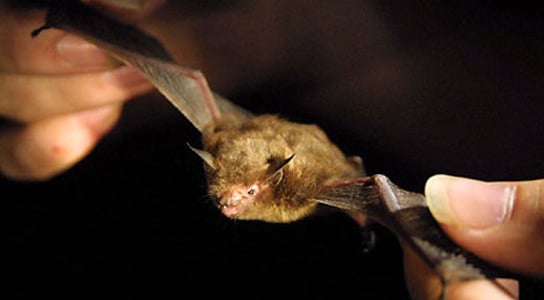
    bumblebee-bat
    Close-up of a bumblebee bat. Credit: Daniel Hargreaves

    The Kitti’s hog-nosed bat (Craseonycteris thonglongyai), sometimes referred to as the bumblebee bat due to its diminutive size, was discovered in 1970s and could arguably be the world’s smallest mammal, depending on how size is defined.

    C. thonglongyai is listed as vulnerable by the IUCN and is found in western Thailand and southeast Burma, in limestone caves along rivers. It is the only existing member of the family Craseonycteridae. Its coat is reddish-brown or gray, with a distinctive pig-like snout. Colonies vary in size, but most have an average of 100 individuals per cave. Some caves will have smaller groups from 10 to 15, while others will have up to 500. The bat feeds in short bursts of activity during evenings and dawn, foraging for insects. Its wings seem to be adapted for hovering flight.
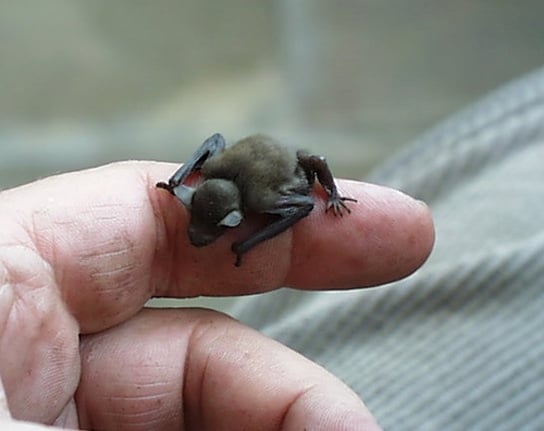
    bumblebee-bat-finger

    The status in Burma is not well known, but the population in Thailand is restricted to a single province and may be at risk for extinction. The principal threats to its survival are mostly anthropogenic, including habitat degradation and the disturbance of roosting sites.

    The bat is about 29 to 33 mm (1.1″ to 1.3″) in length and weighs 2 g (0.074 oz). Some small shrews, including the Etruscan shrew (Suncus etruscus), may be lighter but they are longer. C. thonglongyai‘s closest relatives are bats from the families Hipposideridae and Rhinopomatidae.
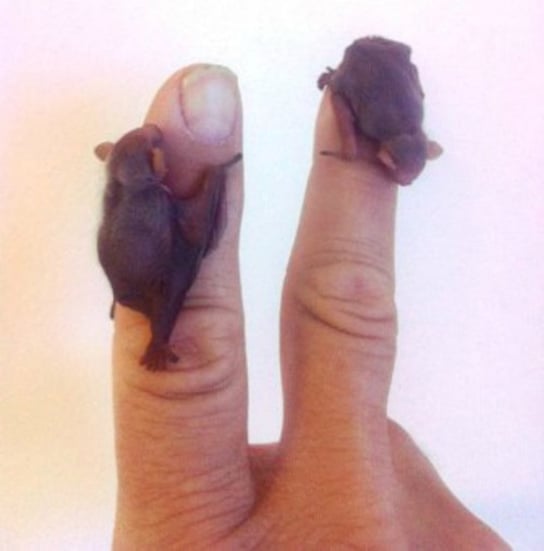
    two-bumblebee-bats-fingers

    There’s much about C. thonglongyai that remains unknown. Scientists know little about their reproductive behavior, or how they evade predators. It’s also unknown whether colonies stay in one cave or move around to others. This bat does use echolocation.

    Never miss a breakthrough: Join the SciTechDaily newsletter.
    Follow us on Google and Google News.

    Bats Chiroptology Popular Wildlife Zoology
    Share. Facebook Twitter Pinterest LinkedIn Email Reddit

    Related Articles

    Bats’ Surprising “Supersense” of Time: They Know the Speed of Sound From Birth

    Experiments Show Cryptic Sixth Sense of Orientation of Bats Lies in the Eye

    Are Bats to Blame for the Coronavirus Crisis? Q&A With Wildlife Biologist

    Elephants Are More Likely to Die at the Hands of Humans Than From Natural Causes

    Bats Tune Frequency of Echolocation to Change Field Perception

    Transgendered Bellbird Discovered in New Zealand

    Mother’s Presence Increases Survivability of Male Orca Offspring

    A Fifth of All Invertebrates on Earth Threatened by Extinction

    Arctic Biologist Alexander Semenov’s Striking Underwater Arctic Sea Life Photos

    7 Comments

    1. ladis on December 4, 2013 7:00 am

      WHAT THE HELL!? SO LITTLE FACTS WHAT THE HELL

      Reply
    2. Daniel Hargreaves on February 15, 2017 12:45 pm

      Hello my name is Daniel Hargreaves and you have credited me in the first photo on this blog – the photo does not belong to me but more importantly none of the bats in all three of the photos on this page are Kitti’s hog nosed bats. I’m more than happy to share some photos with you of the correct species so please get in touch.

      Reply
      • Staff on February 15, 2017 3:21 pm

        Sorry about that. Not sure why the author mistakenly gave you credit. Since the post is from 2012 i can’t find his source material, but i will see if i can update the photos. Thanks-

        Reply
      • Cheryl A Young on December 16, 2022 12:46 pm

        Hello Daniel – do you have photos of Kitti’s hog-nosed bats that I might be able to use in a book? Thank you!

        Reply
    3. Chris Barrington on January 19, 2021 1:55 pm

      Hi this web page is now a source of misinformation across the internet. It ranks quite high in google images and the photos above keep being shared across Facebook with the caption that they are a Kitti’s hog nosed bats when they are not please can you at least remove the photos in this article. Thanks

      Reply
    4. Rachel Bates on January 20, 2021 12:57 am

      So many people keep sharing these photos and stating they’re the Bumblebee bat, when in fact none of these photos are! The second and third photos are of baby bats of a different species, not even adult bats. Please use photos of the correct species – Daniel Hargreaves who commented in 2017, Daniel Whitby, and myself have photos of the true Bumblebee bat. Please update this post!

      Reply
    5. dumb on June 4, 2021 9:05 am

      i like tutles

      Reply
    Leave A Reply Cancel Reply

    • Facebook
    • Twitter
    • Pinterest
    • YouTube

    Don't Miss a Discovery

    Subscribe for the Latest in Science & Tech!

    Trending News

    First-of-Its-Kind Discovery: Homer’s Iliad Found Embedded in a 1,600-Year-Old Egyptian Mummy

    Beyond Inflammation: Scientists Uncover New Cause of Persistent Rheumatoid Arthritis

    A Simple Molecule Could Unlock Safer, Easier Weight Loss

    Scientists Just Built a Quantum Battery That Charges Almost Instantly

    Researchers Unveil Groundbreaking Sustainable Solution to Vitamin B12 Deficiency

    Millions of People Have Osteopenia Without Realizing It – Here’s What You Need To Know

    Researchers Discover Boosting a Single Protein Helps the Brain Fight Alzheimer’s

    World-First Study Reveals Human Hearts Can Regenerate After a Heart Attack

    Follow SciTechDaily
    • Facebook
    • Twitter
    • YouTube
    • Pinterest
    • Newsletter
    • RSS
    SciTech News
    • Biology News
    • Chemistry News
    • Earth News
    • Health News
    • Physics News
    • Science News
    • Space News
    • Technology News
    Recent Posts
    • After Decades, MIT Researchers Capture the First 3D Atomic View of a Mysterious Material
    • Your Favorite Fishing Spot Is Turning Brown – and the Fish Are Changing
    • 380-Million-Year-Old Fish Fossil Reveals Secrets of Life’s First Steps Onto Land
    • Mezcal “Worm” in a Bottle Mystery: DNA Testing Reveals a Surprise
    • Scientists Turn Red Lettuce Green, Unlocking Hidden Nutrients
    Copyright © 1998 - 2026 SciTechDaily. All Rights Reserved.
    • Science News
    • About
    • Contact
    • Editorial Board
    • Privacy Policy
    • Terms of Use

    Type above and press Enter to search. Press Esc to cancel.