
Close Menu
    Facebook X (Twitter) Instagram
    SciTechDaily
    • Biology
    • Chemistry
    • Earth
    • Health
    • Physics
    • Science
    • Space
    • Technology
    Facebook X (Twitter) Pinterest YouTube RSS
    SciTechDaily
    Home»Biology»Reward Neurotransmitter Dopamine Involved in Recognizing Emotions
    Biology

    Reward Neurotransmitter Dopamine Involved in Recognizing Emotions

    By Society for NeuroscienceMay 21, 2022No Comments2 Mins Read
    Facebook Twitter Pinterest Telegram LinkedIn WhatsApp Email Reddit
    Share
    Facebook Twitter LinkedIn Pinterest Telegram Email Reddit
    Human Brain Dopamine Consciousness Happiness Mystery Concept
    According to new research, the neurotransmitter dopamine is involved in recognizing emotion.

    The reward neurotransmitter also contributes to social cognition.

    The neurotransmitter dopamine, famous for its role in reward, is also involved in recognizing emotions, according to new research published in JNeurosci, the Society for Neuroscience’s first journal.

    People with disrupted dopamine levels, such as individuals suffering from Parkinson’s disease or schizophrenia, often struggle with aspects of social cognition. Yet the link between dopamine and specific social behaviors remained elusive, in part due to mixed results from studies that did not account for individual differences in dopamine levels.
    Dopamine Involved in Recognizing Emotions
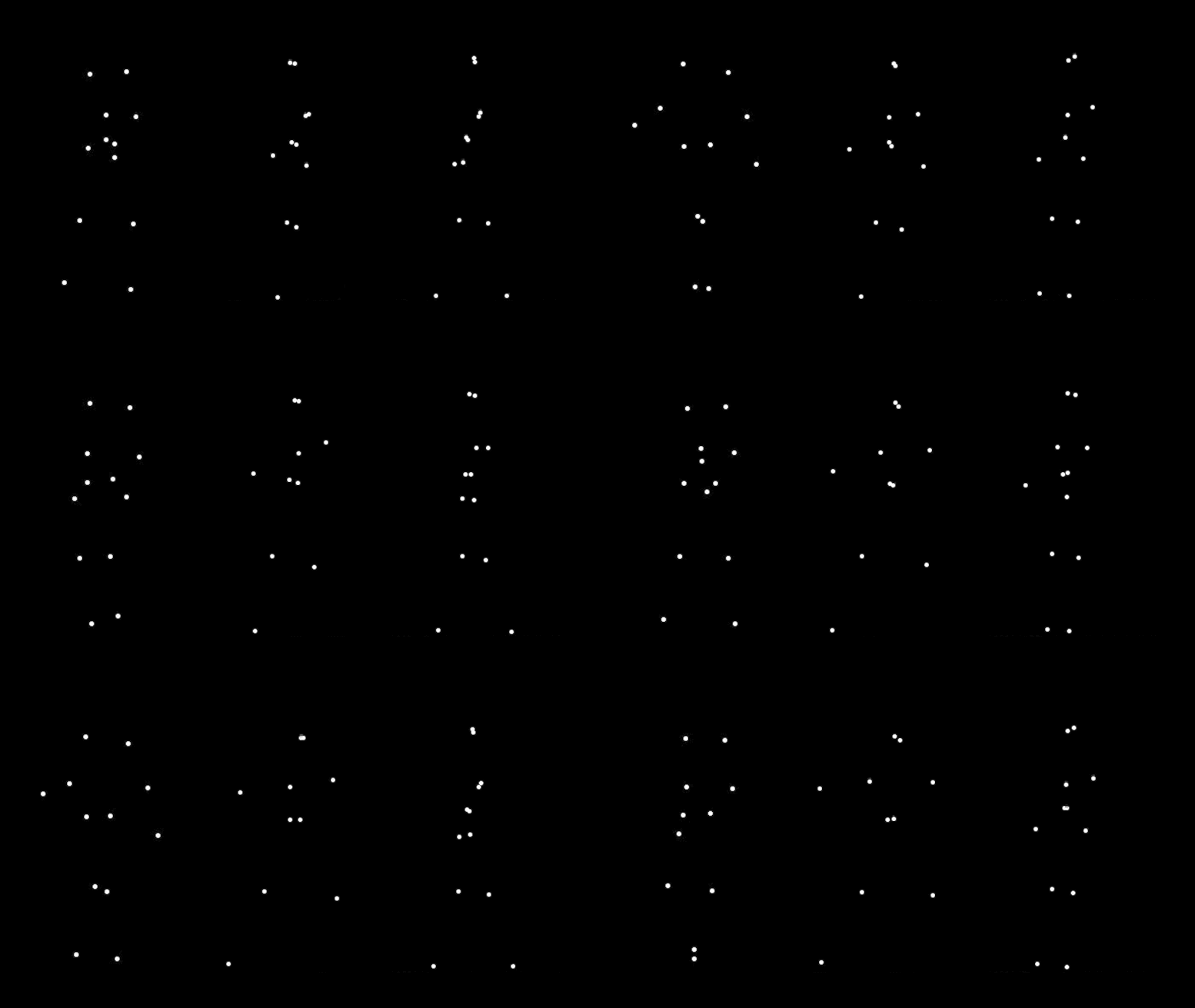
    Examples of the stimuli used in the study. From left to right: Happy, angry, and sad emotional states conveyed in point-light-displays of walking bodies. Credit: Stimuli created by Edey et al (2017) adapted from Nackaerts et al. (2012)

    In a research study by Schuster et al., healthy participants took haloperidol — a dopamine receptor inhibitor — on one day and a placebo pill on another before completing an emotion recognition task. They assessed videos of people expressing an emotion through their posture and gait (i.e., slow movements for sadness, quick, jerky movements for anger). The researchers also indirectly measured each person’s baseline dopamine levels by testing their working memory.

    The effects of haloperidol varied in each person depending on their baseline dopamine levels. In people with low dopamine, the drug increased their ability to recognize emotions, while in people with high dopamine, the drug impaired their ability. Future work will examine how changes in dopamine levels in disorders like Parkinson’s disease contribute to social cognition impairments.

    Reference: “Dopaminergic modulation of dynamic emotion perception” by B.A. Schuster, S. Sowden, A.J. Rybicki, D.S. Fraser, C. Press, P. Holland and J.L. Cook, 2 May 2022, JNeurosci.
    DOI: 10.1523/JNEUROSCI.2364-21.2022

    Never miss a breakthrough: Join the SciTechDaily newsletter.
    Follow us on Google and Google News.

    Brain Neuroscience Parkinson's Disease Society for Neuroscience
    Share. Facebook Twitter Pinterest LinkedIn Email Reddit

    Related Articles

    Researchers Uncover How the Brain Learns From Subconscious Stimuli

    Deep Inside the Brain: Neuroscientists Discover the Missing Piece of the Brain’s Multitasking Network

    Scientists Uncover Brain Mechanism That May Explain Why Sleep Helps You Learn

    Adult-Born Neurons Grow More Than Their Counterparts From Infancy – May Even Have Unique Functions

    Feeling Disconnected? Loneliness Alters Your Brain’s Social Network

    A Child’s Unique Brain Activity Reveals Their Memory Ability

    Unlocking the Neuroscience of How Experiencing Traumatic Stress Leads to Aggression

    Researchers Discover How Stress Restructures the Brain

    Functional Magnetic Resonance Imaging Shows How the Brain Repurposes Unused Regions

    Leave A Reply Cancel Reply

    • Facebook
    • Twitter
    • Pinterest
    • YouTube

    Don't Miss a Discovery

    Subscribe for the Latest in Science & Tech!

    Trending News

    Popular GLP-1 Weight-Loss Drugs Linked to 30% Lower Breast Cancer Risk

    A Deadly Fungus Has Found the Perfect Hiding Place: Human Hair Follicles

    Ancient Neanderthal DNA May Give Some People More Muscle

    How a Low-Fat Vegan Diet Helped People Lose Weight Without Counting Calories

    MIT Physicists Zapped a Quantum Crystal With Lasers – and Discovered Something Surprising

    Mushroom Mystery: The Fungus That Makes People See Tiny Humans

    Popular Erectile Dysfunction Drug Linked to Vision-Threatening Eye Disease

    Scientists Find a Smarter Way To Turn Used Coffee Grounds Into Clean Fuel

    Follow SciTechDaily
    • Facebook
    • Twitter
    • YouTube
    • Pinterest
    • Newsletter
    • RSS
    SciTech News
    • Biology News
    • Chemistry News
    • Earth News
    • Health News
    • Physics News
    • Science News
    • Space News
    • Technology News
    Recent Posts
    • Scientists Steer Infrared Light Through an “Invisible” Waveguide
    • Electrons Mysteriously Slow to a Crawl Inside This Magnetic Material
    • “Entirely Surprising” – Scientists Have Found a Martian Meteorite Unlike Any Known Before
    • Cancer Stem Cells Have an “Energy Addiction” – and Scientists Found a Way To Exploit It
    • Scientists Say This Simple Habit Could Lead to a Happier Marriage
    Copyright © 1998 - 2026 SciTechDaily. All Rights Reserved.
    • Science News
    • About
    • Contact
    • Editorial Board
    • Privacy Policy
    • Terms of Use

    Type above and press Enter to search. Press Esc to cancel.