
Close Menu
    Facebook X (Twitter) Instagram
    SciTechDaily
    • Biology
    • Chemistry
    • Earth
    • Health
    • Physics
    • Science
    • Space
    • Technology
    Facebook X (Twitter) Pinterest YouTube RSS
    SciTechDaily
    Home»Earth»Satellite Imagery Shows 16 Mile Line of Destruction From EF-3 Tornado Ripping Through Gaylord
    Earth

    Satellite Imagery Shows 16 Mile Line of Destruction From EF-3 Tornado Ripping Through Gaylord

    By Adam Voiland, NASA Earth ObservatoryJune 11, 2022No Comments2 Mins Read
    Facebook Twitter Pinterest Telegram LinkedIn WhatsApp Email Reddit
    Share
    Facebook Twitter LinkedIn Pinterest Telegram Email Reddit
    Gaylord May 2021 Annotated
    Gaylord, May 30, 2021
    Gaylord June 2022 Annotated
    Gaylord, June 2, 2022

    Tornado Scars Northern Michigan

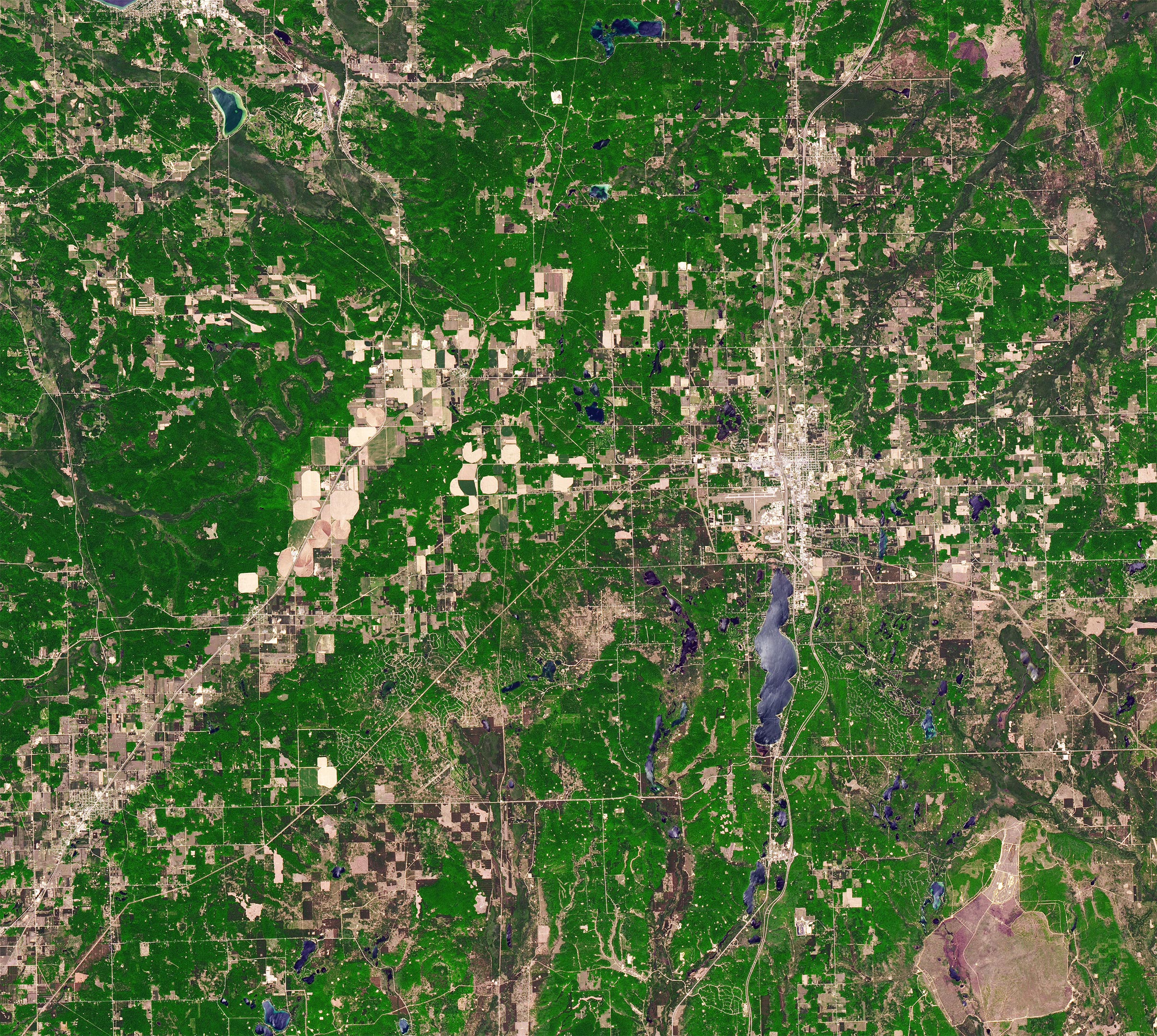
    Satellite imagery shows the line of damage extending through Gaylord, Michigan.

    Gaylord, a city in Otsego County in northern Michigan with a population of 4,286, was struck by an EF-3 tornado a few weeks ago, and satellite and space captured the destruction.

    On the Enhanced Fujita Scale of tornado damage intensity, an EF3 means it has 3-second gusts in the range of 136-165 mph (219-266 km/h).

    Powerful tornadoes are uncommon in northern Michigan. The Great Lakes often weaken approaching thunderstorms because the cool temperatures and breezes over the water hinder storm development.

    But on May 20, 2022, record-breaking warmth in the Midwest helped fuel a line of strong storms in Wisconsin that barreled across Lake Michigan without weakening significantly. One of them strengthened and transitioned into a supercell, an especially powerful type of storm with a deep and persistent rotating updraft.

    That storm spawned an EF-3 tornado bearing winds up to 150 miles (225 kilometers) per hour that ripped through the town of Gaylord. It also dropped hail the size of golf balls and baseballs as it tracked east-northeast across Michigan from the Traverse City area to Alpena.

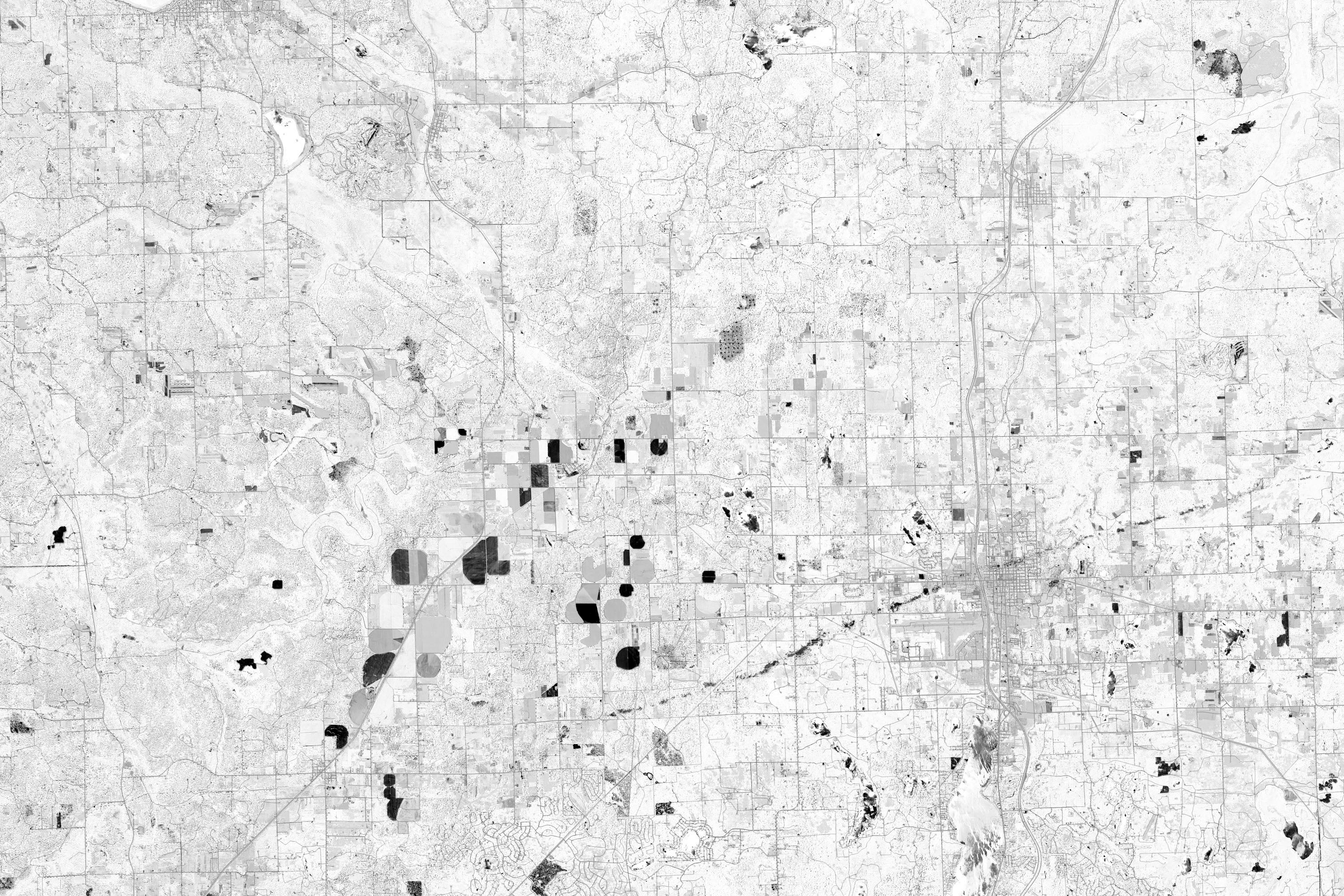
    The Operational Land Imager (OLI) on Landsat 8 captured natural-color images (above) of Gaylord on June 2, 2022, and May 31, 2021. The map below is based on optical differences between those two images, with the area around the track highlighted to emphasize its location.
    Tornado Scars Gaylord June 2022 Annotated
    June 2, 2022

    The line of destruction spanned 16 miles, cutting across forests, farmland, Gaylord’s commercial district, and residential neighborhoods. According to news reports, the tornado killed two people and injured 44 as it decimated a mobile home park, tore off roofs, and tossed vehicles. Preliminary estimates indicate that the storm caused several million dollars in damage.

    Forecasters from the National Weather Service reported that weather balloon observations indicated conditions extremely favorable for tornado formation prior to the tornado touching down: strong wind shear, ample atmospheric instability, and a tendency for rising air to rotate. “It is very rare for this magnitude of all of these variables to come together at once across northern Michigan,” they noted.

    NASA Earth Observatory images by Joshua Stevens, using Landsat data from the U.S. Geological Survey and data from OpenStreetMap.

    Never miss a breakthrough: Join the SciTechDaily newsletter.
    Follow us on Google and Google News.

    NASA NASA Earth Observatory Storms Tornadoes Weather
    Share. Facebook Twitter Pinterest LinkedIn Email Reddit

    Related Articles

    Tornado Damage: Nighttime Satellite Images Detail Kentucky Blackout

    Rapid Intensification for Super Typhoon Chanthu

    Flash Floods From Ida Swamp the Northeast – Areas Hit With 6-10″ of Rain Fall in Just a Few Hours

    NASA Satellite Observes Massive Power Outages in New Orleans

    Hurricane Ida Batters Louisiana: 5th-Strongest Storm Ever To Make Landfall in the Continental U.S.

    Tropical Storm Henri Continues To Strengthen

    Incredible View of Tropical Storm Elsa Captured From Space

    A Cirrus Sign of Tornadoes – An Early Clue of Destructive Weather

    Early Tropical Storm in the Eastern Pacific Sets a New Record

    Leave A Reply Cancel Reply

    • Facebook
    • Twitter
    • Pinterest
    • YouTube

    Don't Miss a Discovery

    Subscribe for the Latest in Science & Tech!

    Trending News

    Scientists Warn That This Common Pet Fish Can Wreck Entire Ecosystems

    Scientists Make Breakthrough in Turning Plastic Trash Into Clean Fuel Using Sunlight

    This Popular Supplement May Interfere With Cancer Treatment, Scientists Warn

    Scientists Finally Solved One of Water’s Biggest Mysteries

    Could This New Weight-Loss Pill Disrupt the Entire Market? Here’s What You Should Know About Orforglipron

    Earth’s Crust Is Tearing Open in Africa, and It Could Form a New Ocean

    Breakthrough Bowel Cancer Trial Leaves Patients Cancer-Free for Nearly 3 Years

    Natural Compound Shows Powerful Potential Against Rheumatoid Arthritis

    Follow SciTechDaily
    • Facebook
    • Twitter
    • YouTube
    • Pinterest
    • Newsletter
    • RSS
    SciTech News
    • Biology News
    • Chemistry News
    • Earth News
    • Health News
    • Physics News
    • Science News
    • Space News
    • Technology News
    Recent Posts
    • Scientists Debunk 100-Year-Old Belief About Brain Cells, Rewriting Textbooks
    • This Simple Home Device May Boost Brain Power in Adults Over 40
    • Ancient Roman Ship Coating Reveals Secrets Hidden for 2,200 Years
    • Enormous Prehistoric Insects Puzzle Scientists
    • College Student Identifies Bizarre New Carnivorous Dinosaur Three Times Older Than T. rex
    Copyright © 1998 - 2026 SciTechDaily. All Rights Reserved.
    • Science News
    • About
    • Contact
    • Editorial Board
    • Privacy Policy
    • Terms of Use

    Type above and press Enter to search. Press Esc to cancel.