
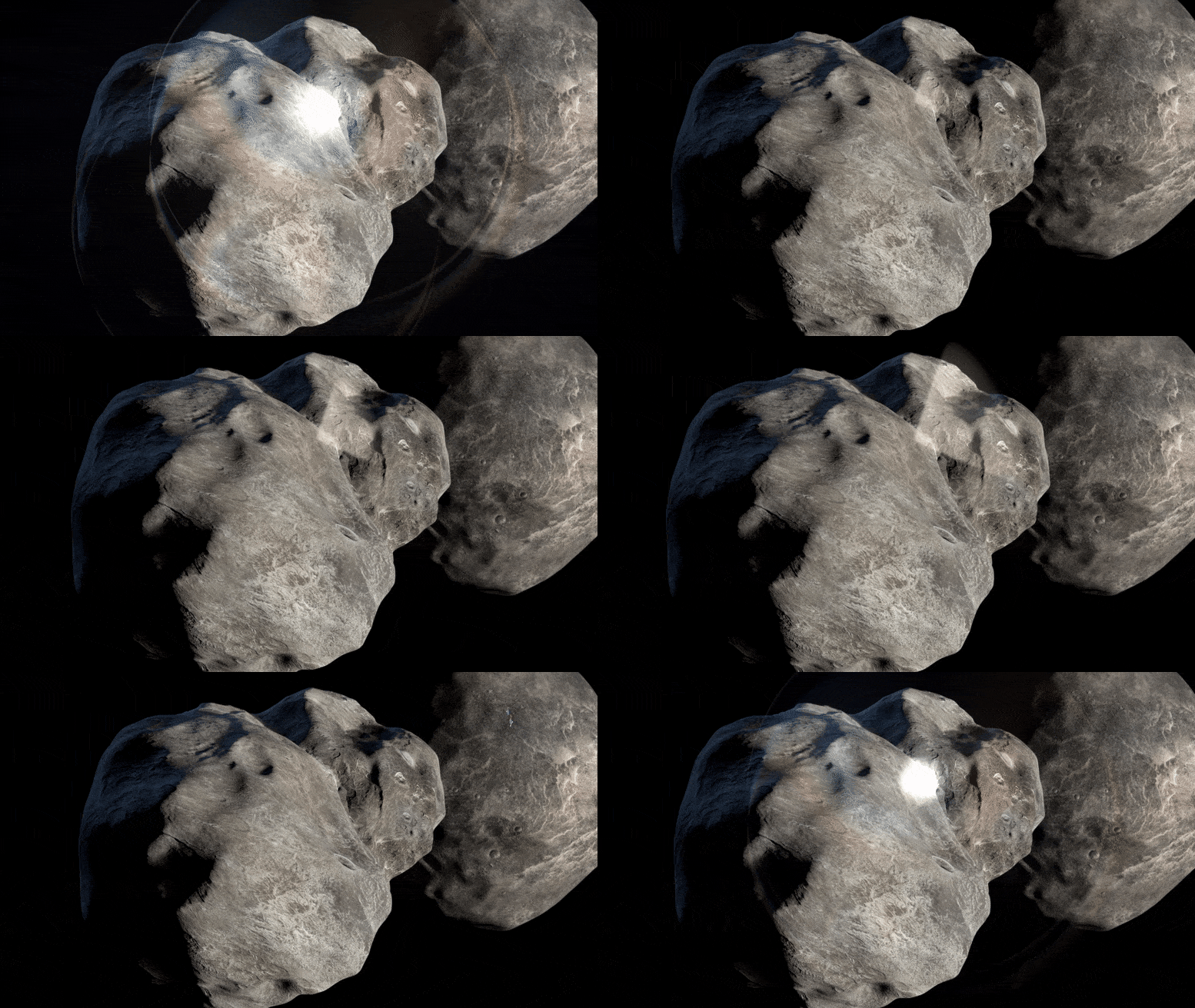
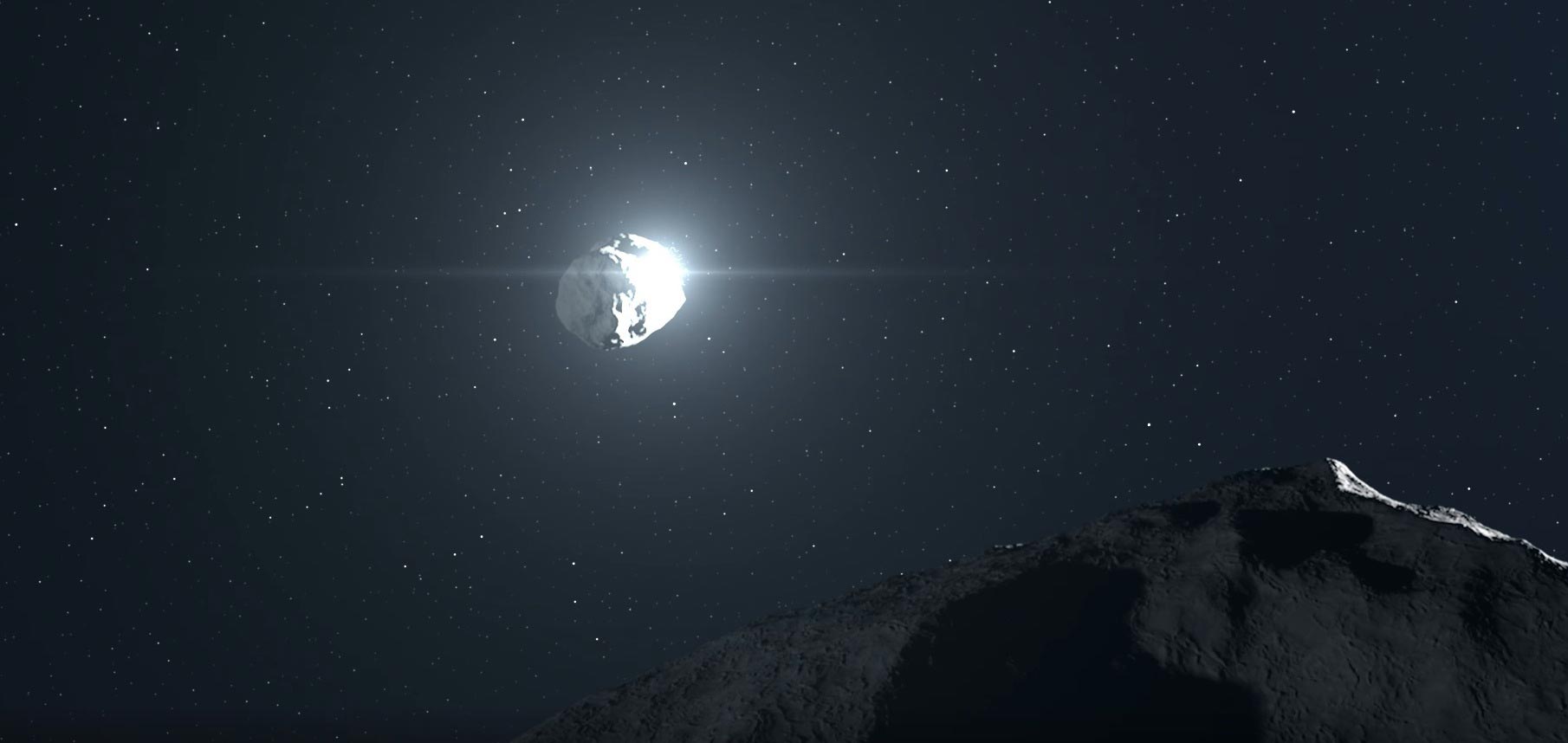
Today, all eyes will be looking up as NASA intentionally crashes the 1260-pound (570-kilogram) DART spacecraft into an orbiting asteroid at high speed. ESA’s Estrack network of ground stations, Europe’s ‘eyes on the sky’, will be particularly focused on the humanmade impactor, keeping track as it closes in on the 500-foot-wide (160-meter-wide) moving target in the world’s first test of asteroid deflection.
Dimorphos, the target asteroid, poses no threat to Earth. And don’t worry – DART’s kinetic impact cannot shove the asteroid into an Earth-impacting path. What this experiment should do, is slightly alter the asteroid’s orbit. This will help scientists learn more about deflection if and when a dangerous asteroid is discovered.
ESA’s ground stations are a key element in the Agency’s autonomous capability to track and link European missions virtually anywhere in the Solar System, while the Space Safety program is leading Europe in creating a responsible future in space.
Watch the impact live as data streams in from DART to ground stations around the globe on September 26, including ESA’s New Norcia station in Australia. The NASA program starts at midnight CEST and will be streamed on ESA Web TV with contributions from ESA’s Hera mission team.

Impacting an Asteroid, Before an Asteroid Impacts Us
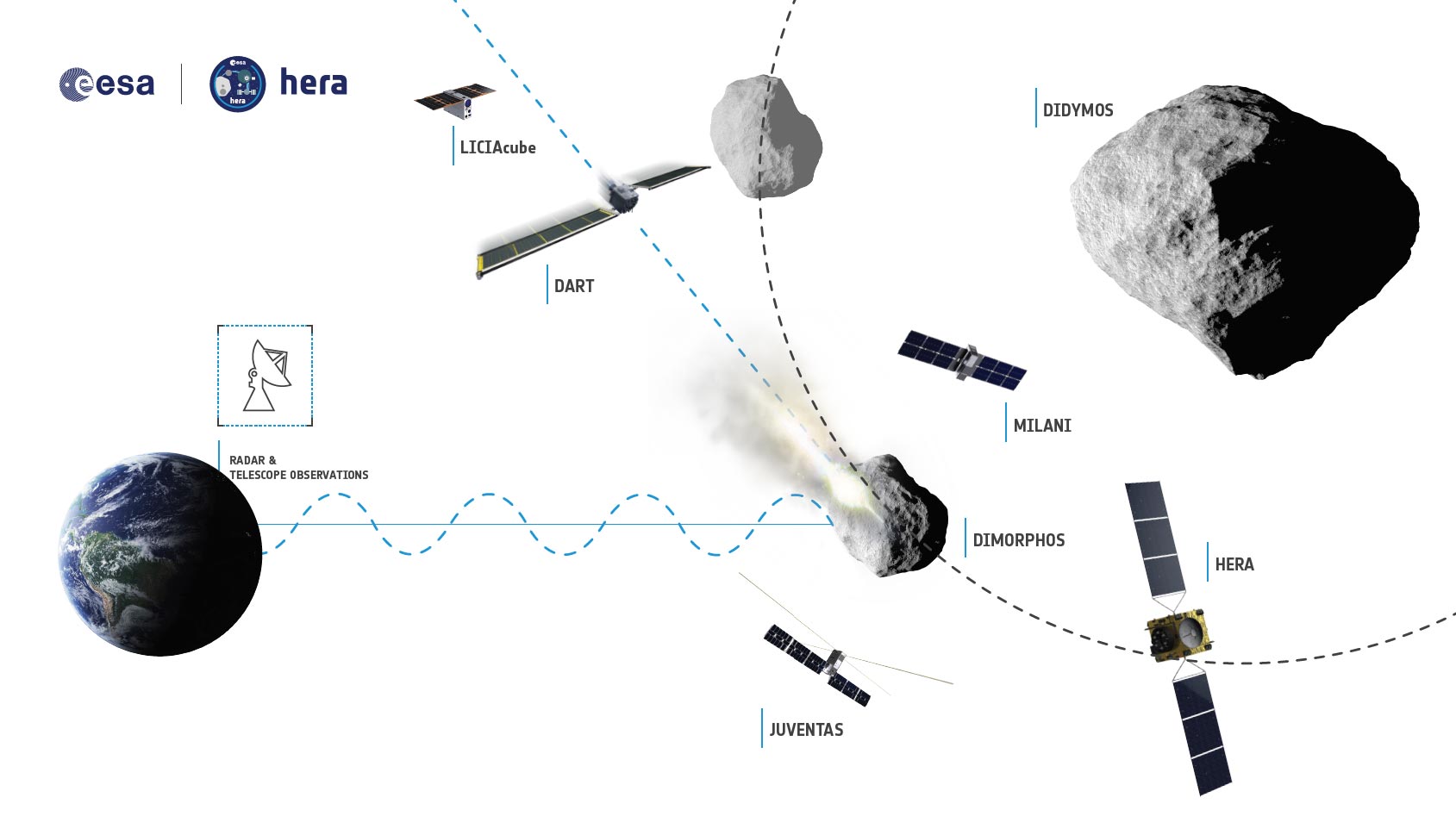
Right now, NASA’s Double Asteroid Redirection Test, DART, is hurtling through space towards a pair of gravitationally bound asteroids in orbit around the Sun. The binary asteroid system is known as Didymos, and the smaller ‘moonlet’ of the pair, Dimorphos, will be the first asteroid in the Solar System to be the target of a humanmade ‘kinetic impactor.’
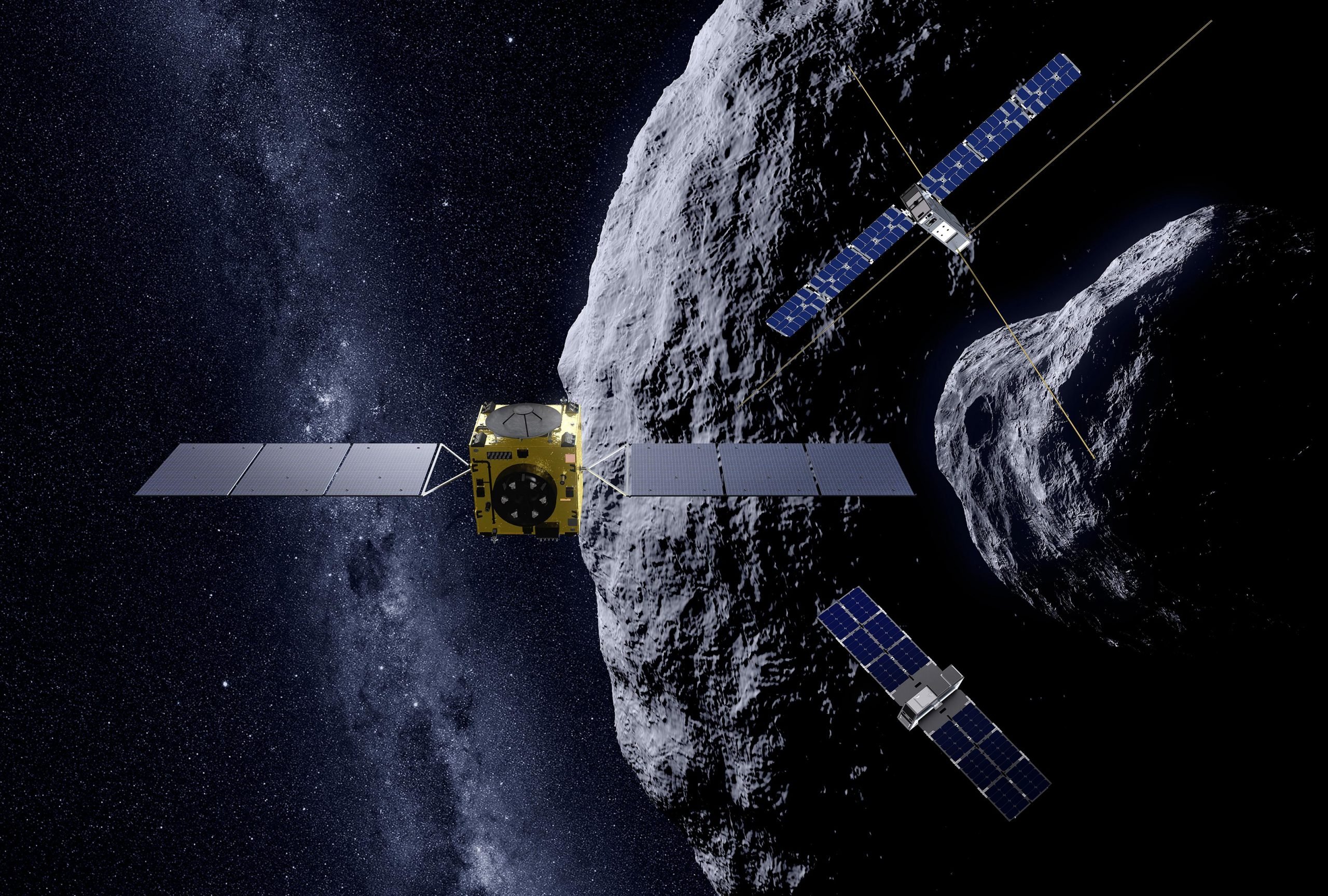
In the aftermath of the impact, ESA’s Hera mission will fly to the stricken rock to carry out an in-depth analysis of the crater formed, the mass of the asteroid, and a great deal more. This will be key to turning this grand experiment into an understood and repeatable planetary defense technique.
All this, however, depends on DART hitting its target. This is no easy feat. After all, the spacecraft will be hurtling through space at approximately 6,000 m/s (14,000 mph) at a distance of 7 million miles (11 million kilometers) from Earth, closing in on a moving object about the same size as the Great Pyramid of Giza.
In fact, it is only in the last hour before impact that DART will even be able to distinguish Dimorphos from the larger central asteroid. At that time it will use its sophisticated onboard guidance, navigation, and control system to autonomously maneuver it towards its unknowing target.
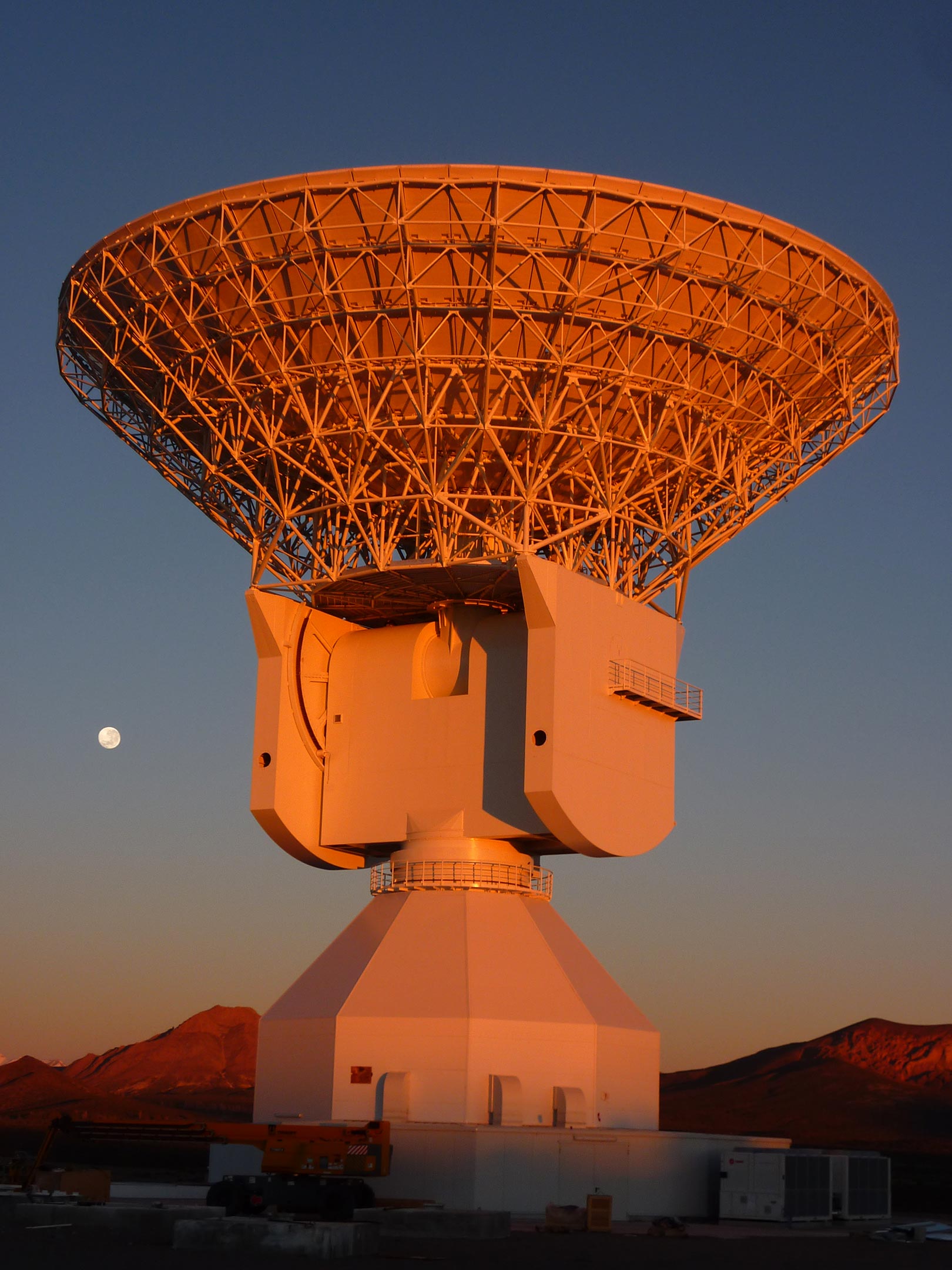
ESA’s network of eyes on the sky, Estrack, is supporting NASA in the weeks before impact by tracking DART, helping to provide data on its status, location, and velocity and crucially keeping a constant watch during its final 12 hours when a live stream of images will be pulsed home to be made available and watched ‘live’ by countless around the globe.
Giant Antennas Come Together
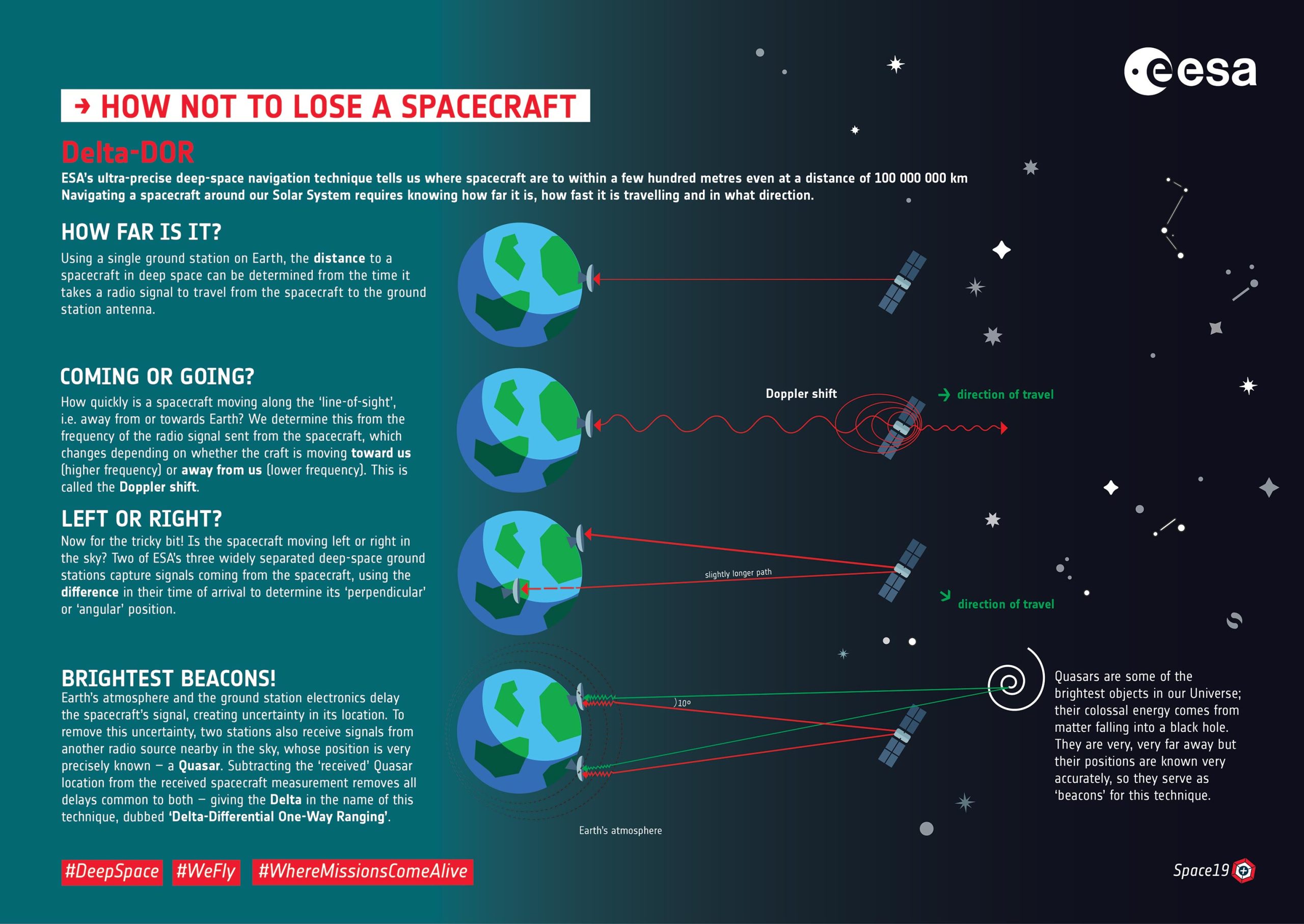
Since May, ESA’s 35-meter (115-foot) deep space antenna in Malargüe, Argentina, has been helping to provide ultra-precise measurements of DART’s position with regular tracking time dedicated to the mission in the months leading up to impact.
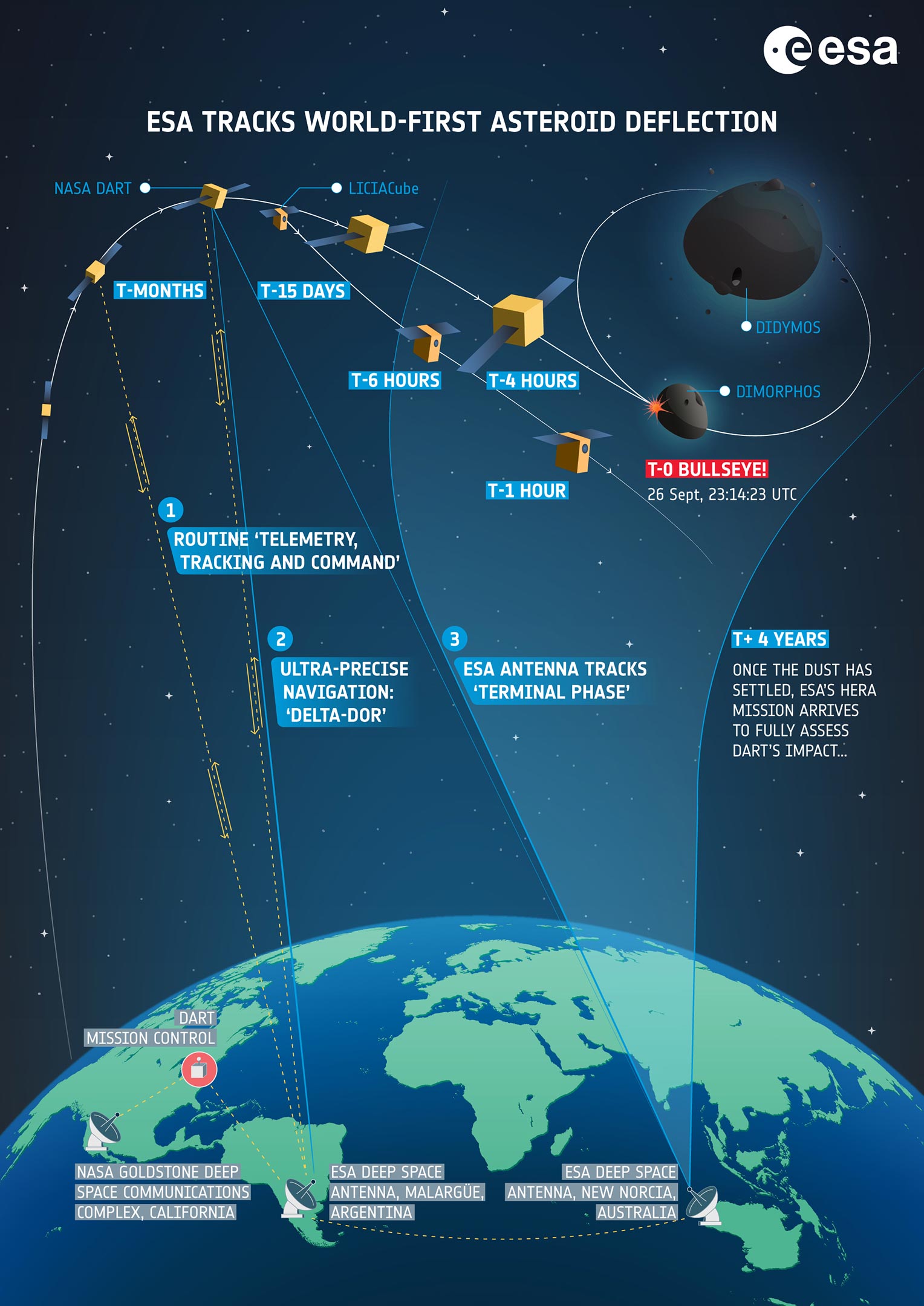
The station creates a geographical triangle on Earth when paired with the NASA antennas located in Canberra, Australia, and the Goldstone in California. Tracking DART simultaneously from each location allows for an extremely precise determination of its location, orientation, and speed. This method of tracking is known as Delta-DOR (delta-Differential One-way Range).
ESA’s Deep space antenna in Australia has also been receiving monthly status reports from DART. Such reports are ‘downlinked’ to Earth from the spacecraft and include details on its status, location, and any commands it was given. All of this is crucial information for NASA’s mission control.
Now in the final ten days before impact, tracking has ramped up even more as ESA’s Estrack network performs daily contacts with the spacecraft to fill the gaps in NASA Deep Space Network. Each of these ‘passes’, i.e. the period in which the spacecraft is visible and communicating with the antenna, lasts for about one hour every day until DART enters the final phase of its mission.
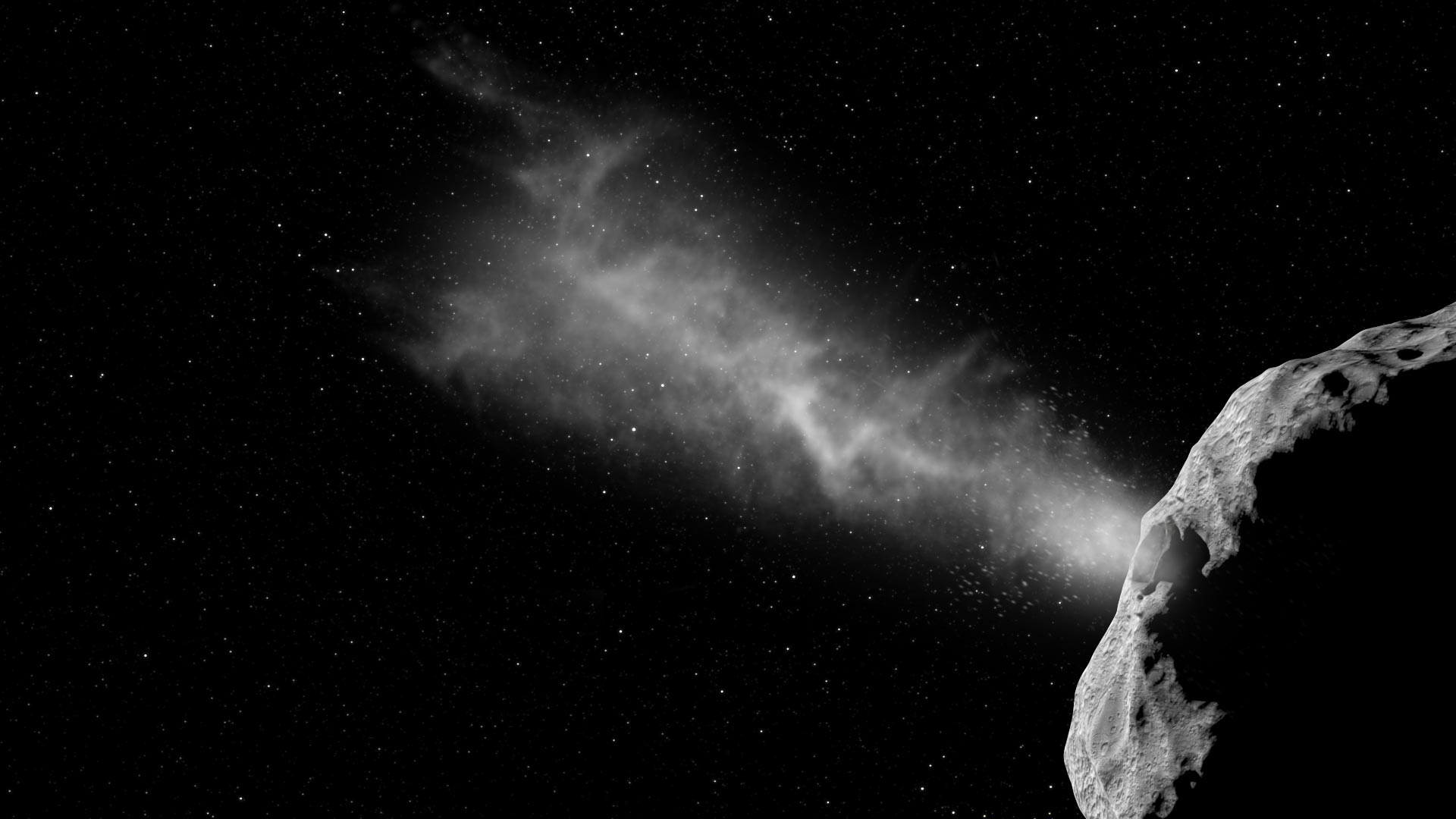
BULLSEYE
In the last few hours of DART’s life, it will send to Earth a constant stream of images revealing its target resolve into view from blurry mass to small asteroid, dramatically getting closer and larger until … bullseye! This will be the first ever non-fiction movie depicting real-life asteroid deflection, and it’s essential that every scene arrives back home.
“It is vital for mission success that there are no gaps in coverage during DART’s terminal phase, and so antennas around the world will be working in unison, backing each other up and filling in any gaps in NASA’s Deep Space Network coverage – we cannot lose the link to DART for a moment,” explains Daniel Firre, ESA’s DART Service Manager.
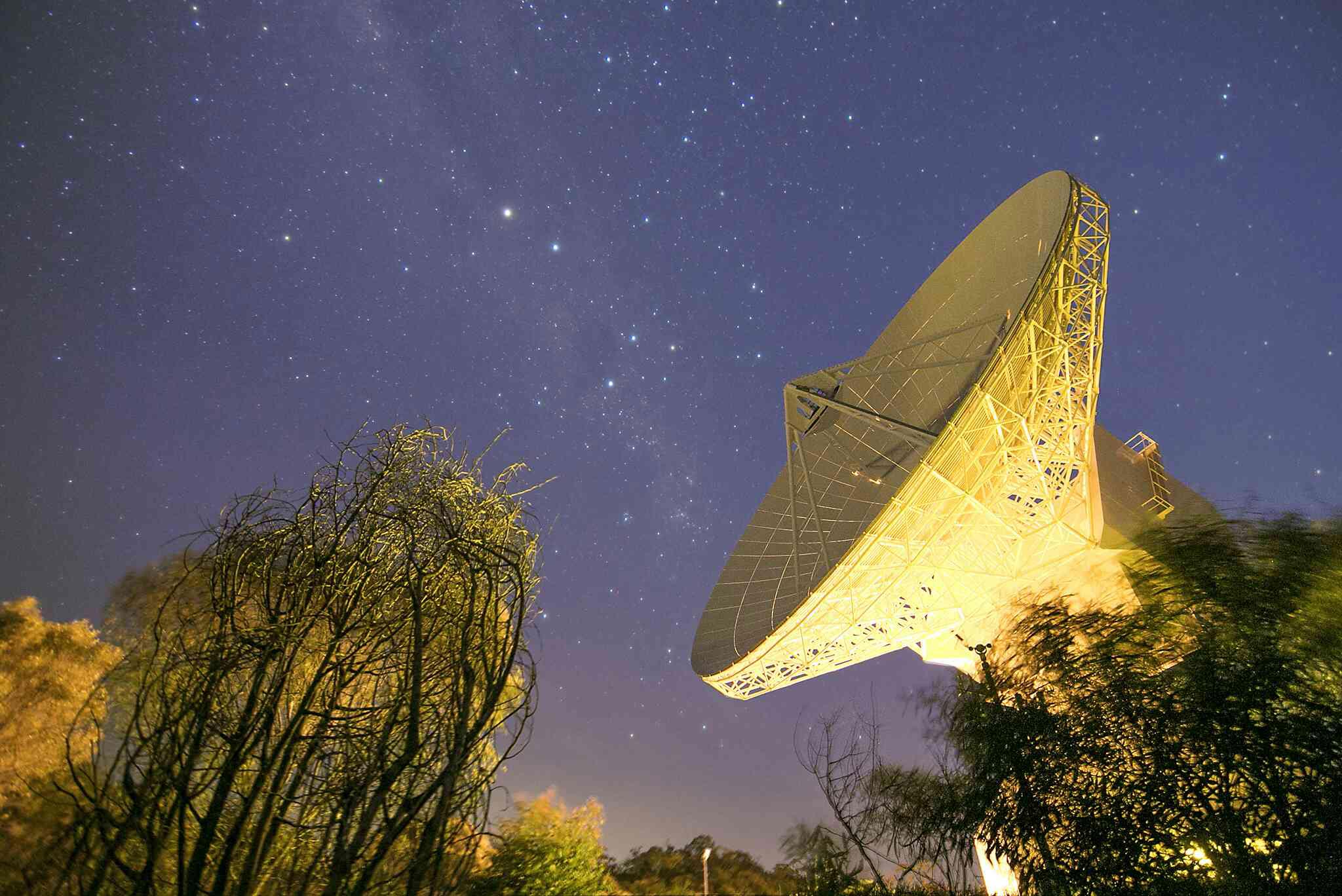
During this final period starting 12 hours before impact and lasting a couple of hours after, ESA’s New Norcia station in Australia will provide a continuously updated stream of data and images from the mission. Data from DART will have traveled 7 million miles (11 million kilometers) before it arrives at the 35-meter (115-foot) dish in Australia, all in about half a minute.
“Our giant dish in Australia will be in touch with DART as it crashes into Dimorphos. In the last minutes, data will stream in from the DRACO instrument onboard. This data will be used by scientists to estimate the mass of the asteroid, surface type, and impact site,” explains Suzy Jackson, Maintenance & Operations Manager for the New Norcia ground station.
“In addition, the data from DART will be used at NASA’s mission control to adjust mission parameters, and it’s really important the information arrives as close to real-time as possible.”
Italian CubeSat To Witness the Crash
The one thing DART can’t show us is the visual result of its impact with the asteroid. As it completes its job, the spacecraft will be destroyed, and communications to Earth will cease. Excitingly, a shoebox-sized CubeSat provided by the Italian Space Agency (ASI) will be riding with DART.
The 14 kg (31 lb) LICIACube separated from DART fifteen days before impact to capture images of the crash and the resulting cloud of ejected matter.
Nearer to Hera
Hera will show us things we’ve never seen before. Astrophysicist and Queen guitarist Brian May tells the story of the ESA mission that would be humanity’s first-ever spacecraft to visit a double asteroid.
To fully understand DART’s impact, once the dust has settled, ESA’s Hera mission will launch in 2024 and arrive at the Didymos asteroid system two years later to perform high-resolution visual, laser, and radio science mapping of the asteroid moon and assess the consequences of the impact.
As Hera launches, arrives at the Didymos pair, and sends its data home, completing this remarkable first test of planetary defense, ESA’s Estrack network will as ever be getting this vital space data back home.
Live coverage of DART’s impact with the asteroid Dimorphos will also air on NASA TV starting at 6 p.m. ET and on the NASA website. The public also can watch live on NASA’s social media accounts on Facebook, Twitter, and YouTube.
Never miss a breakthrough: Join the SciTechDaily newsletter.
Follow us on Google and Google News.
1 Comment
I think humanity testing/learning how to redirect asteroids/comets (of varying mass/size/composition/structure) (in varying ways) is a worthy goal for sure!
(But, personally, I do not believe that the end of the world/humanity will be because of any kind of natural/cosmic/scientific/technological disaster!
But, it will happen (very slowly!) mainly due to moral & intellectual decay of humanity! Similar to the movie “Idiocracy”! 🙂