
Tracking the Pathway to Immunity, One Cell at a Time
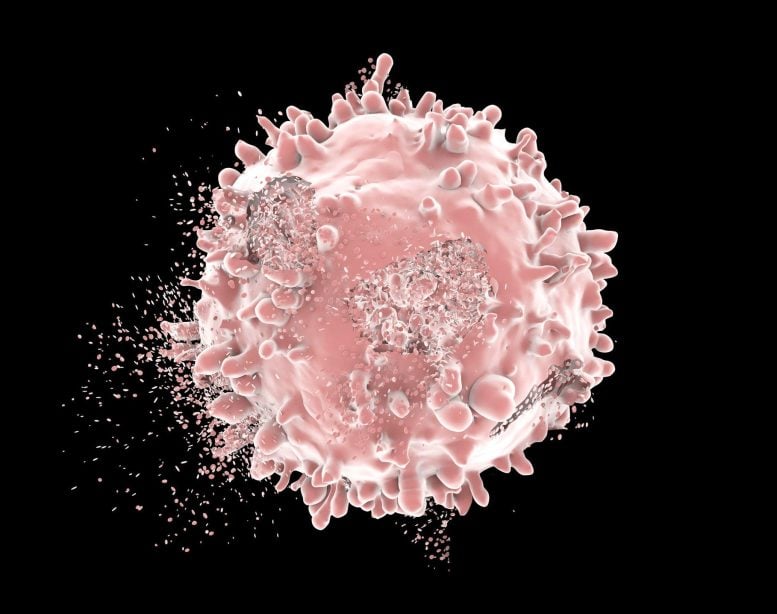
Vaccines work their magic by effectively producing immune cells that survive for a long time, often for over decades. These immune cells build a barrier of protection that can prevent or minimize re-infection as well as a memory that enables us to identify a past invader like a virus and to eliminate it before it causes disease. The antibody in our blood that serves as the barrier is manufactured by “long-lived plasma cells”. While the significance of these cells has long been understood, how and when they are produced after vaccination has remained a mystery.
Until now.
A research team led by Dr. Marcus Robinson and Professor David Tarlinton from Monash University’s Immunological Memory Laboratory has shown in real time how immune memory cells are stored in the bone marrow at a rate of around one cell per hour for several weeks following vaccination. The findings were recently published in the journal Science Immunology. The researchers utilized a genetic system in mice to map the gradual accumulation of these cells.
Mapping Plasma Cell Accumulation Over Time
This system, known as timestamping, enables researchers to indelibly mark all plasma cells present at a specific time after immunization and then return later to identify those that have survived and are therefore long-lived. By repeating this on a regular basis after vaccination, the researchers were able to reveal the history of the accumulation of these long-lived cells, pinpointing when they were made and where they went.
After receiving a vaccination we remain largely immune to that disease because our bodies provide an ongoing supply of antibodies against the immunized disease – essentially making sure we remain topped up with these antibodies.
While we have known the sites in the body where these long-lived plasma cells have been generated including lymph nodes, tonsils, and gut – just what makes some vaccines lead to these cells sticking around for decades versus those that disappear after a few months has been unknown. Given the global interest in long-term immunity provided by COVID vaccines, there is an increased urgency in understanding this process.
Using a mouse model that expressed a fluorescent protein (called the TdTomato protein) only in cells specifically producing antibodies against a specific vaccine.
Because these cells fluoresced it was possible to track individual cells as they were produced and where they were stored.
The research used a series of tools to identify only those plasma cells that were generated by the vaccine. All plasma cells in the mouse model expressed a fluorescent protein (called TdTomato protein), and among those, they identified those recognizing the vaccine and finally, by using the timestamp, they knew when those cells had been made and thus how old they were.
According to Professor Tarlinton, studying these individual cells as they are born, mature, and get stored to protect us against repeat invasion by a particular virus or bacteria “can inform our understanding of how the recruitment of long-lived plasma cells occurs.”
Bone Marrow as a Storage Site for Immunity
The intricacy of the study has allowed the researchers to determine other aspects of the building up of specific immunity:
- How these plasma cells enter the bone marrow
- Whether these plasma cells must displace other cells when they get stored in areas such as bone marrow
- Or if these cells “find” a niche made vacant by previous plasma cells either dying or moving elsewhere
Mapping of these cells revealed that one particular vaccination in a mouse led to the generation of around 40,000 persisting plasma cells in the bone marrow. These cells, after the initial flourish, then decline at a rate of around 0.1% a day with a half-life of about 700 days, providing both an estimate of the duration of protection and identifying for further study the long-lived cells themselves.
According to Professor Tarlinton, understanding how these long-lived plasma cells are generated, live, and die “will inform our ability to modulate their recruitment, through different vaccine combinations or delivery strategies – ultimately allowing us to be able to increase the longevity of immunity,” he said.
“In fact, there is exciting work recently reported in Nature that describes how altering the mechanics of vaccination can dramatically influence the character of the immune response, and we would predict the production of these special cells that have been the focus of our work.”
Reference: “Long-lived plasma cells accumulate in the bone marrow at a constant rate from early in an immune response” by Marcus James Robinson, Mark R. Dowling, Catherine Pitt, Kristy O’Donnell, Rosela H. Webster, Danika L. Hill, Zhoujie Ding, Alexandra R. Dvorscek, Erica J. Brodie, Philip D. Hodgkin, Isaak Quast and David Mathew Tarlinton, 28 October 2022, Science Immunology.
DOI: 10.1126/sciimmunol.abm8389
Never miss a breakthrough: Join the SciTechDaily newsletter.
Follow us on Google and Google News.