
Close Menu
    Facebook X (Twitter) Instagram
    SciTechDaily
    • Biology
    • Chemistry
    • Earth
    • Health
    • Physics
    • Science
    • Space
    • Technology
    Facebook X (Twitter) Pinterest YouTube RSS
    SciTechDaily
    Home»Space»Unveiling Quantum Gravity: New Results From IceCube Neutrino Observatory and Fermi Space Telescope
    Space

    Unveiling Quantum Gravity: New Results From IceCube Neutrino Observatory and Fermi Space Telescope

    By The University of BergenJune 13, 2023No Comments2 Mins Read
    Facebook Twitter Pinterest Telegram LinkedIn WhatsApp Email Reddit
    Share
    Facebook Twitter LinkedIn Pinterest Telegram Email Reddit
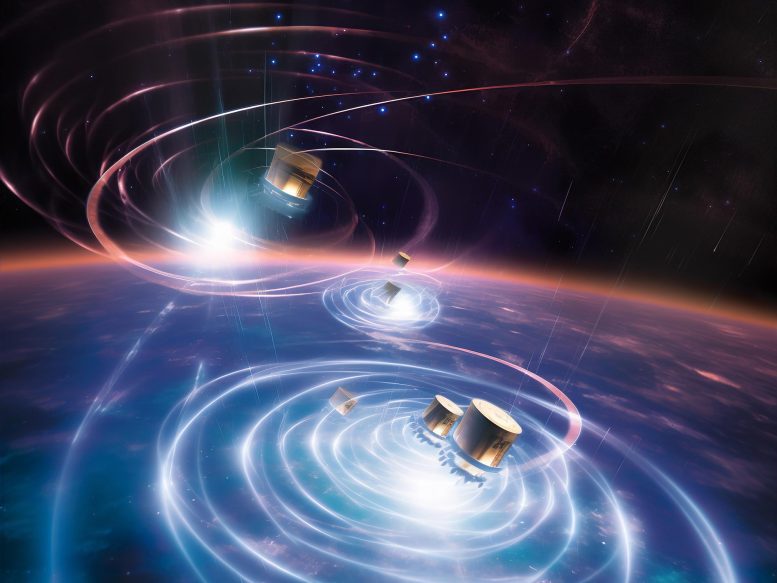
    Astrophysics Quantum Gravity Art Concept
    New research provides preliminary evidence supporting a quantum gravity model which suggests that the speed of ultrarelativistic particles reduces with increased energy. The study used data from the Fermi telescope and the IceCube Neutrino Observatory to validate the theory. The findings mark a significant advancement in the field of quantum gravity.

    Researchers have reached a significant milestone in the field of quantum gravity research, finding preliminary statistical support for quantum gravity.

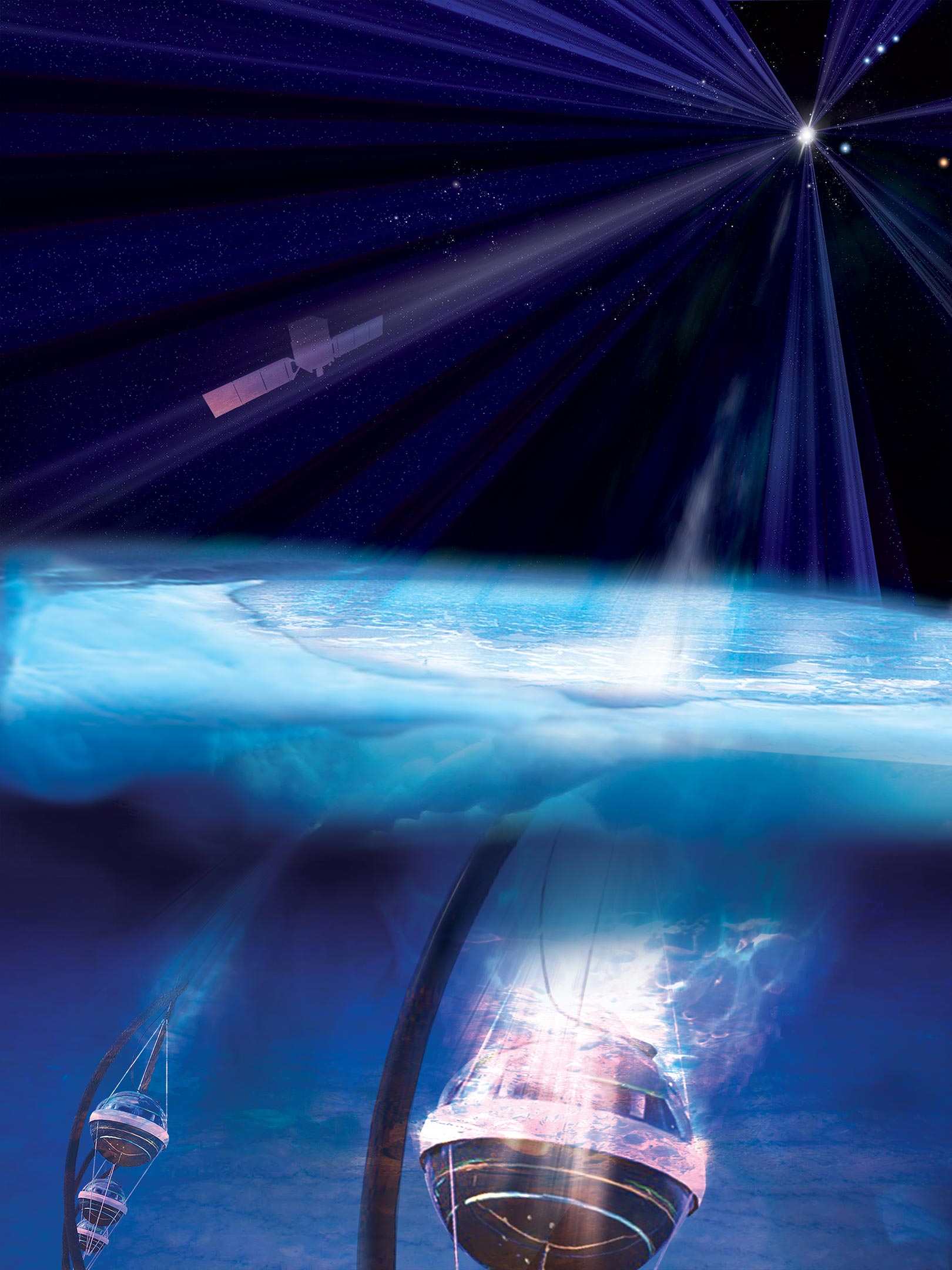
    In a study published in Nature Astronomy on June 12, a team of researchers from the University of Naples “Federico II,” the University of Wroclaw, and the University of Bergen examined a quantum-gravity model of particle propagation in which the speed of ultrarelativistic particles decreases with rising energy. This effect is expected to be extremely small, proportional to the ratio between particle energy and the Planck scale, but when observing very distant astrophysical sources, it can accumulate to observable levels. The investigation used gamma-ray bursts observed by the Fermi telescope and ultra-high-energy neutrinos detected by the IceCube Neutrino Observatory, testing the hypothesis that some neutrinos and some gamma-ray bursts might have a common origin but are observed at different times as a result of the energy-dependent reduction in speed.
    Unveiling Quantum Gravity IceCube Fermi
    Illustration of The Fermi Gamma-ray Space Telescope. Credit: NASA/Fermi and Aurore Simonnet, Sonoma State University

    “By combining data from IceCube and Fermi, we found preliminary evidence supporting quantum gravity models that predict this effect. This marks a significant milestone in the field of quantum gravity research since it is the first time that such a level of quantum gravity-supportive statistical evidence is found,” says corresponding author, Professor Giovanni Amelino-Camelia of the University of Naples on behalf of the team.

    “While these findings are preliminary, they provide a strong foundation for further detailed investigations as we continue to gather data from our gamma-ray and neutrino telescopes. Even if future data were not to confirm this effect, our findings would still provide stringent limits on the parameters of relevant models, which would already represent a rare and notable step for quantum gravity research,” adds Amelino-Camelia.

    Reference: “Could quantum gravity slow down neutrinos?” by Giovanni Amelino-Camelia, Maria Grazia Di Luca, Giulia Gubitosi, Giacomo Rosati and Giacomo D’Amico, 12 June 2023, Nature Astronomy.
    DOI: 10.1038/s41550-023-01993-z

    Never miss a breakthrough: Join the SciTechDaily newsletter.
    Follow us on Google and Google News.

    Astrophysics Fermi Gamma-ray Space Telescope Gamma Ray IceCube Neutrino Observatory Neutrinos Popular
    Share. Facebook Twitter Pinterest LinkedIn Email Reddit

    Related Articles

    A Flash Like No Other: NASA’s Fermi Detects Unique Energy Peak in Unprecedented Gamma-Ray Burst

    Defying Expectations: NASA’s Fermi Sees No Gamma Rays From Nearby Supernova

    Ghostlike Astronomical Messengers Reveal New View of Milky Way

    First Glimpse Into the Inner Depths of an Active Galaxy Provided by Ghostly Neutrino Particles

    Strange Long-Lasting Pulse of High-Energy Radiation Swept Over Earth

    VERITAS Detects Gamma Rays from Distant Galaxy PKS 1441+25

    NuSTAR Discovers Pulsar Powering Intense Gamma Rays

    NASA’s Fermi Measures Extragalactic Background Light

    Gamma-Ray Beams Suggest Milky Way’s Central Black Hole Had Active Past

    Leave A Reply Cancel Reply

    • Facebook
    • Twitter
    • Pinterest
    • YouTube

    Don't Miss a Discovery

    Subscribe for the Latest in Science & Tech!

    Trending News

    Millions of People Have Osteopenia Without Realizing It – Here’s What You Need To Know

    Researchers Discover Boosting a Single Protein Helps the Brain Fight Alzheimer’s

    World-First Study Reveals Human Hearts Can Regenerate After a Heart Attack

    Why Your Dreams Feel So Real Sometimes and So Strange Other Times

    This Simple Home Device May Boost Brain Power in Adults Over 40

    Enormous Prehistoric Insects Puzzle Scientists

    Scientists Develop Bioengineered Chewing Gum That Could Help Fight Oral Cancer

    After 37 Years, the World’s Longest-Running Soil Warming Experiment Uncovers a Startling Climate Secret

    Follow SciTechDaily
    • Facebook
    • Twitter
    • YouTube
    • Pinterest
    • Newsletter
    • RSS
    SciTech News
    • Biology News
    • Chemistry News
    • Earth News
    • Health News
    • Physics News
    • Science News
    • Space News
    • Technology News
    Recent Posts
    • This Is What Makes You Irresistible to Mosquitoes
    • Shockingly Powerful Giant Octopuses Ruled the Seas 100 Million Years Ago
    • After 100 Years, Scientists Uncover Hidden Rule Governing Cosmic Rays
    • The Milky Way Has a Hidden Edge and Scientists Finally Mapped It
    • Scientists Stunned by New Organic Molecules Found on Mars
    Copyright © 1998 - 2026 SciTechDaily. All Rights Reserved.
    • Science News
    • About
    • Contact
    • Editorial Board
    • Privacy Policy
    • Terms of Use

    Type above and press Enter to search. Press Esc to cancel.