
Close Menu
    Facebook X (Twitter) Instagram
    SciTechDaily
    • Biology
    • Chemistry
    • Earth
    • Health
    • Physics
    • Science
    • Space
    • Technology
    Facebook X (Twitter) Pinterest YouTube RSS
    SciTechDaily
    Home»Space»Shimmering Skies: Hubble Unveils a Sparkling Galactic Neighbor
    Space

    Shimmering Skies: Hubble Unveils a Sparkling Galactic Neighbor

    By ESA/HubbleAugust 20, 2023No Comments2 Mins Read
    Facebook Twitter Pinterest Telegram LinkedIn WhatsApp Email Reddit
    Share
    Facebook Twitter LinkedIn Pinterest Telegram Email Reddit
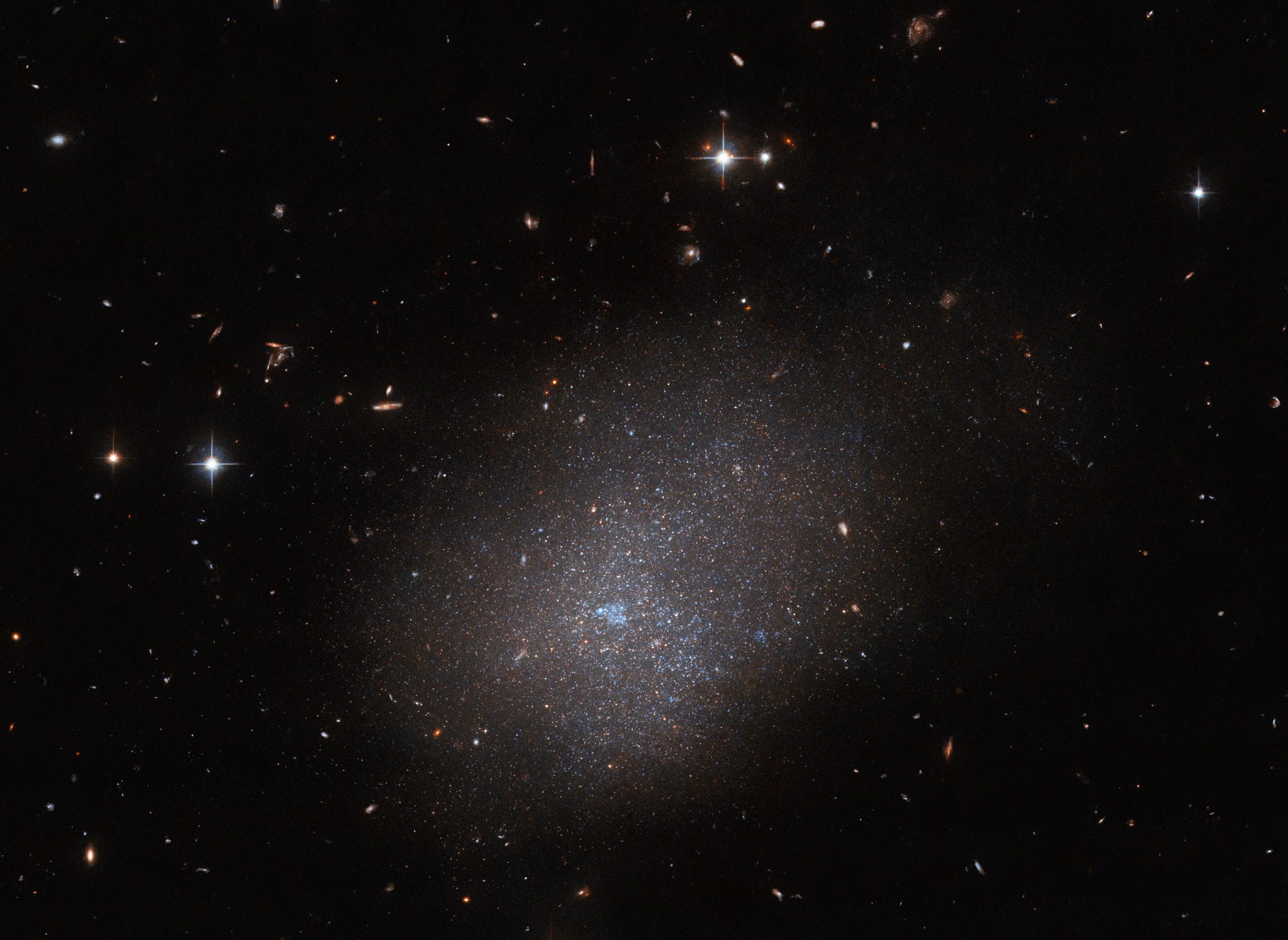
    Galaxy ESO 300-16
    A breathtaking image of the galaxy ESO 300-16, located 28.7 million light-years away in the constellation Eridanus, captured by the NASA/ESA Hubble Space Telescope. This observation is part of Hubble’s ongoing mission to study our galactic neighbors, with 75% of known galaxies within 10 megaparsecs already observed in detail. Credit: ESA/Hubble & NASA, R. Tully

    The galaxy ESO 300-16 looms over this captivating image from the Hubble Space Telescope. This galaxy, which lies 28.7 million light-years from Earth in the constellation Eridanus, is a ghostly assemblage of stars that resembles a sparkling cloud. A rogue’s gallery of distant galaxies and foreground stars completes this astronomical portrait, which was captured by the Advanced Camera for Surveys (ACS).

    Hubble’s In-Depth Exploration

    This particular observation is one of a series that aims to get to know our galactic neighbors. Remarkably, about three-quarters of the known galaxies suspected to lie within 10 megaparsecs of Earth have already been observed by Hubble in enough detail to resolve their brightest stars and establish the distances to these galaxies. A team of astronomers proposed using small gaps in Hubble’s observing schedule to investigate the remaining quarter of the nearby galaxies.

    Grasping Astronomical Distances

    The megaparsec — meaning one million parsecs — is a unit of length used by astronomers to chart the mind-bogglingly large distances involved in astronomy. The motion of Earth around the Sun means that stars appear to slightly shift against very distant stars over the course of a year. This small shift is referred to as parallax and is measured in angular units: degrees, minutes, and seconds. One parsec is equivalent to saying a parallax of one arcsecond, and is equivalent to 3.26 light-years or 30.9 trillion kilometers. Proxima Centauri b, the closest exoplanet to our Sun, lies 1.3 parsecs away.

    Never miss a breakthrough: Join the SciTechDaily newsletter.
    Follow us on Google and Google News.

    Astronomy European Space Agency Hubble Space Telescope
    Share. Facebook Twitter Pinterest LinkedIn Email Reddit

    Related Articles

    A Diamond Necklace of Cosmic Proportions

    Hubble Snaps a Stunning Close-Up of a Magnificent Spiral Galaxy

    Extraordinary Hubble Image: Light Bends From the Beyond

    Hubble Space Telescope Sees Volcanic Activity Reforming the Atmosphere on a Rocky Exoplanet

    Hubble Spies a Luminous Heart With Dark Tendrils

    Spectacular Return to the Veil Nebula

    Hubble Spots a Peculiar Sight: Unusual Spiral Galaxy With a Heavy Arm

    A Flash of Life: Hubble Spies an Unusual Planetary Nebula

    Through the Cosmic Clouds: Hubble Spots a Beautiful Stellar Nursery

    Leave A Reply Cancel Reply

    • Facebook
    • Twitter
    • Pinterest
    • YouTube

    Don't Miss a Discovery

    Subscribe for the Latest in Science & Tech!

    Trending News

    Mushroom Mystery: The Fungus That Makes People See Tiny Humans

    Popular Erectile Dysfunction Drug Linked to Vision-Threatening Eye Disease

    Scientists Find a Smarter Way To Turn Used Coffee Grounds Into Clean Fuel

    Did Cellular Life Begin Twice? New Study Points to Two Independent Origins

    Sitting Up Straight Could Actually Help You Make Better Decisions

    Never-Before-Seen Vortices Are Swirling Across the Sun

    This Common Amino Acid May Help the Body Fight Cancer and Viruses

    Low-Protein “Longevity Diet” Linked to Fat Loss, Muscle Preservation, and Healthy Aging

    Follow SciTechDaily
    • Facebook
    • Twitter
    • YouTube
    • Pinterest
    • Newsletter
    • RSS
    SciTech News
    • Biology News
    • Chemistry News
    • Earth News
    • Health News
    • Physics News
    • Science News
    • Space News
    • Technology News
    Recent Posts
    • Scientists Say This Simple Habit Could Lead to a Happier Marriage
    • This Simple Measurement Could Expose a Hidden Diabetes Risk (And It’s Not Your Waistline)
    • 520-Million-Year-Old Fossil Reveals How Cephalopods Learned To Float
    • “Find of the Year” – Archaeologists Discover the Smallest Ice Age Figurines Ever Found
    • Nearly Complete Fossil Reveals Scientists Were Wrong About This Ancient Mammal
    Copyright © 1998 - 2026 SciTechDaily. All Rights Reserved.
    • Science News
    • About
    • Contact
    • Editorial Board
    • Privacy Policy
    • Terms of Use

    Type above and press Enter to search. Press Esc to cancel.