
Close Menu
    Facebook X (Twitter) Instagram
    SciTechDaily
    • Biology
    • Chemistry
    • Earth
    • Health
    • Physics
    • Science
    • Space
    • Technology
    Facebook X (Twitter) Pinterest YouTube RSS
    SciTechDaily
    Home»Space»Revolutionizing Lunar History: Scientists Introduce a New Timeline
    Space

    Revolutionizing Lunar History: Scientists Introduce a New Timeline

    By Science China PressFebruary 27, 2024No Comments3 Mins Read
    Facebook Twitter Pinterest Telegram LinkedIn WhatsApp Email Reddit
    Share
    Facebook Twitter LinkedIn Pinterest Telegram Email Reddit
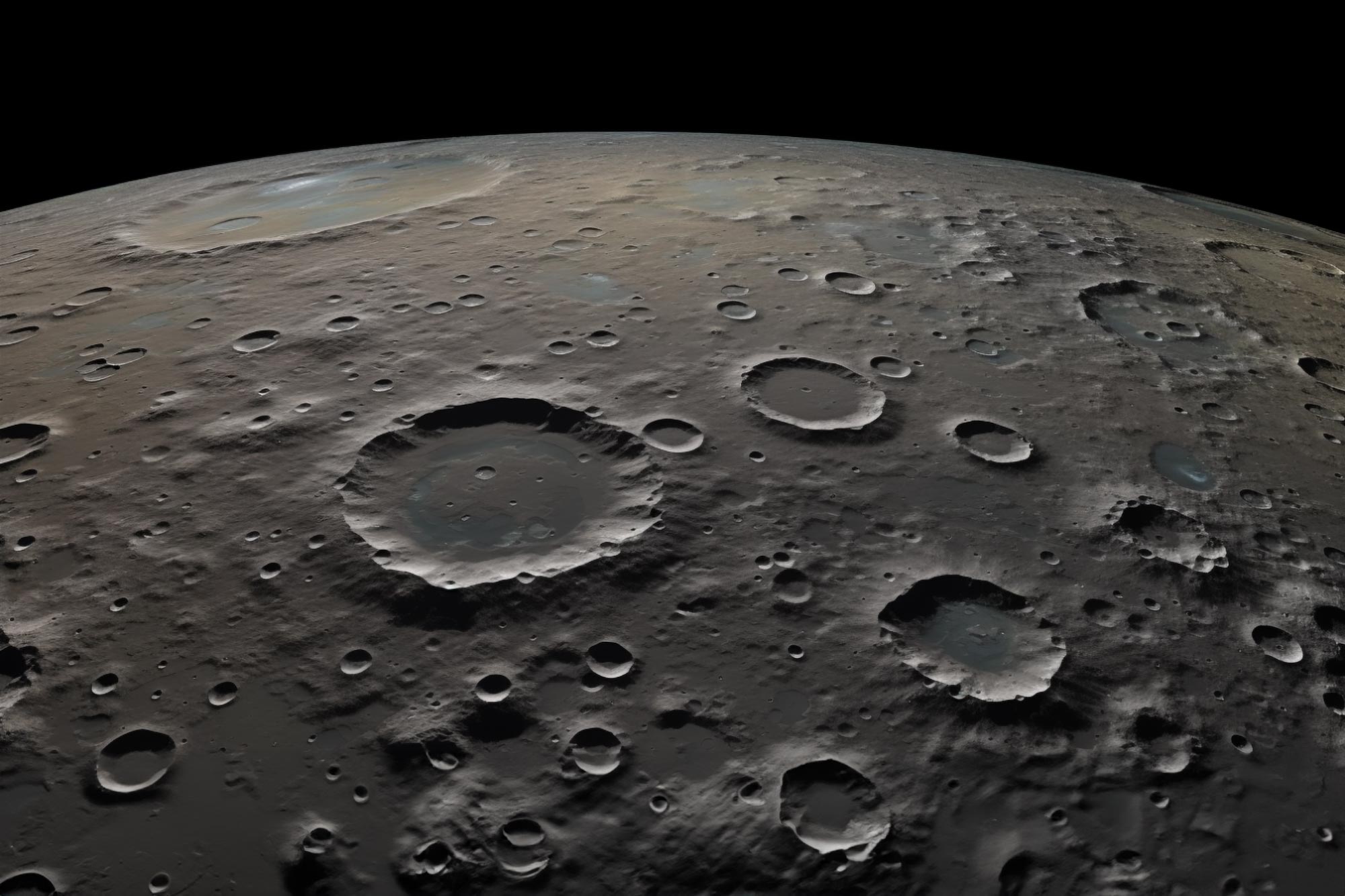
    Moon Surface Art Illustration
    New research introduces significant updates to the lunar stratigraphic time scale, incorporating a holistic view of the Moon’s evolution post-Apollo era. Dividing the Moon’s history into three Eons based on the interplay of internal and external processes, the researchers highlight key evolutionary phases from the formation of the magma ocean to the current dominance of impact events. The identification of the “Das Formation” and the refinement of the Pre-Nectarian Period into the Magma-oceanian and Aitkenian Periods offer a more detailed and systematic framework for understanding lunar evolution, with implications for studying other terrestrial planets. Credit: SciTechDaily.com

    New research led by Dr. Dijun Guo from the National Space Science Center at the Chinese Academy of Sciences, Dr. Jianhzong Liu from the Institute of Geochemistry at the Chinese Academy of Sciences, and Dr. James W Head from Brown University reevaluates the basic lunar stratigraphic timeline, proposing significant revisions to incorporate a broader and more integrated perspective. This update considers the substantial progress made in lunar science since the Apollo missions.

    To begin with, the Moon’s evolutionary history is divided into three distinct phases based on the temporal interplay of exogenic and endogenic processes in altering the Moon. These phases are defined as Eon-level time scale units, which provide insights into the temporal dynamics of lunar evolution. The Eolunarian Eon (4.52–4.31 Ga), refers to magma ocean formation, differentiation, and the solidification of the primary crust, a phase of evolution that largely involved endogenic forces and processes.
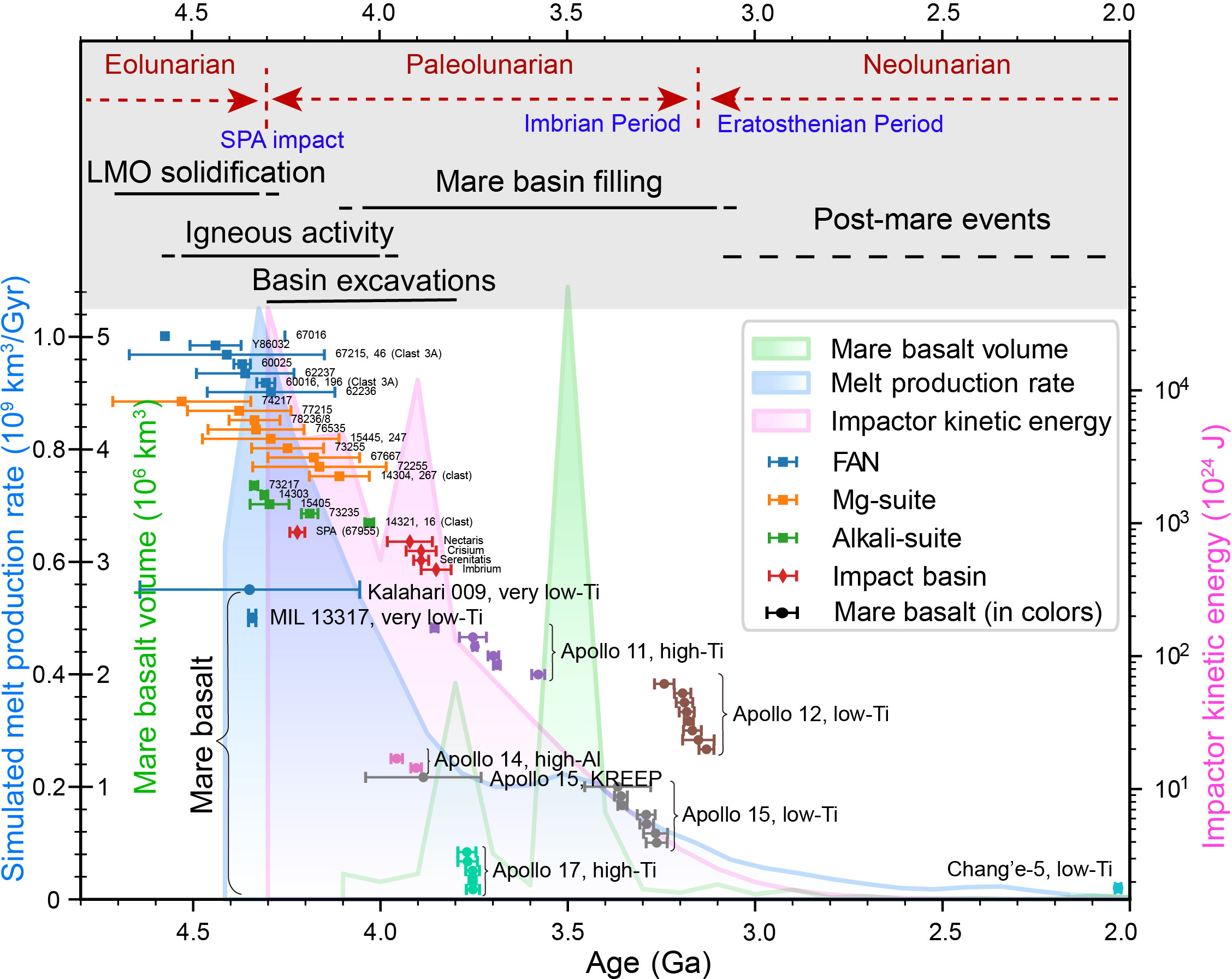
    The Evolution of Lunar Endogenic and Exogenic Processes and the Resulting Three Dynamical Phases
    The evolution of endogenic processes is indicated by simulated melt production rate and mare basalt volume. The evolution of exogenic process is indicated by impactor kinetic energy. The points represent the ages of lunar samples produced from different geologic processes. The three evolution phases are designated as Eolunarian, Paleolunarian, and Neolunarian from old to young. Credit: Science China Press

    The Paleolunarian Eon (4.31–3.16 Ga), is characterized by comparable effects of endogenic and exogenic processes, including great impact events and significant volcanic activities. The Neolunarian Eon (3.16 Ga–present), represents the era dominated by exogenic processes, characterized by reduced volcanic activities and the prevalence of impact events in modifying the lunar surface.

    Refinement of Lunar Time Scale

    Furthermore, the researchers have identified the ejecta stratum of the South Pole-Aitken Basin and named it “Das Formation”. As the oldest stratum resulting from exogenic processes within the lunar crust, the Das Formation serves as the boundary between the Eolunarian and Paleolunarian Eons. By utilizing the Das Formation as a marker, the previously defined Pre-Nectarian Period is further divided into two distinct periods: the early Magma-Oceanian Period and the relatively later Aitkenian Period.
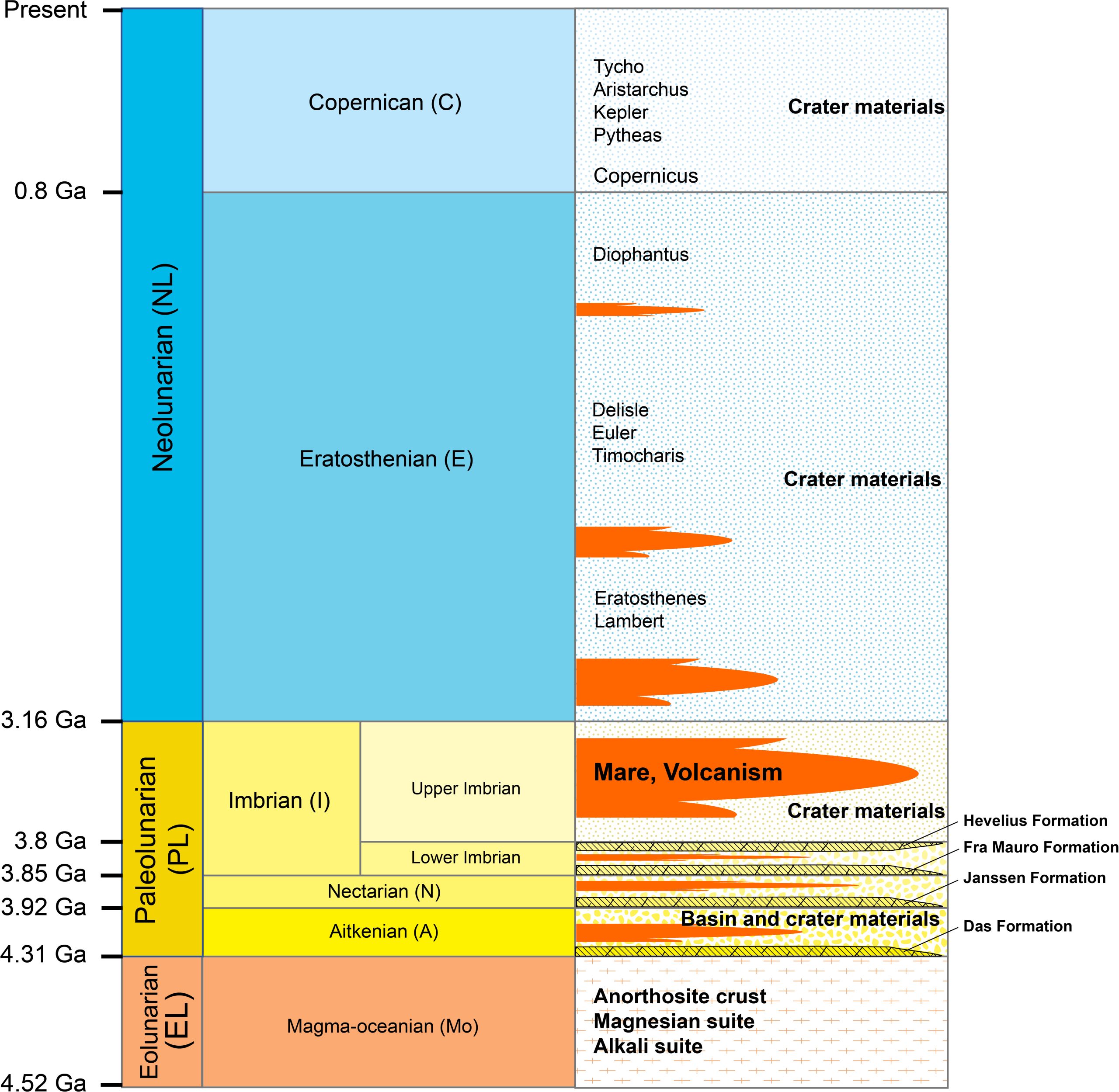
    The Stratigraphic Column of the Moon Corresponding to the New Time Scale
    The stratigraphic column of the Moon corresponding to the new time scale. Credit: Science China Press

    The newly proposed lunar time scale scheme, consisting of three Eons and six Periods units, offers a systematic framework for describing the evolutionary history of the Moon. This scheme effectively illustrates the advantages of expressing the progression, development, and transformation of both endogenic and exogenic processes that have taken place on the Moon. The scheme has been applied in the 1:2.5 million-scale lunar global geologic map compiled by the same group, and it holds significant implications for studying the geological evolution of other terrestrial planets.

    Reference: “A lunar time scale from the perspective of the Moon’s dynamic evolution” by Dijun Guo, Jianzhong Liu, James W. Head, Fuqin Zhang, Zongcheng Ling, Shengbo Chen, Jianping Chen, Xiaozhong Ding, Jinzhu Ji and Ziyuan Ouyang, 15 December 2023, Science China Earth Sciences.
    DOI: 10.1007/s11430-022-1183-4

    Never miss a breakthrough: Join the SciTechDaily newsletter.
    Follow us on Google and Google News.

    Geology Moon Planetary Science
    Share. Facebook Twitter Pinterest LinkedIn Email Reddit

    Related Articles

    NASA GRAIL Mission Provides Insights into Moon Impacts

    Massive Lunar Impact Appears to Have Created the Mafic Mound

    Pre-existing Mineral Deposits on the Moon Can Survive Lunar Impacts

    “Black Beauty” – Scientists Discover a Water-Rich Martian Meteorite

    Saturn-Like Rings May Have Formed Solar System’s Moons

    New Theoretical Models Salvage Moon-Forming Impact Theory

    Simulation May Explain Saturnian System

    Catalog of Moon’s Craters May Reveal Ice Beyond Moon’s Poles

    Phobos May Provide Evidence of Life on Mars

    Leave A Reply Cancel Reply

    • Facebook
    • Twitter
    • Pinterest
    • YouTube

    Don't Miss a Discovery

    Subscribe for the Latest in Science & Tech!

    Trending News

    Chimpanzees Keep Throwing Stones at the Same Trees – Scientists Want To Know Why

    Coffee May Protect the Liver in More Ways Than Scientists Realized

    AI Just Uncovered a Hidden Secret Inside Water

    Scientists Catch a “Jumping Gene” Moving Between Species

    This Tiny-Bead Procedure Is Helping Patients Avoid Knee Replacement

    Neanderthals Nearly Vanished 75,000 Years Ago – Then One Group Repopulated Europe

    AI Detects Hidden Warning Signs Before Major Earthquakes

    Scientists Have Found Evidence That Dark Matter May Not Be Playing by the Rules

    Follow SciTechDaily
    • Facebook
    • Twitter
    • YouTube
    • Pinterest
    • Newsletter
    • RSS
    SciTech News
    • Biology News
    • Chemistry News
    • Earth News
    • Health News
    • Physics News
    • Science News
    • Space News
    • Technology News
    Recent Posts
    • Natural Compound Found in Cheese and Mushrooms May Help Boost Vaccine Responses
    • A Deadly Ebola-Like Virus Is Spreading. Are We Ready?
    • Two Drinks a Day May Be Riskier Than Many Americans Think
    • A Troubling Breast Cancer Trend Is Emerging in Asian American Communities
    • Scientists Have Identified a Key Driver of Age-Related Cognitive Decline
    Copyright © 1998 - 2026 SciTechDaily. All Rights Reserved.
    • Science News
    • About
    • Contact
    • Editorial Board
    • Privacy Policy
    • Terms of Use

    Type above and press Enter to search. Press Esc to cancel.