
Close Menu
    Facebook X (Twitter) Instagram
    SciTechDaily
    • Biology
    • Chemistry
    • Earth
    • Health
    • Physics
    • Science
    • Space
    • Technology
    Facebook X (Twitter) Pinterest YouTube RSS
    SciTechDaily
    Home»Space»The Physics of Failure: Analyzing Hubble’s Gyroscope Malfunction
    Space

    The Physics of Failure: Analyzing Hubble’s Gyroscope Malfunction

    By NASAJune 7, 20241 Comment2 Mins Read
    Facebook Twitter Pinterest Telegram LinkedIn WhatsApp Email Reddit
    Share
    Facebook Twitter LinkedIn Pinterest Telegram Email Reddit
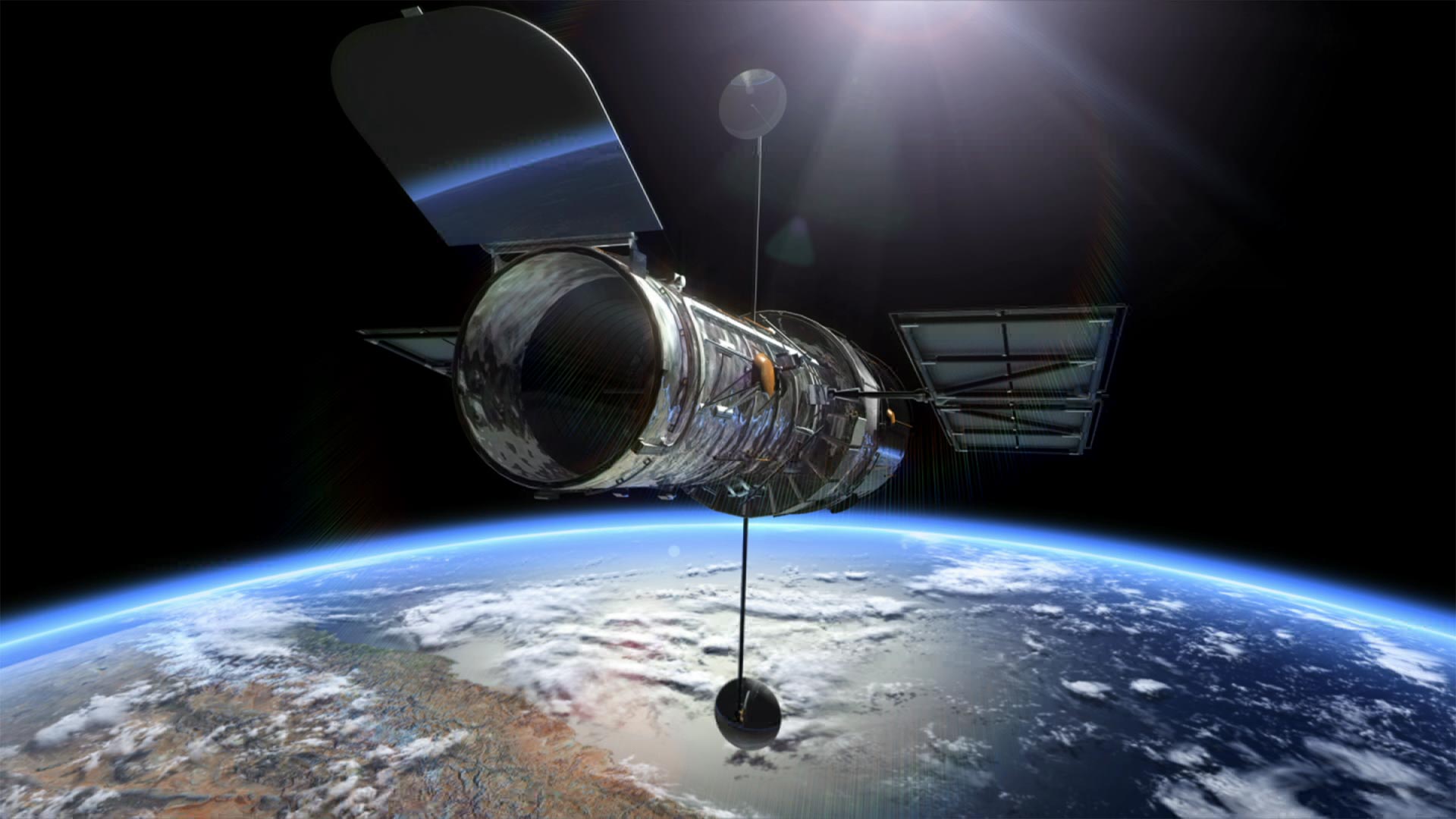
    Hubble Space Telescope Orbiting Over Earth
    Illustration of the Hubble Space Telescope over the Earth. Credit: ESA/Hubble (M. Kornmesser & L. L. Christensen)

    The Hubble Space Telescope is currently in safe mode due to gyroscope problems, suspending its science activities. However, NASA remains optimistic about its future contributions to space exploration, working in tandem with other telescopes.

    On May 24, NASA’s Hubble Space Telescope entered safe mode due to an ongoing gyroscope (gyro) issue, suspending science operations. Hubble’s instruments remain stable, and the telescope is in good health.

    The telescope automatically entered safe mode when one of its three gyroscopes returned faulty telemetry readings. Hubble’s gyros measure the telescope’s slew rates and are part of the system that determines and controls precisely the direction the telescope is pointed.

    NASA anticipates Hubble will continue making discoveries throughout this decade and possibly into the next, working with other observatories, such as the agency’s James Webb Space Telescope for the benefit of humanity.
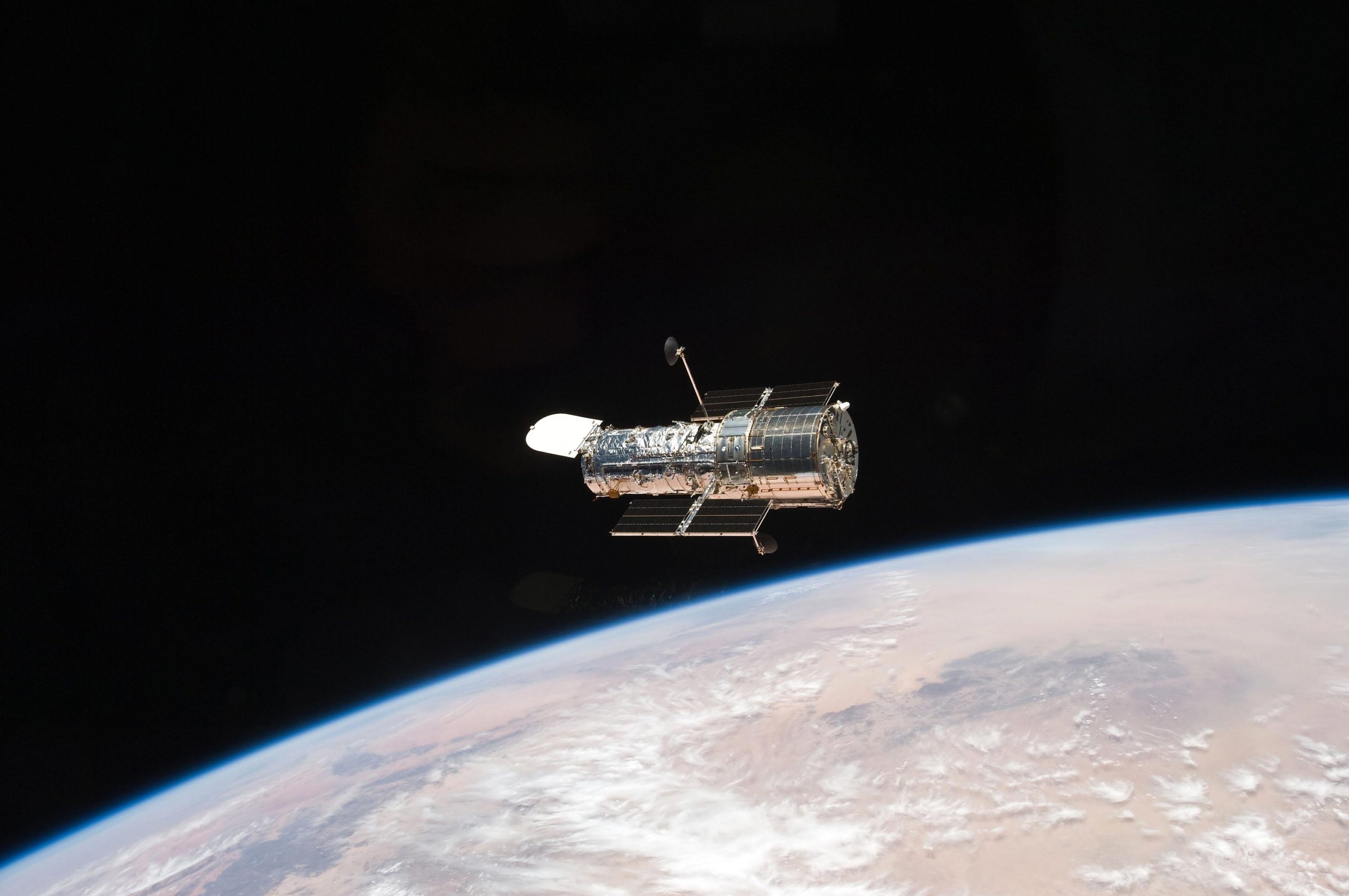
    Hubble Space Telescope After Being Released From Space Shuttle Atlantis
    An STS-125 crew member aboard the Space Shuttle Atlantis captured this still image of the Hubble Space Telescope as the two spacecraft continued their relative separation on May 19, 2009, after having been linked together for the better part of a week. During the week, five spacewalks were performed to complete the final servicing mission for the orbital observatory. Credit: NASA

    The Hubble Space Telescope (HST) is a large space-based observatory launched in 1990 by NASA and the European Space Agency that recently celebrated its 34th anniversary. Orbiting outside the distortion of Earth’s atmosphere, it provides high-resolution images of celestial objects. This has led to numerous scientific breakthroughs, such as accurately determining the rate of expansion of the universe, observing the most distant galaxies, and studying the atmospheres of exoplanets. Hubble’s unique capabilities have made it one of the most important instruments in the history of astronomy.

    Never miss a breakthrough: Join the SciTechDaily newsletter.
    Follow us on Google and Google News.

    Astronomy Hubble Space Telescope NASA
    Share. Facebook Twitter Pinterest LinkedIn Email Reddit

    Related Articles

    Hubble Reveals a Star Disk Three Times Hotter Than the Sun’s Surface

    A Star’s Unexpected Heatwave: FU Orionis Challenges Astrophysics Models

    NASA’s Hubble Reveals How the LMC Defied Galactic Destruction

    Legendary Star’s Smooth Disk Mystifies Astronomers, Challenges Planet Formation Theories

    Cosmic Horror Unveiled: NASA Reveals “Blood-Soaked Eyes” Staring From Deep Space [Video]

    Spanning 248 Billion Miles: Stunning Hubble Timelapse Captures a Star’s Violent Eruptions

    Jupiter’s Great Red Spot Enigma: Unexplained Oscillations Baffle Astronomers

    Unlocking Uranus: NASA’s Dual Observations Pave the Way to Discovering New Worlds

    Astronomers Baffled by Black Hole Jets Igniting Star Explosions

    1 Comment

    1. Eric M. Jones on June 8, 2024 8:36 am

      Clearly they need a new gyroscope design. And they knew it 20 years ago.

      Reply
    Leave A Reply Cancel Reply

    • Facebook
    • Twitter
    • Pinterest
    • YouTube

    Don't Miss a Discovery

    Subscribe for the Latest in Science & Tech!

    Trending News

    Researchers Warn Widely Prescribed Blood Pressure Drugs Could Be Harming Diabetic Kidneys

    James Webb Spots Something Strange Between Day and Night on an Alien Planet

    How Ancient People Moved a 6-Ton Stone 700 Kilometers to Stonehenge

    The Unexpected Gut Health Risk of Cutting Out Sugar

    Popular Weight-Loss Drugs Like Ozempic Linked to Lower Breast Cancer Risk

    AI Learned the Rules of the Universe and That Became a Problem

    Scientists Found a Hidden Brain Signal That Predicts Social Behavior

    Even GPT-5 Failed This Human Attention Test

    Follow SciTechDaily
    • Facebook
    • Twitter
    • YouTube
    • Pinterest
    • Newsletter
    • RSS
    SciTech News
    • Biology News
    • Chemistry News
    • Earth News
    • Health News
    • Physics News
    • Science News
    • Space News
    • Technology News
    Recent Posts
    • Women’s Brains May Be More Vulnerable to Dementia Risk Factors Than Scientists Realized
    • Scientists Say We’ve Been Wrong About the Aging Brain
    • More Weight Loss, Fewer Fractures? New Study Points to Semaglutide
    • These Tiny Birds Became Giants on Remote Scottish Islands
    • A Fatal Deer Disease May Be Spreading in Ways No One Expected
    Copyright © 1998 - 2026 SciTechDaily. All Rights Reserved.
    • Science News
    • About
    • Contact
    • Editorial Board
    • Privacy Policy
    • Terms of Use

    Type above and press Enter to search. Press Esc to cancel.