
A series of six articles appearing in the March issue of The Journals of Gerontology, Series A: Biological Sciences and Medical Sciences finds new correlations between a Mediterranean diet and healthy aging outcomes — while also underscoring the need for careful approaches to the use of data in order to measure the diet’s potential benefits.
Among their findings, the new articles report on the underlying mechanisms of the diet; the positive relationship between the diet and physical and cognitive function; the value of taking a coenzyme Q10 supplement while adhering to the diet; and the role of the diet in reducing inflammation. But in several of the studies, the level of benefit was dependent on how adherence to the diet was measured.
“Greater clarity on how this diet is defined, in both interventions and observational studies, will be critical in the aim of achieving a consensus on how to optimally apply this dietary pattern towards maximizing healthy aging,” state Michelle A. Mendez, Ph.D., and Journals of Gerontology: Medical Sciences Editor-in-Chief Anne B. Newman, MD, FGSA, in an opening editorial.
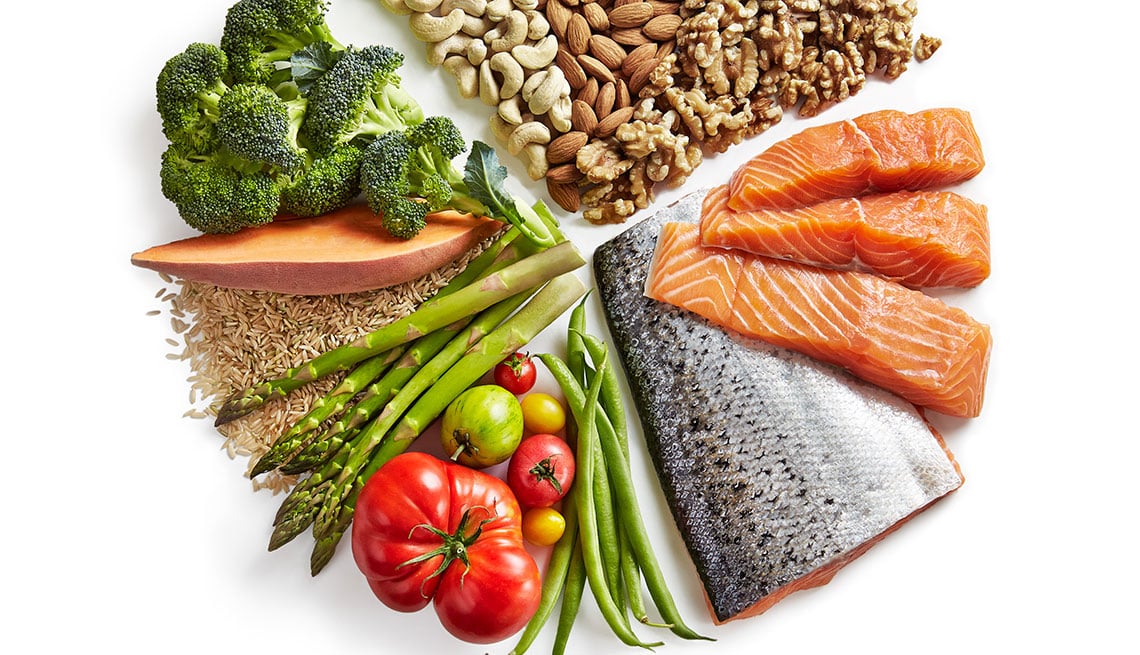
Hallmarks of the Mediterranean diet include: a variety of minimally processed whole grains and legumes as the staple food; plenty of a huge diversity of fresh vegetables consumed on a daily basis; fresh fruits as the typical daily dessert; cold-pressed extra-virgin olive oil, nuts, and seeds as the principal source of fat; moderate consumption of fish; dairy products consumed in low amounts; red and processed meat consumed in very low frequency and amounts; and wine consumed in low to moderate amounts only with meals.
There are a number of scales used to measure adherence to the diet. One of the journal’s studies, conducted by researchers at the University of Paris 13, found that among test subjects, higher numbers on the Literature-based Adherence Score to the Mediterranean Diet were associated with higher odds of meeting certain healthy aging criteria. Similar results were found with another index, the Mediterranean Diet Score; however, use of the Mediterranean Diet Scale yielded a weaker correlation. In another study by researchers at the Autonomous University of Madrid, closer adherence to the diet was associated with a lower likelihood of physical function impairment in older adults, although in this case using the Mediterranean Diet Adherence Screener provided more significant results than the Mediterranean Diet Score.
The exact mechanism by which an increased adherence to the diet exerts its favorable effects is still unknown to scientists. However, writing in one of the new articles, researchers from Washington University in St. Louis state there is accumulating evidence of five important adaptations induced by the Mediterranean dietary pattern. These include lipid lowering; protection from oxidative stress and inflammation; modification of growth factors that can promote cancer; inhibition of nutrient sensing pathways by amino acid restriction and gut microbiota-mediated production of metabolites.
Publication:
- “Can a Mediterranean Diet Pattern Slow Aging?” by Michelle A Mendez, Ph.D. and Anne B Newman, MD, MPH, 12 February 2018, The Journals of Gerontology: Series A.
DOI: 10.1093/gerona/gly003 - “Health Benefits of the Mediterranean Diet: Metabolic and Molecular Mechanisms” by Valeria Tosti, MD, Beatrice Bertozzi, Ph.D. and Luigi Fontana, MD, Ph.D., 13 December 2017, The Journals of Gerontology: Series A.
DOI: 10.1093/gerona/glx227 - “Telomerase RNA Component Genetic Variants Interact With the Mediterranean Diet Modifying the Inflammatory Status and its Relationship With Aging: CORDIOPREV Study” by Francisco Gomez-Delgado, Javier Delgado-Lista, Javier Lopez-Moreno, Oriol Alberto Rangel-Zuñiga, Juan Francisco Alcala-Diaz, Ana Leon-Acuña, Andreea Corina, Elena Yubero-Serrano, Jose David Torres-Peña, Antonio Camargo, Antonio Garcia-Rios, Javier Caballero, Justo Castaño, Jose M Ordovas, Jose Lopez-Miranda and Pablo Perez-Martinez, 5 October 2016, The Journals of Gerontology: Series A.
DOI: 10.1093/gerona/glw194 - “Mediterranean Dietary Patterns and Impaired Physical Function in Older Adults” by Ellen A Struijk, Pilar Guallar-Castillón, Fernando Rodríguez-Artalejo and Esther López-García, 19 October 2016, The Journals of Gerontology: Series A.
DOI: 10.1093/gerona/glw208 - “Mediterranean Diet Supplemented With Coenzyme Q10 Modulates the Postprandial Metabolism of Advanced Glycation End Products in Elderly Men and Women” by Javier Lopez-Moreno, Gracia M Quintana-Navarro, Javier Delgado-Lista, Antonio Garcia-Rios, Juan F Alcala-Diaz, Francisco Gomez-Delgado, Antonio Camargo, Pablo Perez-Martinez, Francisco J Tinahones, Gary E Striker, Francisco Perez-Jimenez, Jose M Villalba, Jose Lopez-Miranda and Elena M Yubero-Serrano, 21 October 2016, The Journals of Gerontology: Series A.
DOI: 10.1093/gerona/glw214 - “Association Between Adherence to the Mediterranean Diet at Midlife and Healthy Aging in a Cohort of French Adults” by Karen E Assmann, Moufidath Adjibade, Valentina A Andreeva, Serge Hercberg, Pilar Galan and Emmanuelle Kesse-Guyot, 29 April 2017, The Journals of Gerontology: Series A.
DOI: 10.1093/gerona/glx066
Never miss a breakthrough: Join the SciTechDaily newsletter.
Follow us on Google and Google News.