
Close Menu
    Facebook X (Twitter) Instagram
    SciTechDaily
    • Biology
    • Chemistry
    • Earth
    • Health
    • Physics
    • Science
    • Space
    • Technology
    Facebook X (Twitter) Pinterest YouTube RSS
    SciTechDaily
    Home»Space»NASA’s Curiosity Finds a Vast Sea of Mysterious Polygons on Mars
    Space

    NASA’s Curiosity Finds a Vast Sea of Mysterious Polygons on Mars

    By Jet Propulsion LaboratoryAugust 2, 2026No Comments3 Mins Read
    Facebook Twitter Pinterest Telegram LinkedIn WhatsApp Email Reddit
    Share
    Facebook Twitter LinkedIn Pinterest Telegram Email Reddit
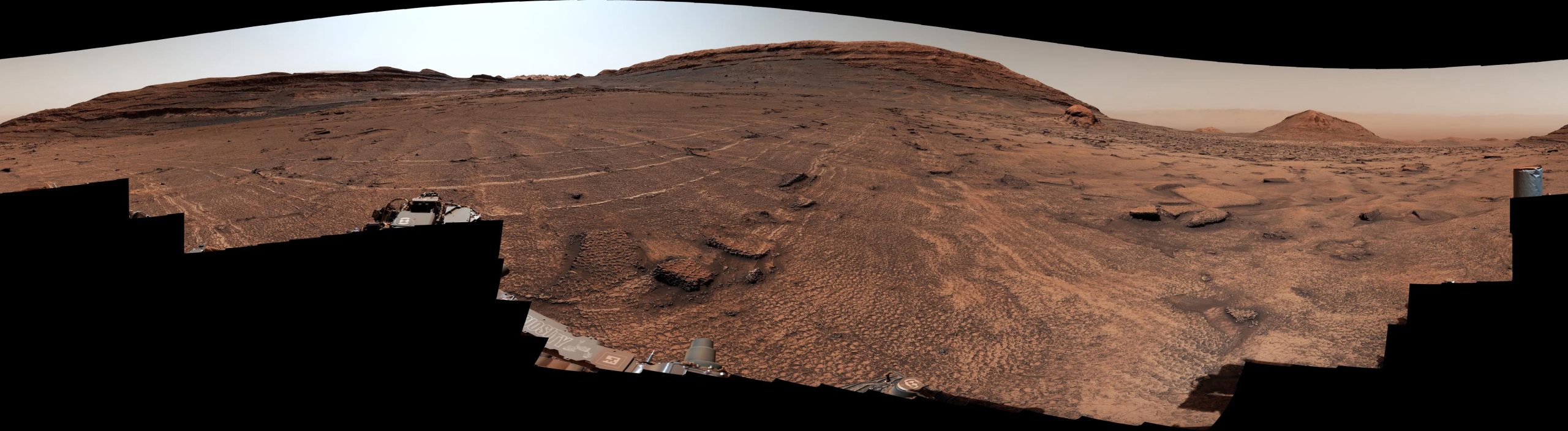
    NASA’s Curiosity Mars Rover Martian Polygons
    NASA’s Curiosity Discovers a Field of Martian Polygons. Credit: NASA/JPL-Caltech/MSSS

    Curiosity has found a vast sea of Martian polygons that may reveal how water and climate once reshaped the Red Planet.

    NASA’s Curiosity rover has encountered an enormous field of honeycomb-shaped fractures while climbing through a Martian valley known as “Valle Grande.” Each geometric feature measures roughly 1.5 to 3 inches (4 to 8 centimeters) across.

    Curiosity has seen smaller groups of similar formations before, but mission scientists have never observed them covering such a broad area.

    A Sea of Polygons Across Mars

    The rover photographed the landscape in a 360-degree panorama on June 19 and 20, during the mission’s 4,930th and 4,931st Martian days, or sols. The polygonal patterns stretch outward in every direction, continuing as far as Curiosity can see.

    The fractures also extend around the sides of a nearby butte called “Miraflores.” The formation rises 20 feet (6 meters) above the surrounding terrain and is capped by a thick layer of sand.

    “We’ve seen a lot of fascinating landscapes through Curiosity’s eyes, but this sea of polygons took our breath away,” said the mission’s project scientist, Ashwin Vasavada of NASA’s Jet Propulsion Laboratory in Southern California. “We measured their shapes and chemistry carefully and are hopeful there are clues in the data as to how these features formed.”
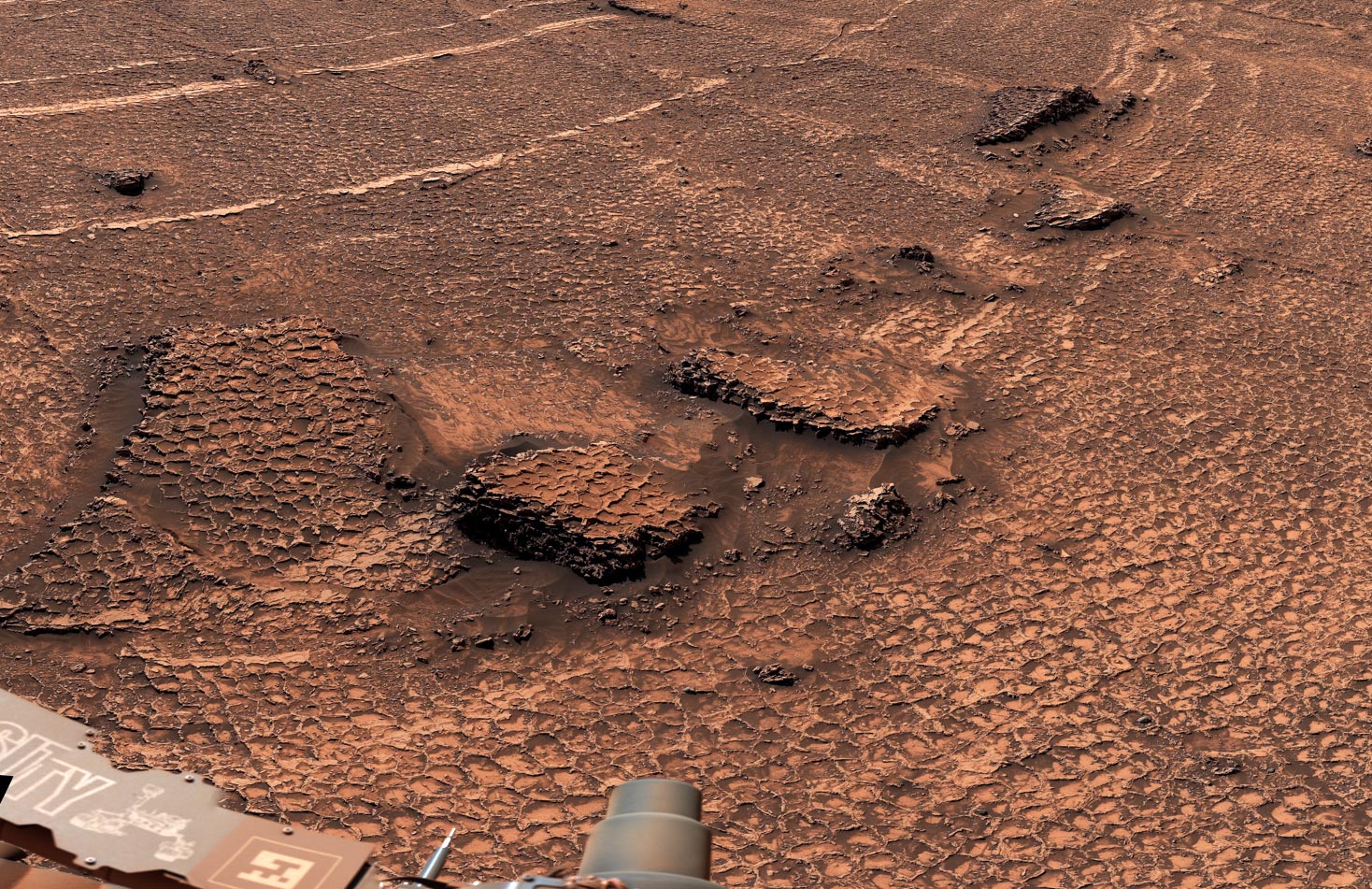
    NASA’s Curiosity Mars Rover Honeycomb Textures
    A close-up of the polygon fractures discovered by NASA’s Curiosity Mars rover highlights their honeycomb-like textures. Credit: NASA/JPL-Caltech/MSSS

    How the Martian Honeycomb May Have Formed

    Some polygonal features previously studied by Curiosity were clearly created by drying mud. However, several other processes can produce similar honeycomb patterns.

    Repeated shifts between warmer and colder conditions can fracture the ground into geometric shapes. Compression may also have played a role by forcing water out of sediment after the surface became buried.

    Scientists are now examining the new measurements to determine which process, or combination of processes, shaped the vast polygon field in Valle Grande.

    Curiosity’s Long Record of Mars Discoveries

    The newly discovered fractures add to a growing collection of unexpected sights Curiosity has encountered since landing on Mars 14 years ago, on August 5, 2012.

    During its journey, the rover has found sulfur crystals, reflective meteorites, and many other unusual geological features. More importantly, Curiosity has uncovered strong evidence that ancient Mars once contained the water, chemical ingredients, and nutrients needed to support microbial life.
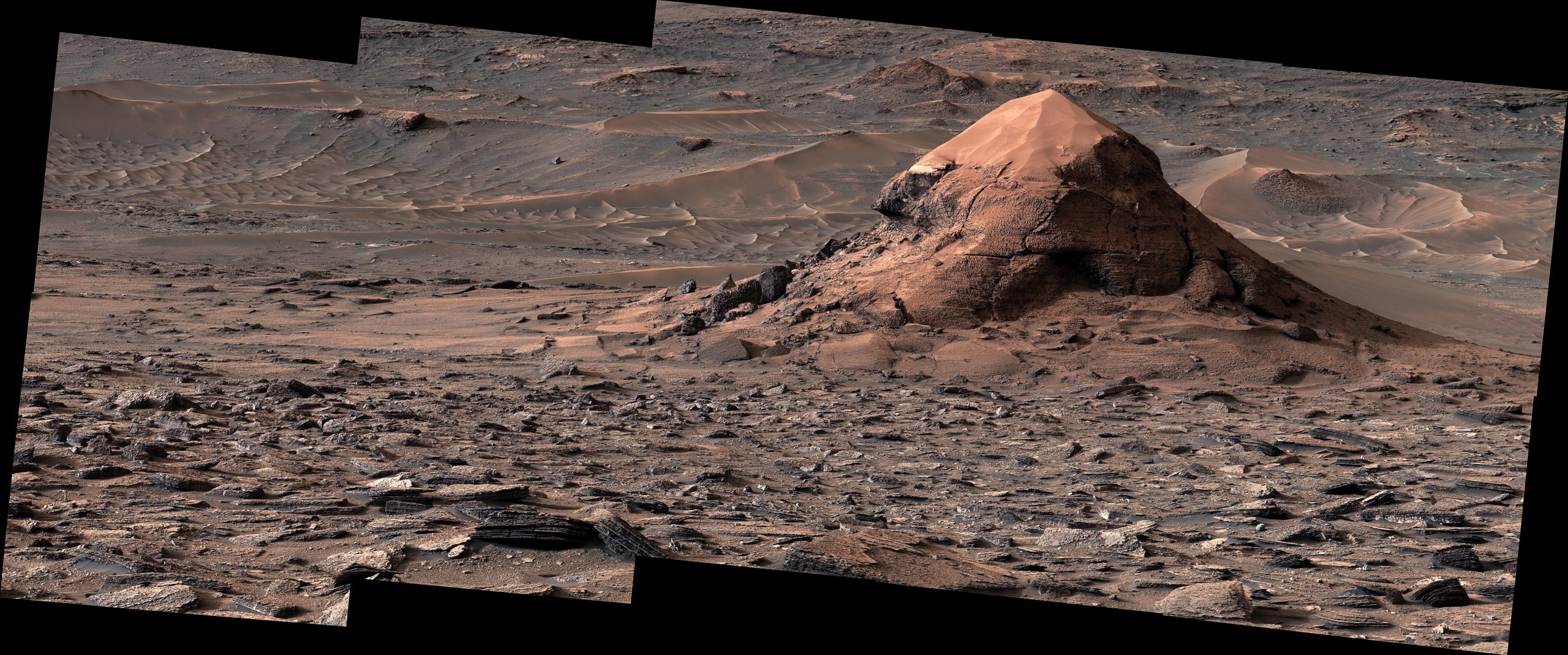
    NASA’s Curiosity Mars Rover Miraflores
    NASA’s Curiosity Mars rover captured this sand-capped butte, nicknamed “Miraflores,” estimated to be about 20 feet (6 meters) tall, on June 11, 2026. The surrounding area includes an expanse of terrain covered in surface features called polygons. Credit: NASA/JPL-Caltech/MSSS

    Clues From Mars’ Watery Past

    Billions of years ago, lakes and streams covered parts of the lower slopes of Mount Sharp, a 3-mile-tall (5-kilometer-tall) mountain that Curiosity has been climbing since 2014.

    The rover has detected chemical traces left behind by this wetter period, including carbon-based molecules thought to be precursors to RNA and DNA, two nucleic acids that carry genetic information.

    Researchers cannot determine whether those organic molecules formed through biological activity or geological processes. Either explanation remains possible. Even so, the finding provided further evidence that ancient Mars once had the chemistry required for life.

    Curiosity was built by JPL, which is managed by Caltech in Pasadena. JPL leads the mission for NASA’s Science Mission Directorate in Washington as part of the agency’s Mars Exploration Program portfolio.

    Never miss a breakthrough: Join the SciTechDaily newsletter.
    Follow us on Google and Google News.

    Curiosity Rover JPL Mars NASA
    Share. Facebook Twitter Pinterest LinkedIn Email Reddit

    Related Articles

    This Martian “Stone Web” Could Rewrite Mars’ Geological History

    What Left This Long, Winding Trail Across Mars? NASA’s Orbiter Has the Answer

    Mars Kept a Secret for 3.5 Billion Years – NASA’s Curiosity Rover Finally Dug It Up

    Life on Mars? NASA’s Curiosity Rover Finds Prebiotic Clues in a 3.7-Billion-Year-Old Rock

    NASA’s Curiosity Rover Uncovers Mars’ Mysterious Spiderweb Rocks and Hidden Crystals

    Curiosity’s Wild Ride: How the Sky Crane Changed the Way NASA Explores Mars

    “Strange and Unexpected” – NASA’s Curiosity Rover Stumbles Upon Yellow Crystals on Mars

    NASA’s Curiosity Mars Rover Faces a Particularly Prickly Power Puzzle

    Dusty Dilemmas: NASA’s Curiosity Mars Rover Navigates Rocky Riddles

    Leave A Reply Cancel Reply

    • Facebook
    • Twitter
    • Pinterest
    • YouTube

    Don't Miss a Discovery

    Subscribe for the Latest in Science & Tech!

    Trending News

    Hair Loss May Be an Overlooked Side Effect of Ozempic and Mounjaro

    Scientists Develop a Groundbreaking Chip That Operates at Brain-Like Speed

    Viagra May Block a Hidden Pathway Cancer Cells Need To Spread

    How Brown Tree Snakes Became an Unstoppable Invasive Species

    Earth’s First Complex Organisms May Hold Clues to Life Beyond Our Planet

    A 25,000-Year-Old Ritual Tradition Was Hidden Beneath This Cave Floor

    Plant Compounds in Berries, Tea, and Cocoa May Support Healthy Brain Aging

    Scientists Turn an Old Antibiotic Back Into a Superbug Killer

    Follow SciTechDaily
    • Facebook
    • Twitter
    • YouTube
    • Pinterest
    • Newsletter
    • RSS
    SciTech News
    • Biology News
    • Chemistry News
    • Earth News
    • Health News
    • Physics News
    • Science News
    • Space News
    • Technology News
    Recent Posts
    • NASA’s Curiosity Finds a Vast Sea of Mysterious Polygons on Mars
    • Astronomers May Have Found the First Moon Beyond Our Solar System
    • Underwater Cameras Expose the Secret Lives of Whale Sharks
    • A Massive Study Reveals the Brain Is Far More Flexible Than We Thought
    • Why Dreaming Leaves the Brain Running Low on Energy
    Copyright © 1998 - 2026 SciTechDaily. All Rights Reserved.
    • Science News
    • About
    • Contact
    • Editorial Board
    • Privacy Policy
    • Terms of Use

    Type above and press Enter to search. Press Esc to cancel.