
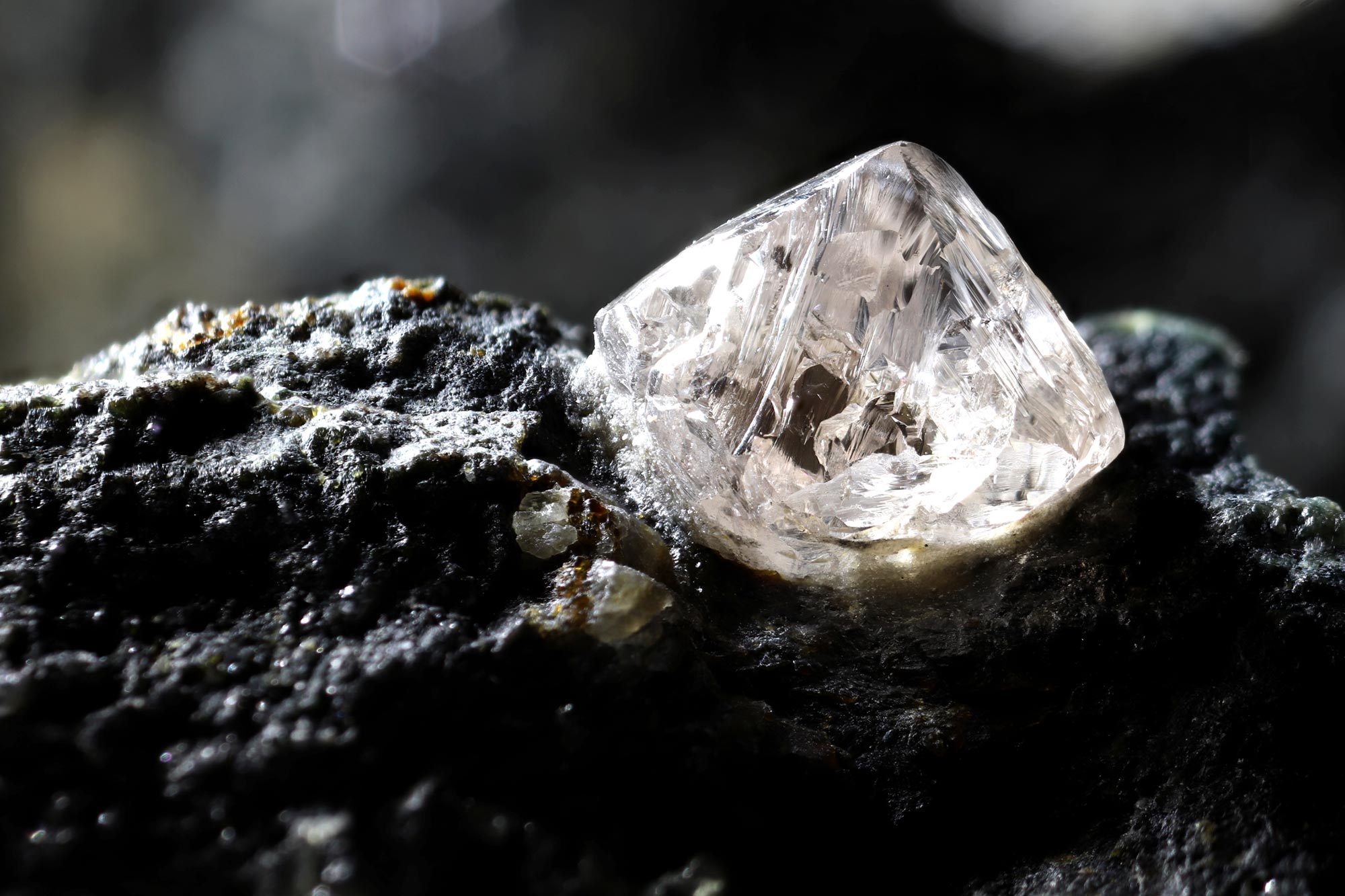
A stone analyzed at the Sirius particle accelerator supports the hypothesis that the mineral goethite can carry water from the planet’s surface into rocks in the lower mantle.
A microscopic pocket sealed inside a diamond only 3 millimeters long may record how water travels from Earth’s surface into the planet’s deep interior. A Brazilian research team found the first direct evidence that goethite, the mineral that gives many soils their brown color, can endure the intense heat and pressure associated with the lower mantle.
Goethite develops in soils and on the ocean floor when iron-rich minerals interact with water. Some water molecules become incorporated into the mineral’s crystal structure, raising the possibility that goethite can carry water downward and release it far beneath the surface.
Previous research has established that water from Earth’s crust can reach the upper mantle, which extends to a depth of about 660 kilometers. The crust is the planet’s outermost rocky layer, measuring roughly 20 to 80 kilometers thick beneath continents and 5 to 10 kilometers beneath oceans. Below the upper mantle lies the lower mantle, where similar chemical ingredients form different crystal structures under greater heat and pressure. This region continues to about 2,900 kilometers below the surface.
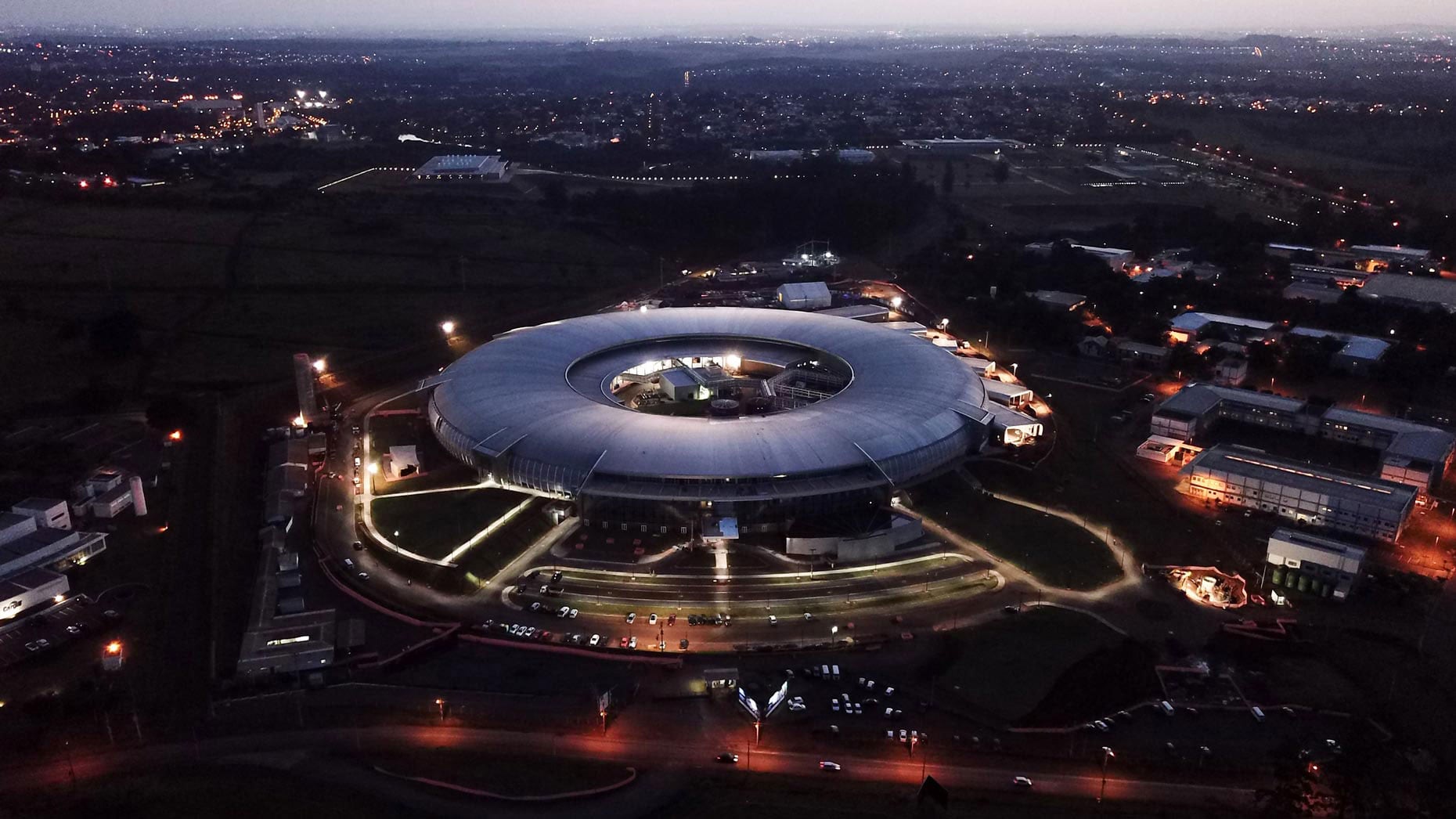
The findings were published in May in Scientific Reports. The research was conducted at Sirius, a particle accelerator operated by the Brazilian Synchrotron Light Laboratory (LNLS), part of the Brazilian Center for Research in Energy and Materials (CNPEM) in Campinas, São Paulo state.
The project grew from geologist Carolina Camarda’s master’s thesis under the supervision of geologist Tiago Jalowitzki of the University of Brasília (UnB) and physicist Hélio Tolentino of the LNLS. Funding came from the Coordination for the Improvement of Higher Education Personnel (CAPES), an agency connected to Brazil’s Ministry of Education.
Camarda worked with Fernanda Gervasoni, a geologist at the Federal University of Pelotas (UFPel) in Rio Grande do Sul state. Gervasoni is now completing a postdoctoral fellowship at the LNLS under Tolentino’s supervision with funding from FAPESP.
A rare diamond carries deep clues
The investigation began with a visit to a gold miners’ cooperative in July 2018. Gervasoni and Jalowitzki traveled to the Chapadão region near Juína, in Mato Grosso state, where they received a donation of ultra-deep diamonds.
Such diamonds occur in only a few locations worldwide and form more than 300 kilometers beneath the surface. Most diamonds originate at depths of about 150 kilometers. Both types eventually reach the surface in magma associated with volcanic eruptions.
Many super-deep diamonds are not desirable as jewelry because they have irregular shapes and contain dark fragments of material trapped while the crystals were forming. These fragments, called mineral inclusions, can be more valuable to geologists than the surrounding diamond.
Because the diamond shields them from later alteration, inclusions preserve evidence of the physical and chemical conditions deep inside Earth hundreds of millions of years ago. They function as natural records of environments that scientists cannot sample directly.
Super-deep diamonds were first identified near Juína in the late 1980s and have contributed to numerous discoveries about Earth’s interior. Previous research on these stones had been led by scientists outside Brazil.
“Ours is the first study conducted entirely by a Brazilian team using Brazilian instruments,” Gervasoni points out.
The work was also the first worldwide to examine a super-deep diamond from beginning to end using synchrotron light methods. Researchers randomly selected one Juína diamond and analyzed it on the Mogno and Carnaúba beamlines at Sirius while the new LNLS equipment was still being commissioned. The beamlines were officially inaugurated in 2023 and 2021, respectively.
X-rays reveal a sealed mineral pocket
Synchrotron light is an exceptionally bright form of electromagnetic radiation produced when electrons move through a particle accelerator at nearly the speed of light. Individual beamlines direct selected portions of that radiation toward instruments used to examine materials.
At the Mogno beamline, high-resolution X-ray microtomography created a three-dimensional map of roughly 100 mineral inclusions inside the diamond. Researchers then used X-ray spectroscopy at the Carnaúba beamline to determine what elements the inclusions contained.
One inclusion stood out because it appeared to hold iron hydroxide. That material is rarely expected in the deep mantle, where hydrated minerals are uncommon, and most rocks do not favor oxidation reactions.
“When researchers find iron hydroxides, they usually dismiss the inclusion, assuming that some microscopic fracture in the diamond caused oxidation through contact with air,” explains Camarda, a Ph.D. candidate at the European XFEL laboratory in Germany. “Since tomography proved the inclusion had no connection to the outside, we decided to investigate.”
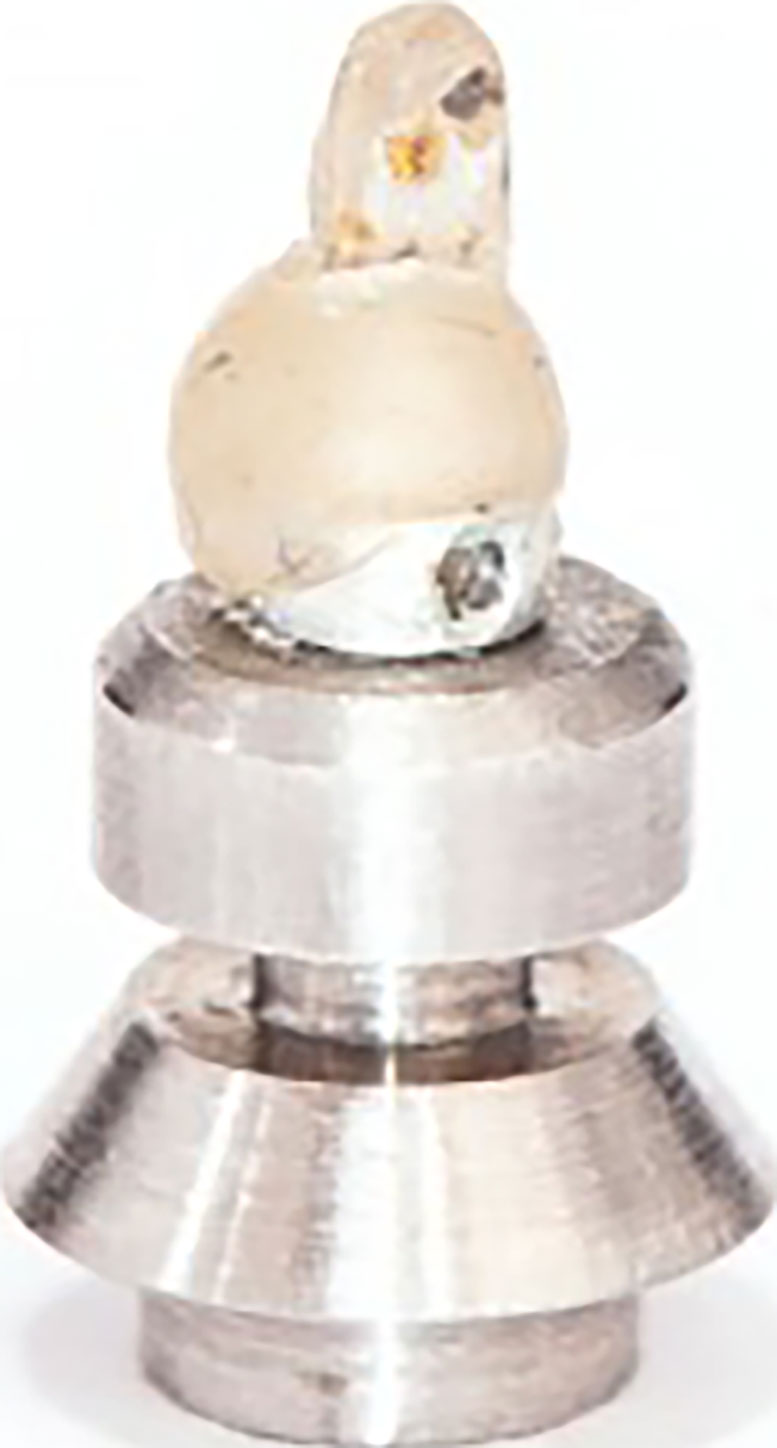
The researchers moved to the Ema beamline at Sirius to identify every mineral within the sealed pocket. X-ray diffraction revealed goethite (FeOOH), an iron oxyhydroxide, along with the iron oxides hematite (Fe2O3) and magnetite (Fe3O4).
All three minerals are common in soils and on the ocean floor. However, their presence together inside a microscopic, sealed inclusion cannot be explained by the temperature and pressure conditions at Earth’s surface.
Goethite survives far greater extremes
Until recently, scientists generally believed that goethite could not survive subduction, the process in which one tectonic plate descends beneath another and sinks toward the mantle.
This process is active along the western coast of South America, where Pacific oceanic crust moves beneath the continent. The resulting volcanic and tectonic activity created the Andes and continues to reshape the mountain range today.
Under the traditional view, temperatures above 200 °C early in the descent would quickly convert goethite into hematite and water. That reaction appeared to rule out goethite as a carrier capable of reaching the deep mantle.
Camarda and colleagues noticed, however, that the diffraction pattern measured at Sirius closely resembled results from a 2021 shock compression experiment at Sichuan University in China.
That experiment indicated that goethite could withstand pressures of 35 to 57 gigapascals (GPa), roughly 500 times the pressure at the deepest part of the ocean, and temperatures ranging from 877 to 1,827 °C. Comparable conditions occur in the lower mantle between about 900 and 1,250 kilometers deep.
Some researchers remain cautious because shock compression does not perfectly reproduce conditions in either the upper or lower mantle. A separate 2021 study led by the University of Bayreuth in Germany, however, found that goethite also survived similar heat and pressure inside diamond anvil cells, which more closely simulate the mantle.
Other diamond anvil experiments have examined the mineral’s stability but concluded that it could lose its water at shallower depths. The evidence therefore points to a more complicated pathway that may depend on the surrounding temperature and geological setting.
Water may reach the lower mantle
Camarda and colleagues propose that goethite can survive subduction when protected inside deep fractures within relatively cool oceanic plates. These sheltered pathways may allow it to descend beyond 400 kilometers before it begins changing into hematite and water, or into magnetite, oxygen, and water.
Those transformations could continue into the lower mantle, providing a possible route for water from the surface to reach parts of Earth previously thought to have little capacity for storing it.
The diamond surrounding the minerals may have crystallized from carbon contained either in mantle rocks or in the descending oceanic plate. Carbon is relatively scarce in the mantle, which is composed mainly of minerals rich in magnesium, iron, and silicon.
Another inclusion in the same diamond contained ferropericlase ((Mg, Fe)O), a mineral abundant in the lower mantle. Its presence provides additional evidence that the diamond formed at great depth.
“The release of water lowers the melting point of these rocks, potentially generating small amounts of magma that tend to rise slowly to the surface,” Gervasoni explains. “Some theories suggest that volcanic rocks that bring super-deep diamonds to the surface form near the transition zone between the upper and lower mantle, around 400 km deep.”
A separate discovery from Juína previously revealed another part of Earth’s deep water cycle. In 2014, an international research team reported in Nature that a Juína diamond contained ringwoodite (Mg2SiO4), a mineral common in the transition zone that can hold water.
Evidence now indicates that the upper mantle may contain substantial quantities of water carried down from the surface. The lower mantle remains more difficult to explain because most of its minerals can store very little water. The goethite preserved inside this diamond offers a possible mechanism for carrying that water deeper.
Reference: “Iron oxyhydroxide as water carrier to the Earth’s mantle” by Carolina Camarda, Fernanda Gervasoni, Tiago Jalowitzki, Francisco M. C. da Silva, Antonio C. Piccino-Neto, Paola Ferraz, João F.G.A. Oliveira, Eduardo X. Miqueles, Nathaly L. Archilha, Igor Torquato, James M. Almeida, Daniel G. Cedeño, Sebastião W. da Silva, Reinhardt A. Fuck and Hélio C. N. Tolentino, 11 May 2026, Scientific Reports.
DOI: 10.1038/s41598-026-46683-8
Funding for the research was provided by the National Council for Scientific and Technological Development (CNPq), which is affiliated with the Brazilian Ministry of Science, Technology, and Innovation; the National Institute of Science and Technology for Tectonic Studies; the Serrapilheira Institute; and the Women in Research program at the University of Münster in Germany.
Never miss a breakthrough: Join the SciTechDaily newsletter.
Follow us on Google and Google News.