
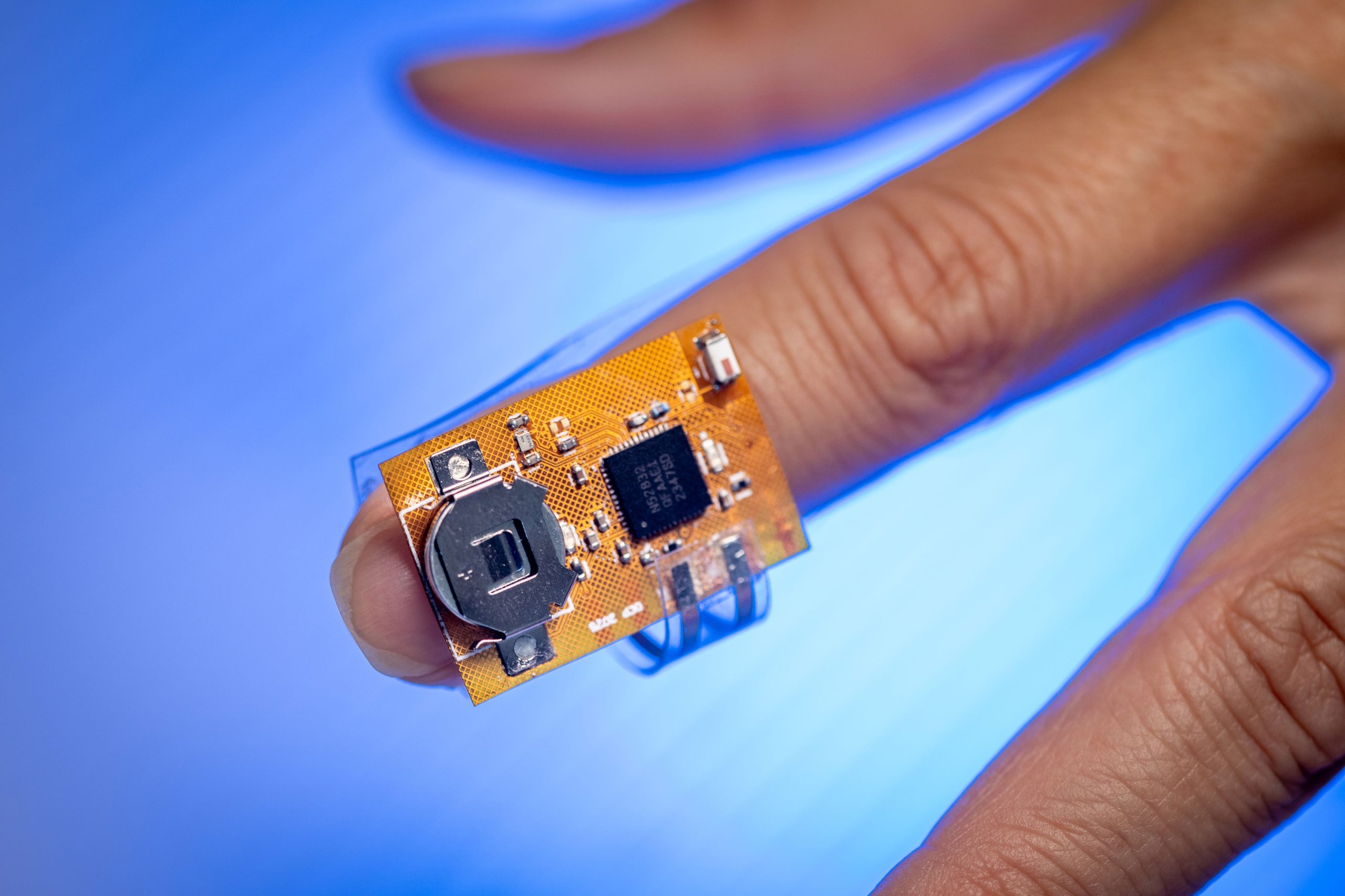
A battery-free sweat sensor could make levodopa monitoring faster and more personalized for people with Parkinson’s disease.
For people with Parkinson’s disease, the effect of a levodopa dose can fade abruptly, allowing movement problems to return before the next scheduled dose. Engineers and neuroscientists at the University of California San Diego have developed a soft fingertip patch that continuously measures the medication in sweat, without requiring a battery. In clinical testing, its readings were comparable to those from standard laboratory blood tests.
Described in Proceedings of the National Academy of Sciences, the technology could give doctors a faster way to tailor daily medication schedules while patients remain at home.
Levodopa is the gold-standard treatment for the loss of motor control associated with Parkinson’s disease, but keeping patients within the correct dosing range can be difficult. Too little medication may leave someone unable to move, while too much can cause severe, involuntary jerking. Early in the disease, one dose may remain effective for several hours. As Parkinson’s progresses, however, that therapeutic window can shrink to about two hours.
Doctors currently depend largely on patient diaries to determine when symptoms return and adjust treatment. Because those records are subjective and incomplete, they may miss potentially dangerous gaps between doses. The wearable patch instead provides continuous, real-time information about levodopa concentrations in the body.
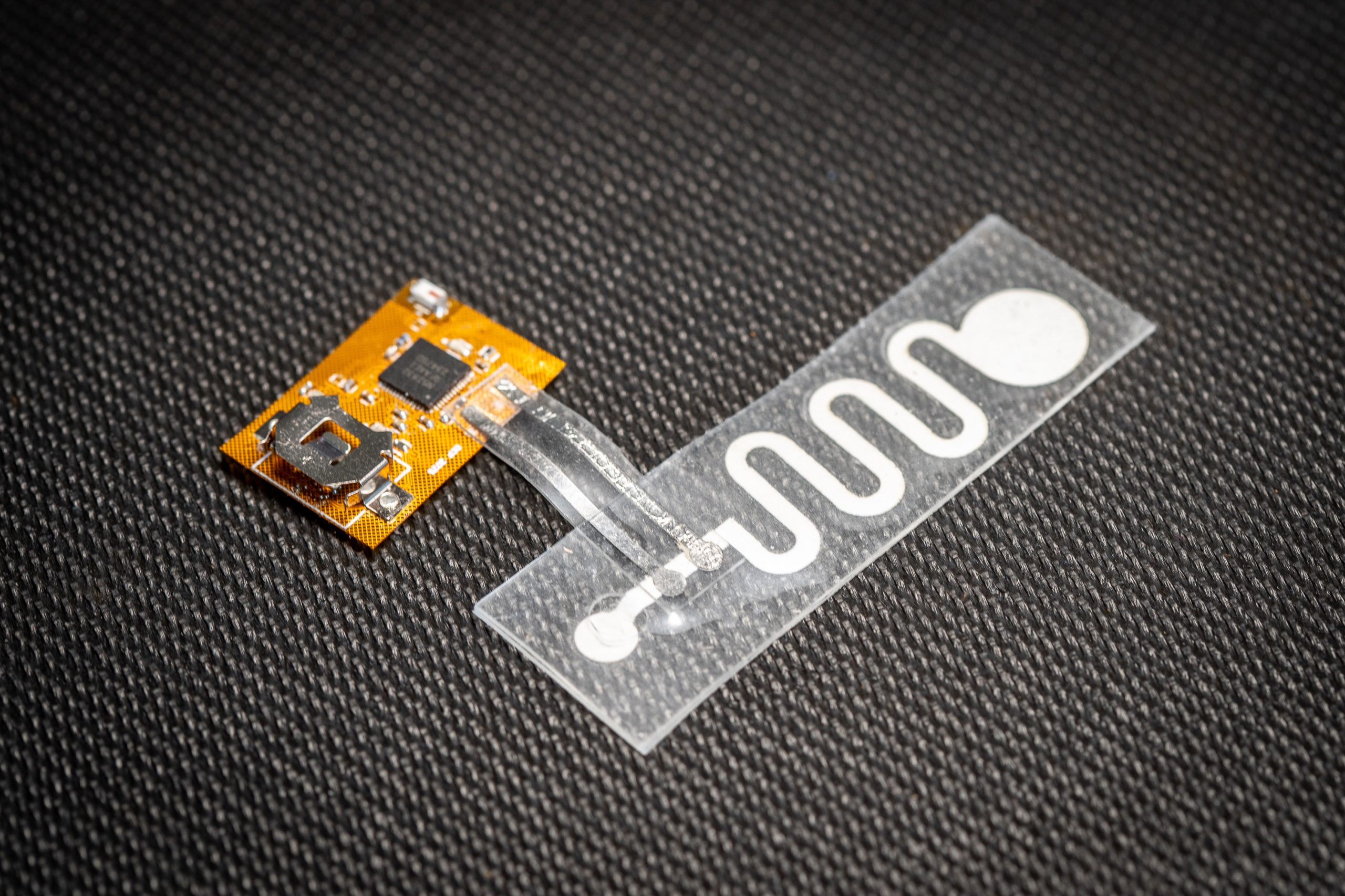
Personalized dosing moves closer to home
The research was led by co-first author Tamoghna Saha, a postdoctoral researcher in the laboratory of Joseph Wang, professor in the Aiiso Yufeng Li Family Department of Chemical and Nano Engineering at the UC San Diego Jacobs School of Engineering.
Wang’s engineering group developed the device with the laboratory of Irene Litvan, professor in the Department of Neurosciences at the UC San Diego School of Medicine. The two groups have worked together for years to create wearable levodopa monitors that could support more personalized treatment for people with Parkinson’s disease.
Sweat both powers and informs the patch
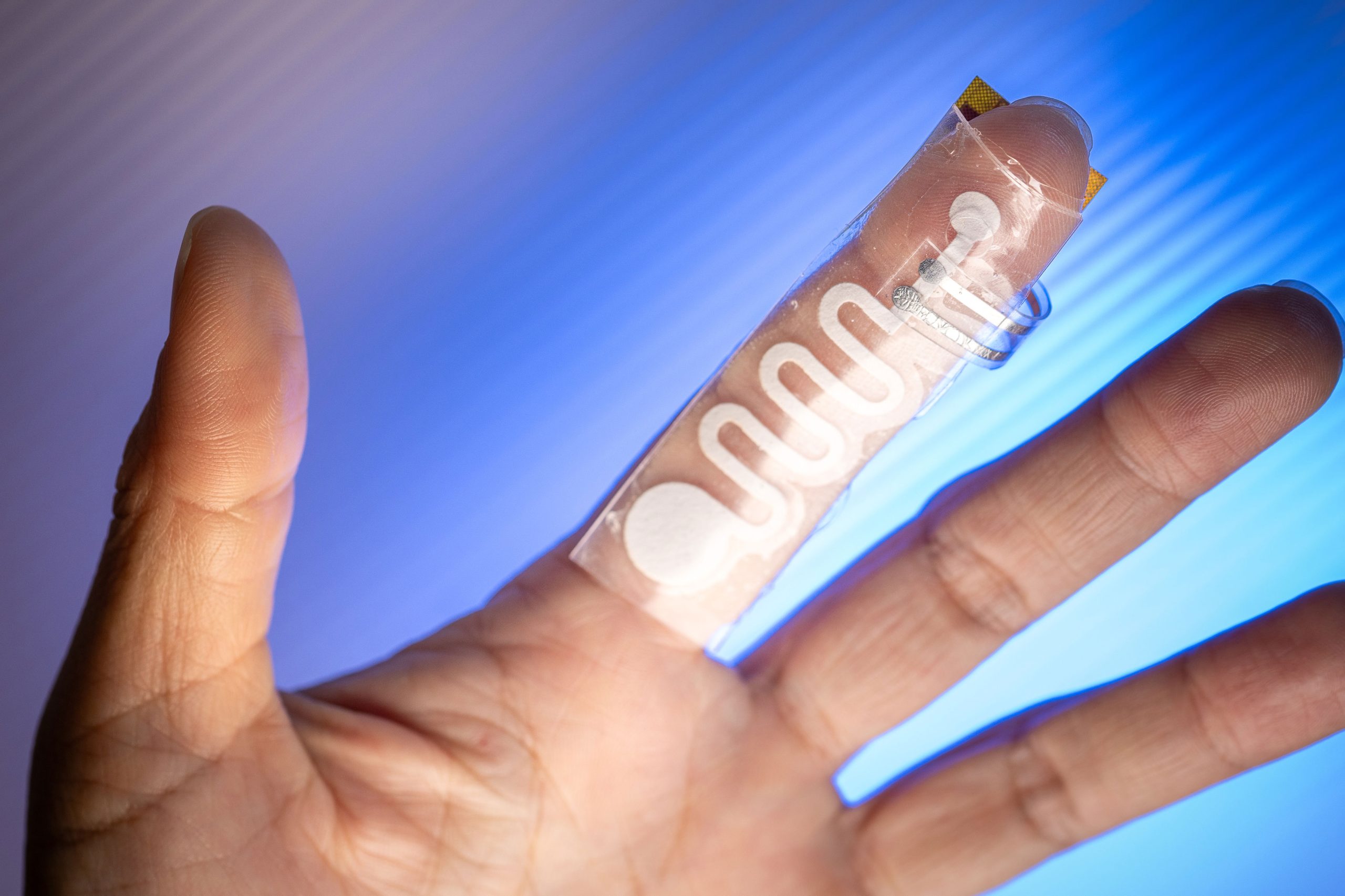
The researchers placed the sensor on the fingertip because that area contains a particularly high concentration of sweat glands. Inside the patch is an absorbent gel that pulls sweat from the skin much like a sponge.
The gel contains concentrated salts and harmless solvents. Because water naturally moves toward areas with higher salt concentrations, the mixture draws sweat from the pores and into the sensing material.
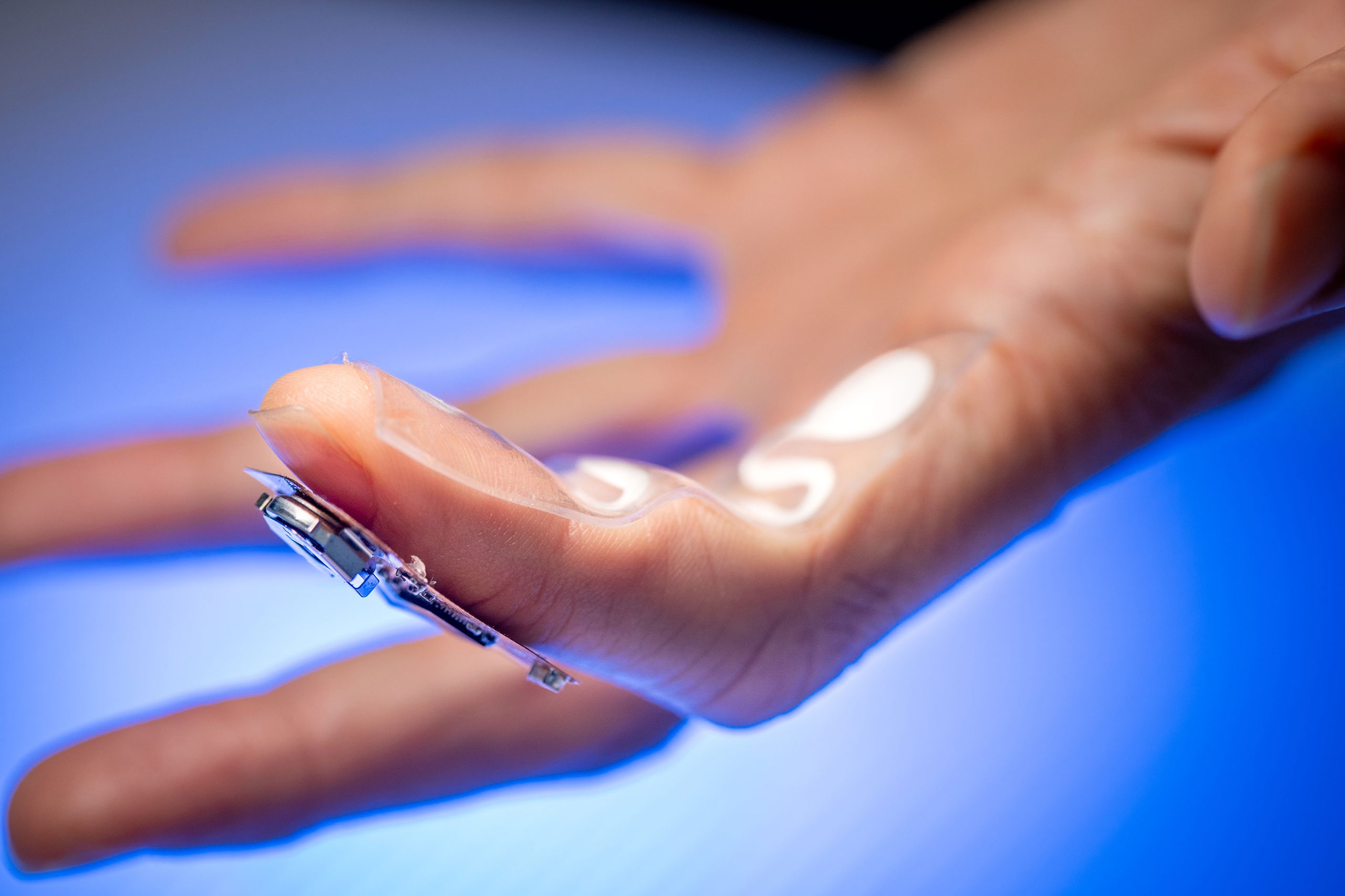
Enzymes embedded in the patch react when they encounter levodopa in the sweat. That reaction produces a small voltage, providing both the energy needed to operate the device and the measurement used to estimate medication levels.
The strength of the voltage corresponds to the amount of levodopa detected. A lower voltage indicates a lower concentration, while a higher voltage signals that more of the drug is present.
Clinical tests matched laboratory measurements
The researchers tested the patch with healthy volunteers and people living with Parkinson’s disease. Its levodopa measurements were comparable to standard laboratory blood tests, which can require several days to produce results.
The readings also showed that participants with Parkinson’s removed levodopa from their bodies significantly faster than healthy participants. According to the researchers, this difference could help explain why Parkinson’s symptoms sometimes worsen so suddenly as medication levels fall.
The device could eventually become part of a closed-loop treatment system. In that setup, the patch would continuously monitor levodopa and communicate with a pump that automatically delivers an appropriate dose when the patient’s body needs it.
Reference: “A wearable patch for continuous levodopa monitoring in sweat: Towards exertion and power-free pharmacodynamic assessment in Parkinson’s disease” by Tamoghna Saha, Muhammad Inam Khan, Katherine Longardner, Barak Sabbagh, Kaiwen Zheng, Hugo de Mendoza, Gaoyuan Ji, Bumsik Choi, Zongnan Wang, Rosie Pham, Michael Skipworth, Eshita Shah, Maria Reynoso, Chochanon Moonla, Abdulhameed Abdal, Debika Datta, Samar Singh Sandhu, Ponnusamy Nandhakumar, Artur Jedrzak, Shichao Ding, Lu Yin, Irene Litvan and Joseph Wang, 27 July 2026, Proceedings of the National Academy of Sciences.
DOI: 10.1073/pnas.2610453123
This research was supported by the UC San Diego Parkinson and Other Movement Disorders Center, the Center for Wearable Sensors, the National Institutes of Health (1R01NS141451-01) and Emory HPLC Bioanalytical Core (RRID:SCR_023531).
Never miss a breakthrough: Join the SciTechDaily newsletter.
Follow us on Google and Google News.