

Close Menu
    Facebook X (Twitter) Instagram
    SciTechDaily
    • Biology
    • Chemistry
    • Earth
    • Health
    • Physics
    • Science
    • Space
    • Technology
    Facebook X (Twitter) Pinterest YouTube RSS
    SciTechDaily
    Home»Health»Scientists Discover a Surprisingly Simple Way To Relieve Stubborn Carpal Tunnel Pain
    Health

    Scientists Discover a Surprisingly Simple Way To Relieve Stubborn Carpal Tunnel Pain

    By Radiological Society of North AmericaOctober 15, 2026No Comments6 Mins Read
    Facebook Twitter Pinterest Telegram LinkedIn WhatsApp Email Reddit
    Share
    Facebook Twitter LinkedIn Pinterest Telegram Email Reddit
    Elderly Woman Wrist Pain
    Carpal tunnel syndrome occurs when a nerve in the wrist becomes compressed, causing numbness, tingling, pain, and weakness in the hand. Often associated with repetitive hand movements, the condition can interfere with everyday activities and may be difficult to treat effectively. Credit: Shutterstock

    A brief procedure using saline could offer lasting relief for stubborn carpal tunnel symptoms without steroids, a small clinical trial suggests.

    The numbness, tingling, weakness, and pain of carpal tunnel syndrome arise when the median nerve, a major nerve running from the forearm, is compressed inside a narrow passage in the wrist. Corticosteroid injections can reduce swelling and ease that pressure, but the relief may be temporary. Associated with repetitive hand and wrist movements, the condition affects roughly 5% to 10% of people over their lifetimes, and its incidence is rising.

    A randomized trial of 63 patients now suggests that injecting saline around the nerve under ultrasound guidance can provide relief that lasts through six months of follow-up. Adding steroids to the procedure did not significantly improve its long-term benefits. The study was published in Radiology, a journal of the Radiological Society of North America (RSNA).
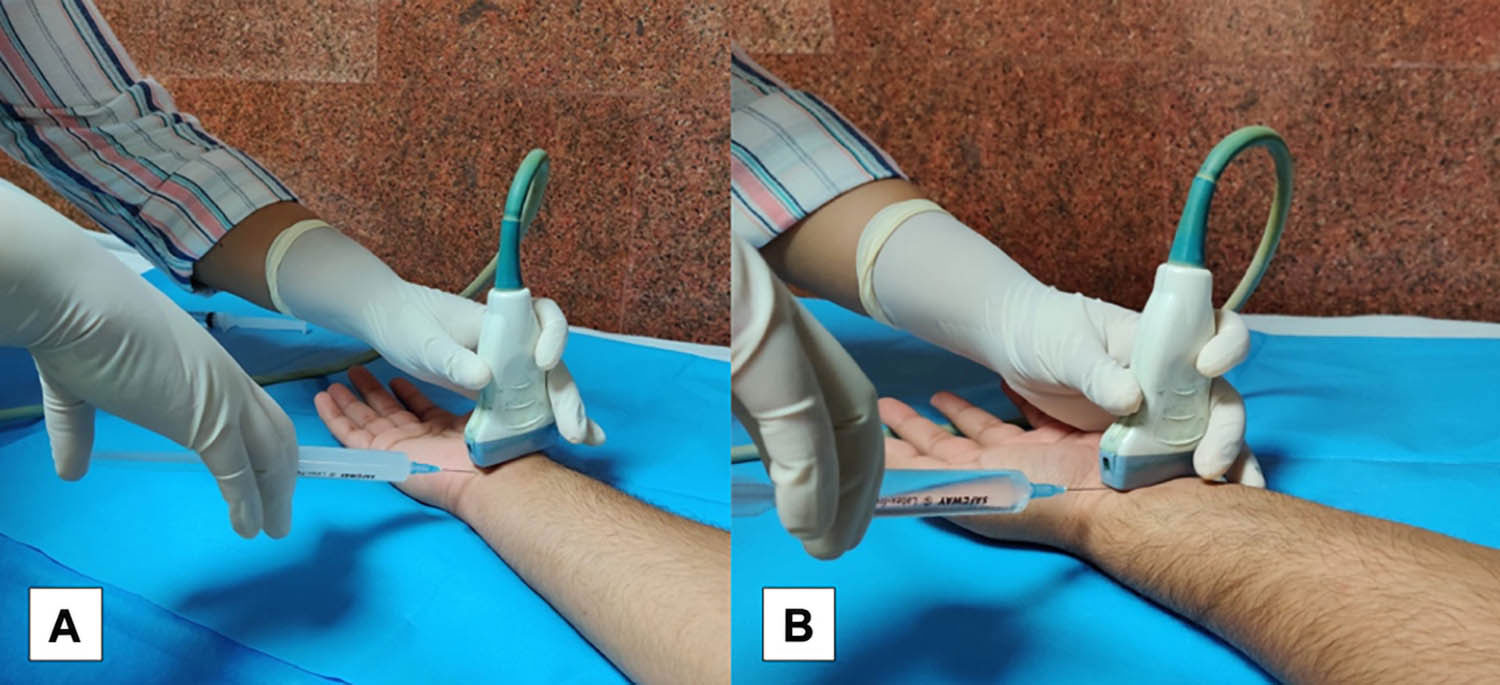
    Ultrasound Guided Hydrodissection for Carpal Tunnel Syndrome
    Photographs depict the in-plane technique of needle insertion for the US-guided hydrodissection procedure using the (A) ulnar approach in right wrist carpal tunnel syndrome (CTS) and the (B) radial approach in left wrist CTS. Credit: Radiological Society of North America (RSNA)

    Using saline to free the nerve

    The procedure, called nerve hydrodissection, uses carefully injected fluid to free the nerve from surrounding adhesions, tissue attachments that can restrict its movement. Ultrasound allows clinicians to guide the injection around the affected nerve. Hydrodissection is generally combined with steroid treatment, so its effectiveness without steroids has remained uncertain.

    Study lead author Anindita Bose, M.D., assistant professor in the Department of Radiology at Mahatma Gandhi Medical College and Hospital in Jaipur, India, and colleagues studied patients with confirmed carpal tunnel syndrome who had not responded to conventional treatment.
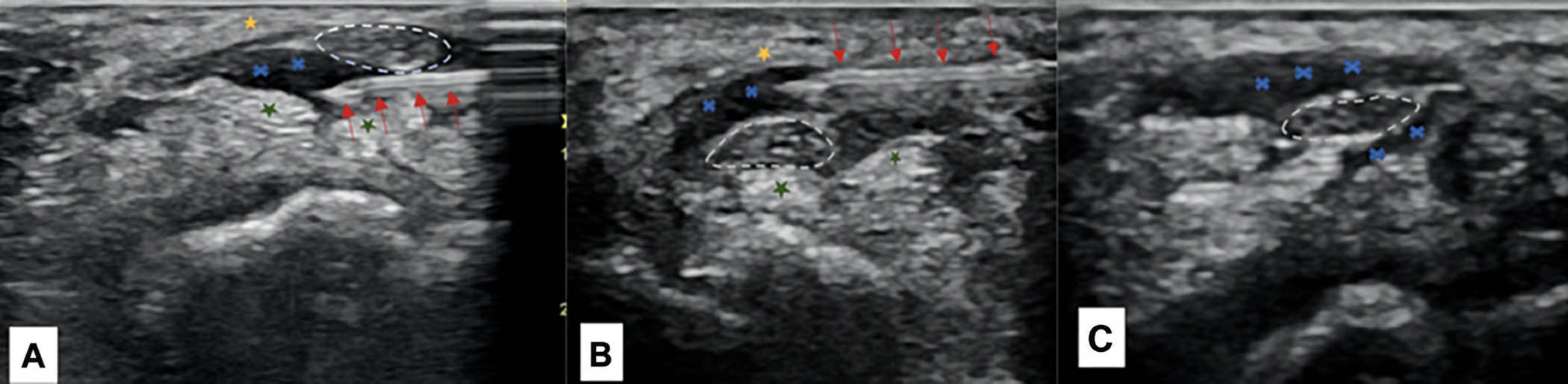
    Ultrasound Images of Median Nerve Hydrodissection
    Ultrasound images depict the procedure of hydrodissection in a patient with carpal tunnel syndrome using an in-plane approach. (A) The needle is placed below the median nerve (white dashed oval) with fluid (blue × symbols) dissecting the nerve from the underlying flexor tendons (green stars). (B) The needle was placed above the median nerve with fluid dissecting the nerve away from the flexor retinaculum (yellow star). (C) Image at completion of procedure depicts the dissected median nerve with fluid all around. Red arrows indicate the needle position. Credit: Radiological Society of North America (RSNA)

    “Most of our patients had been suffering from carpal tunnel syndrome for months to years and did not get much relief despite trying various treatments like pain medications, splints, lifestyle modification, and corticosteroids,” said study co-author Anupama Tandon, M.D., professor in the Department of Radiodiagnosis and Imaging at University College of Medical Sciences and Guru Teg Bahadur Hospital in Delhi, India. “It came as a pleasant surprise to find that a simple procedure of dissecting the median nerve under ultrasound guidance with normal saline provided them long-term relief.”

    To compare the treatments, the researchers randomly divided participants into three equal groups. One received hydrodissection with normal saline, a saltwater solution. Another received hydrodissection with saline and a corticosteroid, while the third received a corticosteroid injection alone. All three treatments were guided by ultrasound.

    The team tracked symptoms, function, and pain using standardized clinical scores. Ultrasound measurements of the median nerve’s cross-sectional area allowed the researchers to assess changes in swelling. Follow-up assessments took place four, 12, and 24 weeks after treatment.

    Less nerve swelling, longer-lasting relief

    All three groups improved significantly by four weeks, but their outcomes diverged as follow-up continued.

    “At 12 weeks and 6 months, both hydrodissection groups demonstrated further improvement in clinical symptoms and function, whereas patients who received corticosteroid injection alone experienced a recurrence of the symptoms, suggesting that the initial benefit was short-lived,” Dr. Tandon said.

    The ultrasound measurements supported the symptom and function results. The median nerve’s cross-sectional area decreased by approximately 43% to 45% after hydrodissection, compared with approximately 15% after steroid injection alone, indicating a greater reduction in nerve swelling.
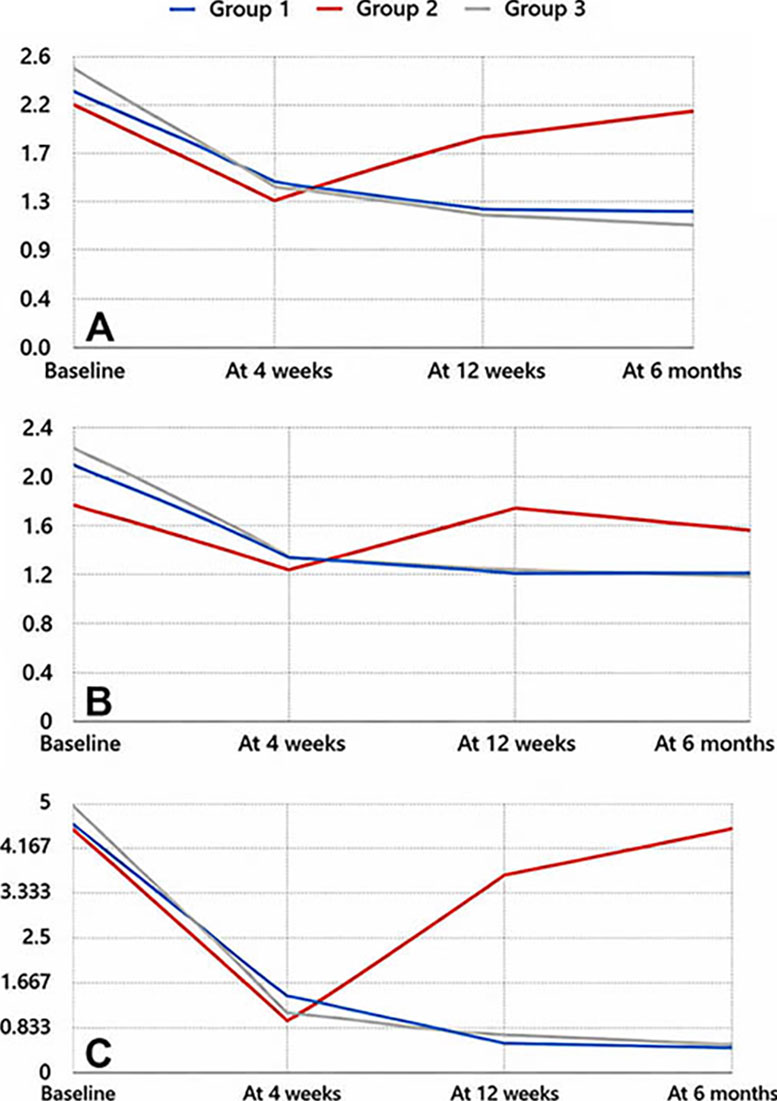
    Carpal Tunnel Treatment Outcomes Over Six Months
    Group comparison of trend in (A) Boston Carpal Tunnel Questionnaire Symptom Severity Scale, (B) Functional Status Scale, and (C) Visual Analog Scale scores at different time points. Group 1 underwent US-guided hydrodissection with normal saline (NS), group 2 underwent US-guided corticosteroid injection alone, and group 3 underwent US-guided hydrodissection with NS plus corticosteroid. Clinical improvement was sustained in both hydrodissection groups, whereas participants treated with corticosteroid injection alone showed symptom recurrence after the initial response. Credit: Radiological Society of North America (RSNA)

    The lack of a significant additional long-term benefit from steroids in the hydrodissection groups matters because those drugs carry risks beyond the possibility that symptoms will return.

    “Traditional steroid injection for carpal tunnel syndrome often provides only temporary relief, thus requiring repeats of the procedure,” Dr. Tandon said. “Further, steroids carry risk of localized skin changes, fat thinning and tendon weakening.”

    A 15-minute procedure without hospitalization

    Hydrodissection took an average of 15 minutes, and patients tolerated it well, with no significant immediate or delayed complications observed. Questionnaire responses indicated high satisfaction with the procedure. It was low-cost, required neither anesthesia nor hospitalization, and allowed patients to return to work within an hour.
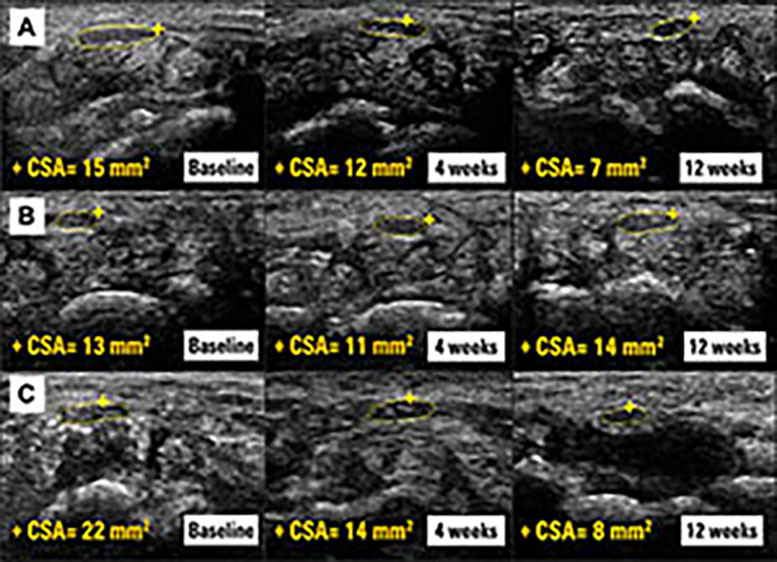
    Ultrasound Images of the Median Nerve
    Ultrasound images of the median nerve (yellow dashed oval) in participants with carpal tunnel syndrome who underwent US-guided interventions. Images show (A) hydrodissection with normal saline (NS) only in a 33-year-old female participant, (B) US-guided corticosteroid injection in a 35-year-old female participant, and (C) US-guided hydrodissection with NS and corticosteroid in a 29-year-old male participant at baseline, 4 weeks, and 12 weeks. Median nerve cross-sectional area (CSA) decreased progressively following hydrodissection, but there was no significant improvement after corticosteroid injection alone. Credit: Radiological Society of North America (RSNA)

    “Overall, the study suggests that ultrasound-guided saline hydrodissection is a safe, minimally invasive treatment that can provide sustained clinical and morphological improvement in patients with refractory carpal tunnel syndrome,” Dr. Tandon said. “Thus, hydrodissection merits to be a minimally invasive option for mild to moderate carpal tunnel syndrome and can defer and even alleviate the need for surgery.”

    The researchers said larger studies across multiple centers, with longer follow-up, are needed. They have already launched a study comparing the long-term effectiveness of different fluids used for hydrodissection in carpal tunnel syndrome, including dextrose versus saline.

    “This trial features an extended follow-up period to track long-term patient outcomes and establish the true durability of the treatment,” Dr. Tandon said.

    Reference: “Efficacy of US-guided Hydrodissection for Carpal Tunnel Syndrome: A Prospective Randomized Controlled Trial” by Anindita Bose, Anupama Tandon, Gopesh Mehrotra, Siddharth Maheshwari and Ayush Khandelwal, 6 October 2026, Radiology.
    DOI: 10.1148/radiol.260185

    Never miss a breakthrough: Join the SciTechDaily newsletter.
    Follow us on Google and Google News.

    Medical Imaging Neurology Pain Management Radiological Society of North America Ultrasound
    Share. Facebook Twitter Pinterest LinkedIn Email Reddit

    Related Articles

    Scientists Find a Clue to Making Brain Stimulation More Reliable

    Scientists Discover Surprising Effect of Ultra-Processed Foods Inside Thigh Muscles

    Beyond Amyloid Plaques: Scientists Reveal Broader Chemical Disruptions in Alzheimer’s

    Parkinson’s “Trigger” Seen Directly in the Human Brain for the First Time

    New Study: Light Therapy Enhances Brain Connectivity After Injury

    Soccer Players Beware – New Research Links Heading to Significant Decline in Brain Function

    Scientists Uncover New Brain Circuit for Epilepsy

    High-Intensity Focused Ultrasound Treats Prostate Cancer With Minimal Side Effects

    Noninvasive Arterial Spin Labeling MRI Detects Evidence of Cognitive Decline Before Symptoms Appear

    Leave A Reply Cancel Reply

    • Facebook
    • Twitter
    • Pinterest
    • YouTube

    Don't Miss a Discovery

    Subscribe for the Latest in Science & Tech!

    Trending News

    Beyond Ozempic? New Weight Loss Drug Shows Stunning Results in Major Clinical Trial

    Scientists Create a Nuclear Clock So Precise It Barely Loses a Second in 30 Million Years

    Scientists Discover Groundbreaking Clues to Tissue Regrowth and “Immortality” in the Ocean

    A New Test Upends a Long-Held Assumption About Dark Matter

    Scientists Discover an Unexpected New Way To Fight Alzheimer’s Before It Starts

    Sleeping Less Than 5 Hours Was Linked to Higher Risk of 37 Diseases

    This 345-Million-Year-Old Fossil Fooled Scientists for Decades

    Scientists Restore Limited Vision in Blind Patients Using Gene Therapy and Special Goggles

    Follow SciTechDaily
    • Facebook
    • Twitter
    • YouTube
    • Pinterest
    • Newsletter
    • RSS
    SciTech News
    • Biology News
    • Chemistry News
    • Earth News
    • Health News
    • Physics News
    • Science News
    • Space News
    • Technology News
    Recent Posts
    • Scientists Discover a Surprisingly Simple Way To Relieve Stubborn Carpal Tunnel Pain
    • Same Calories, Same Nutrients – but One Meal Triggered a Surprising Reaction in the Body
    • Researchers Map the Brain’s Mysterious “Blue Place” and Discover a Record-Breaking Neuron
    • Scientists Discover a New Cousin of Diamond That Was Thought To Exist Only in Theory
    • A Missing Molecule May Explain Why Muscles Weaken With Age
    Copyright © 1998 - 2026 SciTechDaily. All Rights Reserved.
    • Science News
    • About
    • Contact
    • Editorial Board
    • Privacy Policy
    • Terms of Use

    Type above and press Enter to search. Press Esc to cancel.