
Close Menu
    Facebook X (Twitter) Instagram
    SciTechDaily
    • Biology
    • Chemistry
    • Earth
    • Health
    • Physics
    • Science
    • Space
    • Technology
    Facebook X (Twitter) Pinterest YouTube RSS
    SciTechDaily
    Home»Science»Scientists Discover 15,000-Year-Old Clay Figures That Rewrite the History of Human Art
    Science

    Scientists Discover 15,000-Year-Old Clay Figures That Rewrite the History of Human Art

    By PLOSNovember 18, 2026No Comments4 Mins Read
    Facebook Twitter Pinterest Telegram LinkedIn WhatsApp Email Reddit
    Share
    Facebook Twitter LinkedIn Pinterest Telegram Email Reddit
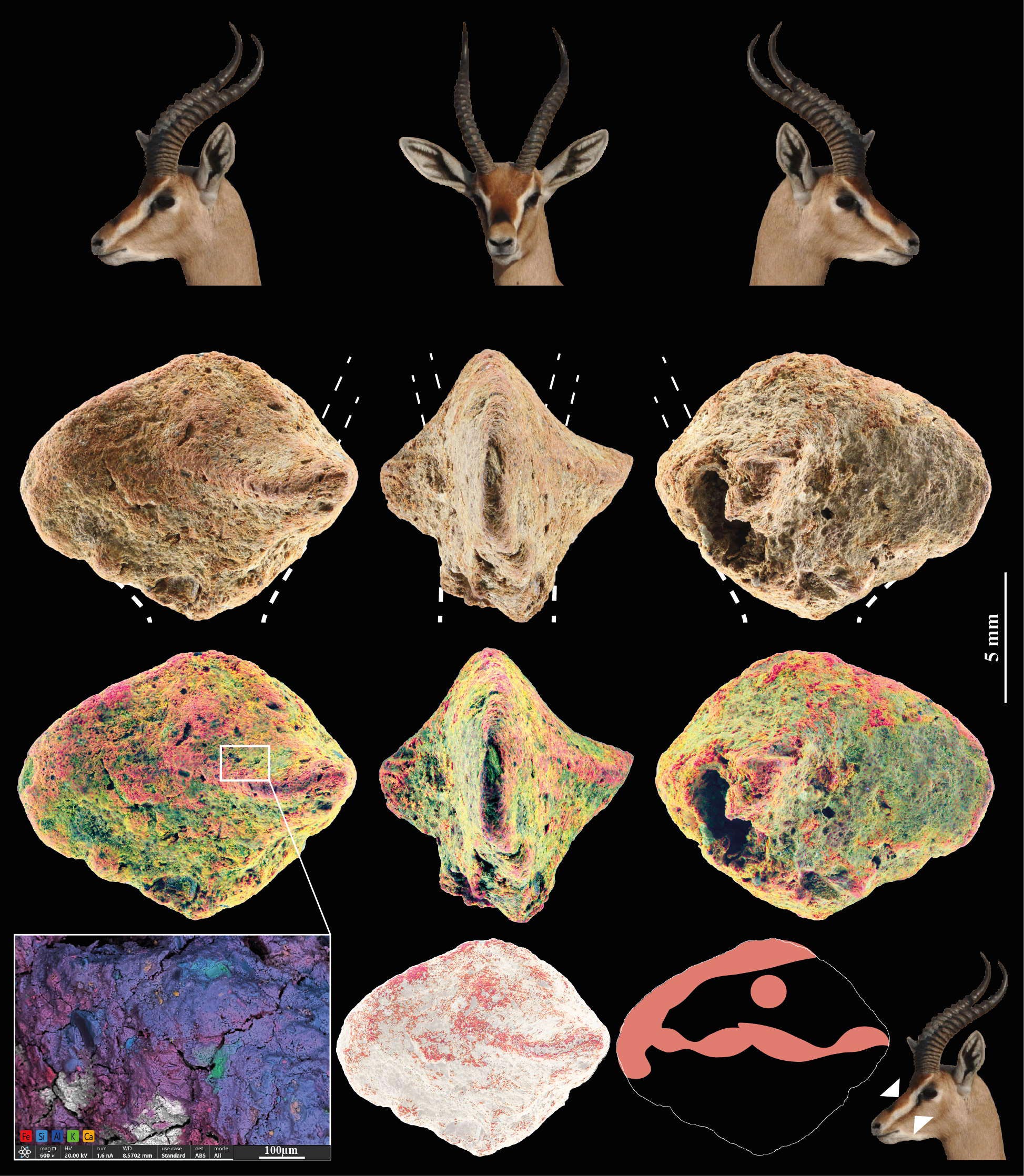
    Ancient Natufian Clay Gazelle Head Figurine
    Fragment of a Natufian figurine depicting a gazelle head with horns made of perishable materials (e.g., twigs) modelled in clay 12,000 years ago, discovered at the site of Eynan-Mallaha (Upper Jordan Valley). The head was painted red with engobe (a mixture of liquid clay and ochre) to depict the gazelle’s eyes and fur pattern. Credit: Laurent Davin, CC-BY 4.0

    Clay figurines from the Middle East suggest that artistic traditions were already being shared across generations before farming, possibly with children taking part in their creation.

    Long before agriculture transformed life in the Middle East, people were already shaping clay into figures that reflected the world around them. Some resembled birds, mammals, and humans, while others carried traces of red or orange coloring. One fragment may even depict the facial markings of a mountain gazelle.

    These small artifacts, originally excavated from three sites in present-day Israel, date back roughly 15,000 to 11,500 years. Researchers believe they provide the earliest known evidence of a clay figurine-making tradition in the region, suggesting that people were using the material for symbolic expression much earlier than previously thought.

    Hunter-gatherers worked with clay before farming

    At the time, the region was home to Natufian communities, hunter-gatherers who had begun living in permanent settlements before the development of agriculture. Archaeologists already knew that Natufian people made figurines, although most previously discovered examples were fashioned from bone or stone.
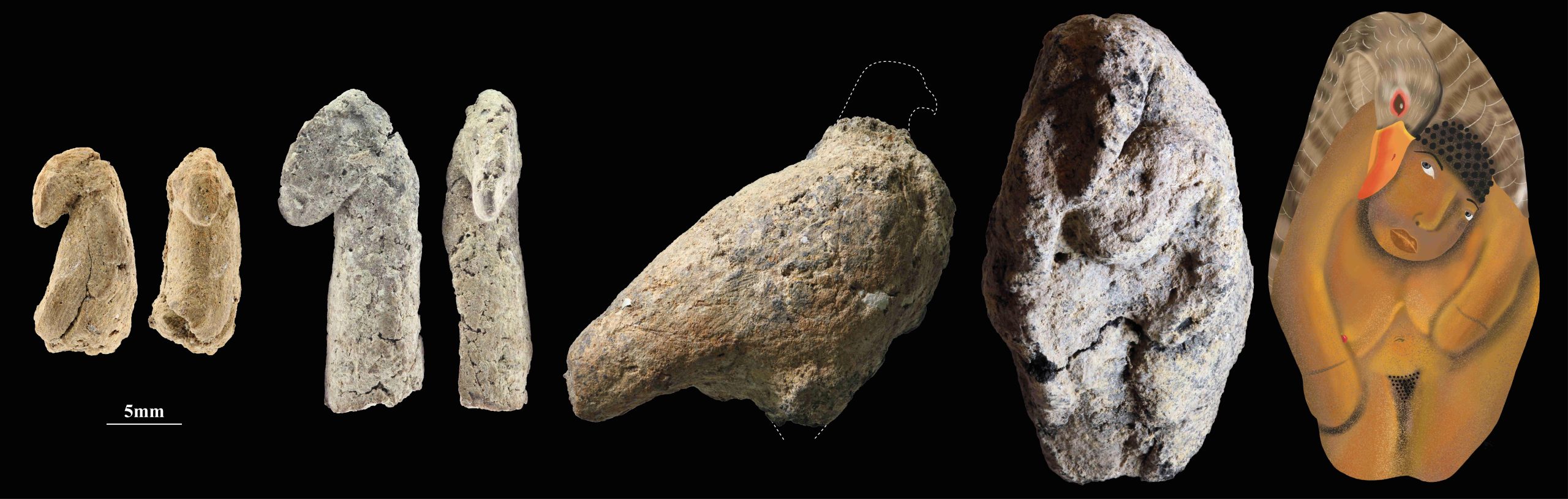
    Ancient Natufian Clay Figurines Depicting Birds and Human Bird Interaction
    Natufian figurines depicting waterfowls, a bird of prey and a human-bird (woman-goose) interaction, modelled in clay 15,000 years ago (left) and 12,000 years ago (right), discovered at the sites of Eynan-Mallaha and Nahal Ein Gev II (Upper Jordan Valley). Credit: Laurent Davin, CC-BY 4.0

    Clay figurines, by contrast, were generally believed to have become common during the Neolithic period, when the agricultural revolution began around 11,500 years ago. The newly identified objects suggest that the practice had much deeper roots, revealing a wider range of artistic expression among these early communities.

    Children may have helped shape ancient art

    The findings also raise questions about how cultural traditions developed before farming. The researchers suggest that Natufian artistic practices were more varied and complex than previously recognized, and that some aspects of the region’s later Neolithic culture may have originated thousands of years earlier.

    The research, published November 11, 2026, in the open-access journal PLOS One, was conducted by Dr. Laurent Davin of the Hebrew University of Jerusalem in Israel and colleagues. Beyond revealing an earlier history of clay figurines, the study offers clues about how creative practices and cultural knowledge may have passed between generations.
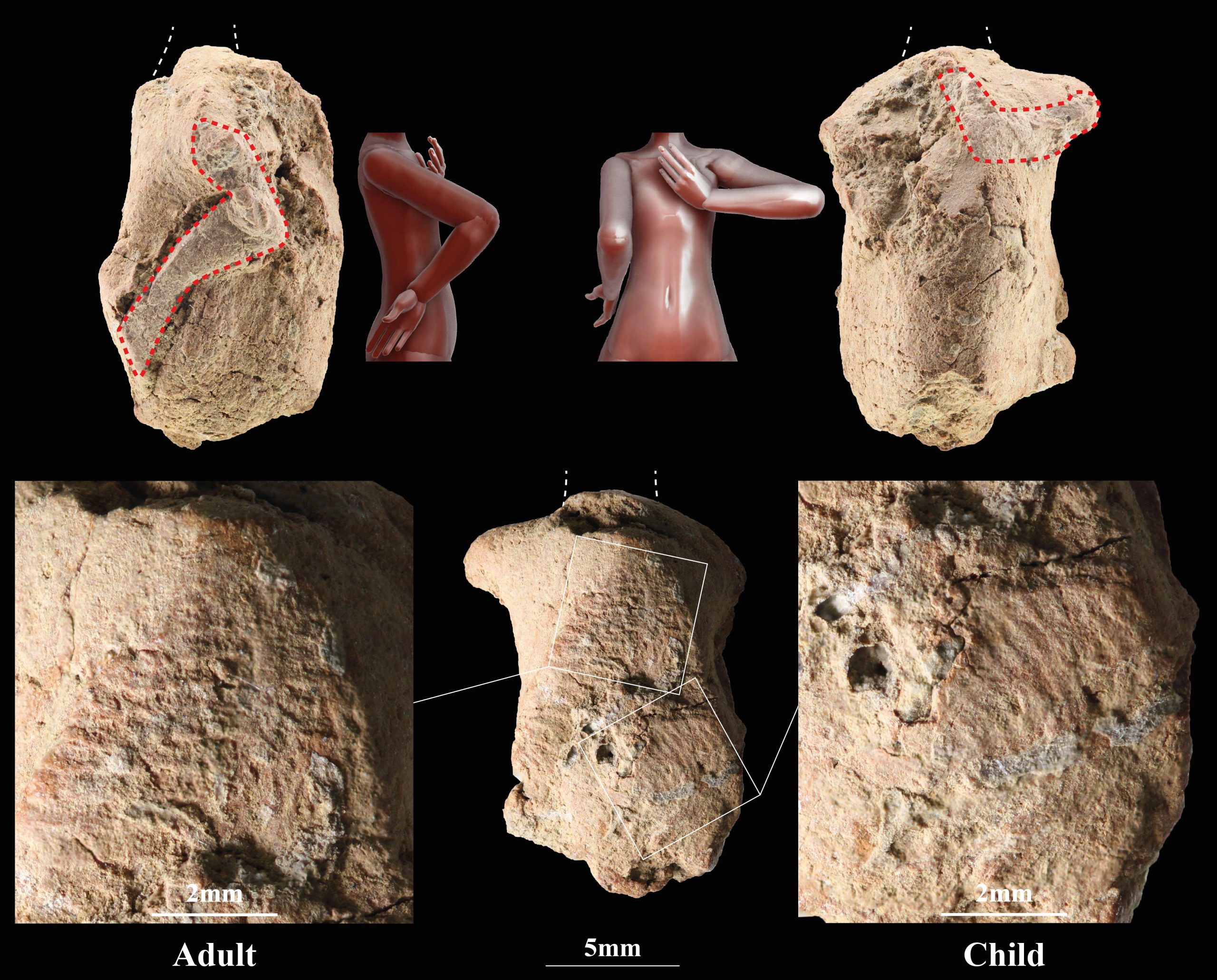
    Natufian Clay Figurine With Adult and Child Fingerprints
    A Natufian figurine depicting a stylized human body modelled in clay 15,000 years ago, discovered at the site of Eynan-Mallaha (Upper Jordan Valley). The back of the clay figurine bears the fingerprint of an adult, covered by a child’s fingerprint. This sequence of gestures in the wet clay, when the figurine was being modelled, is a rare direct testimony of inter-generational knowledge transmission in a hands-on apprenticeship. Credit: Laurent Davin, CC-BY 4.0

    “These discoveries change how we understand the beginnings of artistic expression in the first villages of humanity. Thousands of years before agriculture and pottery emerged, people were already using clay to create figures, as part of their beliefs and knowledge of the natural world. What is particularly fascinating is the evidence that children were involved in making these objects, suggesting that creativity and cultural knowledge were shared across generations,” said Davin.

    Reference: “Modelling symbols among the first-sedentary communities: Emergence of clay figurines in Epipaleolithic Southwest Asia” by Laurent Davin, Marion Sindel, Mina Weinstein-Evron, Reuven Yeshurun, Daniel Kaufman, Leore Grosman, Anna Belfer-Cohen, Hamoudi Khalaily and François R. Valla, 11 November 2026, PLOS ONE.
    DOI: 10.1371/journal.pone.0360388

    This research was supported by the Israel Academy of Sciences and Humanities, Council for Higher Education, Computational Archaeology Laboratory at the Hebrew University of Jerusalem, Fondation des Treilles, Fondation Fyssen, Irene Levi Sala Care Archaeological Foundation, Israel Science Foundation (grants 511/22 and 703/23), French Ministry for Europe and Foreign Affairs, Wenner–Gren Foundation, Centre de Recherche Français à Jérusalem, and National Geographic Foundation.

    Never miss a breakthrough: Join the SciTechDaily newsletter.
    Follow us on Google and Google News.

    Archaeology Art Culture PLOS Prehistory
    Share. Facebook Twitter Pinterest LinkedIn Email Reddit

    Related Articles

    Archaeologists Uncover 3,800-Year-Old Burial Mystery on Spain’s Coast

    A Natural “Varnish” May Explain How 37,000-Year-Old Cave Art Survived

    The Truth About Vikings Is More Complicated Than Museums Admit

    Scientists Finally Solve a 100-Year Mystery About France’s Famous Ice Age Cave Paintings

    Revolutionizing Our Understanding of Ancient Warfare – New Study Validates the Combat Readiness of 3500-Year-Old Greek Armor

    New Research Shatters the Myth of Men As Hunters and Women As Gatherers

    Clues to Origin of Mysterious Tanystropheid Reptiles From New Brazilian Fossil

    Neandertals Dove Underwater to Collect Clam Shells to Use as Tools

    Queen Elizabeth I Identified As Author of 16th Century Tacitus’ Annals Translation

    Leave A Reply Cancel Reply

    • Facebook
    • Twitter
    • Pinterest
    • YouTube

    Don't Miss a Discovery

    Subscribe for the Latest in Science & Tech!

    Trending News

    Scientists Uncover a Bizarre Quantum Effect Where Time Could Flow at Different Speeds Simultaneously

    James Webb Telescope Reveals a Giant Planet That Was Hiding in Plain Sight

    Scientists Just Challenged a 50-Year-Old Theory About How Evolution Works

    Researchers Turn Moon Dust Into LEGO-Like Bricks That Could Build Future Lunar Bases

    Powerful New Weight-Loss Drug Could Change How Millions Treat Painful Knee Arthritis

    A 3-Million-Year-Old Fossil Is Turning the Story of Human Evolution Upside Down

    A Simple Pill Could Cure a Common Cause of High Blood Pressure

    A 6-Million-Year-Old Whale Had a Face So Strange Scientists Thought It Was Crushed

    Follow SciTechDaily
    • Facebook
    • Twitter
    • YouTube
    • Pinterest
    • Newsletter
    • RSS
    SciTech News
    • Biology News
    • Chemistry News
    • Earth News
    • Health News
    • Physics News
    • Science News
    • Space News
    • Technology News
    Recent Posts
    • Scientists Discover 15,000-Year-Old Clay Figures That Rewrite the History of Human Art
    • Scientists Discover Mysterious Toxic Chemicals Floating in the Air Above America
    • Scientists Discover a Hidden Magnetic Effect That Produces Signals 100 Times Stronger
    • “Wow!” Hera’s First Close-Up Reveals a Surprisingly Strange Asteroid Landscape
    • Astronomers Discover a Chilling Preview of Our Solar System’s Future
    Copyright © 1998 - 2026 SciTechDaily. All Rights Reserved.
    • Science News
    • About
    • Contact
    • Editorial Board
    • Privacy Policy
    • Terms of Use

    Type above and press Enter to search. Press Esc to cancel.