
Close Menu
    Facebook X (Twitter) Instagram
    SciTechDaily
    • Biology
    • Chemistry
    • Earth
    • Health
    • Physics
    • Science
    • Space
    • Technology
    Facebook X (Twitter) Pinterest YouTube RSS
    SciTechDaily
    Home»Space»Ancient Fossil Mystery Solved – Findings Could Aid Quest for Life on Mars
    Space

    Ancient Fossil Mystery Solved – Findings Could Aid Quest for Life on Mars

    By University of EdinburghNovember 29, 2019No Comments2 Mins Read
    Facebook Twitter Pinterest Telegram LinkedIn WhatsApp Email Reddit
    Share
    Facebook Twitter LinkedIn Pinterest Telegram Email Reddit
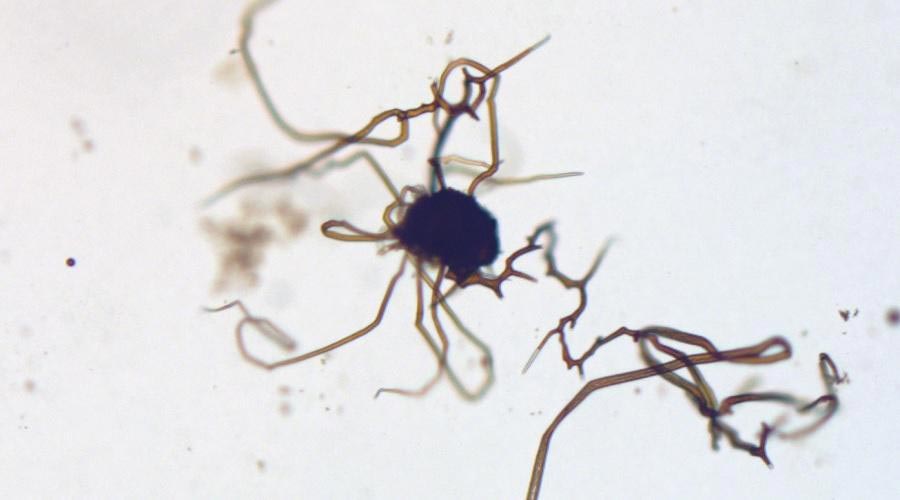
    Life-Like Structure
    A life-like structure created in the lab by chemical gardening. Credit: Sean McMahon

    The search for evidence of life on Mars could be helped by fresh insights into ancient rocks on Earth.

    Research which suggests that structures previously thought to be fossils may, in fact, be mineral deposits could save future Mars missions valuable time and resources.

    Microscopic tubes and filaments that resemble the remains of tiny creatures may have been formed by chemical reactions involving iron-rich minerals, the study shows.

    Previous research had suggested that such structures were among the oldest fossils on Earth.

    Mars Missions

    The new findings could aid the search for extraterrestrial life during future missions to Mars by making it easier to distinguish between fossils and non-biological structures.

    The discovery was made by a scientist from the University of Edinburgh who is developing techniques to seek evidence that life once existed on Mars.

    Astrobiologist Sean McMahon created tiny formations in the lab that closely mimic the shape and chemical composition of iron-rich structures commonly found in Mars-like rocks on Earth, where some examples are thought to be around four billion years old.

    Chemical Reactions

    Dr. McMahon created the complex structures by mixing iron-rich particles with alkaline liquids containing the chemicals silicate or carbonate.

    This process — known as chemical gardening — is thought to occur naturally where these chemicals abound. It can occur in hydrothermal vents on the seabed and when deep groundwater circulates through pores and fractures in rocks.

    His findings suggest that structure alone is not sufficient to confirm whether or not microscopic life-like formations are fossils. More research will be needed to say exactly how they were formed.

    The study, published in the journal Proceedings of the Royal Society B on November 27, 2019, was funded by the European Union’s Horizon 2020 program.

    Dr. Sean McMahon said: “Chemical reactions like these have been studied for hundreds of years but they had not previously been shown to mimic these tiny iron-rich structures inside rocks. These results call for a re-examination of many ancient real-world examples to see if they are more likely to be fossils or non-biological mineral deposits.”

    Reference: “Earth’s earliest and deepest purported fossils may be iron-mineralized chemical gardens” by Sean McMahon, 27 November 2019, Proceedings of the Royal Society B.
    DOI: 10.1098/rspb.2019.2410

    Never miss a breakthrough: Join the SciTechDaily newsletter.
    Follow us on Google and Google News.

    Fossils Mars Popular University of Edinburgh
    Share. Facebook Twitter Pinterest LinkedIn Email Reddit

    Related Articles

    Life on Mars – Or False Fossils?

    Images From ESA’s Mars Express Reveals the Features of Ladon Basin

    A Connection Between Volatiles in the Subsurface of Mars and the Impact Process

    Mission Engineers Prepare for Curiosity’s Landing on Mars

    Phobos May Provide Evidence of Life on Mars

    CO2 Snow Particles on Mars Are About the Size of Red Blood Cells

    High-Energy UV Radiation Triggers Methane on Mars

    Mars Rover Opportunity to Spend Several Months at “Greeley Haven”

    NASA Curiosity Heads to Mars

    Leave A Reply Cancel Reply

    • Facebook
    • Twitter
    • Pinterest
    • YouTube

    Don't Miss a Discovery

    Subscribe for the Latest in Science & Tech!

    Trending News

    First-of-Its-Kind Discovery: Homer’s Iliad Found Embedded in a 1,600-Year-Old Egyptian Mummy

    Beyond Inflammation: Scientists Uncover New Cause of Persistent Rheumatoid Arthritis

    A Simple Molecule Could Unlock Safer, Easier Weight Loss

    Scientists Just Built a Quantum Battery That Charges Almost Instantly

    Researchers Unveil Groundbreaking Sustainable Solution to Vitamin B12 Deficiency

    Millions of People Have Osteopenia Without Realizing It – Here’s What You Need To Know

    Researchers Discover Boosting a Single Protein Helps the Brain Fight Alzheimer’s

    World-First Study Reveals Human Hearts Can Regenerate After a Heart Attack

    Follow SciTechDaily
    • Facebook
    • Twitter
    • YouTube
    • Pinterest
    • Newsletter
    • RSS
    SciTech News
    • Biology News
    • Chemistry News
    • Earth News
    • Health News
    • Physics News
    • Science News
    • Space News
    • Technology News
    Recent Posts
    • After Decades, MIT Researchers Capture the First 3D Atomic View of a Mysterious Material
    • Your Favorite Fishing Spot Is Turning Brown – and the Fish Are Changing
    • 380-Million-Year-Old Fish Fossil Reveals Secrets of Life’s First Steps Onto Land
    • Mezcal “Worm” in a Bottle Mystery: DNA Testing Reveals a Surprise
    • Scientists Turn Red Lettuce Green, Unlocking Hidden Nutrients
    Copyright © 1998 - 2026 SciTechDaily. All Rights Reserved.
    • Science News
    • About
    • Contact
    • Editorial Board
    • Privacy Policy
    • Terms of Use

    Type above and press Enter to search. Press Esc to cancel.