
Close Menu
    Facebook X (Twitter) Instagram
    SciTechDaily
    • Biology
    • Chemistry
    • Earth
    • Health
    • Physics
    • Science
    • Space
    • Technology
    Facebook X (Twitter) Pinterest YouTube RSS
    SciTechDaily
    Home»Biology»‘Bee’ Thankful for the Evolution of Pollen – Discovery Made With Highly Detailed Electron Scanning Microscope
    Biology

    ‘Bee’ Thankful for the Evolution of Pollen – Discovery Made With Highly Detailed Electron Scanning Microscope

    By University of Missouri-ColumbiaMay 28, 2020No Comments3 Mins Read
    Facebook Twitter Pinterest Telegram LinkedIn WhatsApp Email Reddit
    Share
    Facebook Twitter LinkedIn Pinterest Telegram Email Reddit
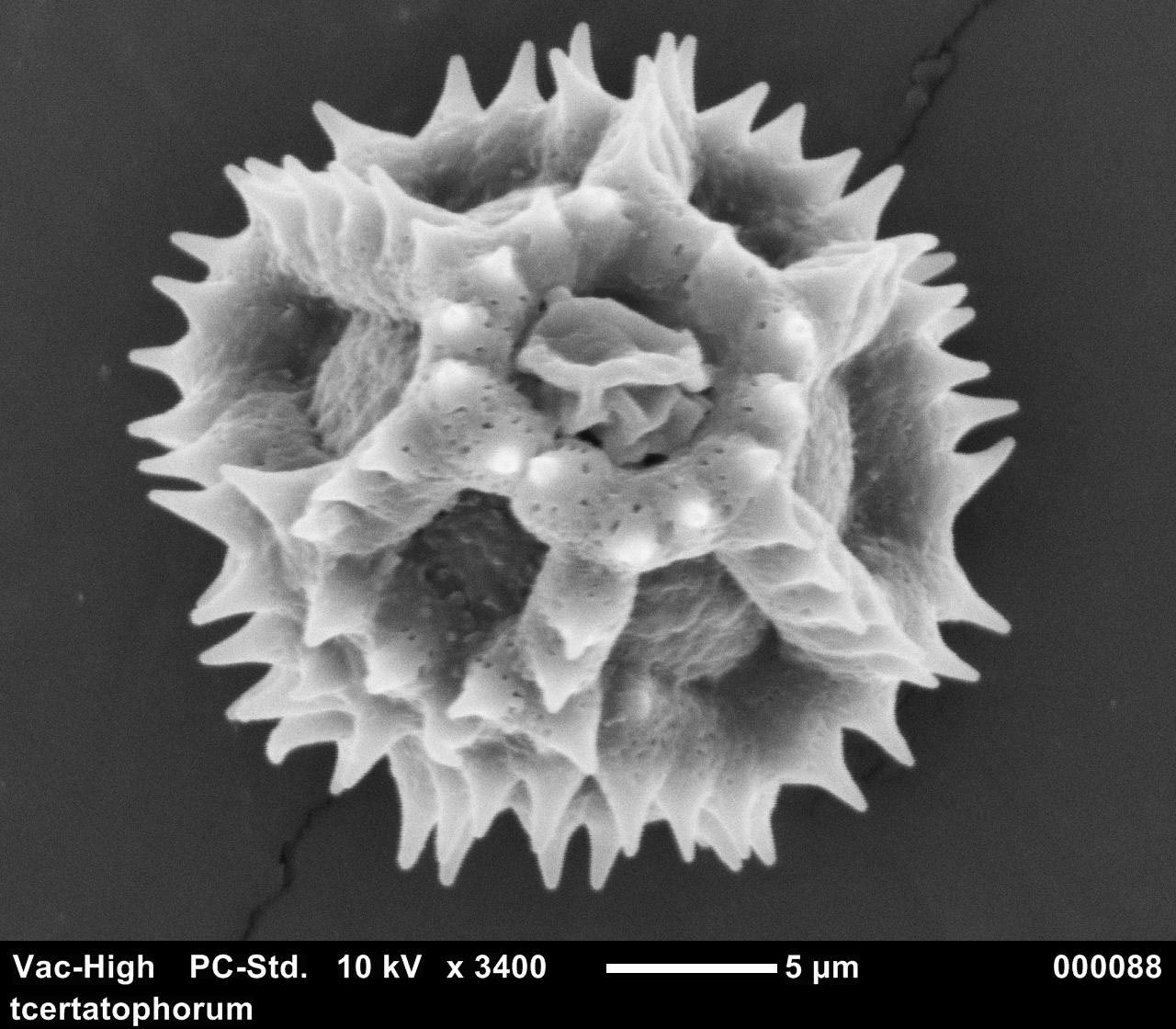
    Spiny Pollen
    A microscopic view of spiny pollen from a native wild dandelion species in the southern Rocky Mountains. Credit: University of Missouri

    University of Missouri researchers discover wildflower’s spiny pollen adapts to help plants reproduce.

    Have pollen. Must travel.

    Over 80% of the world’s flowering plants must reproduce in order to produce new flowers, according to the U.S. Forest Service. This process involves the transfer of pollen between plants by wind, water or insects called pollinators — including bumblebees.

    In a new study, researchers at the University of Missouri discovered spiny pollen — from a native wild dandelion species in the southern Rocky Mountains — has evolved to attach to traveling bumblebees. Using a highly detailed electron scanning microscope, the research team could observe the microscopic surface of the spiny pollen, which otherwise looks like yellow dust to the naked eye.

    “We observed this native pollen from the Rockies has optimally spaced spines that allow it to easily attach to a pollinator, such as a bumblebee,” said Austin Lynn, a recent graduate with a doctorate in biology from the Division of Biological Sciences in the College of Arts and Science. “When we compared that with the average lawn dandelion, which does not need pollen to reproduce, we saw that the pollen on the lawn dandelion has a shorter distance between these spines, making it harder to attach to traveling pollinators. Therefore, we show this wild dandelion pollen has evolved over many generations to create an optimal shape for attaching to pollinators.”
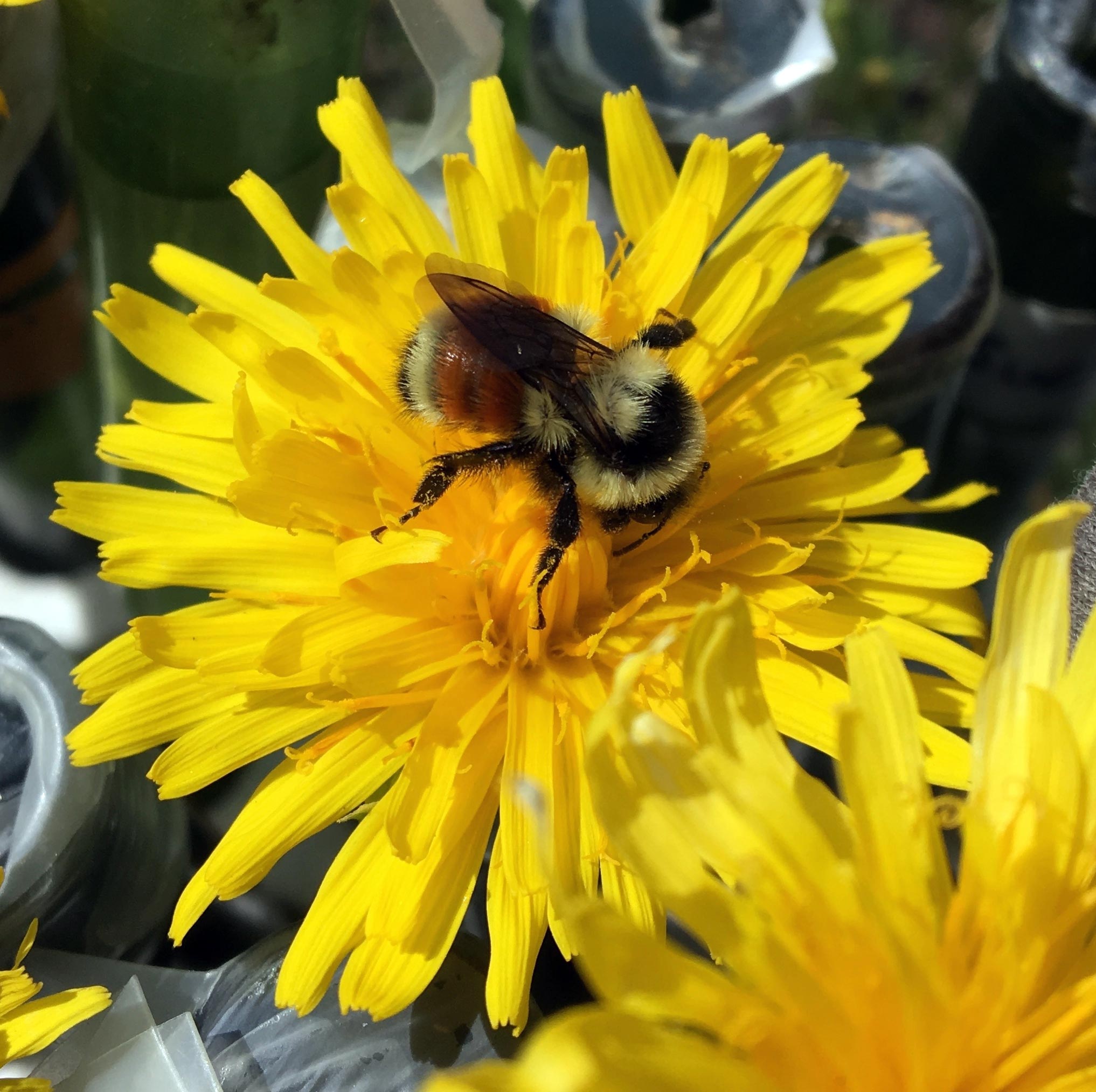
    Bumblebee on a Flower
    Over 80% of the world’s flowering plants must reproduce in order to produce new flowers, according to the U.S. Forest Service. This process involves the transfer of pollen between plants by wind, water or insects called pollinators — including bumblebees. Credit: University of Missouri

    Previous studies have examined spiny pollen, but this is one of the first studies focusing on the pollen’s spines. Lynn, the lead researcher on the study, said the researchers were also able to refute a competing idea that spiny pollen serves as a defensive mechanism to protect the pollen from being eaten.

    “The spiny pollen actually acts like Velcro,” Lynn said. “So, when bees are harvesting pollen for food, this pollen is sticking to their hair. It’s a great example of mutualism where the plant needs the pollinator to reproduce and the pollinator needs the plant for its food.”

    The researchers plan to study how a bumblebee’s hairs contribute to this process.

    The study, “Sexual and natural selection of pollen morphology in Taraxacum,” was published in the American Journal of Botany. Other authors on the study include Emelyn Piotter and Candace Galen at MU; and Ellie Harrison at Colorado State University. Funding was provided by the Mountain Area Land Trust and a Cherng Foundation Scholarship. The content is solely the responsibility of the authors and does not necessarily represent the official views of the funding agencies.

    Reference: “Sexual and natural selection on pollen morphology in Taraxacum” by Austin Lynn, Emelyn Piotter, Ellie Harrison and Candace Galen, 12 February 2020, American Journal of Botany.
    DOI: 10.1002/ajb2.1428

    Never miss a breakthrough: Join the SciTechDaily newsletter.
    Follow us on Google and Google News.

    Agriculture Bees Food Science Plant Science University of Missouri-Columbia
    Share. Facebook Twitter Pinterest LinkedIn Email Reddit

    Related Articles

    Lychee Genome Tells a Colorful Story About an Ancient Tropical Fruit

    Citrus Mystery: Juicy Past of Favorite Okinawan Fruit Revealed

    New and Improved CRISPR 3.0 System for Highly Efficient Gene Activation in Plants

    Predicting Effects of Genetic Mutations: For Tomato Genes, One Plus One Doesn’t Always Make Two

    Climate Change and Food Production Affected by How Plant Roots Compete for Underground Real Estate

    “Completes the Circle”: A 40-Year Scientific Journey Leads to a New Truffle Species

    Tomato’s Hidden DNA Mutations Revealed in Genetic Study of 100 Varieties

    A Question for Almond Growers: To Bee, or Not to Bee?

    Surprisingly, Plants Are Better Pollinated in Cities Than in the Countryside

    Leave A Reply Cancel Reply

    • Facebook
    • Twitter
    • Pinterest
    • YouTube

    Don't Miss a Discovery

    Subscribe for the Latest in Science & Tech!

    Trending News

    Beyond Pain Relief: Scientists Discover a Protein That Could Stop Osteoarthritis in Its Tracks

    Scientists Discover Why Alcohol Prevents the Liver From Healing, Even After You Quit

    Scientists Stunned As Volcano Removes Methane From the Air

    Scientists Discover Signs Africa May Be Splitting Apart Beneath Zambia

    Common Blood Pressure Drug Supercharges Cancer Treatment in Surprising New Study

    540-Million-Year-Old Fossils Reveal a Huge Surprise About Early Life on Earth

    Scientists Reverse Stroke Damage Using Stem Cells in Breakthrough Study

    Eating One Egg a Day Could Cut Alzheimer’s Risk by 27%

    Follow SciTechDaily
    • Facebook
    • Twitter
    • YouTube
    • Pinterest
    • Newsletter
    • RSS
    SciTech News
    • Biology News
    • Chemistry News
    • Earth News
    • Health News
    • Physics News
    • Science News
    • Space News
    • Technology News
    Recent Posts
    • Scientists Uncover Hidden Biological Differences Between Men and Women’s Immune Systems
    • Scientists Challenge a Long-Held Belief About Why Human Childbirth Is So Difficult
    • Too Much Sleep May Age Your Body Faster, New Study Warns
    • Scientists Uncover Promising New Strategy To Stop Parkinson’s in Its Tracks
    • New Study Reveals How Vitamin D Could Calm Gut Inflammation
    Copyright © 1998 - 2026 SciTechDaily. All Rights Reserved.
    • Science News
    • About
    • Contact
    • Editorial Board
    • Privacy Policy
    • Terms of Use

    Type above and press Enter to search. Press Esc to cancel.