
Close Menu
    Facebook X (Twitter) Instagram
    SciTechDaily
    • Biology
    • Chemistry
    • Earth
    • Health
    • Physics
    • Science
    • Space
    • Technology
    Facebook X (Twitter) Pinterest YouTube RSS
    SciTechDaily
    Home»Chemistry»Stretchable Conductive Hydrogel Developed That Could Help Repair Damaged Nerves
    Chemistry

    Stretchable Conductive Hydrogel Developed That Could Help Repair Damaged Nerves

    By American Chemical SocietyOctober 7, 2020No Comments3 Mins Read
    Facebook Twitter Pinterest Telegram LinkedIn WhatsApp Email Reddit
    Share
    Facebook Twitter LinkedIn Pinterest Telegram Email Reddit
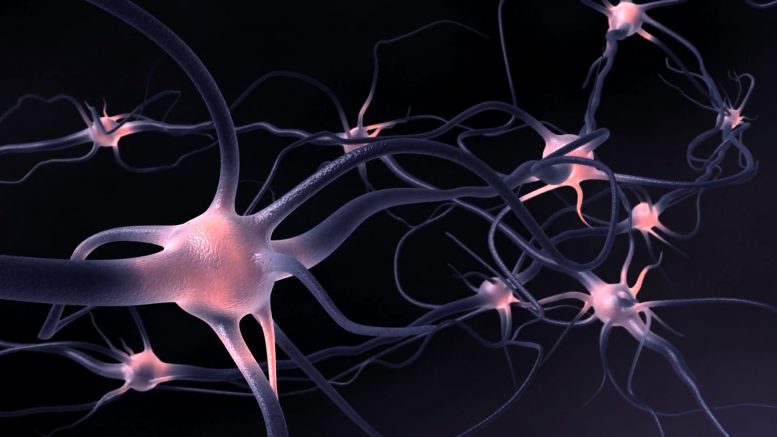
    Nerve Cells Illustration
    Researchers have created a stretchable conductive hydrogel that shows promise in repairing injuries to peripheral nerves.

    Injuries to peripheral nerves — tissues that transmit bioelectrical signals from the brain to the rest of the body — often result in chronic pain, neurologic disorders, paralysis, or disability. Now, researchers have developed a stretchable conductive hydrogel that could someday be used to repair these types of nerves when there’s damage. They report their results in ACS Nano.
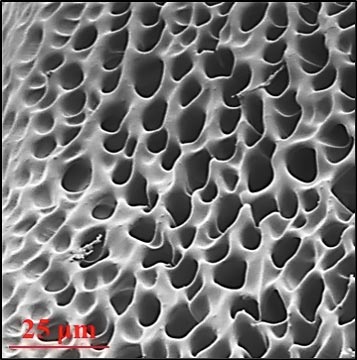
    Hydrogel Repair Damaged Nerves
    A conductive polymer hydrogel could help repair damaged peripheral nerves. Credit: Adapted from ACS Nano 2020, DOI: 10.1021/acsnano.0c05197

    Injuries in which a peripheral nerve has been completely severed, such as a deep cut from an accident, are difficult to treat. A common strategy, called autologous nerve transplantation, involves removing a section of peripheral nerve from elsewhere in the body and sewing it onto the ends of the severed one. However, the surgery does not always restore function, and multiple follow-up surgeries are sometimes needed.

    Artificial nerve grafts, in combination with supporting cells, have also been used, but it often takes a long time for nerves to fully recover. Qun-Dong Shen, Chang-Chun Wang, Ze-Zhang Zhu, and colleagues wanted to develop an effective, fast-acting treatment that could replace autologous nerve transplantation. For this purpose, they decided to explore conducting hydrogels — water-swollen, biocompatible polymers that can transmit bioelectrical signals.

    The researchers prepared a tough but stretchable conductive hydrogel containing polyaniline and polyacrylamide. The crosslinked polymer had a 3D microporous network that, once implanted, allowed nerve cells to enter and adhere, helping restore lost tissue.

    The team showed that the material could conduct bioelectrical signals through a damaged sciatic nerve removed from a toad. Then, they implanted the hydrogel into rats with sciatic nerve injuries. Two weeks later, the rats’ nerves recovered their bioelectrical properties, and their walking improved compared with untreated rats. Because the electricity-conducting properties of the material improve with irradiation by near-infrared light, which can penetrate tissues, it could be possible to further enhance nerve conduction and recovery in this way, the researchers say.

    The authors acknowledge funding from the National Key Research and Development Program of China, the National Natural Science Foundation of China, the Program for Changjiang Scholars and Innovative Research Team in University, and Program B for Outstanding Ph.D. Candidate of Nanjing University.

    Reference: “Conductive Hydrogel for a Photothermal-Responsive Stretchable Artificial Nerve and Coalescing with a Damaged Peripheral Nerve” by Mei Dong, Bo Shi, Dun Liu, Jia-Hao Liu, Di Zhao, Zheng-Hang Yu, Xiao-Quan Shen, Jia-Min Gan, Ben-long Shi, Yong Qiu, Chang-Chun Wang, Ze-Zhang Zhu and Qun-Dong Shen, 7 October 2020, ACS Nano.
    DOI: 10.1021/acsnano.0c05197

    Never miss a breakthrough: Join the SciTechDaily newsletter.
    Follow us on Google and Google News.

    American Chemical Society Biochemistry Injury Nanotechnology Neuroscience Polymers
    Share. Facebook Twitter Pinterest LinkedIn Email Reddit

    Related Articles

    Bacterial Enzyme Makes New Type of Biocompatible, Biodegradable Polymer

    Nano-Photosynthesis: An Illuminating Possibility for Stroke Treatment

    Scientists Invent New Method for Producing Synthetic DNA

    Highly-Selective New Tool to Dissect the “Undruggable”

    Nanocrystals With Unique Surface Texture That Eradicates Bacteria Biofilm

    Human Cells Made Magnetic With Engineered Protein Crystals

    Scientists Develop DNA Microcapsules for New Kinds of Biomedical Nanodevices

    Shining Molecules Detect Tau Pathology in Alzheimer’s Disease

    Cerium Oxide Nanocrystals Act as Super Antioxidants

    Leave A Reply Cancel Reply

    • Facebook
    • Twitter
    • Pinterest
    • YouTube

    Don't Miss a Discovery

    Subscribe for the Latest in Science & Tech!

    Trending News

    Breakthrough Bowel Cancer Trial Leaves Patients Cancer-Free for Nearly 3 Years

    Natural Compound Shows Powerful Potential Against Rheumatoid Arthritis

    100,000-Year-Old Neanderthal Fossils in Poland Reveal Unexpected Genetic Connections

    Simple “Gut Reset” May Prevent Weight Gain After Ozempic or Wegovy

    2.8 Days to Disaster: Scientists Warn Low Earth Orbit Could Suddenly Collapse

    Common Food Compound Shows Surprising Power Against Superbugs

    5 Simple Ways To Remember More and Forget Less

    The Atomic Gap That Could Cost the Semiconductor Industry Billions

    Follow SciTechDaily
    • Facebook
    • Twitter
    • YouTube
    • Pinterest
    • Newsletter
    • RSS
    SciTech News
    • Biology News
    • Chemistry News
    • Earth News
    • Health News
    • Physics News
    • Science News
    • Space News
    • Technology News
    Recent Posts
    • After 37 Years, the World’s Longest-Running Soil Warming Experiment Uncovers a Startling Climate Secret
    • NASA Satellite Captures First-Ever High-Res View of Massive Pacific Tsunami
    • ADHD Isn’t Just a Deficit: Study Reveals Powerful Hidden Strengths
    • Scientists Uncover “Astonishing” Hidden Property of Light
    • Scientists Discover Stem Cells That Could Regrow Teeth and Bone
    Copyright © 1998 - 2026 SciTechDaily. All Rights Reserved.
    • Science News
    • About
    • Contact
    • Editorial Board
    • Privacy Policy
    • Terms of Use

    Type above and press Enter to search. Press Esc to cancel.