

A groundbreaking discovery has emerged from the depths of the Mediterranean Sea: the KM3NeT detector has identified the most energetic neutrino ever observed, clocking in at an astonishing 220 PeV.
This single event provides compelling evidence that such high-energy neutrinos exist in the universe, opening a new frontier in astrophysics. Neutrinos, nearly massless and chargeless, are incredibly elusive, making their detection a monumental feat. With only a fraction of the KM3NeT telescope operational, this discovery hints at even greater breakthroughs to come in multi-messenger astronomy.
Record-Breaking Neutrino Discovery
On February 13, 2023, scientists using the ARCA detector of the KM3NeT neutrino telescope — located deep in the sea — detected an extraordinary event. A neutrino with an estimated energy of 220 PeV (220 million billion electron volts) was recorded, making it the most energetic neutrino ever observed. This discovery provides the first evidence that neutrinos of such extreme energies exist in the universe. After two years of meticulous analysis, the KM3NeT international research team has now published the findings in Nature on February 12, 2025.
The event was identified as a single muon traveled through the entire detector, triggering signals in more than one-third of its active sensors. The steep angle of its trajectory, combined with its immense energy, strongly suggests that it originated from a high-energy cosmic neutrino interacting near the detector.

Opening a New Chapter in Neutrino Astronomy
“KM3NeT has begun to probe a range of energy and sensitivity where detected neutrinos may originate from extreme astrophysical phenomena. This first-ever detection of a neutrino of hundreds of PeV opens a new chapter in neutrino astronomy and a new observational window on the Universe,” comments Paschal Coyle, KM3NeT Spokesperson at the time of the detection, and researcher at CNRS Centre National de la Recherche Scientifique – Centre de Physique des Particules de Marseille, France.
The high-energy universe is the realm of cataclysmic events such as accreting supermassive black holes at the center of galaxies, supernova explosions, gamma ray bursts, all as yet not fully understood. These powerful cosmic accelerators, generate streams of particles called cosmic rays. Some cosmic rays may interact with matter or photons around the source, to produce neutrinos and photons. During the travel of the most energetic cosmic rays across the Universe, some may also interact with photons of the cosmic microwave background radiation, to produce extremely energetic “cosmogenic” neutrinos.
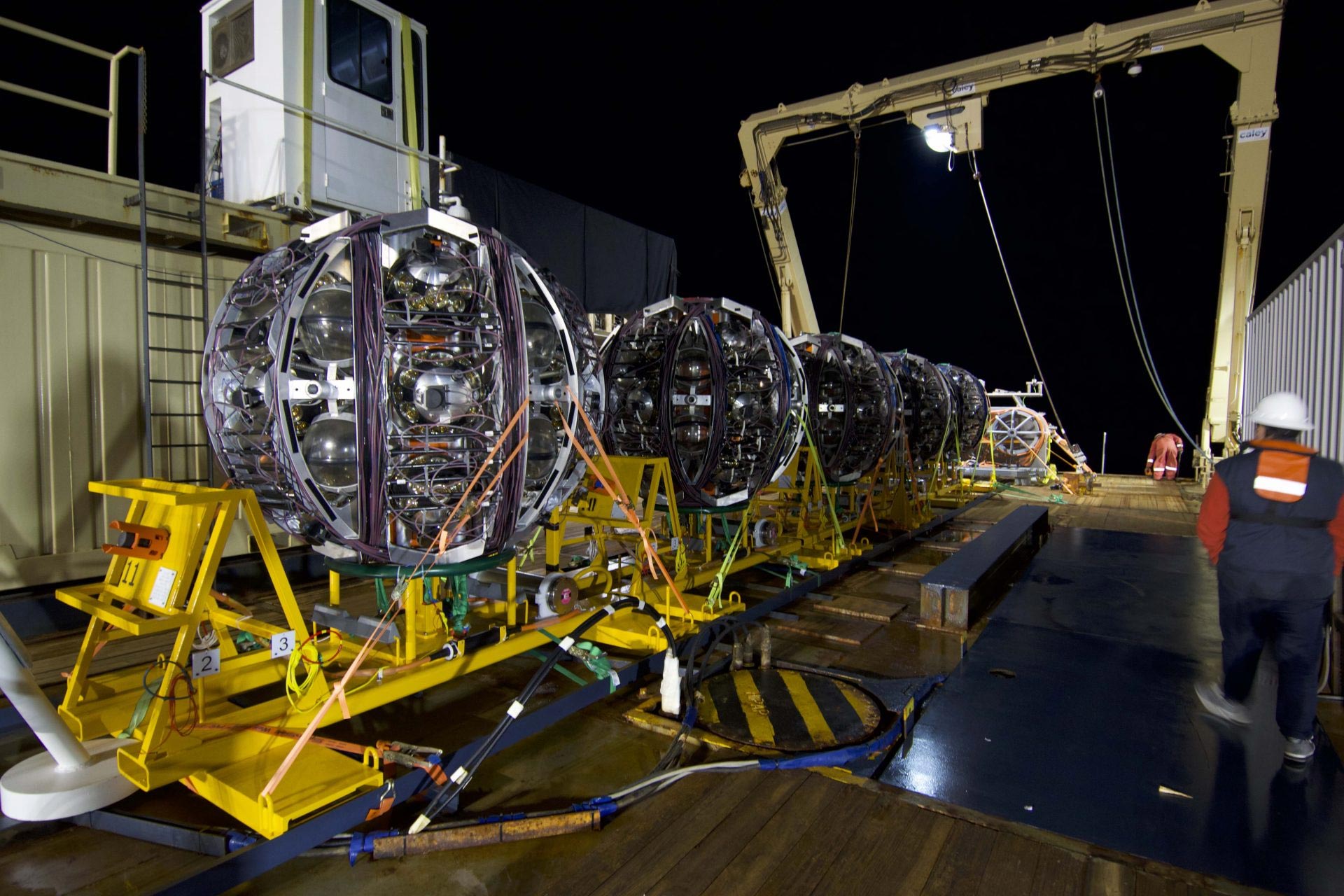
Neutrinos: Ghostly Messengers of the Cosmos
“Neutrinos are one of the most mysterious of elementary particles. They have no electric charge, almost no mass, and interact only weakly with matter. They are special cosmic messengers, bringing us unique information on the mechanisms involved in the most energetic phenomena and allowing us to explore the farthest reaches of the Universe,” explains Rosa Coniglione, KM3NeT Deputy-Spokesperson at the time of the detection, researcher at the INFN National Institute for Nuclear Physics, Italy.
Although neutrinos are the second most abundant particle in the Universe after photons, their weak interaction with matter makes them very hard to detect and requires enormous detectors. The KM3NeT neutrino telescope, currently under construction, is a giant deep-sea infrastructure distributed across two detectors ARCA and ORCA. In its final configuration, KM3NeT will occupy a volume of more than one cubic kilometer. KM3NeT uses seawater as the interaction medium for neutrinos. Its high-tech optical modules detect the Cherenkov light, a bluish glow that is generated during the propagation through the water of the ultra-relativistic particles produced in neutrino interactions.

Unprecedented Precision in Neutrino Detection
“To determine the direction and energy of this neutrino required a precise calibration of the telescope and sophisticated track reconstruction algorithms. Furthermore, this remarkable detection was achieved with only one-tenth of the final configuration of the detector, demonstrating the great potential of our experiment for the study of neutrinos and for neutrino astronomy,” comments Aart Heijboer, KM3NeT Physics and Software Manager at the time of the detection, and researcher at Nikhef National Institute for Subatomic Physics, The Netherlands.
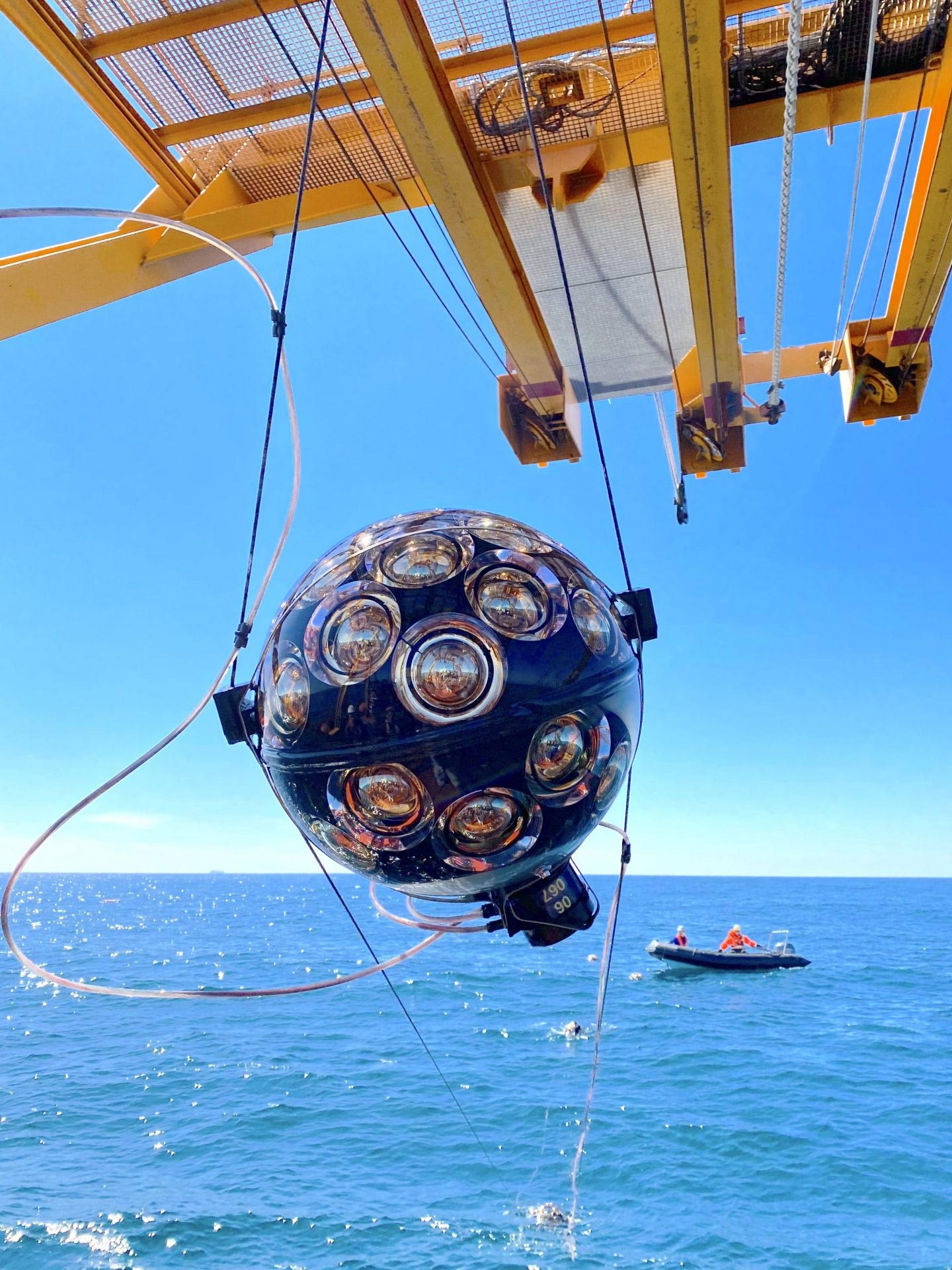
ARCA: Peering Into the Extreme Universe
The KM3NeT/ARCA (Astroparticle Research with Cosmics in the Abyss) detector is mainly dedicated to the study of the highest energy neutrinos and their sources in the Universe. It is located at 3450 m depth, about 80 km from the coast of Portopalo di Capo Passero, Sicily. Its 700 m high detection units (DUs) are anchored to the seabed and positioned about 100 m apart. Every DU is equipped with 18 Digital Optical Modules (DOM) each containing 31 photomultipliers (PMTs). In its final configuration, ARCA will comprise 230 DUs. The data collected are transmitted via a submarine cable to the shore station at the INFN Laboratori Nazionali del Sud.
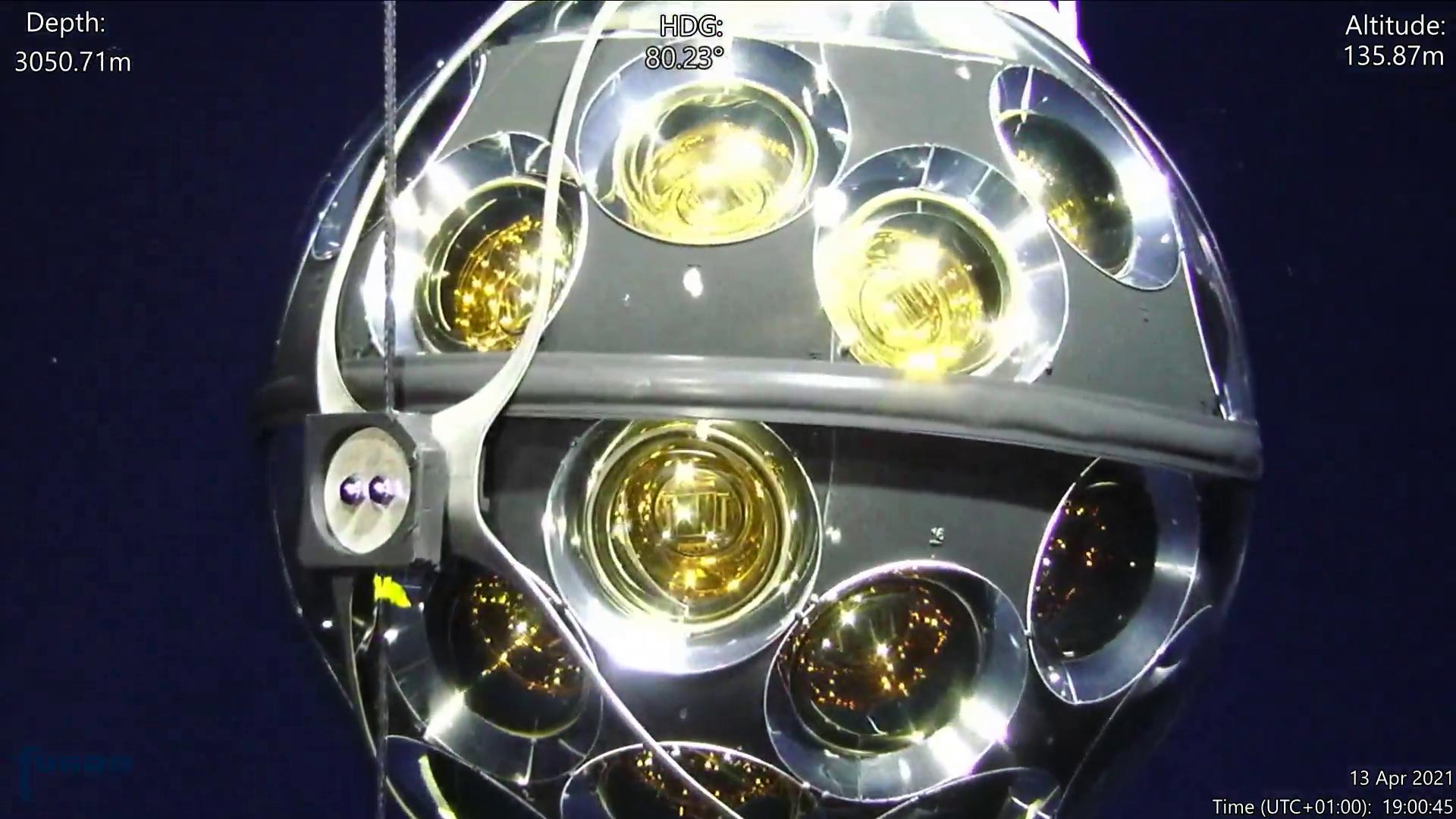
ORCA: Unlocking the Secrets of Neutrinos
The KM3NeT/ORCA (Oscillation Research with Cosmics in the Abyss) detector is optimized to study the fundamental properties of the neutrino itself. It is located at a depth of 2450 m, about 40 km from the coast of Toulon, France. It will comprise 115 DUs, each 200 m high and spaced by 20 m. The data collected by ORCA are sent to the shore station at La Seyne Sur Mer.
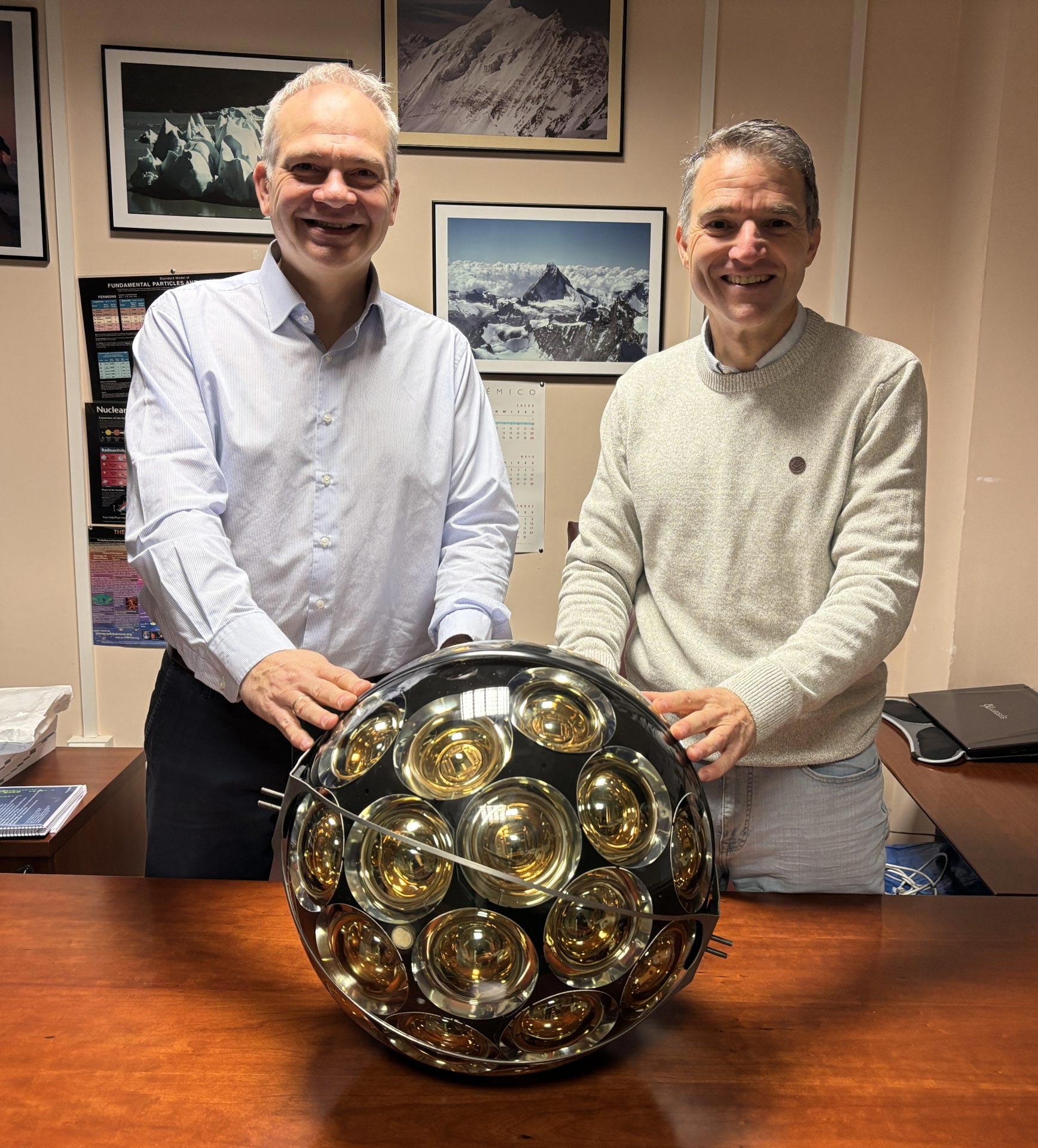
A Monumental Feat in Particle Physics
“The scale of KM3NeT, eventually encompassing a volume of about one cubic kilometer with a total of about 200,000 photomultipliers, along with its extreme location in the abyss of the Mediterranean Sea, demonstrates the extraordinary efforts required to advance neutrino astronomy and particle physics. The detection of this event is the result of a tremendous collaborative effort between many international teams of engineers, technicians, and scientists,” comments Miles Lindsey Clark, KM3NeT Technical Project Manager at the time of the detection, and research engineer at the CNRS – Astroparticle and Cosmology laboratory, France.
The Search for More Ultra-High Energy Neutrinos
This ultra-high energy neutrino may originate directly from a powerful cosmic accelerator. Alternatively, it could be the first detection of a cosmogenic neutrino. However, based on this single neutrino it is difficult to conclude on its origin. Future observations will focus on detecting more such events to build a clearer picture. The ongoing expansion of KM3NeT with additional detection units and the acquisition of additional data will improve its sensitivity and enhance its ability to pinpoint cosmic neutrino sources, making it a leading contributor to multi-messenger astronomy.
Explore Further: A Deep-Sea Telescope Just Detected the Most Energetic Ghost Particle Ever
Reference: “Observation of an ultra-high-energy cosmic neutrino with KM3NeT” by The KM3NeT Collaboration, 12 February 2025, Nature.
DOI: 10.1038/s41586-024-08543-1
The KM3NeT Collaboration brings together more than 360 scientists, engineers, technicians, and students of 68 institutions from 21 countries all over the world.
KM3NeT is included in the roadmap of the European Strategy Forum on Research Infrastructures, which recognizes KM3NeT as a priority research infrastructure for Europe. In addition to the funding provided by research agencies in several countries, KM3NeT has benefitted from various funding through the European research and innovation programs as well as the European Regional Development Fund.
Never miss a breakthrough: Join the SciTechDaily newsletter.
Follow us on Google and Google News.
1 Comment
This single event provides compelling evidence that such high-energy neutrinos exist in the universe, opening a new frontier in astrophysics.
GOOD.
Ask the researchers:
Is it indeed compelling evidence that every blind person claim to have touched an elephant?
Scientific research guided by correct theories can enable researchers to think more. Can you get an Interpretation of Quantum Theory within the Framework of Topological Vortex Theory (TVT)? (https://scitechdaily.com/microscope-spacecrafts-most-precise-test-of-key-component-of-the-theory-of-general-relativity/#comment-875168). Can you get an Interpretation of Einstein’s Relativity within the Framework of Topological Vortex Theory (TVT)? (https://scitechdaily.com/microscope-spacecrafts-most-precise-test-of-key-component-of-the-theory-of-general-relativity/#comment-875170).
A topological vortex is a concept in physics that describes the natural gravitational field or the fluid-body coupled system. A topological vortex is formed by the interaction and balance of vortex and anti-vortex field pairs, which can be set into resonance by the body motion and interaction.
Topological Vortex Theory (TVT) treats space as an ideal fluid, posits that the topological vortex gravitational field is fundamental to the structure of the universe, and emphasizes the importance of topological phase transitions in understanding mass, inertia, and energy.
According to the Topological Vortex Theory (TVT), spins create everything, spins shape the world. There are substantial distinctions between Topological Vortex Theory (TVT) and traditional physical theories. Grounded in the inviscid, incompressible, and isotropic spaces, TVT introduces the concept of topological phase transitions and employs topological principles to elucidate the formation and evolution of matter in the universe, as well as the impact of interactions between topological vortices and anti-vortices on spacetime dynamics and thermodynamics.
Within TVT, low-dimensional spacetime matter serves as the foundation for high-dimensional spacetime matter, and the hierarchical structure of matter and its interaction mechanisms challenge conventional macroscopic and microscopic interpretations. The conflict between Quantum Physics and Classical Physics can be attributed to their differing focuses: Quantum Physics emphasizes low-dimensional spacetime matter, whereas Classical Physics centers on high-dimensional spacetime matter.
Subatomic particles in the quantum world often defy the familiar rules of the physical world. The fact repeatedly suggests that the familiar rules of the physical world are pseudoscience. In the familiar rules of the physical world, two sets of cobalt-60 can form the mirror image of each other by rotating in opposite directions, and should receive the Nobel Prize for physics.
Please witness the grand performance of some so-called peer review publications (including PRL, PNAS, Nature, Science, etc.). https://scitechdaily.com/microscope-spacecrafts-most-precise-test-of-key-component-of-the-theory-of-general-relativity/#comment-854286. Some so-called academic publications (including PRL, PNAS, Nature, Science, etc.) are addicted to their own small circles and have deviated from science for a long time.
As the background of various material interactions and movements, space exhibits inviscid, absolutely incompressible and isotropic physical characteristics. It may form various forms of spacetime vortices through topological phase transitions. Hence, vortex phenomena are ubiquitous in cosmic space, from vortices of quantum particles and living cells to tornados and black holes. Stars and radioactive elements are one of the most active topological nodes in spacetime. Utilizing them is more valuable and meaningful than simulating them. Small or micro power topology intelligent batteries may be the direction of future energy research and development for human society.
Under the topological vortex architecture, science and pseudoscience are clear at a glance. Topological Vortex Theory (TVT) can play a crucial role in elucidating the foundations of physics, establishing its principles, and combating pseudoscience. Therefore, TVT has been strongly opposed and boycotted by traditional so-called peer review publications (such as PRL, PNAS, Nature, Science, etc.).
These so-called peer review publications (including PRL, PNAS, Nature, Science, etc.) mislead the direction of science and are known for their various absurdities and wonders. They collude together, reference each other, and use so-called Impact Factor (IF) or the Nobel Prize to deceive people around.
Ask the so-called peer review publications (including PRL, PNAS, Nature, Science, etc.):
1. What are your criteria for distinguishing science from pseudoscience?
2. Is your Impact Factor (IF) the standard for distinguishing science from pseudoscience?
3. Is the Nobel Prize the standard for distinguishing science from pseudoscience?
4. What is the most important aspect of academic publications?
5. Is the most important aspect of academic publications being flashy and impractical articles?
Pseudo academic publications (including PRL, PNAS, Nature, Science, etc.) are neither inclusivity nor openness, nor transparency and fairness, and have already had a serious negative impact on the progress of science and technology. Some so-called peer review publications (including PRL, PNAS, Nature, Science, etc.) are addicted to their own small circle and no longer know what science is. They hardly know what is dirty and ugly.
Publications that mislead the public under the guise of scholarship are more reprehensible than ordinary publications. The field of physics faces an ongoing challenge in maintaining scientific rigor and integrity in the face of pervasive pseudoscientific claims. Fighting against rampant pseudoscience, physics still has a long way to go.
While my comments may be lengthy, they are necessary to combat the proliferation of rampant pseudoscience and to promote the advancement of science and technology, and also is all I can do.
Appreciate the SciTechDaily for its inclusivity, openness, transparency, and fairness. If the researchers are truly interested in cosmic matter, please read: A Brief History of the Evolution of Cosmic Matter (https://scitechdaily.com/microscope-spacecrafts-most-precise-test-of-key-component-of-the-theory-of-general-relativity/#comment-873523).