
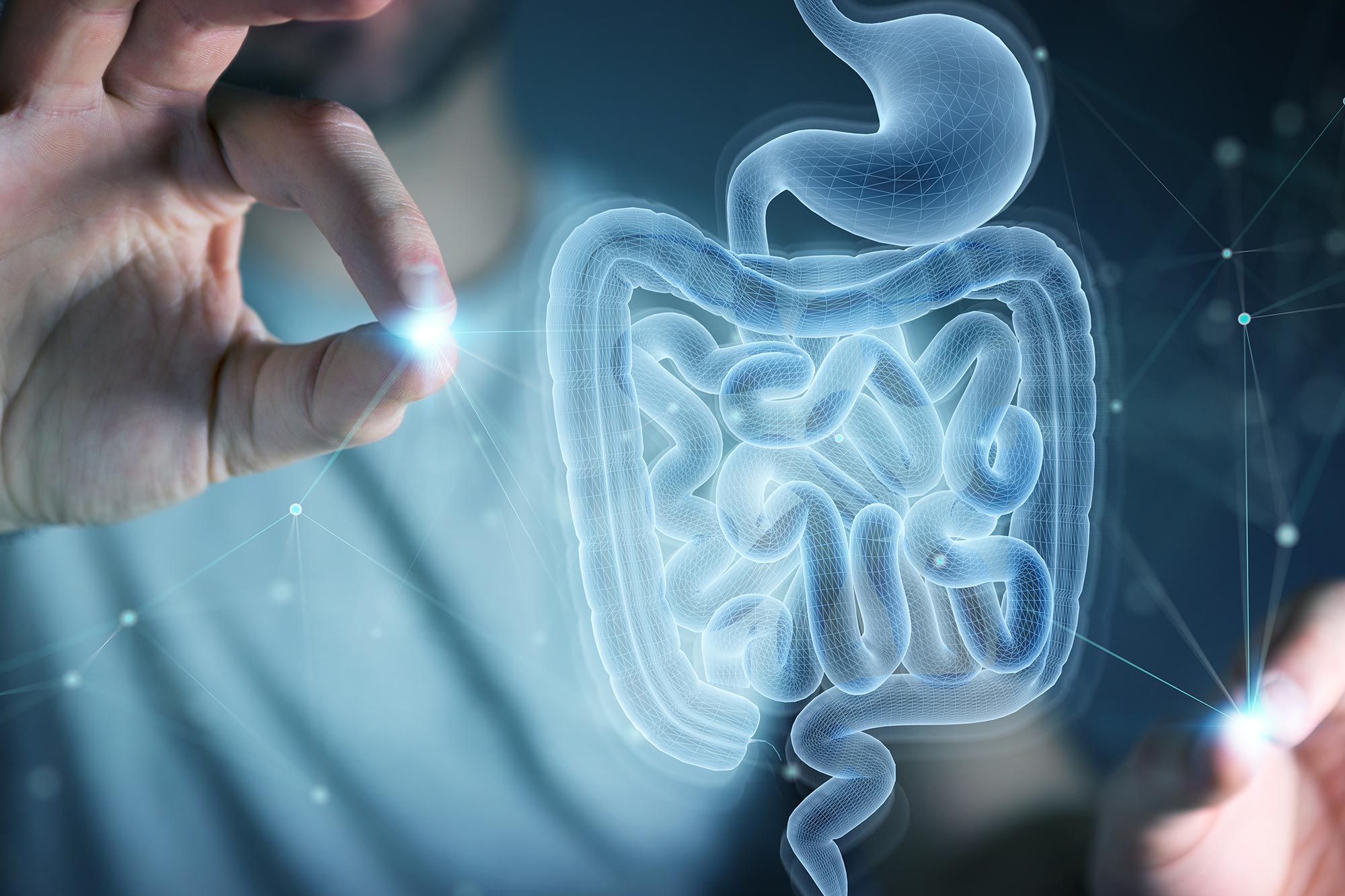
Researchers designed microscopic hydrogel spheres filled with blood-detecting bacteria to identify gastrointestinal bleeding non-invasively.
After being swallowed and passing through the body, the spheres can be magnetically collected and analyzed within minutes. In mice, the brightness of the bacterial glow revealed how severe colitis was. The technology could pave the way for easier gut-health diagnostics.
Bacterial Microsphere Pills for Fast, Easy Gut Disease Detection
Move over, colonoscopies — researchers writing today (November 19) in ACS Sensors report that they have created a new type of ingestible sensor built from microscopic spheres filled with blood-responsive bacteria that identify signs of gastrointestinal disease. These small “pills” are swallowed and include magnetic particles, which allow them to be retrieved from stool with ease. After passing through mouse models with colitis, the sensors identified gastrointestinal bleeding within minutes. The team notes that the bacteria inside these spheres could be re-engineered to detect additional gut-related disorders.
“This technology provides a new paradigm for rapid and non-invasive detection of gastrointestinal diseases,” says Ying Zhou, a co-author of the study.
Why We Need Gentler Diagnostics for GI Conditions
In the U.S., millions of people experience colorectal cancer or inflammatory bowel disease, including colitis, which can result in intestinal bleeding, diarrhea and abdominal cramping. The standard diagnostic approach remains the colonoscopy, which relies on an endoscope, a camera-equipped device guided through the large intestine. Although highly effective, many individuals avoid the test because of the preparation required and the discomfort associated with the procedure.
To offer a more patient-friendly option, Zhou, Bang-Ce Ye, Zhen-Ping Zou and colleagues are exploring ways to use bacteria that recognize biological markers of disease, such as heme — a component of red blood cells that signals intestinal bleeding.
Engineering Bacterial Biosensors That Survive the Digestive Tract
The researchers had previously designed heme-sensitive bacteria that emit light when exposed to blood, but these earlier sensors were fragile and prone to breaking down in the digestive environment, making them difficult to recover.
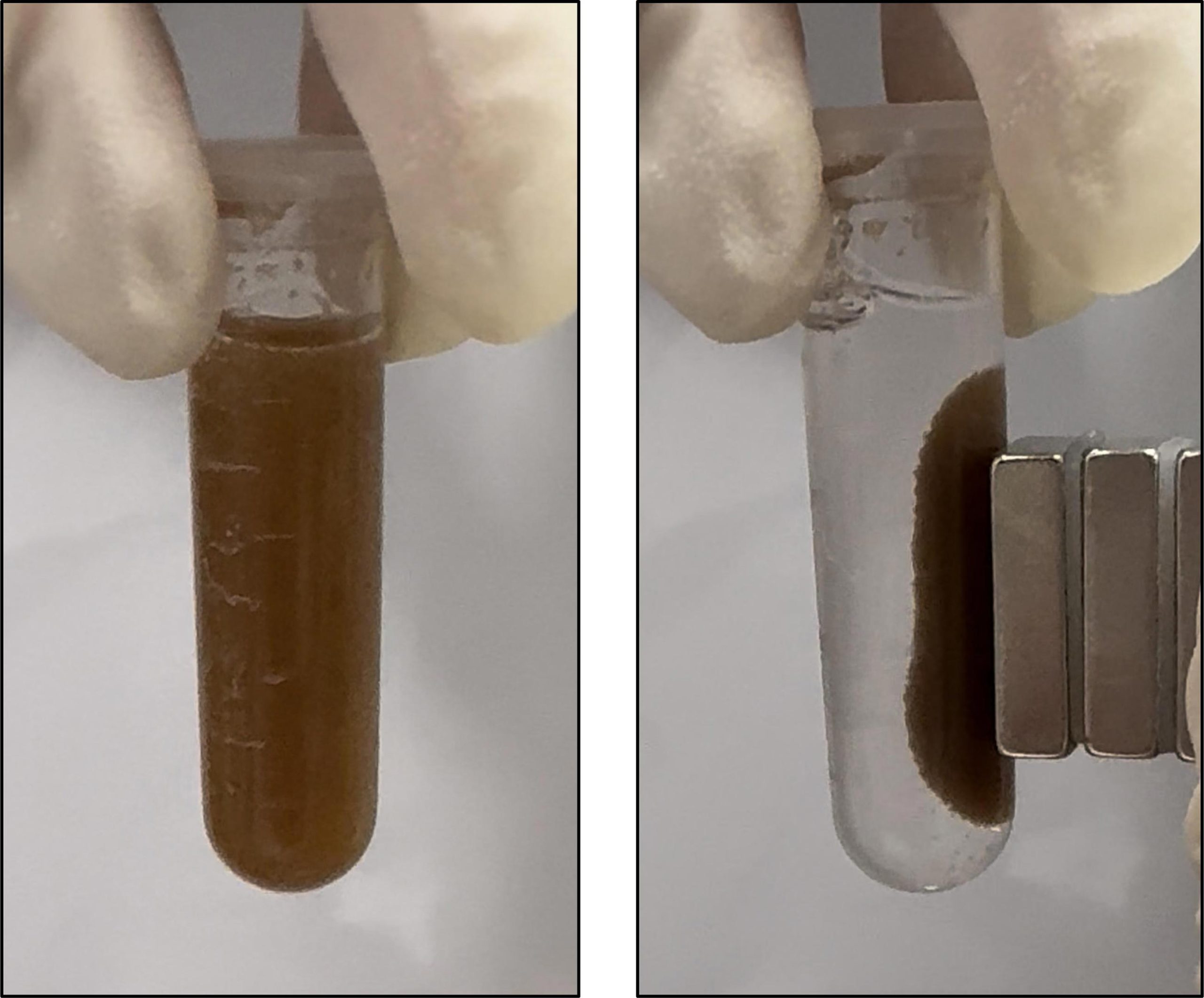
In the current work, the team embedded their heme-sensing bacteria and magnetic particles inside small droplets of sodium alginate, a common food thickener. This technique produced tiny hydrogel microspheres that can be pulled from feces with a magnet after passing through the digestive system.
Early experiments showed that the hydrogel shielded the bacteria from simulated digestive fluids while still permitting heme to reach the sensor, triggering it to glow.
Live Mouse Tests Reveal Disease Severity in Minutes
Then, the team administered the microspheres orally to mouse models of colitis, representing disease levels from no activity to severe stages. After the microspheres traveled through the animals’ gastrointestinal systems, the researchers retrieved the sensors from feces with a magnet and found:
- Microsphere cleanup and signal analysis took about 25 minutes.
- As the disease progressed, the sensor’s light intensity increased, indicating greater heme levels in mouse models with more advanced colitis.
- Assessments of healthy mice given the sensor indicated the microspheres were biocompatible and safe.
A New Path for Gut Disease Monitoring
Although the sensor still needs to be tested in humans, the researchers say this method of encapsulating bacterial sensors could be used to diagnose gastrointestinal diseases and monitor treatments and disease progression.
Reference: “Magnetic Hydrogel: Enhanced Bacterial Biosensor for Speedy Gut Disease Detection” by Chu-Ying Xu, Jing Mi, Jing-Feng Zhao, Yan-Lin Zhu, Yu-Hou Wu, Chen-Rui Zhang, Zhen-Ping Zou, Bang-Ce Ye and Ying Zhou, 19 November 2025, ACS Sensors.
DOI: 10.1021/acssensors.5c01813
The authors acknowledge funding from the National Natural Science Foundation of China, the National Key Research and Development Program of China, and the China Postdoctoral Science Foundation.
Never miss a breakthrough: Join the SciTechDaily newsletter.
Follow us on Google and Google News.
3 Comments
How will address the findings of polyps?
Colonoscopies help discover and remove these all in one go.
Either way, if this cant see polyps, or does find them, you will still need a procedure to find/remove them.
Heck, by the time that these little “glow-balls” find significant bleeding in the GI tract, it’s likely that anything like cancerous polyps are already very advanced.
The prep procedures for colonoscopies have improved much over the years, and my most recent one wasn’t nearly as bad as even 5 years ago (I’m on a 3-5 year cycle for those). The prep I went through just a few weeks ago was the “Miralax-Gatorade” protocol. The diarrhea wasn’t fun and simply cannot be avoided, but the taste/mouth feel of the prep solution was so very much more tolerable (I won’t say it was delicious, but it wasn’t purely awful like so much that I’ve experienced) than the previous preps that I highly recommend it. And it was purely over-the-counter stuff that cost well less than $20 in total.
I agree.
I just did my colonoscopy this May as I am on a 5 year cycle as well.
Prep is what it is but honestly not that bad.
They found a single polyp.
I will continue to go every 5 years and make sure they get any new polyps and stay on top of any potential issues.
Not taking any chances with “pills” or even these new stool tests.
All of those rely on detecting things that show up in more avanced stages.