
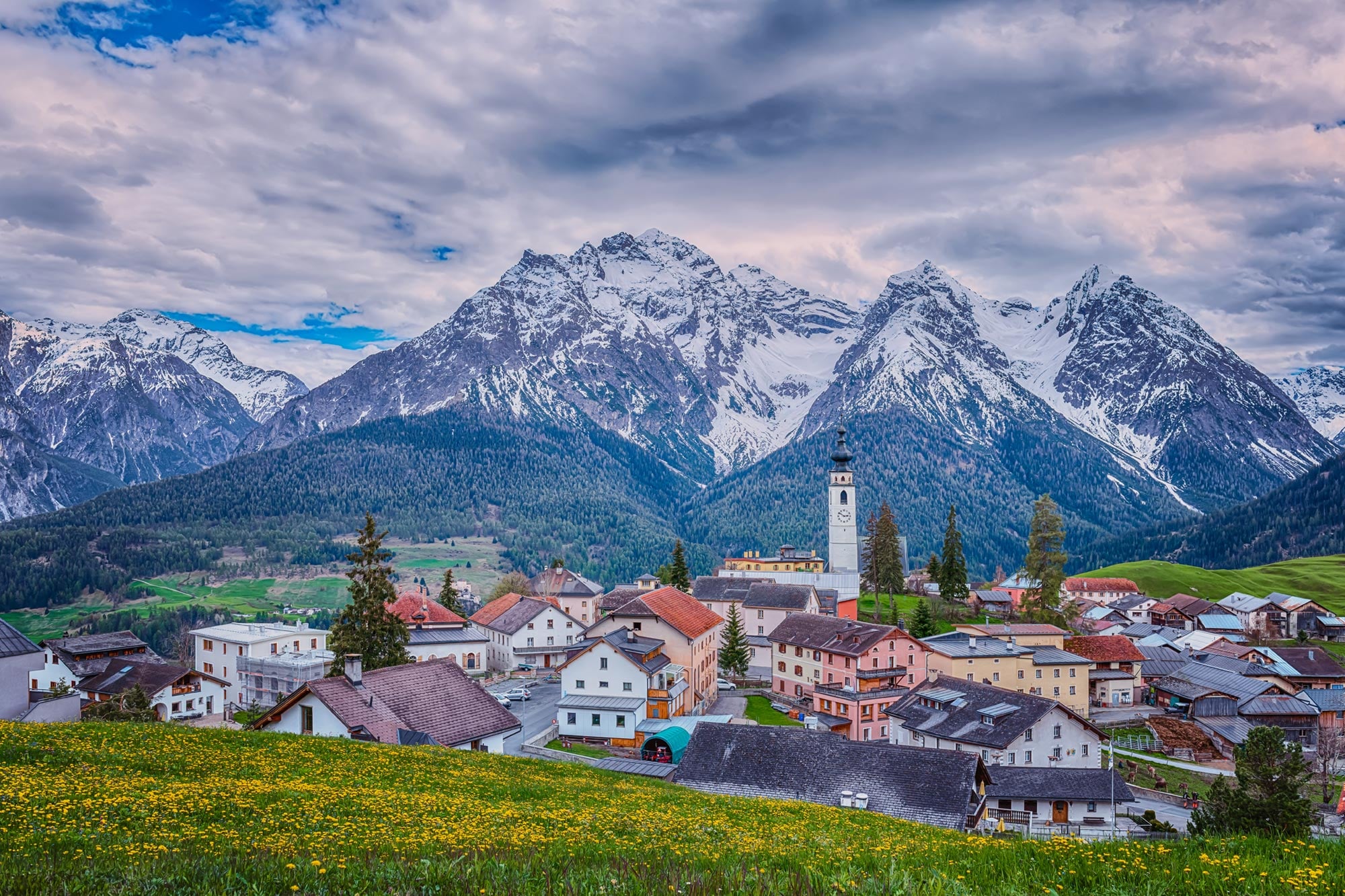
High above the world, a rapid climate shift is unfolding with global consequences.
A major global review finds that climate change is intensifying more rapidly in mountain regions than in nearby lowland areas. Scientists warn this uneven warming could have serious consequences for billions of people who live in or depend on mountain environments for water, food, and stability.
The international study, published in Nature Reviews Earth & Environment, explores a process known as “elevation-dependent climate change” (EDCC), which refers to the tendency for environmental changes to accelerate at higher altitudes. Researchers say this effect is reshaping mountain climates worldwide.
A Comprehensive Global Analysis of Mountain Climate
The review is the most detailed assessment so far of how temperatures, rainfall, and snowfall are changing across mountain ranges around the globe. It brings together multiple lines of evidence to show how quickly conditions are shifting at higher elevations.
Led by Associate Professor Dr. Nick Pepin of the University of Portsmouth, the research team analyzed data from global gridded climate datasets along with in-depth case studies. These focused on major mountain systems including the Rocky Mountains, the Alps, the Andes, and the Tibetan Plateau.
Faster Warming and Shifting Snowfall
The analysis identified clear and troubling trends between 1980 and 2020:
- Temperature: On average, mountain regions warmed 0.21°C per century faster than surrounding lowland areas
- Precipitation and snow: Rainfall has become more variable, while snow is increasingly falling as rain rather than accumulating as snowfall
“Mountains share many characteristics with Arctic regions and are experiencing similarly rapid changes,” said Dr. Pepin from the University of Portsmouth’s Institute of the Earth and Environment. “This is because both environments are losing snow and ice rapidly and are seeing profound changes in ecosystems. What’s less well known is that as you go higher into the mountains, the rate of climate change can become even more intense.”
Why Billions of People Are Affected
The impacts of these changes reach far beyond mountain landscapes themselves. More than one billion people around the world rely on mountain snow and glaciers as a key source of freshwater. This includes large populations in China and India, the world’s two largest countries by population, which receive significant water supplies from the Himalayas.
Dr. Pepin emphasized that warming temperatures are already altering these critical systems. “The Himalayan ice is decreasing more rapidly than we thought. When you transition from snowfall to rain because it has become warmer, you’re more likely to get devastating floods. Hazardous events also become more extreme.”
Ecosystems Under Pressure at Higher Elevations
Rising temperatures are also forcing plants and animals to move uphill in search of cooler conditions. “As temperatures rise, trees and animals are moving higher up the mountains, chasing cooler conditions. But eventually in some cases they’ll run out of mountain and be pushed off the top. With nowhere left to go, species may be lost and ecosystems fundamentally changed.”
Extreme Weather Shows the Risks Are Growing
Recent disasters underscore the urgency of these findings. Dr. Pepin pointed to events in Pakistan this summer, when some of the deadliest monsoon conditions in years struck the region. Intense cloudbursts and extreme rainfall in mountainous areas led to floods that killed more than 1,000 people.
Building on a Decade of Research
The new review builds on the team’s earlier work, including a 2015 paper published in Nature Climate Change. That study was the first to show clear evidence that warming rates increase with elevation. It identified several drivers of this pattern, such as shrinking snow and ice cover, rising atmospheric moisture, and the effects of aerosol pollutants.
Ten years later, scientists have improved their understanding of what controls these changes and how they affect mountain systems. Still, the broader challenge remains unresolved. “The issue of climate change has not gone away,” said Dr. Pepin. “We can’t just tackle mountain climate change independently of the broader issue of climate change.”
Data Gaps and the Need for Better Monitoring
One of the biggest obstacles to understanding mountain climate change is the lack of long term weather observations at high elevations. “Mountains are harsh environments, remote, and hard to get to,” said Dr. Nadine Salzmann from the WSL Institute for Snow and Avalanche Research SLF in Davos, Switzerland. “Therefore, maintaining weather and climate stations in these environments remains challenging.”
Because of these gaps, scientists may be underestimating how quickly temperatures are rising and how fast snow and ice could disappear. The review also calls for improved climate models with much finer spatial detail. Many existing models track changes only every few kilometers, even though conditions can vary sharply between slopes that are only meters apart.
Dr. Emily Potter from the University of Sheffield stressed that technology alone will not solve the problem. “The good news is that computer models are improving. But better technology alone isn’t enough; we need urgent action on climate commitments and significantly improved monitoring infrastructure in these vulnerable mountain regions.”
Reference: “Elevation-dependent climate change in mountain environments” by Nick Pepin, Martha Apple, John Knowles, Silvia Terzago, Enrico Arnone, Lorenz Hänchen, Anna Napoli, Emily Potter, Jakob Steiner, Scott N. Williamson, Bodo Ahrens, Tanmay Dhar, A. P. Dimri, Elisa Palazzi, Arathi Rameshan, Nadine Salzmann, Maria Shahgedanova, João de Deus Vidal Jr and Dino Zardi, 25 November 2025, Nature Reviews Earth & Environment.
DOI: 10.1038/s43017-025-00740-4
Never miss a breakthrough: Join the SciTechDaily newsletter.
Follow us on Google and Google News.
2 Comments
One frequently hears laments about how melting glaciers will result in reduced stream flow and therefore result in water shortages. Why is it that those same people never mention that if the climate were to turn colder, and glaciers were to start advancing again, there would be reduced meltwater? The only way that water availability could remain constant is if the climate were be unchanging. However, this isn’t how the world works! Climate is always changing. The trick is for humans to not use all the available water by having a population that is small enough to have a surplus as a buffer against dry or cold years.
“As temperatures rise, trees and animals are moving higher up the mountains, chasing cooler conditions. But eventually in some cases they’ll run out of mountain and be pushed off the top. With nowhere left to go, species may be lost and ecosystems fundamentally changed.”
The unstated assumption is that the trees and animals will be unable to adapt to a changing environment. Which is strange, because anyone familiar with evolution realizes that it is elevation changes resulting from orogeny (mountain building), and subsequent erosion to a peneplane, that changes the local climate and results in the evolution of new species that take advantage of new ecological niches. This all happens because of what is called the Lapse Rate, which is the natural temperature change with elevation in the troposphere. Lapse rates vary with with latitude, season, and humidity, but are commonly in the range of about 4 to 10°C/km elevation. That means, to maintain environmental conditions that the trees and animals are accustomed to, they only have to migrate upwards about 100 to 250m for each 1°C of cooling they want to experience. 1°C is about the average global temperature increase per century. That means about 1 meter per year for the high lapse rate or 2.5 meters per year for the low lapse rate — or the pikas could just wander over to the north side of the mountain, the last stronghold of alpine glaciers, to gain a few more centuries. Actually, trees rarely thrive above about 4,000m. Warming might help them extend the tree line, but that can’t be mentioned because some might see that in a positive light.
Assigning numbers to one’s assumptions is more informative than just waving ones arms vigorously. Even if one is firmly grasping brightly-colored pom-poms to attract attention.
“When you transition from snowfall to rain because it has become warmer, you’re more likely to get devastating floods.”
I am most familiar with flooding in California. It is not uncommon for what is now called an “atmospheric river,” originating near Hawaii and thus formerly referred to as a “Pineapple Express,” to dump warm water on snow in the Sierra Nevada, and flash melt the snow in late-December to early-January. That is how one gets truly devastating floods! Therefore, if it continues to warm and the precipitation runs off instead of accumulating as snow, these types of snow melt-induced flash floods may become rarer. That is, the current situation may be transitory. Be that as it may, there have been no events on the West Coast of the USA to match the magnitude of the the Great Flood of 1862, despite 164 years of warming.