
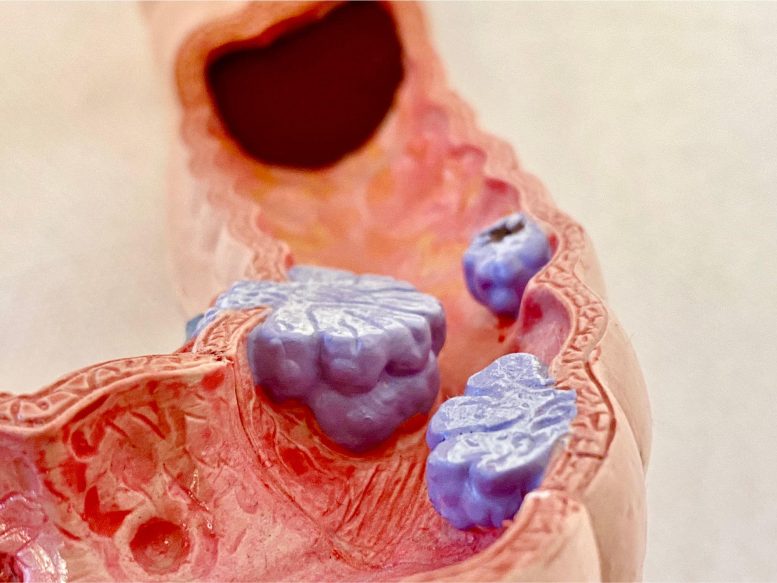
Grasping the connection between the gut microbiome and the polyp growth paves the way for potential diagnostic procedures and treatments.
Researchers from Mass General Brigham have recently published a study in the journal Cell Host & Microbe that establishes a connection between specific gut bacteria and the formation of precancerous polyps in the colon.
“Researchers have done a lot of work to understand the relationship between the gut microbiome and cancer. But this new study is about understanding the microbiome’s influence on precancerous polyps,” said co-corresponding author Daniel C. Chung, MD, medical co-director of the Center for Cancer Risk Assessment at the Mass General Cancer Center and a faculty member of the Gastroenterology Division. “Through the microbiome, we potentially have an opportunity to intervene and prevent colorectal cancer from forming.”
Colorectal cancer, the second most deadly type of cancer in the U.S., is seeing an increase in incidence among younger adults. Almost all colorectal cancers originate from a precancerous polyp. Therefore, one of the most effective strategies to decrease colorectal cancer rates is to halt the progression at the polyp stage.
There’s more than one way for a polyp to develop. The two main types of polyps are tubular adenomas and sessile serrated polyps. Risk factors for colorectal cancer and polyps include lifestyle factors like being overweight or obese, low physical activity levels, a diet high in red and processed meats, smoking, and alcohol use. These factors also influence the bacteria that live in our intestines, collectively known as the gut microbiome.
The Gut Microbiome and Its Impact on Polyp Development
Researchers think these environmental influences could promote polyp growth in one of two ways. Either they change the gut microbiome directly in a way that encourages polyp growth, or they promote polyp growth which in turn influences the gut microbiome by directly affecting the cells lining the intestines.
Earlier, smaller studies trying to link the gut microbiome to polyps have not found a consistent pattern, though they didn’t look at these two types of polyps specifically.
To study the gut microbiome’s link to colon polyps, the researchers took data from 1,200 people getting routine screening colonoscopies. They gathered information on their health, diet, medications, and lifestyle, as well as analyzed stool samples to determine the bacterial makeup of their gut microbiome. The new research is the biggest study from an extensive collaborative research program, the GI Disease and Endoscopy Registry (GIDER) at Massachusetts General Hospital, allowing these researchers to understand gastrointestinal diseases in greater depth than ever. This registry remains active and ongoing data collection will enable longitudinal follow-up.
Distinct Bacterial Signatures in Different Polyp Types
The new study is the largest of its kind and analyzed the differences in the gut microbial signature of people without colon polyps, with tubular adenomas, or with sessile serrated adenomas. They also correlated this data with the patient’s health and family histories.
Bacterial signatures clustered into three groups based on the type and presence of polyps in the colon. Nineteen bacterial species were significantly different in patients with tubular adenomas than in other populations. In patients with sessile serrated adenomas, eight species were significantly different.
The authors note that the study population was mostly white, limiting generalizability to other racial groups and that the study cannot establish whether bacterial species or adenoma tissue change first. The next step is for researchers to isolate specific species of bacteria acting in the gut and see if they can verify these functional relationships between the bacterial species and polyp growth with a model in a lab. This information could help develop a probiotic or treatment to lower colorectal cancer risk or as a screening method to assess polyp or colorectal cancer risk.
“The hope is that by changing specific aspects of the diet or the microbiome, we can alter the natural history of these polyps,” Chung said. “Interventions to prevent polyp formation or alter their growth patterns may ultimately prevent colorectal cancer.”
Reference: “Association of distinct microbial signatures with premalignant colorectal adenomas” by Jonathan Wei Jie Lee, Damian R. Plichta, Shreya Asher, Marisa Delsignore, Tiffany Jeong, Jessica McGoldrick, Kyle Staller, Hamed Khalili, Ramnik J. Xavier and Daniel C. Chung, 1 May 2023, Cell Host & Microbe.
DOI: 10.1016/j.chom.2023.04.007
The study was funded in part by the Center for Microbiome Informatics and Therapeutics at MIT, the Center for the Study of Inflammatory Bowel Disease, and the National Institutes of Health.
Disclosures: Co-author Ramnik Xavier is a co-founder of Celsius Therapeutics and Jnana Therapeutics, a member of the scientific advisory board of Nestle, and a member of the board of directors at Moonlake Immunotherapeutics. Jonathan Wei Jie Lee is a co-founder of AMILI and serves as a member of the scientific advisory board. Chung is a consultant to Guardant. Hamed Khalili has received grant funding from Pfizer and is a consultant to Takeda. Kyle Staller has served as a consultant to Arena, Boston Pharmaceutics, Gelesis, GI Supply, and Takeda/Shire; he has received research support from Ironwood and Urovant.
Never miss a breakthrough: Join the SciTechDaily newsletter.
Follow us on Google and Google News.