
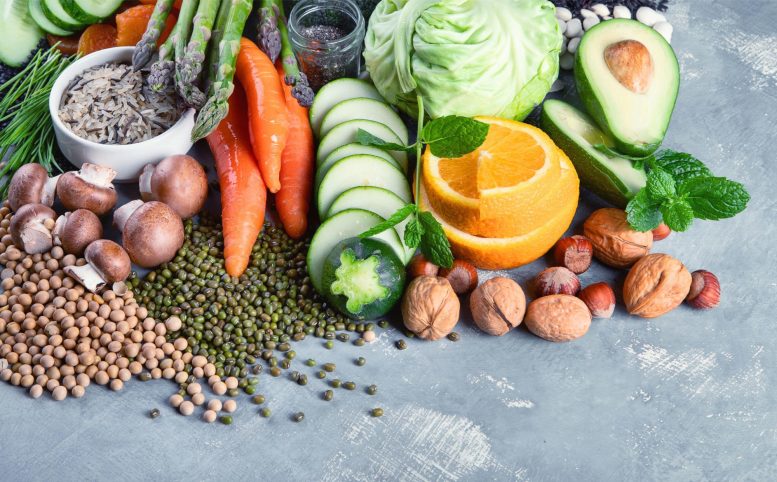
Healthy plant-based diets lower colorectal cancer risk in men, especially Japanese American and white men, but show no impact in women. Antioxidants likely play a role in reducing inflammation.
A diet rich in whole grains, vegetables, and legumes and low in refined grains, fruit juices, and added sugars may lower the risk of colorectal cancer in men, according to a study recently published in the journal BMC Medicine. The study found that consuming a plant-based diet is associated with a reduced risk of the disease.
Jihye Kim, the corresponding author said: “Colorectal cancer is the third most common cancer worldwide and the risk of developing colorectal cancer over a lifetime is one in 23 for men and one in 25 for women1. Although previous research has suggested that plant-based diets may play a role in preventing colorectal cancer, the impact of plant foods’ nutritional quality on this association has been unclear. Our findings suggest that eating a healthy plant-based diet is associated with a reduced risk of colorectal cancer.”
Researchers from Kyung Hee University, South Korea found that, among a population of 79,952 American men, those who ate the highest average daily amounts of healthy plant-based foods had a 22% lower risk of colorectal cancer, compared to those who ate the lowest amounts of healthy plant foods. However, the authors did not identify any significant associations between the nutritional quality of plant-based diets and colorectal cancer risk among a population of 93,475 American women.
Jihye Kim said: “We speculate that the antioxidants found in foods such as fruits, vegetables, and whole grains could contribute to lowering colorectal cancer risk by suppressing chronic inflammation, which can lead to cancer. As men tend to have a higher risk of colorectal cancer than women, we propose that this could help explain why eating greater amounts of healthy plant-based foods was associated with reduced colorectal cancer risk in men but not women.”
Racial and Ethnic Variations
The authors found that the association between the nutritional quality of plant-based diets and colorectal cancer risk among men varied by race and ethnicity. Among Japanese American men, colorectal cancer risk was 20% lower for those who ate the highest amount of healthy plant foods per day than for those who ate the lowest amount. Among white men, those who ate the highest amount of healthy plant foods had a 24% lower colorectal cancer risk than those who ate the lowest amount. The authors did not identify any significant associations between plant-based diets and colorectal cancer risk among African American, Latino, or Native Hawaiian men.
Jihye Kim said: “We suggest that the association between plant-based diets and colorectal cancer risk may have been strongest in Japanese American and white men due to differences in other colorectal cancer risk factors between racial and ethnic groups. However, further research is needed to confirm this.”
To examine the relationship between plant-based diets and colorectal cancer risk, the authors analyzed data collected from adults who were recruited from Hawaii and Los Angeles, USA to the Multiethnic Cohort Study between 1993 and 1996. On average, male participants were aged 60 years and female participants were aged 59 years at the beginning of the study period. 24,138 (30.2%) male participants were Japanese American, 20,663 (25.8%) were, 19,198 (24.0%) were Latino, 10,381 (13.0%) were African American and 5,572 (7.0%) were Native Hawaiian.
Participants reported their usual food and drink intake during the previous year and the authors assessed whether their diets were high in plant-based foods they classified as healthy — such as whole grains, fruits, vegetables, and legumes — or unhealthy — for example, refined grains, fruit juices, and added sugars — relative to other participants.
They then calculated the incidence of new colorectal cancer cases until 2017 using data obtained from cancer registries. The authors accounted for participants’ age, family history of colorectal cancer, BMI, smoking history, physical activity levels, alcohol consumption, multivitamin use and treatment, and daily energy intake. They also accounted for female participants’ use of hormone replacement therapy. 4,976 participants (2.9%) developed colorectal cancer during the study period.
The researchers caution that the observational nature of their study does not allow for conclusions about a causal relationship between plant-based food intake and colorectal cancer risk. They also did not account for the beneficial effects that foods such as fish and dairy may have in reducing colorectal cancer risk in their analyses. Additionally, as participants’ diets were recorded at the beginning of the study, they may not be representative of their lifetime diets.
The authors suggest that future research is needed to investigate the genetic and environmental factors that could influence the association between plant-based food intake and colorectal cancer risk between racial and ethnic groups.
Reference: “Plant-based dietary patterns defined by a priori indices and colorectal cancer risk by sex and race/ethnicity: the Multiethnic Cohort Study” by Jihye Kim, Carol J. Boushey, Lynne R. Wilkens, Christopher A. Haiman, Loïc Le Marchand and Song-Yi Park, 29 November 2022, BMC Medicine.
DOI: 10.1186/s12916-022-02623-7
The study was funded by the National Research Foundation of Korea and the United States National Cancer Institute.
Never miss a breakthrough: Join the SciTechDaily newsletter.
Follow us on Google and Google News.
1 Comment
Why does the title specify lowering of “men’s” risk of colon cancer when the study includes both men and women?
Furthermore, why does this article exist when it clearly states “The researchers caution that the observational nature of their study does not allow for conclusions about a causal relationship between plant-based food intake and colorectal cancer risk”?