

Centimeter-sized pebbles have been detected in protoplanetary discs using e‑MERLIN, filling in a critical phase of planet formation. These findings point toward the birthplaces of future planetary systems.
A new window into the early stages of solar system formation has opened with the discovery of planet-forming ‘pebbles’ surrounding two young stars.
These small building blocks are believed to slowly cluster together over time, initiating the same process that formed Jupiter approximately 4.5 billion years ago, followed by the rest of the planets in our solar system—Saturn, Uranus, Neptune, Mercury, Venus, Earth, and Mars.
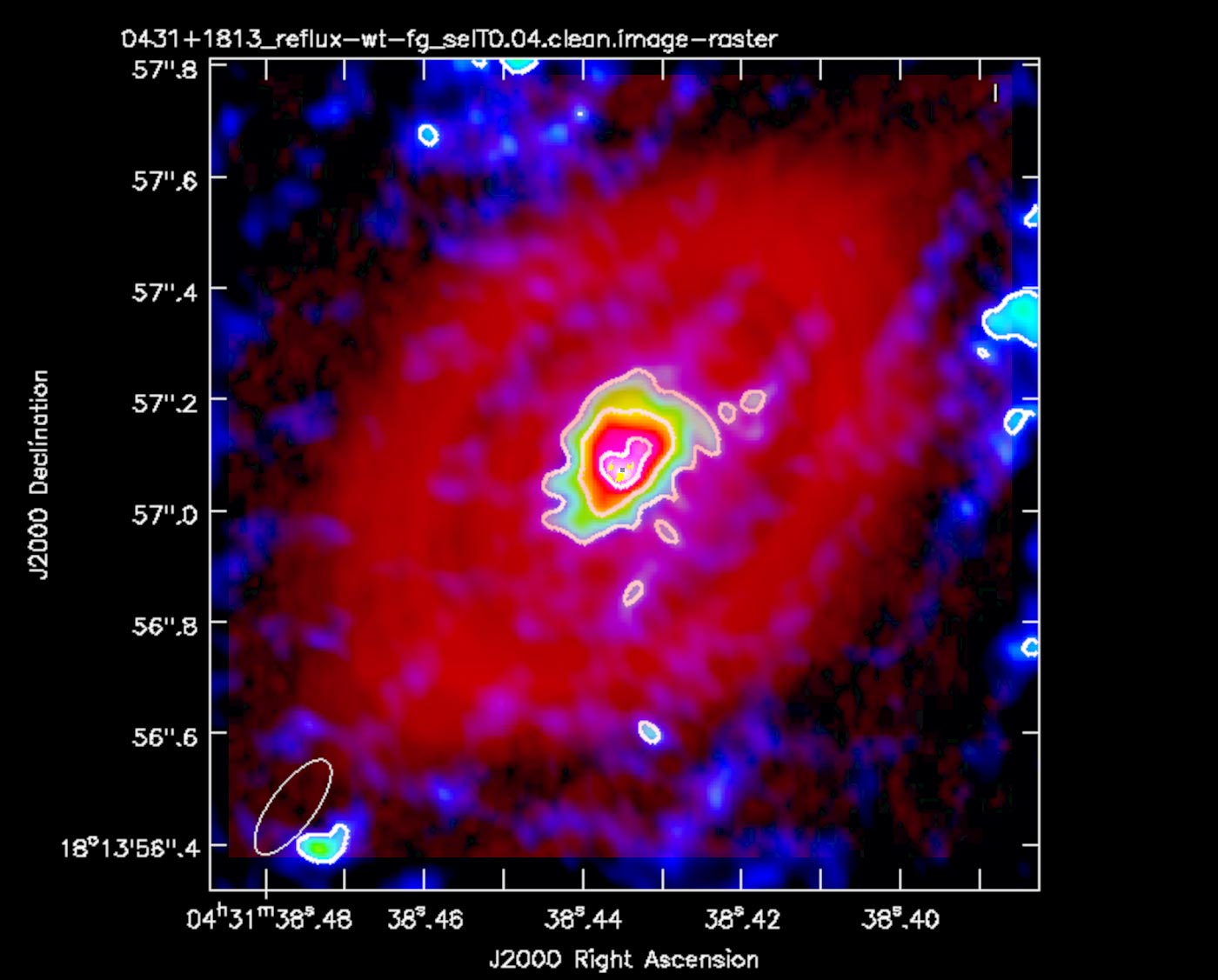
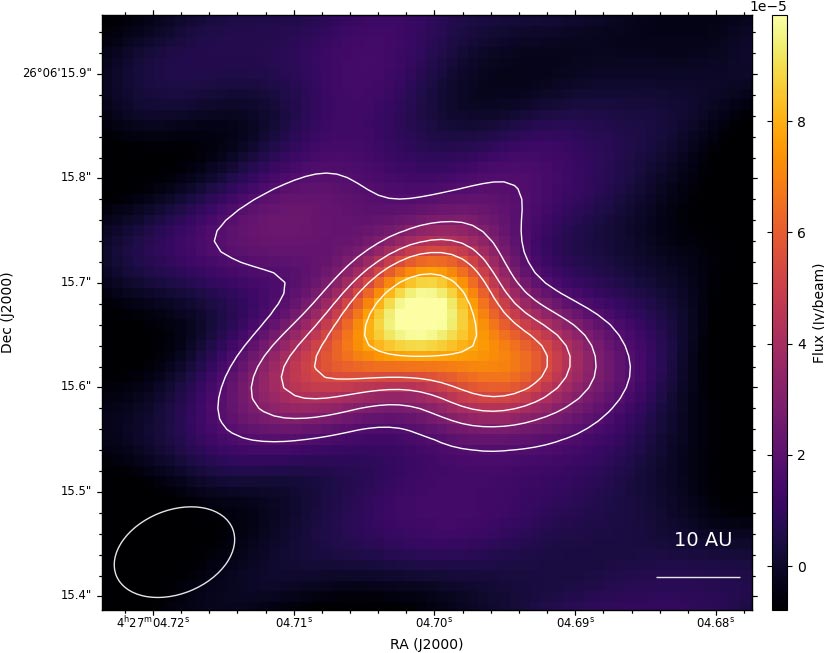
Researchers identified these protoplanetary discs, the regions where planets begin to form, extending as far as Neptune-like distances around the stars DG Tau and HL Tau, located roughly 450 light-years from Earth.
Announced at the Royal Astronomical Society’s National Astronomy Meeting 2025 in Durham, the findings provide valuable insights into a previously elusive stage of planet development.
“These observations show that discs like DG Tau and HL Tau already contain large reservoirs of planet-forming pebbles out to at least Neptune-like orbits,” said researcher Dr Katie Hesterly, of the SKA Observatory.
“This is potentially enough to build planetary systems larger than our own solar system.”
PEBBLeS project reveals planetary potential
The study is part of the PEBBLeS project (Planet Earth Building-Blocks – a Legacy eMERLIN Survey), which is led by Professor Jane Greaves of Cardiff University.
The research team is examining rocky debris belts around various stars to uncover patterns in how frequently and where planets form, particularly around stars that will eventually resemble our Sun.
This effort relies on e‑MERLIN, a network of seven radio telescopes spread across 217 km (135 miles) in the UK, all linked by high-speed optical fiber to a central hub at Jodrell Bank Observatory in Cheshire.
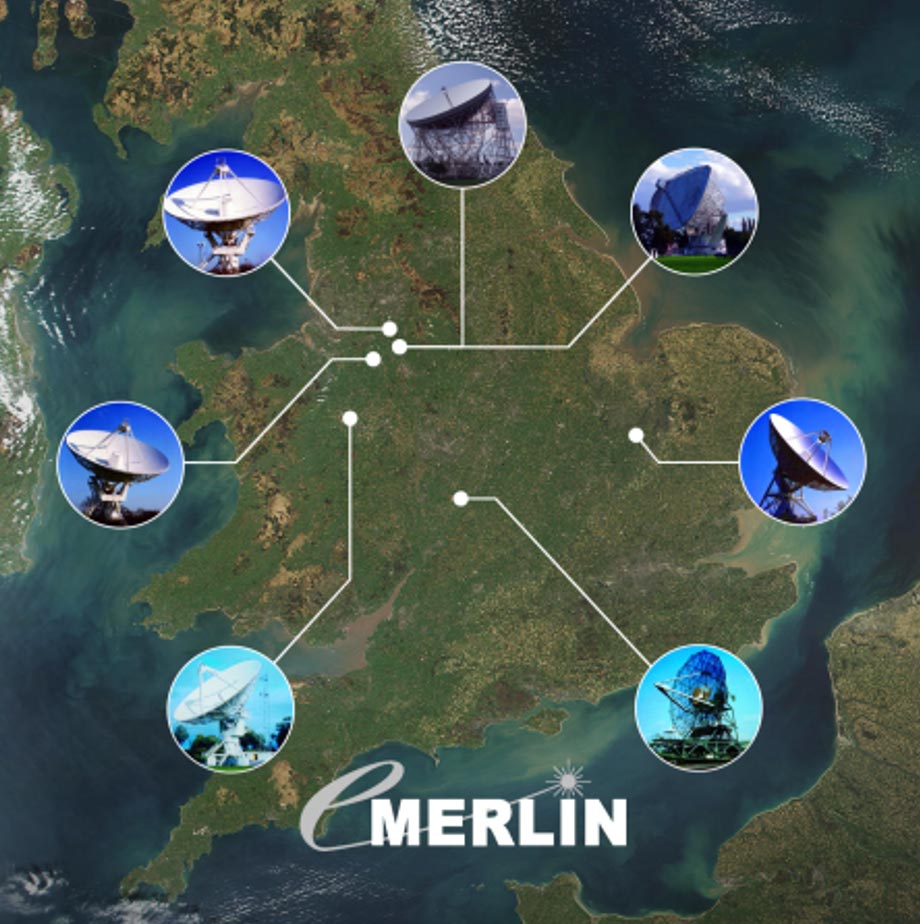
Currently, e‑MERLIN is the only radio telescope with the resolution and sensitivity needed to investigate protoplanetary discs—the birthplaces of planets—with the necessary scientific precision.
“Through these observations, we’re now able to investigate where solid material gathers in these discs, providing insight into one of the earliest stages of planet formation,” said Professor Greaves.
Bridging the planet formation gap
Since the 1990s, astronomers have found both disks of gas and dust, and nearly 2,000 fully-formed planets, but the intermediate stages of formation are harder to detect.
“Decades ago, young stars were found to be surrounded by orbiting discs of gas and tiny grains like dust or sand,” said Dr Anita Richards, of the Jodrell Bank Centre for Astrophysics at the University of Manchester, who has also been involved in the research.
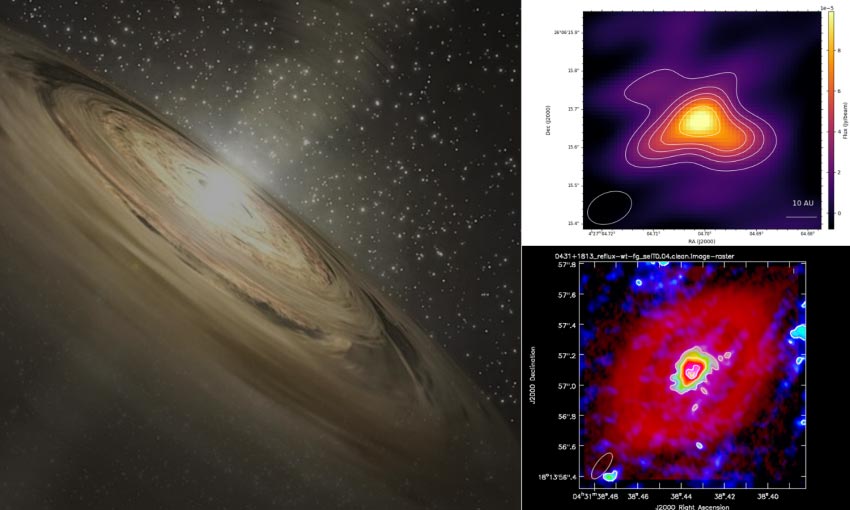
“Enough grains to make Jupiter could be spread over roughly the same area as the entire orbit of Jupiter, making this easy to detect with optical and infrared telescopes, or the ALMA submillimeter radio interferometer.
“But as the grains clump together to make planets, the surface area of a given mass gets smaller and harder to see.”
Centimeter-wavelength observations detect rocky material
For that reason, because centimeter-sized pebbles emit best at wavelengths similar to their size, the UK interferometer e-MERLIN is ideal to look for these because it can observe at around 4 cm wavelength.
In one new e‑MERLIN image of DG Tau’s disc, it reveals that centimetre-sized pebbles have already formed out to Neptune-like orbits, while a similar collection of planetary seeds has also been detected encircling HL Tau.
These discoveries offer an early glimpse of what the Square Kilometer Array (SKA) telescope in South Africa and Australia will uncover in the coming decade with its improved sensitivity and scale, paving the way to study protoplanetary discs across the galaxy in unprecedented detail.
“e-MERLIN is showing what’s possible, and SKA telescope will take it further,” said Dr Hesterly.
“When science verification with the SKA-Mid telescope begins in 2031, we’ll be ready to study hundreds of planetary systems to help understand how planets are formed.”
Meeting: National Astronomy Meeting 2025
Never miss a breakthrough: Join the SciTechDaily newsletter.
Follow us on Google and Google News.
4 Comments
Then at the 1 meter barrier it all falls apart.
Oh please, untill it becomes a planet we cannot say this is the beginning of a solar system since we dont even know how ours started. It all theories.
Oh please. Untill it develops any planets this is hardly truth. We dont even know how our own solar system started it’s all theories. To claim this is a beginning solar system is lightyears of a reach 1,300 lightyears to be exact.
There is only one solar system. All the other planets are in planetary systems.