
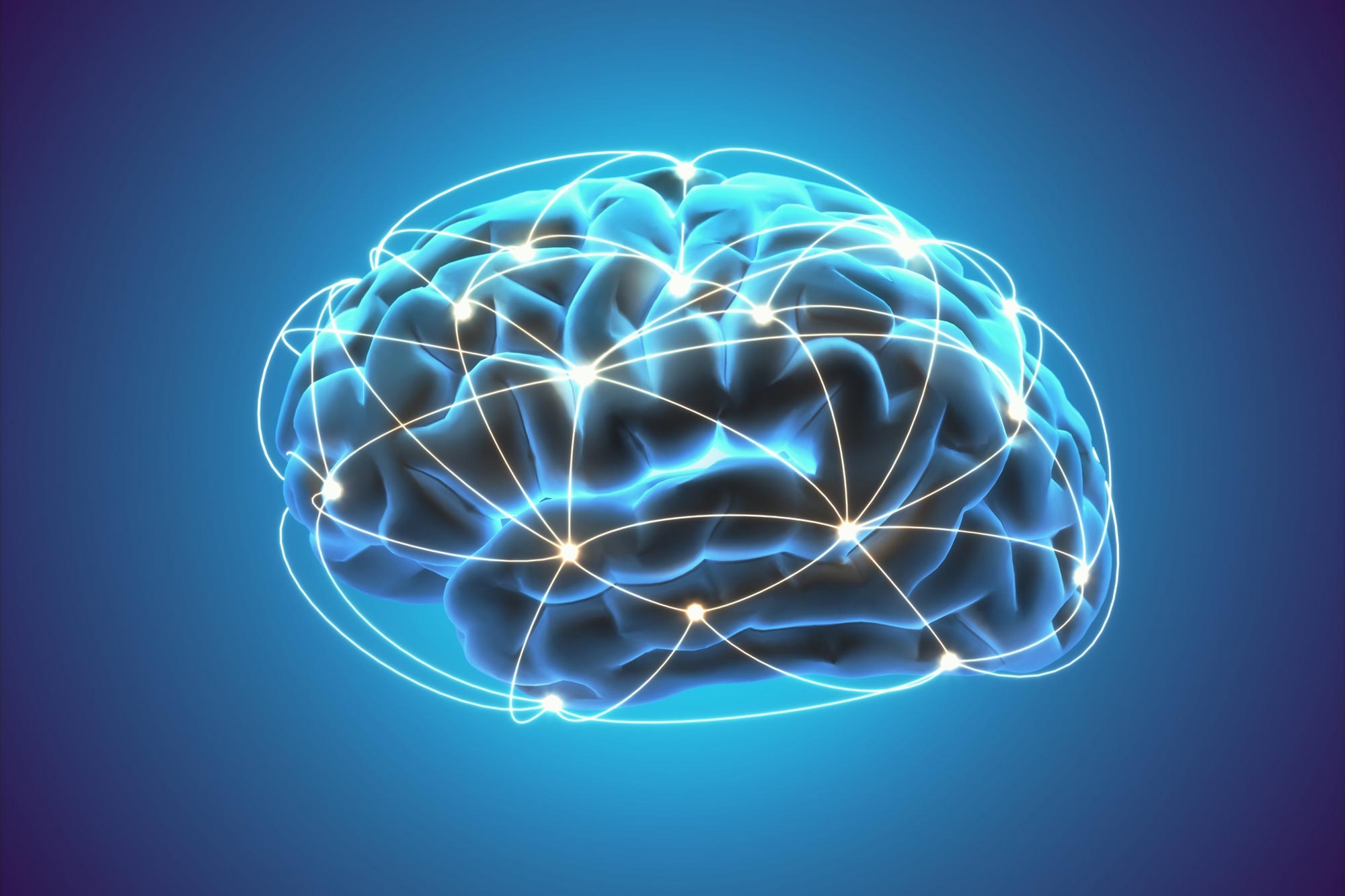
A new study shows that intelligence is best predicted by global brain connectivity, not just specific regions, indicating a more holistic neural basis for cognition. They examined fluid, crystallized, and general intelligence using fMRI data, finding that general intelligence had the strongest predictive power.
The human brain is the central organ that controls our body. It processes sensory information and enables us to think, make decisions, and store knowledge. Despite its remarkable capabilities, it is paradoxical how much remains unknown about this intricate organ.
Jonas Thiele and Dr. Kirsten Hilger, who leads the “Networks of Behavior and Cognition” research group at the Department of Psychology I at Julius-Maximilians-Universität Würzburg (JMU), are dedicated to unraveling the mysteries of the brain. Their latest research has been published in the scientific journal PNAS Nexus.
Predicting Intelligence from Brain Connections
The researchers used data sets from a large-scale data-sharing project based in the US: the Human Connectome Project. With the help of fMRI – an imaging method that measures changes in brain activity – over 800 people were examined. Both at rest and while they performed various tasks.
The Würzburg-led team looked at various connections that map the communication strength between different brain regions and made predictions about individual intelligence scores based on these observations.
“Many studies predicting intelligence from brain connections have been published in the last years and they also achieve quite good predictive performance,” says Kirsten Hilger. However, the neuroscientists question their deeper meaning, as the predictions would never be as accurate as the results of an intelligence test. “We therefore intended to move away from the pure prediction of intelligence scores and instead better understand the fundamental processes in the brain. We hope that this will give us a better understanding of the neural code of individual differences in intelligence.”
Kirsten Hilger hopes that colleagues will follow her example and that more studies will be designed in the future aiming at improving the conceptual understanding of human cognition with a focus on interpretability.
Three Types of Intelligence
The team distinguished three types of intelligence in their predictions: Fluid intelligence refers to the ability to solve logical problems, recognize patterns, and process new information, independent of existing knowledge or learned skills.
Crystallized intelligence encompasses the knowledge and skills that a person acquires over the course of their life. This includes general knowledge, experience, and understanding of language and concepts. It arises through education and experience.
Together, these two forms make up general intelligence. The best predictive performance was achieved with general intelligence, followed by crystallized and fluid intelligence.
Brain-wide Connections Best Predict Intelligence
Various theoretical considerations determined which different connections in the brain were examined. In addition, randomly selected connections were also tested. One crucial observation: the distribution of connections across the entire brain as well as the pure number of connections were most important for predictive performance, more important than between which exact brain regions the individual connections were located.
“The interchangeability of the selected connections suggests that intelligence is a global property of the whole brain. We were able to predict intelligence not just from a specific set of brain connections, but from different combinations of connections distributed throughout the brain,” says Hilger.
Results Outperform Established Theories
While established theories of intelligence often focus on specific areas of the brain – such as the prefrontal cortex – the results of the study suggest that connections between additional brain regions are important for intelligence: “The connections of brain regions proposed in the most popular neurocognitive models of intelligence produced better results than randomly selected connections. However, the results were even better when complementary connections were added,” reports Kirsten Hilger.
Overall, this suggests that there are even more aspects of intelligence than previously assumed that are waiting to be understood in the future.
Reference: “Choosing explanation over performance: Insights from machine learning-based prediction of human intelligence from brain connectivity” by Jonas A Thiele, Joshua Faskowitz, Olaf Sporns and Kirsten Hilger, 10 December 2024, PNAS Nexus.
DOI: 10.1093/pnasnexus/pgae519
Never miss a breakthrough: Join the SciTechDaily newsletter.
Follow us on Google and Google News.
7 Comments
Hi
Holistic approach is generally ignored by our scientists, especially physicists. In the era of AI, the finding that a holistic approach is more suitable for explaining general intelligence has a crucial implication – artificial general intelligence may be impossible. In my opinion, gut also has a role in general intelligence. When gut says it requires food, the brain explores even hitherto unexplored paths for getting food. This motivated search is what makes general intelligence different from SI.
Holistic approach is generally ignored by our scientists, especially physicists. In the era of AI, the finding that a holistic approach is more suitable for explaining general intelligence has a crucial implication – artificial general intelligence may be impossible. In my opinion, gut also has a role in general intelligence. When gut says it requires food, the brain explores even hitherto unexplored paths for getting food. This motivated search is what makes general intelligence different from AI.
These 800 people were not illegally chipped for this study, I hope!
In,2023 I found that because my job didn’t necessarily require it and I was usually to tired to read sometimes at the end of the day I was not performing enough thinking. I found a good way to change things with a meditative like thought performed the day or when I can. It has helped to give me true benefits.
What it’s based on is what I want to remember and I used in in a way that gives me true strength. What I do is tie my weakness to my strength in an attempt to re-enforce memory in two ways. Using this method will help offer a true strength in your thoughts. You can practice more than one thoughts process at once.
I’ve had difficulty remembering names all my life. To counter this, I assign a a similar sounding word, or sometimes an event, to help with recollection. Try this when meditating and see if it helps.
I’m 69 and over the years driven by an obsessive curiosity developed a theoretical framework that explains how our minds function. A theory which literally explains everything. Any researchers interested hearing me out are more than welcome to contact me. The amazing thing is that all over the world scientists have managed to discover pieces of the puzzle but somehow no one sees the bigger picture.