
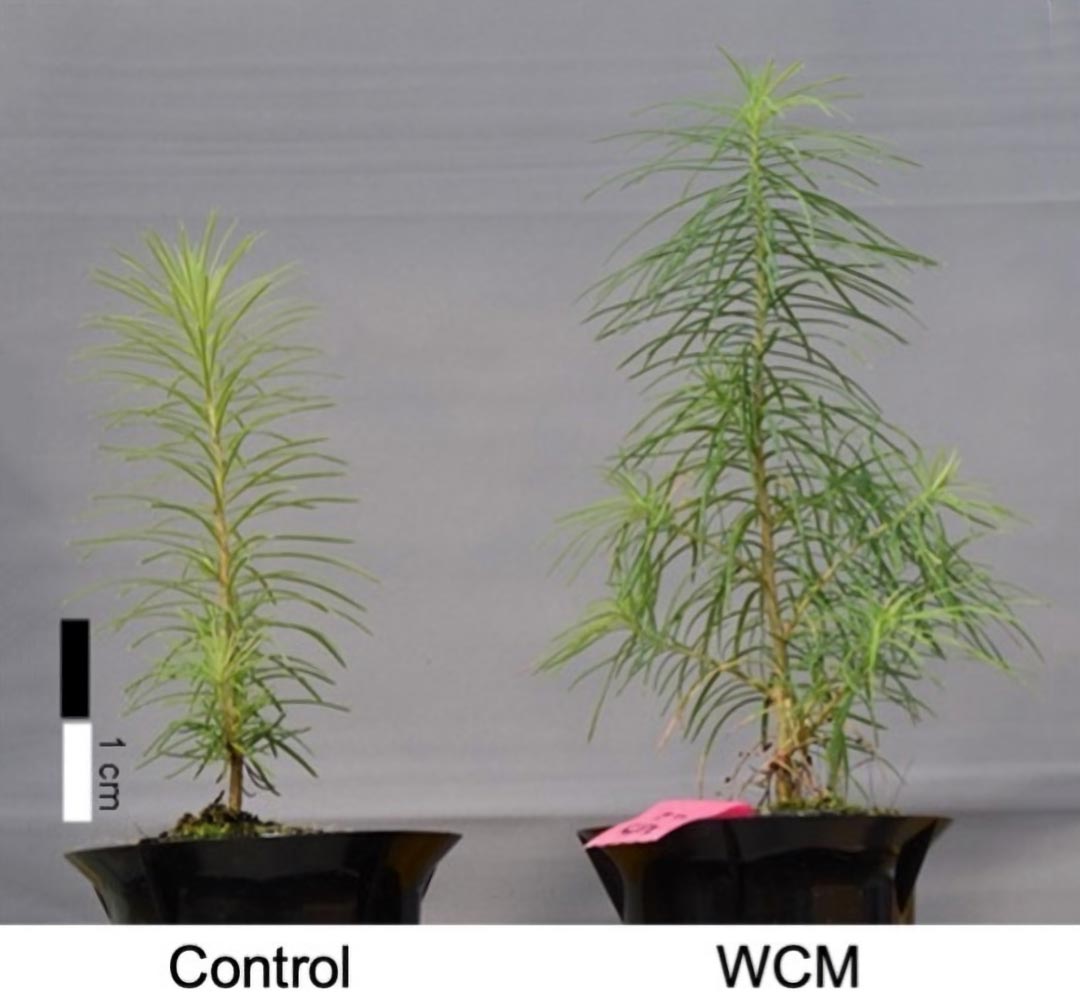
Plastic sheets coated with an Eu3+ film that converts UV light to red light were able to accelerate the growth of vegetal plants and trees.
Scientists developed a europium-based thin-film coating and demonstrated that it accelerates both vegetal plant and tree growth. This technology can improve plant production speed and has the potential to help address global food supply issues. The interdisciplinary team of researchers was from Hokkaido University’s Engineering and Agriculture departments and the Institute for Chemical Reaction Design and Discovery (WPI-ICReDD).
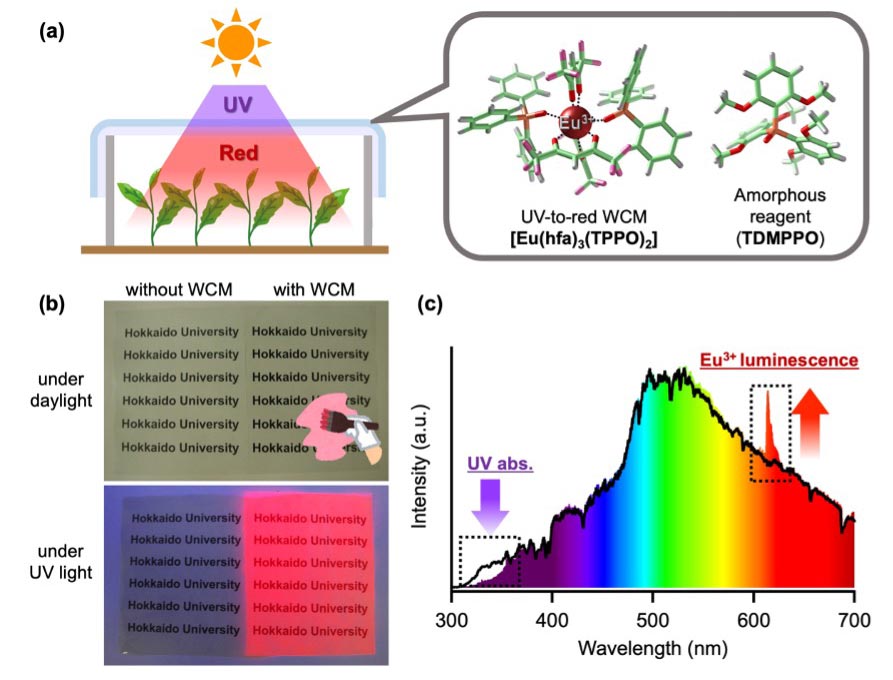
Plants use a process called photosynthesis to transform visible light into energy. Sunlight emits ultraviolet (UV) radiation in addition to visible light. In this work, scientists used a wavelength-converting material (WCM) that can change UV radiation into red light to provide plants with more visible light to use in photosynthesis.

Scientists developed a WCM based on a europium complex and made a thin-film coating that can be applied to commercially available plastic sheets. Researchers not only demonstrated that the film converts UV light to red light, but they also showed that the film does not block any of the beneficial visible light from the sun. The film was then tested by comparing plant growth using sheets with and without the WCM coating.
Application of the WCM Film
Trials were performed for both Swiss chard, a vegetal plant, and Japanese larch trees. In summer, when days are long and sun irradiation is strong, no significant difference was observed for Swiss chard when using the WCM films. In winter, however, when days are shorter and sunlight is weaker, Swiss chard plants grown using the WCM films showed 1.2 times greater plant height and 1.4 times greater biomass after 63 days. Investigators attributed this accelerated growth to the increased supply of red light provided by the WCM films.
Trials involving Japanese larch trees also showed accelerated growth. Seedlings showed a higher relative growth rate in the initial 4 months of growth, resulting in a stem diameter 1.2-fold larger and total biomass 1.4-fold larger than trees grown without the WCM coating. Critically, this enabled the seedlings to reach the standard size for planting in the forestry of Hokkaido within one year. The use of WCM films could shorten the growth period of seedlings from two years to one year, resulting in more cost-efficient plant production.
This technology also has the potential to help with food security issues in colder climates and is beneficial because it does not require any electricity to operate. According to the research team, the customizability of the technology as especially promising.
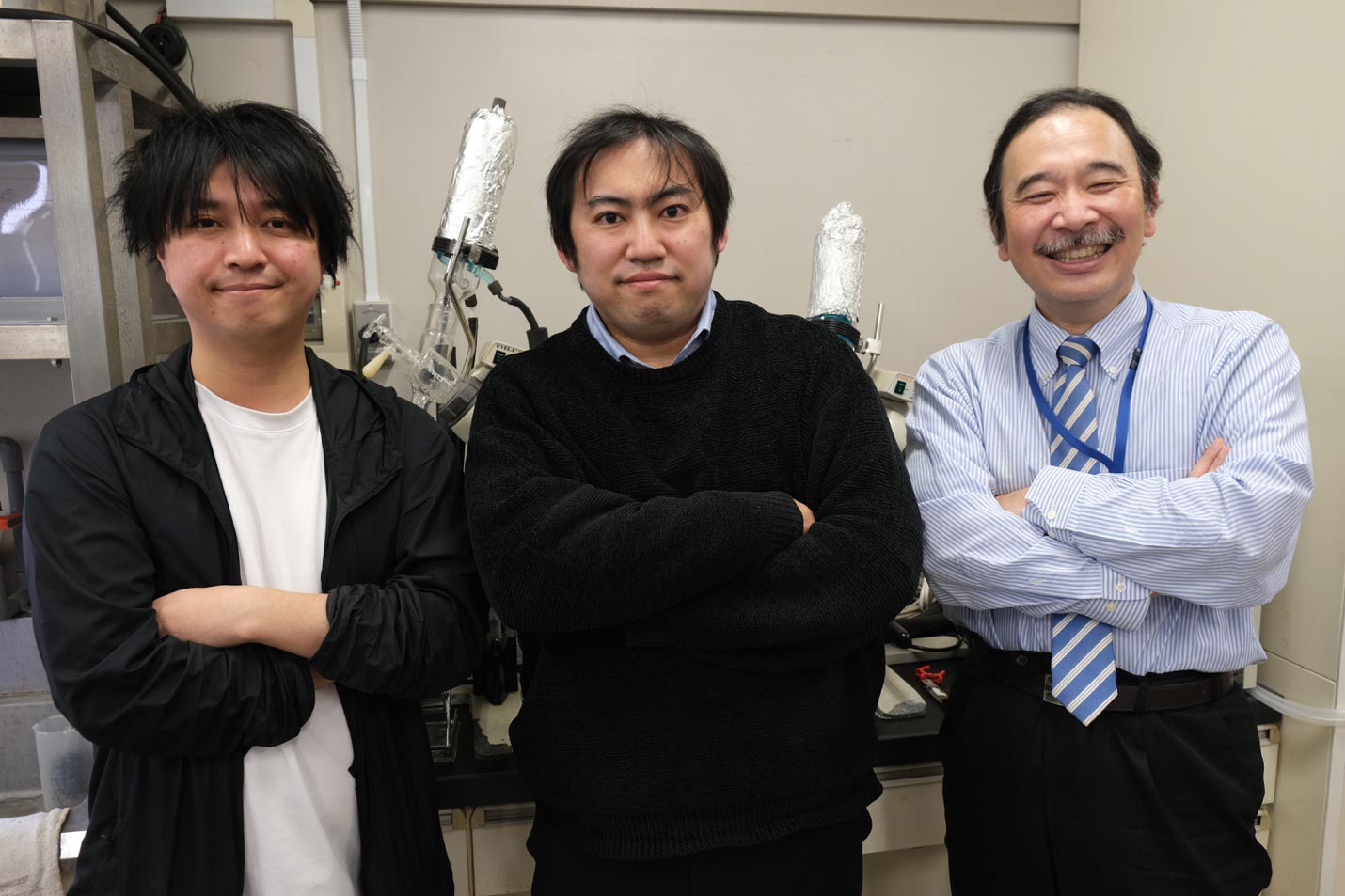
“By using a coating of wavelength-changing material, we were able to successfully create a transparent film and demonstrate its ability to accelerate plant growth,” said lead author Sunao Shoji. “By rationally designing the light-emitting ion, we can freely control the color of emitted light to be other colors like green or yellow, so we expect to be able to create wavelength-converting films that are optimized for different plant types. This opens a large avenue of future development for next-generation agricultural and forestry engineering.”
Reference: “Plant growth acceleration using a transparent Eu3+-painted UV-to-red conversion film” by Sunao Shoji, Hideyuki Saito, Yutaka Jitsuyama, Kotono Tomita, Qiang Haoyang, Yukiho Sakurai, Yuhei Okazaki, Kota Aikawa, Yuki Konishi, Kensei Sasaki, Koji Fushimi, Yuichi Kitagawa, Takashi Suzuki and Yasuchika Hasegawa, 26 October 2022, Scientific Reports.
DOI: 10.1038/s41598-022-21427-6
Never miss a breakthrough: Join the SciTechDaily newsletter.
Follow us on Google and Google News.
8 Comments
Where can one purchase this film?
Amazing, a film that works like a green house gas.
>> Amazing, a film that works like a green house gas.
Without destroying all life on Earth, I’m sure you meant to add. It’s such nonsense to post conspiracy thoughts that global warming and climate change is in any way beneficial to life on Earth. You should know better, posting on a science site.
>>You should know better, posting on a science site.
You really don’t want to see the nonsense posted to the “Tree of Life” article then.
Actually if you look at the research, you’d see temp. increases often benefit crops and plant life. Our misuse of water supplies and contaminating water aquifers are what we should be most concerned with. Of course that would only save lives, not make money on bogus climate change credits or policies supporting big businesses.
This is fantastic for not only throwing Er(III) dyed film in forests (they go over making the paint and painting film with it), but increasing growth before the trees are even genetically enhanced to have more photophores and drought resistance that increase growth more. This is a neat enhancement of commercial forestry. Gotta enhance some forests’ rains..
I am extremely sensitive to UVA. Not only can I not go outside in the sun, I cannot get near sunny windows because UVA goes right through the glass. To coat my windows with this film would be wonderful!
My first thought is if this were reversible converting IR to UV, photovoltaic efficiency could be enhanced.