
Scientists found that “boring” ocean faults may be quietly storing vast amounts of Earth’s carbon.
“Studying a rock is like reading a book. The rock has a story to tell,” says Frieder Klein, an associate scientist in the Marine Chemistry & Geochemistry Department at the Woods Hole Oceanographic Institution (WHOI).
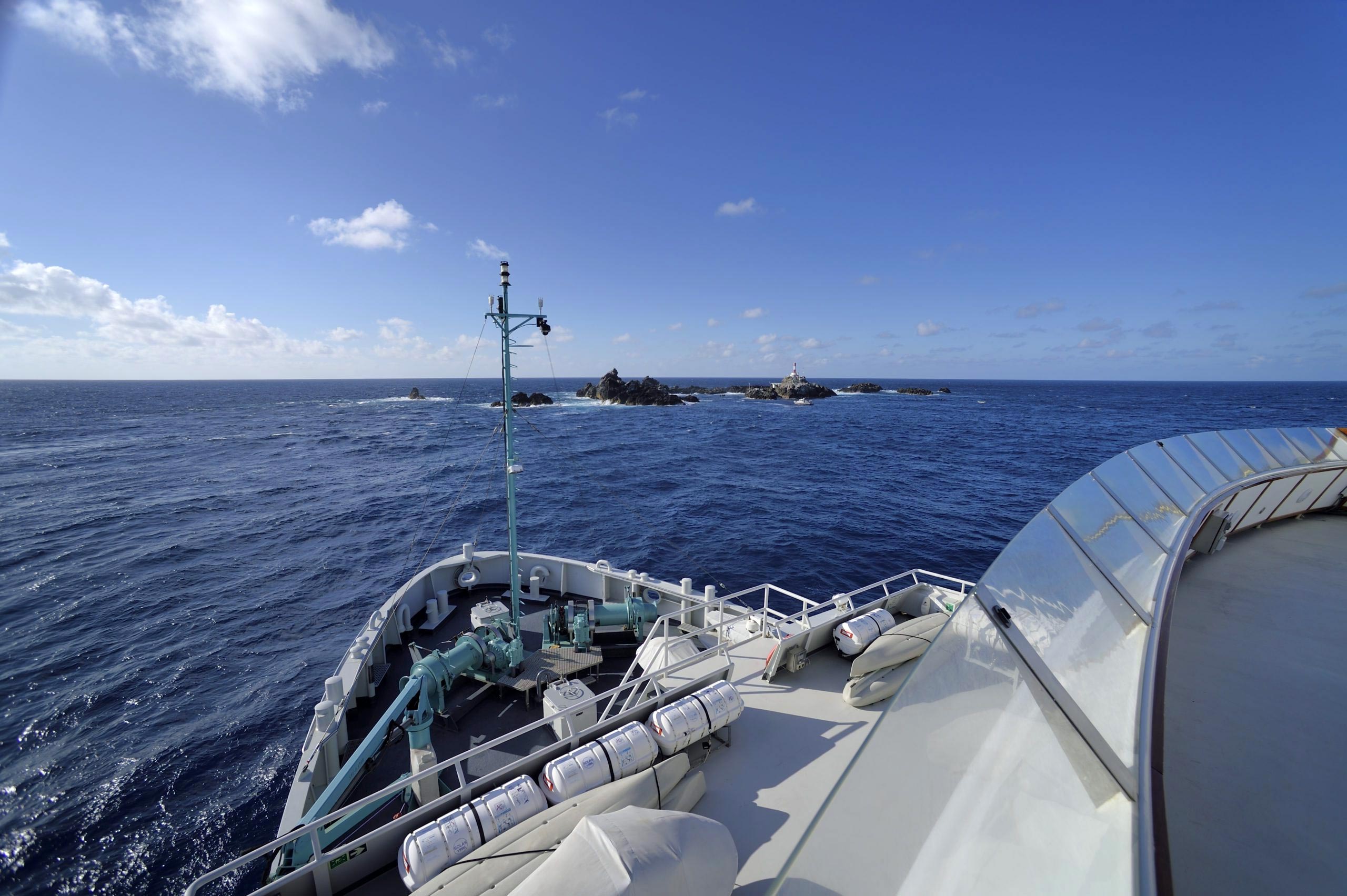
That story became especially compelling when Klein and his team examined rocks collected from the underwater slopes of the St. Peter and St. Paul Archipelago, located in the St. Paul’s oceanic transform fault about 500 km off the coast of Brazil. What they uncovered points to a previously unknown process in Earth’s geological carbon cycle.
Overlooked Ocean Faults Reveal New Clues
Transform faults are regions where tectonic plates slide past one another. They form one of the three major types of plate boundaries on Earth and stretch about 48,000 km worldwide. The other two are mid-ocean ridges (about 65,000 km) and subduction zones (about 55,000 km).
Scientists have spent decades studying carbon cycling at mid-ocean ridges and subduction zones. In contrast, oceanic transform faults have received far less attention when it comes to carbon dioxide. Because these areas have relatively low volcanic activity, they were long considered “somewhat boring,” according to Klein.
That assumption is now changing.
A Newly Discovered Carbon Sink in the Mantle
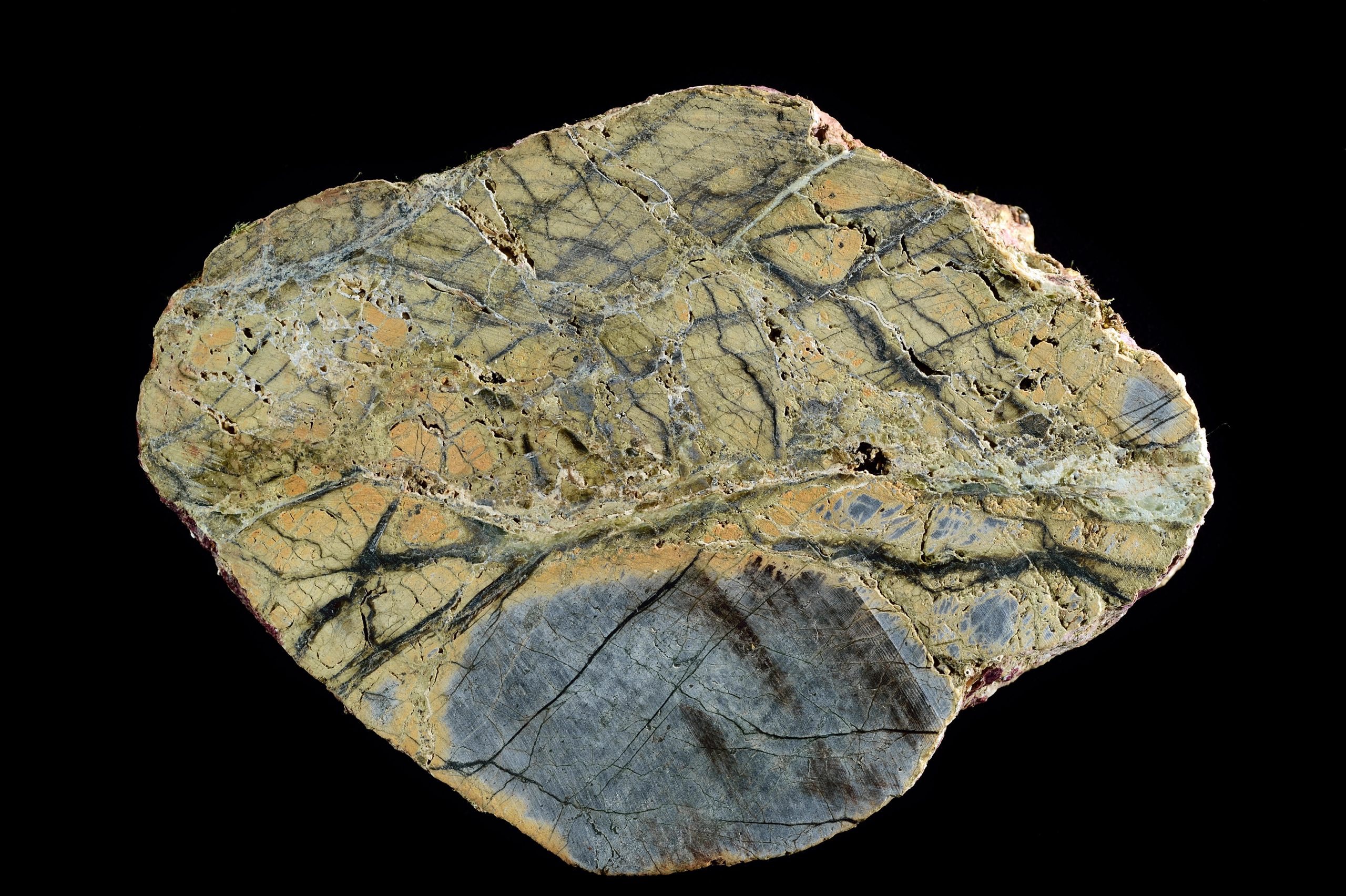
“What we have now pieced together is that the mantle rocks that are exposed along these ocean transform faults represent a potentially vast sink for CO2,” Klein explains. As mantle material partially melts, it releases CO2. This gas becomes mixed into hydrothermal fluids, reacts with surrounding mantle rocks near the seafloor, and is ultimately stored there.
“This is a part of the geological carbon cycle that was not known before,” says Klein, lead author of the study “Mineral Carbonation of Peridotite Fueled by Magmatic Degassing and Melt Impregnation in an Oceanic Transform Fault,” published in the Proceedings of the National Academy of Sciences (PNAS). Because transform faults were not previously included in global estimates of geological CO2 movement, the amount of carbon transferred into the oceanic mantle and seawater may be greater than scientists once believed.
Small Today, Powerful Over Geological Time
“The amount of CO2 emitted at the transform faults is negligible compared to the amount of anthropogenic, or human-driven, CO2,” says Klein. “However, on geological timescales and before humans emitted so much CO2, geological emissions from Earth’s mantle, including from transform faults, were a major driving force of Earth’s climate.”
The study notes that “global anthropogenic CO2 emissions are estimated to be on the order of 36 gigatons (Gt) per year, dwarfing estimates of average geological emissions (0.26 Gt per year) to the atmosphere and hydrosphere. Yet, over geological timescales, emissions of CO2 sourced from Earth’s mantle have been pivotal in regulating Earth’s climate and habitability, as well as the C [carbon]-concentration in surface reservoirs, including the oceans, atmosphere, and lithosphere.” Klein adds that “this is before anthropogenic combustion of fossil fuels, of course.”
Why This Discovery Matters for Climate Science
“In order to fully understand modern human-caused climate change, we need to understand natural climate fluctuations in Earth’s deep past, which are tied to perturbations in Earth’s natural carbon cycle. Our work provides insights into long-timescale fluxes of carbon between Earth’s mantle and the ocean/atmosphere system,” says co-author Tim Schroeder, member of the faculty at Bennington College, Vermont. “Large changes in such carbon fluxes over millions of years have caused Earth’s climate to be much warmer or colder than it is today.”
How Carbon Gets Locked Into Ocean Rocks
To investigate how carbon moves between the mantle and the ocean, the researchers focused on the formation of soapstone “and other magnesite-bearing assemblages during mineral carbonation of mantle peridotite” in the St. Paul’s transform fault.
“Fueled by magmatism in or below the root zone of the transform fault and subsequent degassing, the fault constitutes a conduit for CO2-rich hydrothermal fluids, while carbonation of peridotite represents a potentially vast sink for the emitted CO2.”
The team also points out that “the combination of low extents of melting, which generates melts enriched in incompatible elements, volatiles, and particularly CO2, and the presence of peridotite at oceanic transform faults creates conditions conducive to extensive mineral carbonation.”
A Chance Discovery Years in the Making
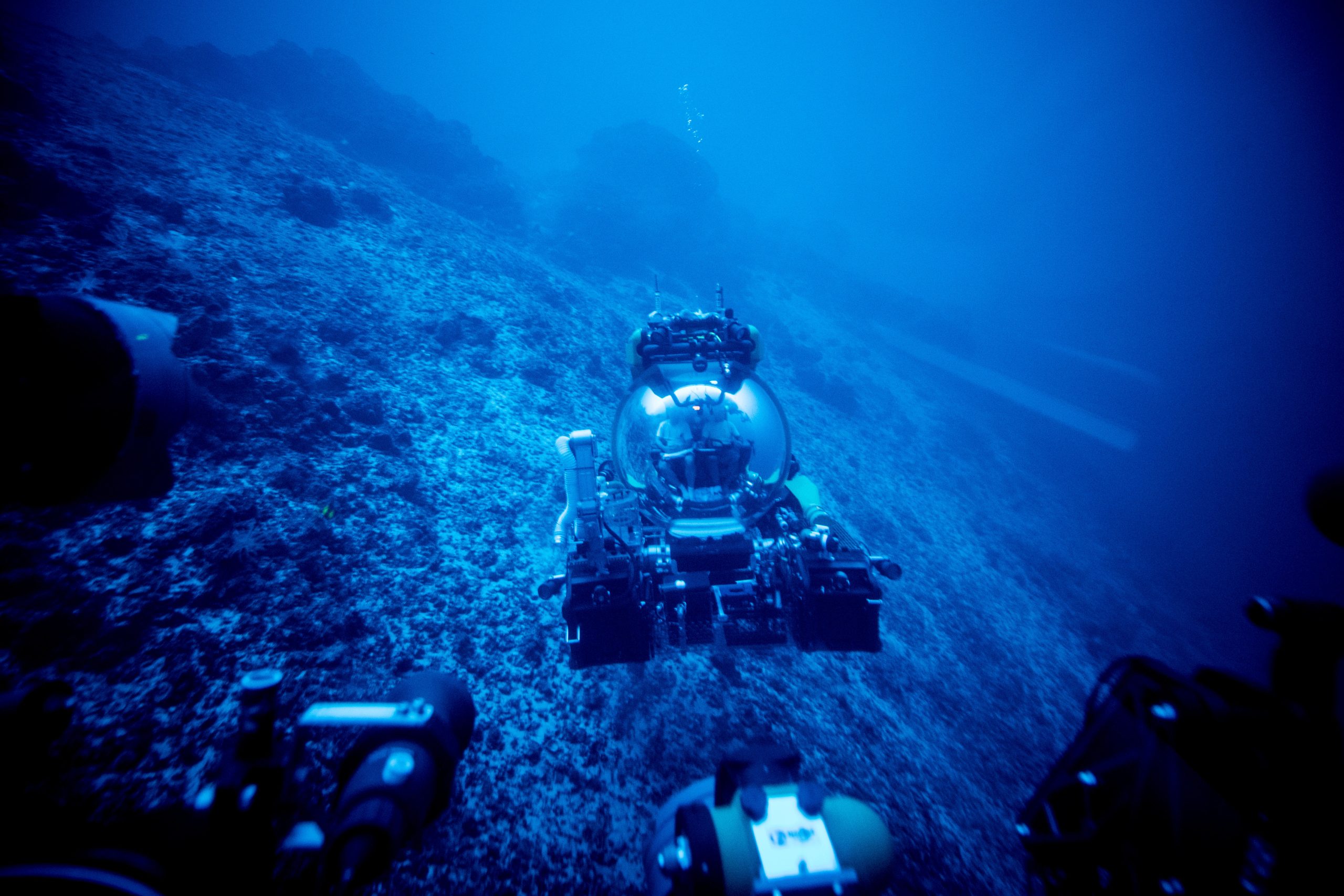
The rocks were collected during a 2017 expedition using human-occupied vehicles.
Finding them turned out to be unexpected. “was a dream come true. We had predicted the presence of carbonate-altered oceanic mantle rocks 12 years ago, but we couldn’t find them anywhere,” says Klein. “We went to the archipelago to explore for low-temperature hydrothermal activity, and we failed miserably in finding any such activity there. It was unbelievable that we were able to find these rocks in a transform fault, because we found them by chance while looking for something else.”
Reference: “Mineral carbonation of peridotite fueled by magmatic degassing and melt impregnation in an oceanic transform fault” by Frieder Klein, Timothy Schroeder, Cédric M. John, Simon Davis, Susan E. Humphris, Jeffrey S. Seewald, Susanna Sichel, Wolfgang Bach and Daniele Brunelli, 12 February 2024, Proceedings of the National Academy of Sciences.
DOI: 10.1073/pnas.2315662121
Funding for this research was provided by the Dalio Ocean Initiative, the Independent Research & Development Program at WHOI, and the National Science Foundation.
Never miss a breakthrough: Join the SciTechDaily newsletter.
Follow us on Google and Google News.