
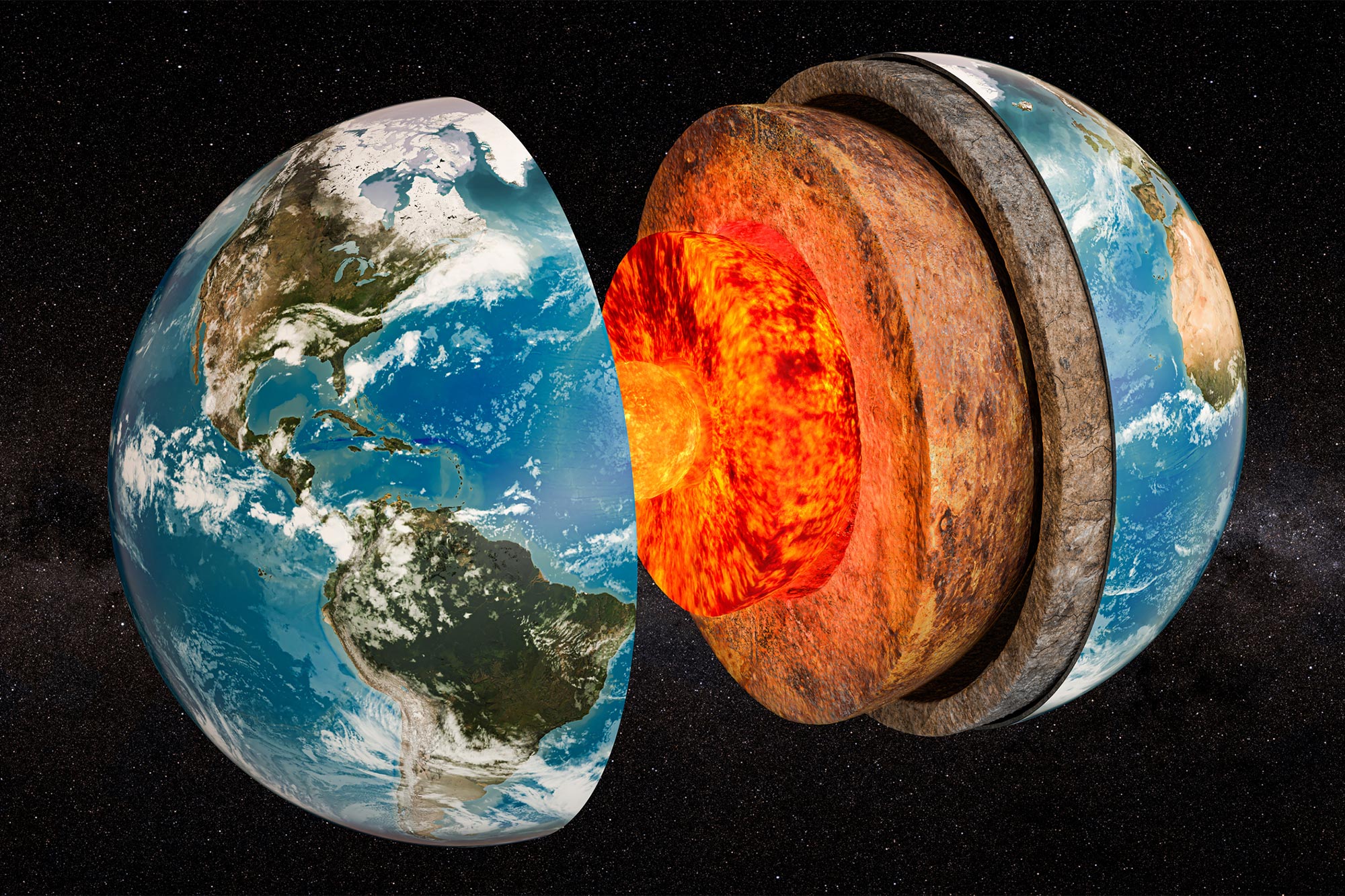
An international team has begun to investigate the mantle’s role in supporting life on Earth, driving volcanism, and influencing global cycles.
Scientists have successfully recovered the first long section of rocks originating from the Earth’s mantle, the layer beneath the crust and the planet’s largest component. These rocks are expected to shed light on the mantle’s role in the origins of life on Earth, the volcanic activity that occurs when it melts, and its influence on the global cycles of crucial elements like carbon and hydrogen, according to the research team.
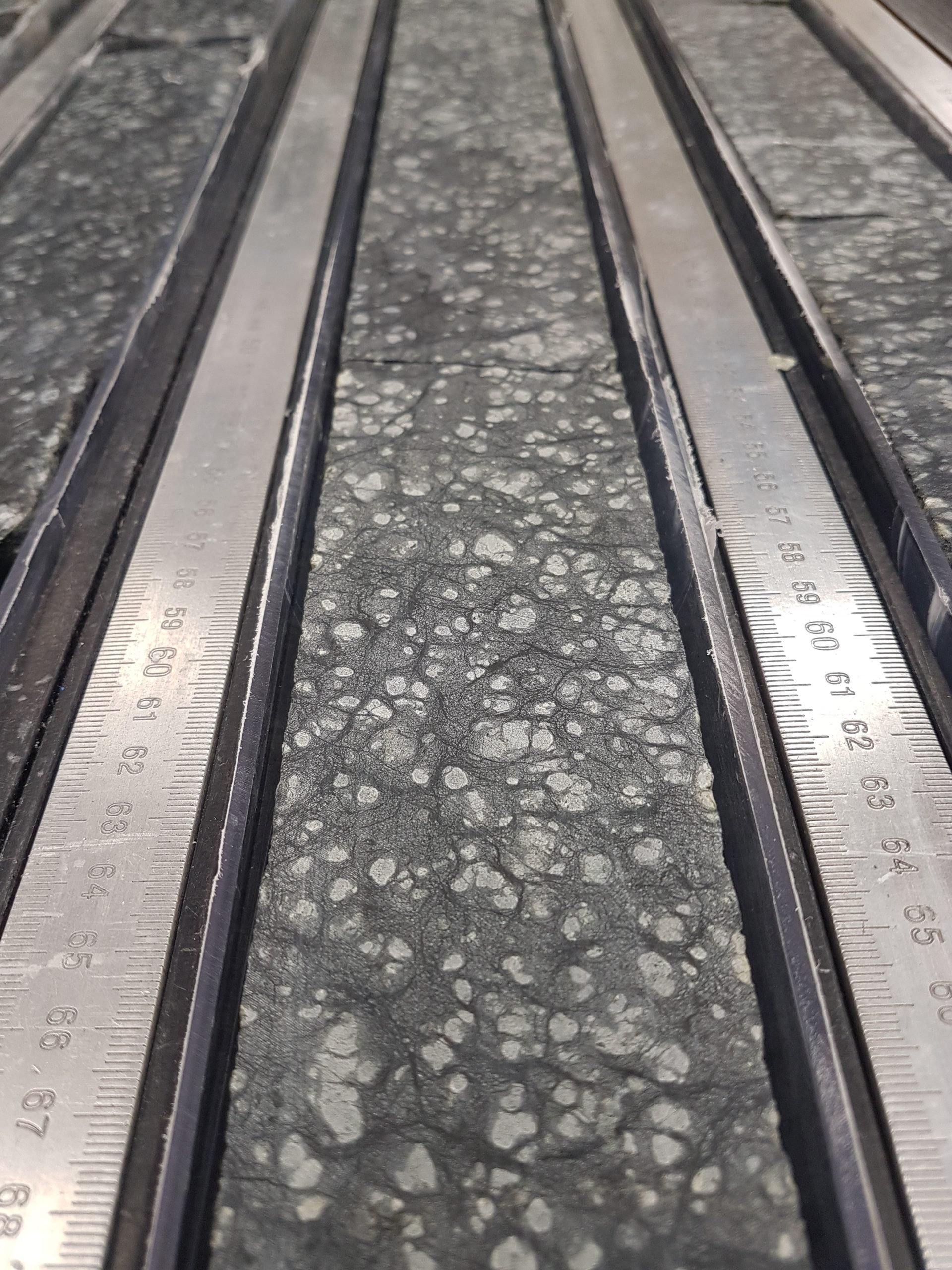
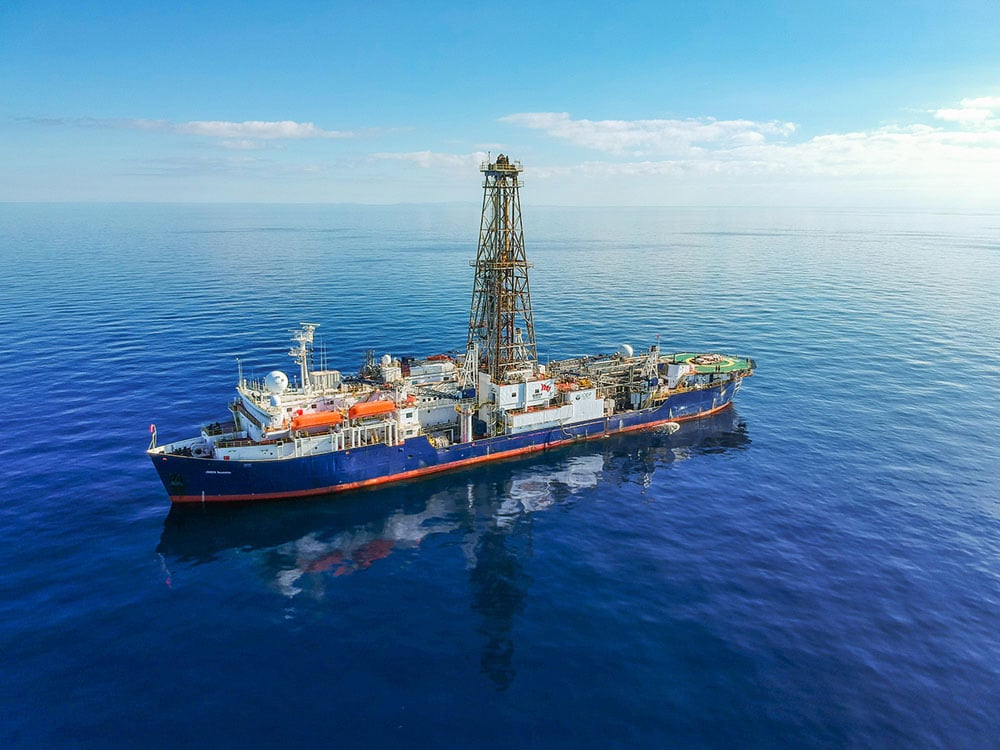
The nearly continuous 1,268 meters (4160 feet) of mantle rock was recovered from a “tectonic window,” a section of the seabed where rocks from the mantle were exposed along the Mid-Atlantic Ridge, during Expedition 399 “Building Blocks of Life, Atlantis Massif” of the ocean drilling vessel JOIDES Resolution in Spring 2023.
With attempts dating back to the early 1960s, the recovery was a record-breaking achievement led by the International Ocean Discovery Program, an international marine research consortium of more than 20 countries that retrieves cores—cylindrical samples of sediment and rock—from the ocean floor to study Earth’s history.
Analyzing the Recovered Rocks
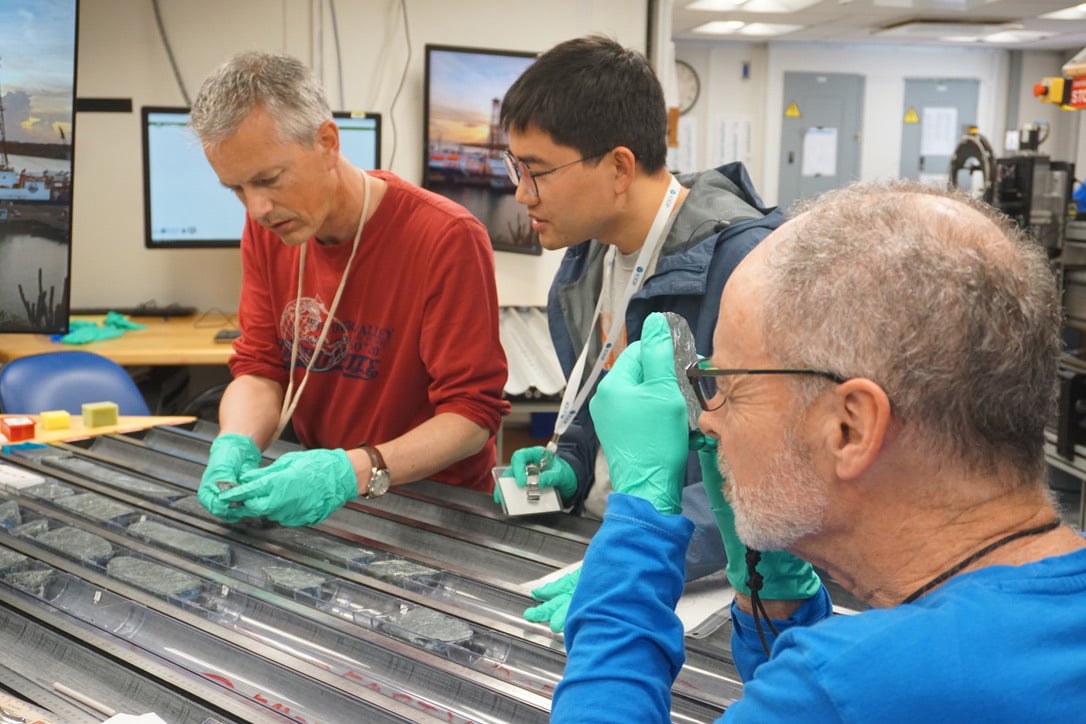
Since then, the expedition team has been compiling an inventory of the recovered mantle rocks to understand their composition, structure, and context.
Their findings, presented in the journal Science, reveal a more extensive history of melting in the recovered rocks than expected.
Lead author Professor Johan Lissenberg from Cardiff University’s School of Earth and Environmental Sciences, said: “When we recovered the rocks last year, it was a major achievement in the history of the Earth sciences, but, more than that, its value is in what the cores of mantle rocks could tell us about the makeup and evolution of our planet. Our study begins to look at the composition of the mantle by documenting the mineralogy of the recovered rocks, as well as their chemical makeup. Our results differ from what we expected. There is a lot less of the mineral pyroxene in the rocks, and the rocks have got very high concentrations of magnesium, both of which result from much higher amounts of melting than what we would have predicted.”
This melting occurred as the mantle rose from the deeper parts of the Earth towards the surface.
Results from further analysis of this process could have major implications for the understanding of how magma is formed and leads to volcanism, the researchers claim.
“We also found channels through which melt was transported through the mantle, and so we are able to track the fate of magma after it is formed and travels upwards to the Earth’s surface. This is important because it tells us how the mantle melts and feeds volcanoes, particularly those on the ocean floor that account for the majority of volcanism on Earth. Having access to these mantle rocks will allow us to make the connection between the volcanoes and the ultimate source of their magmas.”
Potential Link to the Origin of Life
The study also provides initial results on how olivine, an abundant mineral in mantle rocks, reacts with seawater, leading to a series of chemical reactions that produce hydrogen and other molecules that can fuel life.
Scientists believe this might have been one of the underpinning processes in the origin of life on Earth.
Dr. Susan Q Lang, an associate scientist in Geology and Geophysics at the Woods Hole Oceanographic Institution, who was a co-chief scientist on the expedition and part of a team continuing to analyze rock and fluid samples, said: “The rocks that were present on early Earth bear a closer resemblance to those we retrieved during this expedition than the more common rocks that make up our continents today.
“Analysing them gives us a critical view into the chemical and physical environments that would have been present early in Earth’s history, and that could have provided a consistent source of fuel and favorable conditions over geologically long timeframes to have hosted the earliest forms of life.”
The international team of more than 30 scientists from the JOIDES Resolution expedition will continue their research on the recovered drill cores to address a wide range of problems.
Dr. Andrew McCaig, an Associate Professor in the School of Earth and Environment at the University of Leeds, who was the lead proponent of Expedition 399 and a co-chief scientist on the Expedition added: “Everyone involved in Expedition 399, starting with the first proposal in 2018, can be proud of the achievements documented in this paper. Our new deep hole will be a type section for decades to come in disciplines as diverse as melting processes in the mantle, chemical exchange between rocks and the ocean, organic geochemistry, and microbiology. All data from the expedition will be fully available, an exemplar of how international science should be conducted.”
Reference: “A long section of serpentinized depleted mantle peridotite” by C. Johan Lissenberg, Andrew M. McCaig, Susan Q. Lang, Peter Blum, Natsue Abe, William J. Brazelton, Rémi Coltat, Jeremy R. Deans, Kristin L. Dickerson, Marguerite Godard, Barbara E. John, Frieder Klein, Rebecca Kuehn, Kuan-Yu Lin, Haiyang Liu, Ethan L. Lopes, Toshio Nozaka, Andrew J. Parsons, Vamdev Pathak, Mark K. Reagan, Jordyn A. Robare, Ivan P. Savov, Esther M. Schwarzenbach, Olivier J. Sissmann, Gordon Southam, Fengping Wang, C. Geoffrey Wheat, Lesley Anderson and Sarah Treadwell, 8 August 2024, Science.
DOI: 10.1126/science.adp1058
Never miss a breakthrough: Join the SciTechDaily newsletter.
Follow us on Google and Google News.
2 Comments
Origin of life has already been made known, genesis 1:1. In the beeginning…..
In what order and by who but not really to much detail in how.. Carl Sagan told us that we are made of the stuff that was made in stars. And this is probably correct. He also told us that we one day would discover other life in the universe but might not even recognize it. Isint everything in the universe part of the universe I mean we are made of the stuff the universe made .we are a product of the universe. The universe is the creator . And if we are alive then Carl Sagan was right we don’t even recognize that the universe is alive . The universe is the creator and the creator is alive and we are the proof that the universe is alive. And there is nothing that isint consistent with Genesis. Some people like to use the 6000 year date of creation as evidence for not believing any thing else. But it was put down in writing at least 2000 years ago . It was only 500 years ago and science was still teaching that the sun revolved around the flat earth. It’s been 500 years but that dont mean there right about anything now either . You have to decide things yourself today more than ever . Anyways science says that all life divides cells . So maybe there was no big bang . Maybe it was a big division . Watch this one minute long you tube video of actual footage of a human cell dividing in real time. And watch the instantaneous inflation right after it divides . And when the 3rd cell divides it divides 3 ways and right when it divides all of a sudden there is Einstein’s prediction of what the universe looks like . A cone . It’s interesting if this really is similar to creation then what scientist believe they are looking at through the James Webb telescope is not creation it is the very tail end of creation . In fact everything in the cone is the visible universe is all the tail end of creation .they missed the show . Again
https://youtu.be/N97cgUqV0Cg?si=DhfvyV0jq1vypmZu