
Close Menu
    Facebook X (Twitter) Instagram
    SciTechDaily
    • Biology
    • Chemistry
    • Earth
    • Health
    • Physics
    • Science
    • Space
    • Technology
    Facebook X (Twitter) Pinterest YouTube RSS
    SciTechDaily
    Home»Physics»Actor in a Supporting Role: Substrate Effects on Atomically Thin Semiconductors
    Physics

    Actor in a Supporting Role: Substrate Effects on Atomically Thin Semiconductors

    By Lawrence Berkeley National LaboratoryMay 17, 2021No Comments3 Mins Read
    Facebook Twitter Pinterest Telegram LinkedIn WhatsApp Email Reddit
    Share
    Facebook Twitter LinkedIn Pinterest Telegram Email Reddit
    Electronic Characteristics of 2D Semiconductor
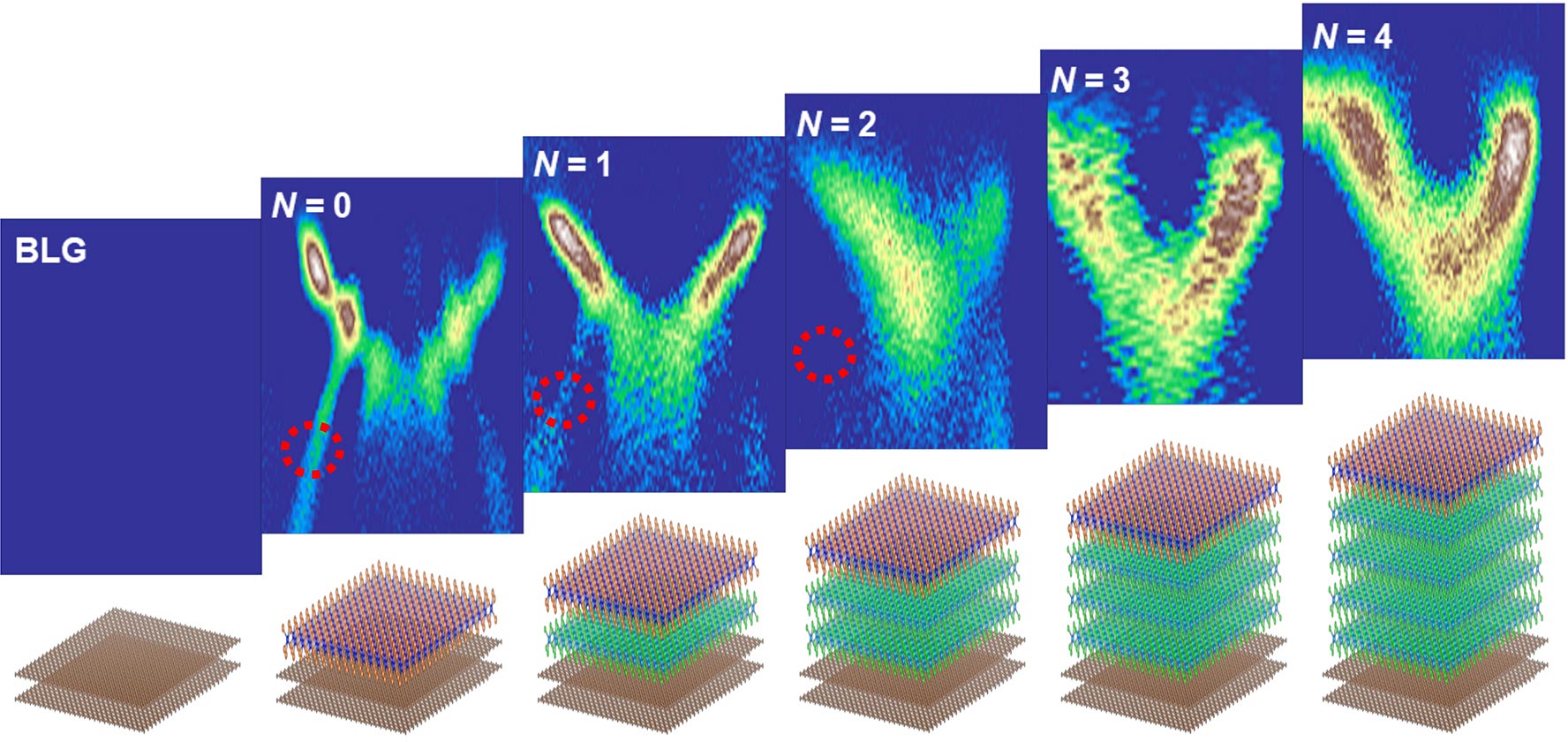
    Using ultraviolet light, researchers probed the electronic characteristics of a 2D semiconductor (purple) as the number of substrate layers (green) increased. In the data maps, red circles mark an electronic feature that diminished as substrate layers were added. Credit: Meng Kai Lin/University of Illinois at Urbana-Champaign

    Researchers detected non-negligible interactions between technologically intriguing 2D materials and the substrates that physically support them.

    Atomically thin layers are of great technological interest because of potentially useful electronic properties that emerge as the layer thickness approaches the 2D limit. Such materials tend to form weak bonds outside the layer and are thus generally assumed to be unaffected by substrates that provide physical support.

    To make further progress, however, scientists must rigorously test this assumption, not only to better understand single-layer physics, but also because the existence of substrate effects raises the possibility of tuning layer properties by tweaking the substrate.

    As reported in the journal Physical Review Letters, a team led by Tai-Chang Chiang of the University of Illinois at Urbana-Champaign and his postdoctoral associate, Meng-Kai Lin, used Berkeley Lab’s Advanced Light Source (ALS) to probe changes in the electronic properties of a 2D semiconductor, titanium telluride, as the thickness of a substrate, platinum telluride, was increased. Single-layer titanium telluride is highly sensitive to what lies underneath, making it particularly useful as a test case for investigating substrate coupling effects.

    The results showed that as the substrate thickness increased, a dramatic and systematic variation occurred in the single-layer titanium telluride. An electronic phenomenon known as a charge density wave — a coupled charge and lattice distortion characteristic of single-layer titanium telluride — was suppressed.

    Quantum Interactions and Substrate Transformations

    “The experimental findings, combined with first-principles theoretical simulations, led to a detailed explanation of the results in terms of the basic quantum mechanical interactions between the single layer and the tunable substrate,” said Lin. 

    Given that the interfacial bonding remained weak, the researchers concluded that the observed changes were correlated with the substrate’s transformation from a semiconductor to a semimetal as it increased in thickness.

    “This systematic study illustrates the crucial role that substrate interactions play in the physics of ultrathin films,” said Lin. “The scientific understanding derived from our work also provides a framework for designing and engineering ultrathin films for useful and enhanced properties.”

    Reference: “Charge Instability in Single-Layer TiTe2 Mediated by van der Waals Bonding to Substrates” by Meng-Kai Lin, Joseph A. Hlevyack, Peng Chen, Ro-Ya Liu, Sung-Kwan Mo, and T.-C. Chiang, 22 October 2020, Physical Review Letters.
    DOI: 10.1103/PhysRevLett.125.176405

    Never miss a breakthrough: Join the SciTechDaily newsletter.
    Follow us on Google and Google News.

    2D Materials DOE Lawrence Berkeley National Laboratory Nanotechnology Semiconductors
    Share. Facebook Twitter Pinterest LinkedIn Email Reddit

    Related Articles

    Quantum Illumination: Advanced Device Generates Single Photons and Encodes Information

    Directly Imaging Quantum States in Two-Dimensional Materials

    Main Attraction: Scientists Create World’s Thinnest Magnet – Just One Atom Thick!

    Next-Gen Information Technology: The Spintronics Revolution Could Be Just a Hopfion Away

    A COSMIC Approach to Nanoscale Science: World-Leading Resolution of Nanomaterials

    Speeding Toward Improved Hydrogen Fuel Production With a New Nanomaterial

    Physics Process Yielding Nanolasers in 2D Semiconductors Could Be Game-Changer for High Speed Communications

    Making Quantum ‘Waves’ in Ultrathin Materials – Plasmons Could Power a New Class of Technologies

    Nanoscale Quantum Sensors Image Stress and Magnetism at High Pressures

    Leave A Reply Cancel Reply

    • Facebook
    • Twitter
    • Pinterest
    • YouTube

    Don't Miss a Discovery

    Subscribe for the Latest in Science & Tech!

    Trending News

    Scientists Discover How Coffee Impacts Memory, Mood, and Gut Health

    Why Did the Neanderthals Disappear? Scientists Reveal Humans Had a Hidden Advantage

    Physicists Propose Strange Experiment Where Time Goes Quantum

    Magnesium Magic: New Drug Melts Fat Even on a High-Fat, High-Sugar Diet

    Weight-Loss Drugs Like Ozempic May Come With an Unexpected Cost

    Mezcal “Worm” in a Bottle Mystery: DNA Testing Reveals a Surprise

    New Research Reveals That Your Morning Coffee Activates an Ancient Longevity Switch

    This Is What Makes You Irresistible to Mosquitoes

    Follow SciTechDaily
    • Facebook
    • Twitter
    • YouTube
    • Pinterest
    • Newsletter
    • RSS
    SciTech News
    • Biology News
    • Chemistry News
    • Earth News
    • Health News
    • Physics News
    • Science News
    • Space News
    • Technology News
    Recent Posts
    • This Popular Supplement May Boost Your Brain, Not Just Your Muscles
    • What Happened in Childhood Could Be Causing Your Gut Issues Today
    • Scientists Say This Simple Supplement May Actually Reverse Heart Disease
    • Scientists Just Captured Killer T Cells in Action Inside Tumors
    • Alaska’s Sky Explodes With Swirling Clouds and a Hidden Polar Storm
    Copyright © 1998 - 2026 SciTechDaily. All Rights Reserved.
    • Science News
    • About
    • Contact
    • Editorial Board
    • Privacy Policy
    • Terms of Use

    Type above and press Enter to search. Press Esc to cancel.