
Close Menu
    Facebook X (Twitter) Instagram
    SciTechDaily
    • Biology
    • Chemistry
    • Earth
    • Health
    • Physics
    • Science
    • Space
    • Technology
    Facebook X (Twitter) Pinterest YouTube RSS
    SciTechDaily
    Home»Biology»Airborne Insecticide Emission From Pneumatic Drilling Machines Linked to Honeybee Death
    Biology

    Airborne Insecticide Emission From Pneumatic Drilling Machines Linked to Honeybee Death

    By American Chemical SocietyMarch 15, 2012No Comments3 Mins Read
    Facebook Twitter Pinterest Telegram LinkedIn WhatsApp Email Reddit
    Share
    Facebook Twitter LinkedIn Pinterest Telegram Email Reddit
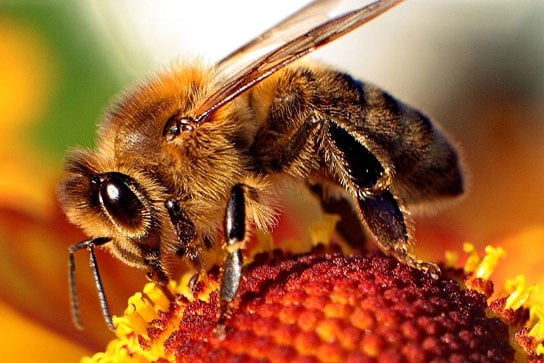
    insecticide linked to die-off of honeybees
    A new study links the death of honeybees to the technology used for planting corn coated with insecticides.

    A new study links the death of honeybees to the technology used for planting corn that has been coated with insecticides. While the insecticides themselves have low toxicity for most animals, the airborne cloud expelled by the pneumatic drilling machines has a higher concentration of particles of the insecticide and kills the honeybees that fly through it.

    New research has linked springtime die-offs of honeybees critical for pollinating food crops — part of the mysterious malady called colony collapse disorder — with technology for planting corn coated with insecticides. The study, published in ACS’ journal Environmental Science & Technology, appears on the eve of spring planting seasons in some parts of Europe where farmers use the technology and widespread deaths of honeybees have occurred in the past.

    In the study, Andrea Tapparo and colleagues explain that seeds coated with so-called neonicotinoid insecticides went into wide use in Europe in the late 1990s. The insecticides are among the most widely used in the world, popular because they kill insects by paralyzing nerves but have lower toxicity for other animals. Almost immediately, beekeepers observed large die-offs of bees that seemed to coincide with mid-March to May corn planting. Scientists thought this might be due to particles of insecticide made airborne by the pneumatic drilling machines used for planting. These machines forcefully suck seeds in and expel a burst of air containing high concentrations of particles of the insecticide coating. In an effort to make the pneumatic drilling method safer, the scientists tested different types of insecticide coatings and seeding methods.

    They found, however, that all of the variations in seed coatings and planting methods killed honeybees that flew through the emission cloud of the seeding machine. One machine modified with a deflector to send the insecticide-laced air downwards still caused the death of more than 200 bees foraging in the field. The authors suggest that future work on this problem should focus on a way to prevent the seeds from fragmenting inside the pneumatic drilling machines.

    Reference: “Assessment of the Environmental Exposure of Honeybees to Particulate Matter Containing Neonicotinoid Insecticides Coming from Corn Coated Seeds” by Andrea Tapparo, Daniele Marton, Chiara Giorio, Alessandro Zanella, Lidia Soldà, Matteo Marzaro, Linda Vivan and Vincenzo Girolami, 31 January 2012, Environmental Science & Technology.
    DOI: 10.1021/es2035152

    Never miss a breakthrough: Join the SciTechDaily newsletter.
    Follow us on Google and Google News.

    American Chemical Society Bees Corn Food Science Insecticide Toxic Substance
    Share. Facebook Twitter Pinterest LinkedIn Email Reddit

    Related Articles

    Research Shows Common Insecticide Is Harmful to Bees in Any Amount

    ‘Bee’ Thankful for the Evolution of Pollen – Discovery Made With Highly Detailed Electron Scanning Microscope

    A Question for Almond Growers: To Bee, or Not to Bee?

    Bad News for Honey Bees: Insecticides Are Growing Much More Toxic

    Low Oxygen Levels Trigger the Formation of Plant Sex Cells

    Researcher Studies Root Growth to Develop Hardier, Weather-resistant Crops

    Controversial Proposal Wants Sugar to be Regulated as a Toxic Substance

    Antibiotic-Free Meat Might Still Be Contaminated with Drug Resistant Bacteria

    Using Bees To Ease Tensions Between People And Elephants

    Leave A Reply Cancel Reply

    • Facebook
    • Twitter
    • Pinterest
    • YouTube

    Don't Miss a Discovery

    Subscribe for the Latest in Science & Tech!

    Trending News

    Study Finds Exercise May Be a Surprisingly Powerful Treatment for Pain

    New Research Reveals Dinosaurs May Have Eaten Seaweed

    Don’t Miss: Saturn, Halley’s Comet Meteors and the Seven Sisters Light Up October

    Could Vitamin C Help Stop Leukemia Before It Starts?

    AI May Seem Human-Like, but That Doesn’t Mean People Think It’s Conscious

    Study Finds Natural Dairy Trans Fats Behave Very Differently From Industrial Fats

    Your Voice May Reveal How Fast Your Brain Is Aging

    These Fingernail-Sized Animals Are Moving Astonishing Amounts of California Beach Sand

    Follow SciTechDaily
    • Facebook
    • Twitter
    • YouTube
    • Pinterest
    • Newsletter
    • RSS
    SciTech News
    • Biology News
    • Chemistry News
    • Earth News
    • Health News
    • Physics News
    • Science News
    • Space News
    • Technology News
    Recent Posts
    • Pizza, Processed Meat, and Sweets Linked to Faster Cognitive Decline in Some Older Adults
    • AI Skin Scanner Spots Hidden Cancer Before It’s Visible
    • Scientists Find an Unexpected Way To Fight Knee Arthritis
    • NASA’s SpaceX Crew‑12 Splashes Down After 237 Days and 100 Million Miles in Orbit
    • Look Up: Dragon Fireballs, Disappearing Planets, Hunter’s Moon Fill October’s Spooky Skies
    Copyright © 1998 - 2026 SciTechDaily. All Rights Reserved.
    • Science News
    • About
    • Contact
    • Editorial Board
    • Privacy Policy
    • Terms of Use

    Type above and press Enter to search. Press Esc to cancel.