
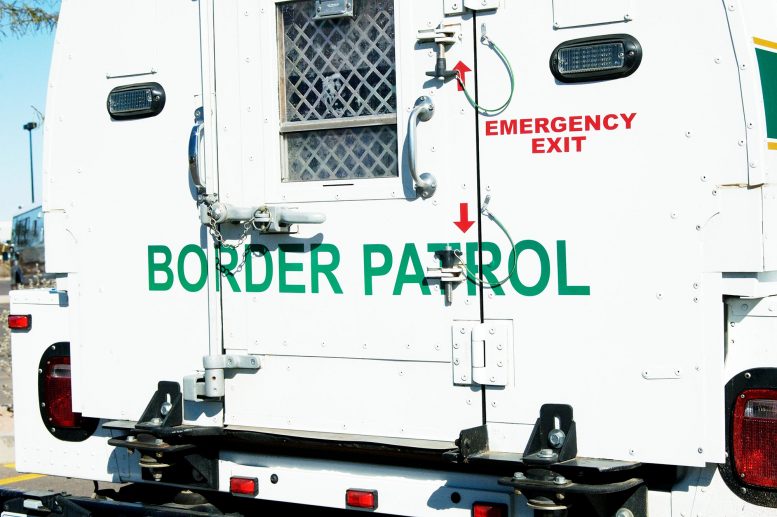
Analysis of corruption cases among customs officers and border patrol agents reveals alarming trends depending on their years of service.
When a customs officer in El Paso, Texas was arrested for conspiracy to smuggle marijuana into the U.S between 2003 and 2007, investigators found she had sought a job with the Customs and Border Protection (CBP) agency mainly to enable the smuggling operation.
This is but one example of how drug cartels infiltrate the agency. The estimated retail value of the drugs this one officer smuggled in over four years was around $288 million. Investigators also found that in the eight years between 2006 and 2014, roughly 30 job applicants admitted in their polygraph test that they were sent by Mexican cartels to seek employment with the agency.
These incidents support findings from a study by David Jancsics, a San Diego State University sociologist, who found that the total years of service agents had was the strongest predictor of different types of corruption on the border. If they were in an early career, they were more prone to the trafficking of drugs and weapons. If they were veterans, they were more prone to immigration corruption — bringing in illegal immigrants.

“One of the main implications of the study is that strict border enforcement may even increase corruption,” said Jancsics, assistant professor at SDSU Imperial Valley with a joint appointment in SDSU’s School of Public Affairs. “Organized crime groups will actively target federal border law enforcement to assist with their illicit transport, since bribing agents is less risky than being caught by random inspections.”
Using documents obtained by investigative journalists with the Center for Investigative Reporting and The Texas Tribune through Freedom of Information Act requests, Jancsics analyzed data from cases where customs officers and Border Patrol agents had been arrested, charged, and convicted for corruption between October 2004 and October 2015.
The study, published in Security Journal, is the result of two years of research and a detailed review of 160 cases.
Jancsics has been studying corruption since 2009, but began to focus on border corruption after NATO invited him in 2015 to present at a conference in Ukraine about border corruption. He found there were not many sources of academic literature on the subject, aside from how it relates to trade, tariffs, and taxes. He decided to focus on what happens when CBP agents are bribed by different groups.
In 2017, he began a retrospective analysis of the data the journalists had obtained from the CBP, which was drawn from court documents, plea arguments, attorney letters, affidavits, sentencing memos, FBI reports, agent reports, press releases and other types of official documents.
A majority of the cases he studied, 71 percent, were from the southern border, and the rest were from the northern border as well as airports throughout the country that serve as entry points. Three states accounted for nearly 70 percent of the cases — Texas had the most number of cases in this data set, at 51, followed by California at 30 and Arizona at 25 cases.
Using decision tree analysis to separate data into homogenous groups, Jancsics found 56 percent of officers with less than five years of service, especially from the south, were involved in drug trafficking, compared to 27 percent of veteran officers.
For immigration corruption, it was the reverse — 40 percent of veteran officers were involved in human smuggling compared to 25 percent of early career officers.
These findings have deeper policy implications as it relates to the hiring of agents.
“We have no idea of the actual extent of corruption, because this is just from the reported cases,” Jancsics said. “So it’s only the tip of the iceberg.”
Reference: “Law enforcement corruption along the U.S. borders” by David Jancsics, 2 October 2019, Security Journal.
DOI: 10.1057/s41284-019-00203-8
Never miss a breakthrough: Join the SciTechDaily newsletter.
Follow us on Google and Google News.