
A new peptide inhibitor, RI-AG03, targets two key areas of the Tau protein in Alzheimer’s disease, showing effectiveness in lab and fruit fly models. This innovative approach could lead to treatments that slow disease progression with minimal side effects.
An international team of scientists led by Lancaster University has made a significant breakthrough in the fight against Alzheimer’s Disease.
For the first time, researchers have developed a drug that works on both major aggregation-promoting ‘hotspots’ of the Tau protein in the brain — a key driver of neurodegeneration.
The drug, a peptide inhibitor called RI-AG03, was effective at preventing the build-up of Tau proteins in both lab and fruit fly studies.
Breakthrough in Alzheimer’s Treatment
The research, published today (October 3) in Alzheimer’s & Dementia: The Journal of the Alzheimer’s Association, was led by Lancaster University in collaboration with the University of Southampton, Nottingham Trent University, Tokyo Metropolitan Institute of Medical Science and the University of Texas Southwestern Medical Center.
The Lancaster University team included the late Professor David Allsop and the late Dr. Nigel Fullwood who were both from the Faculty of Biomedical and Life Sciences at Lancaster University.
The paper describes how RI-AG03 was first developed by Dr. Aggidis in the laboratory of the late Professor Allsop, using computational biology where it was tested in lab dishes.
Dual-Target Strategy in Drug Design
Lead author Dr. Anthony Aggidis, former Postdoctoral Research Associate at Lancaster University and visiting researcher at the University of Southampton, said: “Our research represents an important step toward creating treatments that can prevent the progression of diseases like Alzheimer’s disease.
“By targeting both of the key areas on the Tau protein, this unique approach could help address the growing impact of dementia on society, providing a much-needed new option for treating these devastating diseases.”
Understanding Tau Protein’s Role in Alzheimer’s
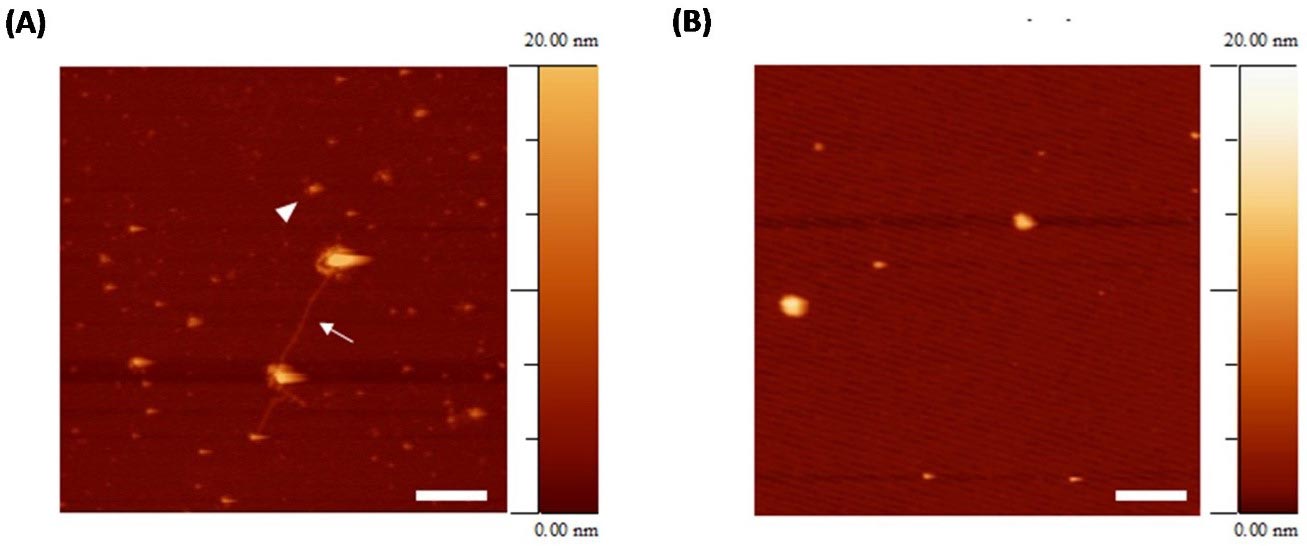
Tau proteins play a crucial role in maintaining the structure and function of neurons (brain cells). But in Alzheimer’s disease, these proteins malfunction, clumping together to form long, twisting fibrils.
As the fibrils accumulate, they create what are called neurofibrillary tangles — masses of twisted Tau proteins that clog the neurons, preventing them from getting the nutrients and signals they need to survive.
As more neurons die, memory, thinking, and behaviour become increasingly impaired, leading to the cognitive decline seen in Alzheimer’s.
The Dual-Targeting Approach
There are two specific ‘hotspots’ of the Tau protein where this clumping tends to happen. While current treatments target one or the other of these hotspots, RI-AG03 uniquely targets and blocks both.
Amritpal Mudher, Professor of Neuroscience at the University of Southampton, said: “There are two regions of the Tau protein that act like a zipper to enable it to aggregate. For the first time, we have a drug that is effective in inhibiting both these regions. This dual-targeting mechanism is significant because it addresses both domains that stimulate Tau aggregation, potentially paving the way for more effective treatments for neurodegenerative diseases like Alzheimer’s.”

Advantages of Peptide-Based Treatment
The peptide-based approach is also more targeted than current treatments, potentially making it safer, with fewer side effects.
Dr. Aggidis said: “We know that the toxicity of the Tau protein is intimately linked with its ability to aggregate, so by inhibiting aggregation we expect to see desirable effects. But current aggregation inhibitors have had many side effects because they can interfere with the functions of many other proteins. RI-AG03 is specifically designed against the Tau protein, meaning it’s less likely to undesirably interact with other proteins.”
Research Testing and Outcomes
To test its effectiveness in cells within a living organism, researchers at the University of Southampton then gave the drug to fruit flies that had pathogenic Tau. These fruit fly models of Alzheimer’s Disease were generated by Dr. Shreyasi Chatterjee who is a Senior Lecturer at Nottingham Trent University.
The researchers found the drug suppressed neurodegeneration and extended the lives of the flies by around two weeks – a significant extension considering the life span of the insects.
To understand what was happening, Southampton’s scientists looked deep into the brains of the fruit flies.
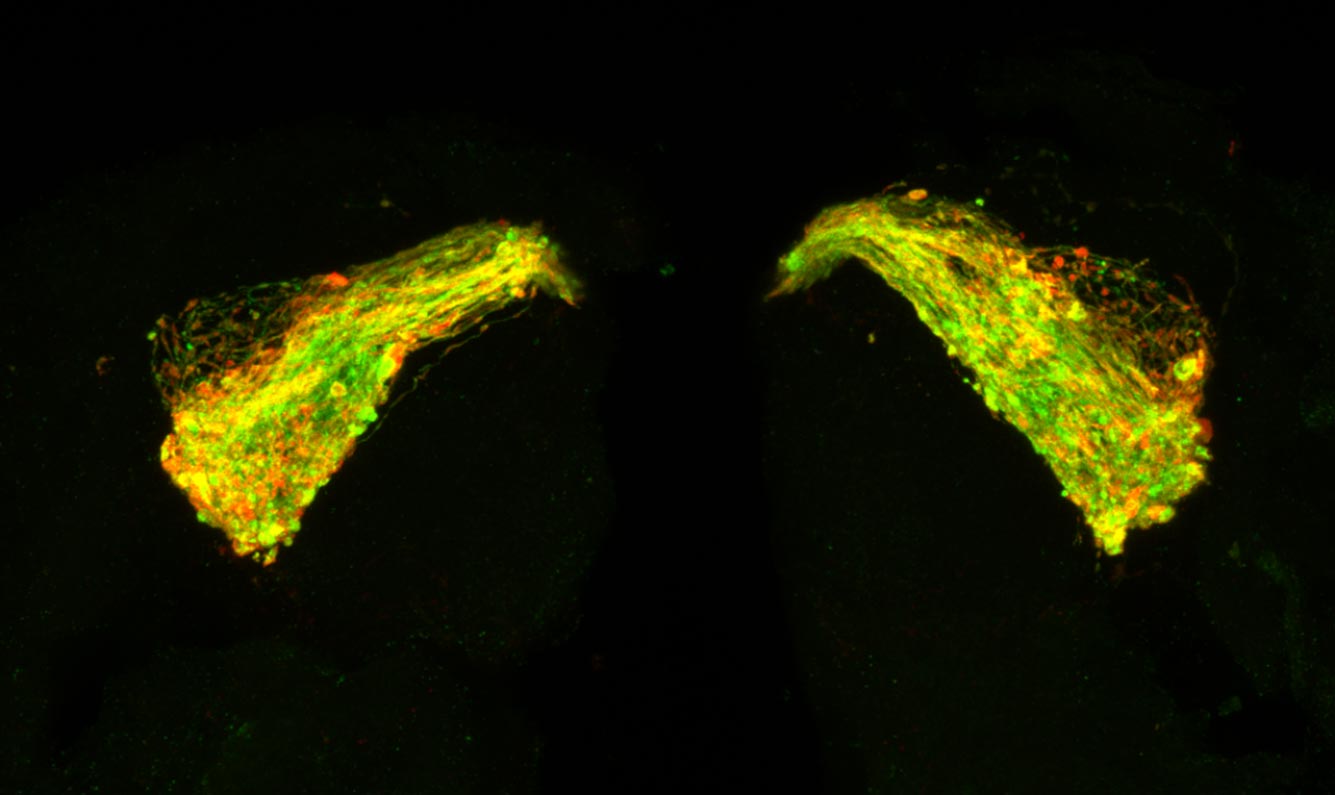
Professor Mudher said: “When we didn’t feed the flies with the peptide inhibitor, they had lots of the pathogenic fibrils, which group together to make up a tangle. But when we fed them with the drug, the pathogenic fibrils decreased significantly in quantity.”
“The higher the dosage given, the greater the improvement we saw in the fruit fly’s lifespan.”
To make sure this wasn’t unique to fruit flies, researchers at the University of Texas Southwestern Medical Centre tested the drug in a biosensor cell — a type of living human cell line that is engineered to detect pathogenic tau fibril formation.
Here too, they found the drug successfully penetrated the cells and reduced the aggregation of Tau proteins.
The team believe their work will have a significant impact on drug discovery efforts in the field of neurodegenerative diseases and now plans to test RI-AG03 in rodents, before proceeding to clinical trials.
Future Prospects
Dr. Richard Oakley is Associate Director of Research and Innovation at the Alzheimer’s Society UK, which funded the research. He said: “Dementia is the UK’s biggest killer, and it applies enormous cost and pressure to our healthcare system which is why we’re committed to funding world-leading studies like this one.
“This research is taking promising steps towards a new one-of-a-kind therapy which targets Tau, a damaging protein in the brains of people living with Alzheimer’s, preventing it from clumping together. This drug has the potential to be more targeted than others currently being studied, and we hope it will result in fewer toxic side effects.
“It’s important to note that the study is in its early stages, so we don’t yet know if it will work or be safe for humans, but it’s an exciting development and we look forward to seeing where it leads.
“Research will beat dementia, but we need to make it a reality sooner through more funding, more partnerships, and more people taking part in dementia research.”
Reference: “A novel peptide-based tau aggregation inhibitor as a potential therapeutic for Alzheimer’s disease and other tauopathies” by Anthony Aggidis, George Devitt, Yongrui Zhang, Shreyasi Chatterjee, David Townsend, Nigel J. Fullwood, Eva Ruiz Ortega, Airi Tarutani, Masato Hasegawa, Amber Cooper, Philip Williamson, Ayde Mendoza-Oliva, Marc I. Diamond, Amritpal Mudher and David Allsop, 3 October 2024, Alzheimer’s & Dementia.
DOI: 10.1002/alz.14246
The research was funded by the Alzheimer’s Society UK.
Never miss a breakthrough: Join the SciTechDaily newsletter.
Follow us on Google and Google News.
1 Comment
This drug does not “attack (Alzheimer’s) disease at its core”, as the title says. It attacks tau protein aggregation in the brains of fruit flies, who do not have Alzheimer’s. These types of exaggerated titles that ignore that the study is done on animals and not humans are all for hype purposes, and does not serve the public interest. This is not a “game changer”. This is a sales piece. ““Research will beat dementia, but we need to make it a reality sooner through more funding, more partnerships, and more people taking part in dementia research.” More funding is the key point.
Interestingly, there are now some studies suggesting that tau protein aggregations/tangles are not the cause of Alzheimer’s. See the article in SciTechDaily, Amyloid Plaques May Not Cause Alzheimer’s: New Research Challenges Decades-Old Theories. https://scitechdaily.com/amyloid-plaques-may-not-cause-alzheimers-new-research-challenges-decades-old-theories/
What causes these tau proteins to aggregate in the first place? That does not seem to be considered. The drug therapy approach chosen by current Alzheimer’s models is to stop the tangles, not to ask why the tangles form. Trying to treat tangles is treating the outcome, not the cause. And the outcome may be protective of the brain. You can’t fully know without knowing their purpose in the brain and why they form.
That said, as a medical anthropologist, I study the cultural causes of disease, and Alzheimer’s has many cultural causes, including sleep position. The fact that this is a human neurodegenerative disease that takes decades to develop shows that you can’t properly study this disease in fruit flies designed to have tau protein problems in their tiny, genetically-altered fly brains.
Brain circulation is essential for brain health, and in our culture people sleep in such a way that they actually harm their brains. This causes migraines, sleep apnea, glaucoma, dementia, and more. And it’s easy to do a self-study to see if this helps you treat or prevent these conditions. See my article, Heads Up! The Way you are Sleeping can be Killing You! https://www.academia.edu/1483361/Heads_Up_The_Way_You_Are_Sleeping_May_Be_Killing_You_