
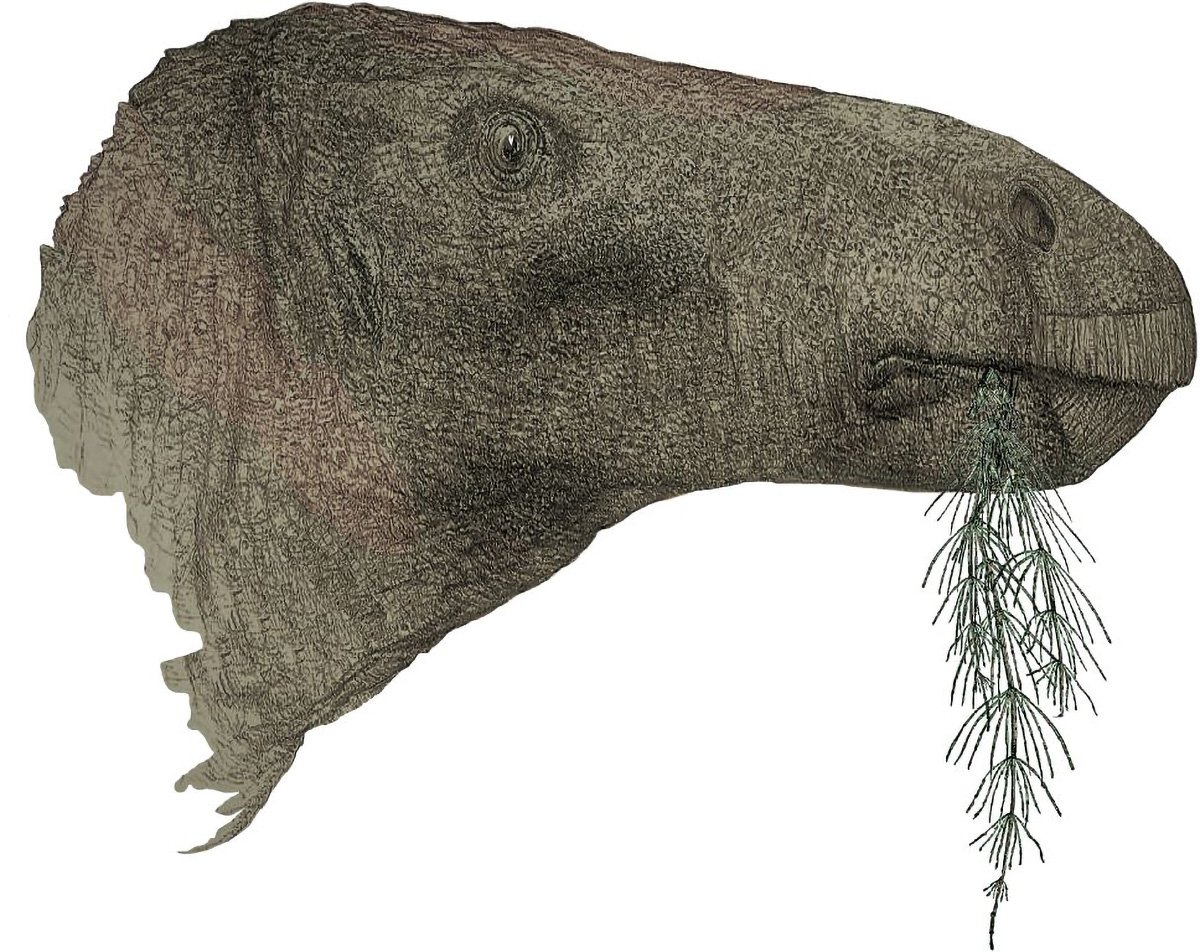
A new dinosaur species, Comptonatus chasei, discovered on the Isle of Wight, represents a major advancement in understanding Cretaceous-era dinosaur diversity in England, with ongoing research suggesting more significant findings are likely.
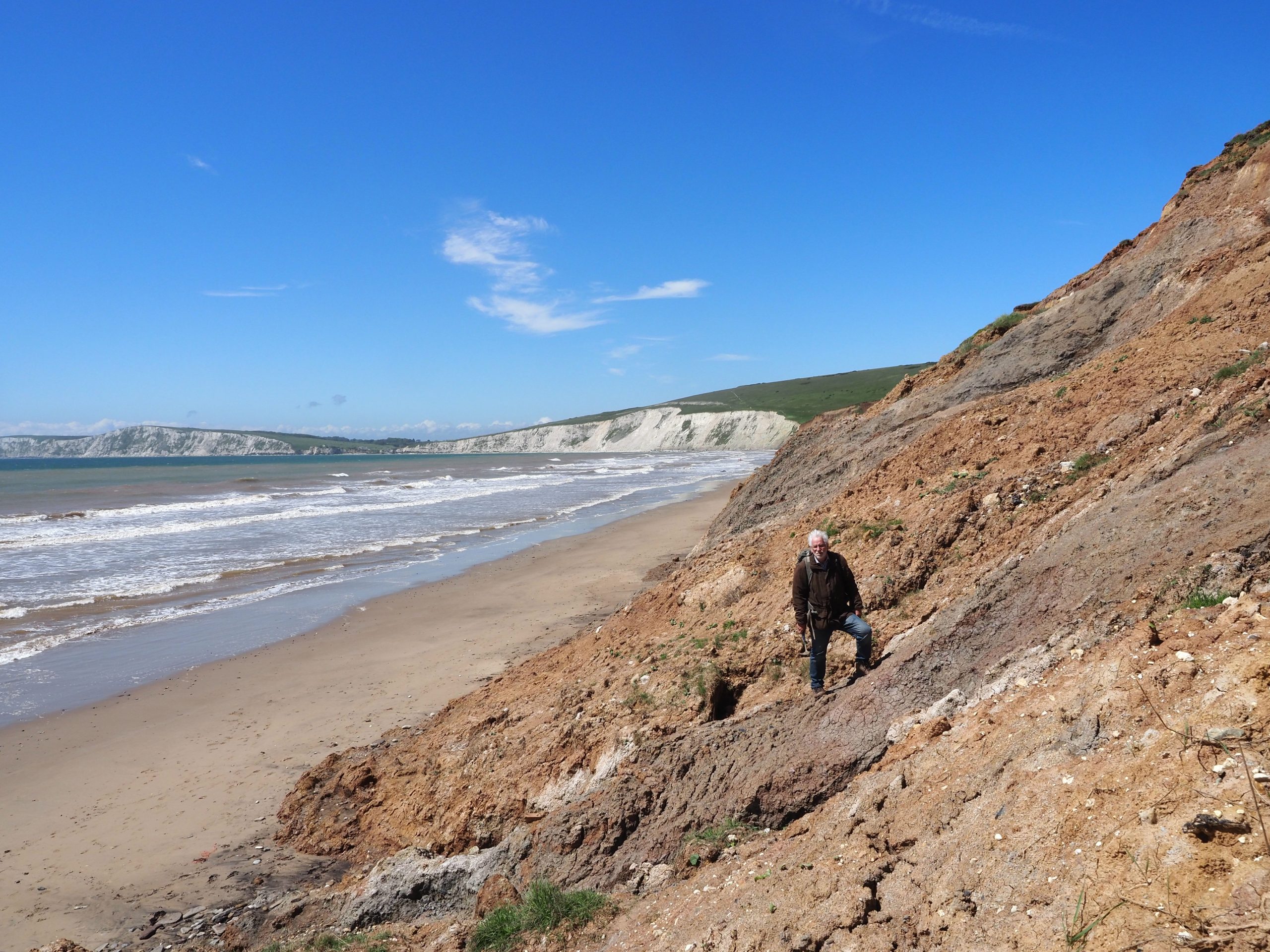
A new paper describes the most complete dinosaur discovered in this country in the past century. The specimen, approximately 125 million years old and featuring a pubic hip bone the size of a dinner plate, was found in 2013 in the cliffs of Compton Bay on the Isle of Wight. The discovery was made by fossil collector Nick Chase before he tragically died of cancer.
Jeremy Lockwood, a retired GP and University of Portsmouth PhD student, helped with the dinosaur’s excavation and has spent years analyzing the 149 different bones that make up the skeleton. Jeremy determined that the skeleton represented a new genus and species, which he named Comptonatus chasei in tribute to Nick.
Jeremy said: “Nick had a phenomenal nose for finding dinosaur bones — he really was a modern-day Mary Anning. He collected fossils daily in all weathers and donated them to museums. I was hoping we’d spend our dotage collecting together as we were of similar ages, but sadly that wasn’t to be the case. Despite his many wonderful discoveries over the years, including the most complete Iguanodon skull ever found in Britain, this is the first dinosaur to be named after him.”
Scientific Insights and Theories
When it was first discovered, the specimen was thought to be a known dinosaur called Mantellisaurus, but Jeremy’s study revealed a lot more dinosaur diversity. Indeed, this is the second new genus to be described by Jeremy.
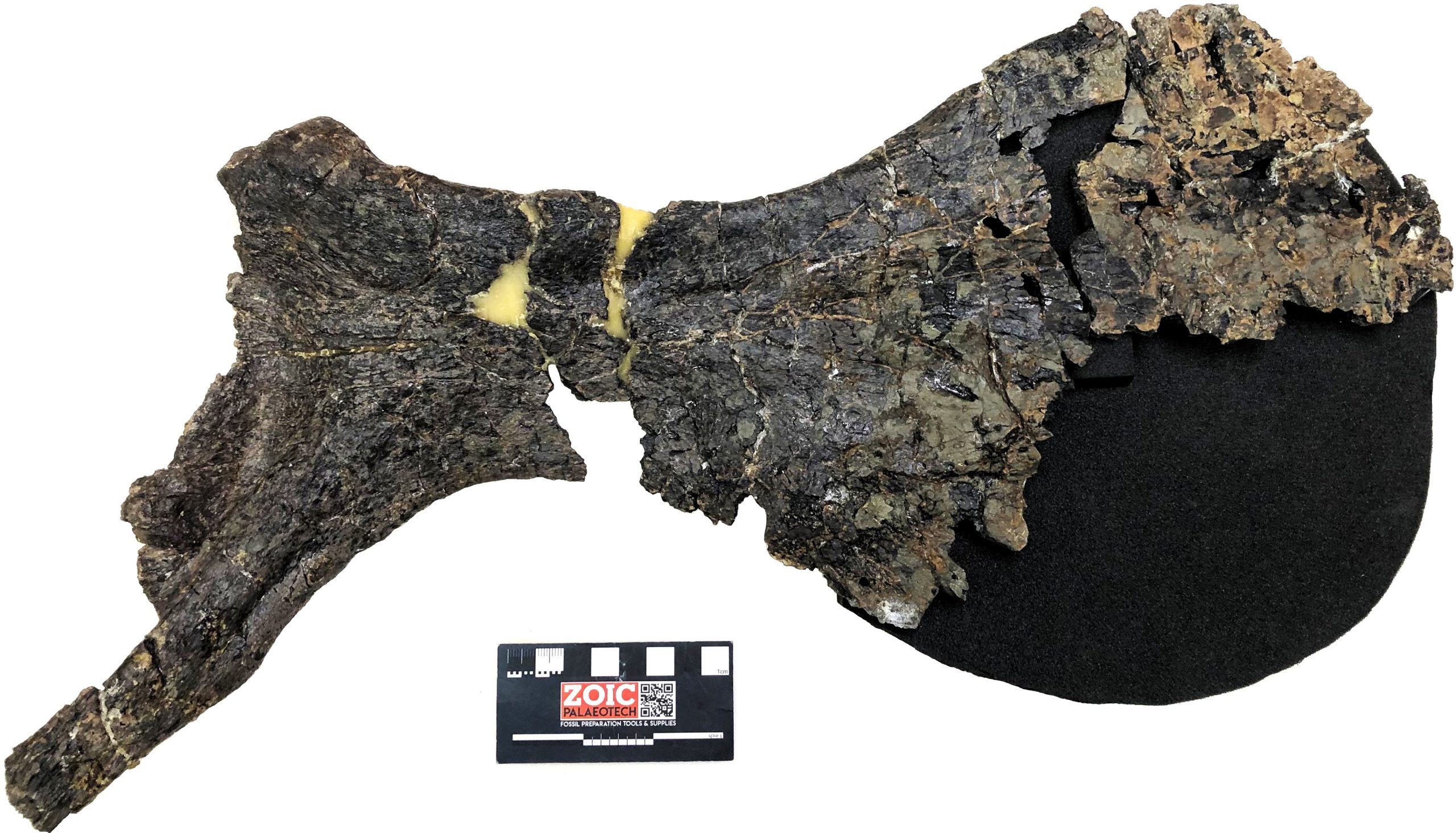
He said: “I’ve been able to show this dinosaur is different because of certain unique features in its skull, teeth, and other parts of its body. For example, its lower jaw has a straight bottom edge, whereas most iguanodontians have a jaw that curves downwards. It also has a very large pubic hip bone, which is much bigger than other similar dinosaurs. It’s like a dinner plate!”
Jeremy doesn’t know why the pubic hip bone, which is placed at the base of the abdomen was so big: “It was probably for muscle attachments, which might mean its mode of locomotion was a bit different, or it could have been to support the stomach contents more effectively, or even have been involved in how the animal breathed, but all of these theories are somewhat speculative.”
Jeremy named the dinosaur Comptonatus after Compton Bay where it was found and ‘tonatus’ is a Latin word meaning ‘thunderous’.
“This animal would have been around a ton, about as big as a large male American bison. And evidence from fossil footprints found nearby shows it was likely to be a herding animal, so possibly large herds of these heavy dinosaurs may have been thundering around if spooked by predators on the floodplains over 120 million years ago.”
Research Contributions and Museum Inclusion
Dr. Susannah Maidment, Senior Researcher and paleontologist at the Natural History Museum and senior author of the paper completed whilst supervising Jeremy’s PhD commented: “Comptonatus is a fantastic dinosaur specimen: one of the most complete to be found in the UK in a century.
“Its recognition as a new species is due to incredibly detailed work by NHM Scientific Associate Dr. Jeremy Lockwood, whose research continues to reveal that the diversity of dinosaurs in southern England in the Early Cretaceous was much greater than previously realized.
“The specimen, which is younger than Brighstoneus but older than Mantellisaurus (two iguandontian dinosaurs closely related to Comptonatus) demonstrates fast rates of evolution in iguandontian dinosaurs during this time period, and could help us understand how ecosystems recovered after a putative extinction event at the end of the Jurassic Period.”
Despite only four new dinosaur species being described on the Isle of Wight in the whole of the 1900s, there have been eight new species named in the last five years.
Jeremy added: “This really is a remarkable find. It helps us understand more about the different types of dinosaurs that lived in England in the Early Cretaceous. This adds to recent research that shows that Wessex was one of the world’s most diverse ecosystems.”
The dinosaur has been added to the collections at the Dinosaur Isle Museum in Sandown on the Isle of Wight. The paper was recently published in the Journal of Systematic Palaeontology.
Dr. Martin Munt, Dinosaur Isle curator, said: “Ongoing research on the museum collection continues to reveal exciting new discoveries. Most of Nick’s most important finds have remained on the Island, a lasting legacy. We can look forward to many more new types of prehistoric creatures being discovered from the Island’s cliffs and collection.”
Mike Greenslade, General Manager for the National Trust on the Isle of Wight, said: “This extraordinary discovery at National Trust’s Compton Bay highlights the rich natural heritage of the Isle of Wight. Finding the most complete dinosaur in the UK in a century not only showcases the island’s palaeontological significance but also underscores the importance of preserving our landscapes for future generations to explore and learn from. Nick Chase’s remarkable find and Jeremy Lockwood’s dedicated research are a testament to the incredible history waiting to be uncovered here. We are thrilled to be part of this ongoing journey of discovery and scientific advancement.”
Reference: “Comptonatus chasei, a new iguanodontian dinosaur from the Lower Cretaceous Wessex Formation of the Isle of Wight, southern England” by Jeremy A. F. Lockwood, David M. Martill and Susannah C. R. Maidment, 9 July 2024, Journal of Systematic Palaeontology.
DOI: 10.1080/14772019.2024.2346573
Never miss a breakthrough: Join the SciTechDaily newsletter.
Follow us on Google and Google News.
17 Comments
For the delay I thought modern crocodilian has 2 hypapophysis in centra vertebrae but hard to find that for other day .the mesoeucrocodylia with pneumatic neck bone is eustrepdonylus diversensis the feature they cliam modern crocodilian do not have the gator type mesoeucrocodylia
They cliam this is dinosaur because it has pneumatic bone like dinosaur pneumatic bone beyond the skull but lack lacrimal horn a us gator feature the ankle is like modern crocodilian none of bone is fuse the cliam it’s a juvenile the juvenile huanxiagnathus a compsognathidae the tibiotarsus is fuse the new news on compsognathidae they allso has gator ankle too the tibia is fuse the fibula no news the adult sinosauropteryx compsognathus some ankle bone are not fuse this is not dinosaur feature
All compsognathidae lack full ankle fusion because they were semi aquatic like gator they have big tail like aquatic lizard they show how they turn into modern crocodilian .the frontal is fuse in eustrepdonylus this could not be early thecodont or pseudosuchus only mesoeucrocodylia dinosaur has fuse frontal.all ankle bone are not fuse a gator type mesoeucrocodylia feature only could be gator type mesoeucrocodylia they say it’s primitive spinosauridae this is most advance spinosauridae because it’s a gator type mesoeucrocodylia the jaw can swallow large prey that dismember by death roll a mesoeucrocodylia feature
Spinosauridae is first mesoeucrocodylia then turn into the gator this is cover up like macelognathus .no news on compsognathus if it has gator type peg ankle
Eustrepdonylus is mesoeucrocodylia atoposauridae close to theriosuchus they have opisthocoelous vertebrae the fish gar feature but sound like these are land crocodilian these opisthocoelous vertebrae were common in dinosaur some bird like maniraptoran bird the dromaeosauridae allso has acoelous like bird and mammal these advance vertebrae are rare in dinosaur these unusual is mesoeucrocodylia feature the fish unusual has primitive vertebrae find in dinosaur. lizard and gator have advance vertebrae
Hello, my fiance’ and I found a bunch of fossils
Including a Dino hatching and a of human origin Head and Foot. The head has someone else’s hand attached to it still. Anyway would love to share with someone who actually wants to see these. They should be in the Smithsonian. We need help! Please! Thank You!
I would love to see that!Good luck to you in finding ANYONE to look at your finds. From experience, it seems to be a hard road to hoe with little results…
Anonymous fossils are rarely useful for science. But I’m sure there are local natural museums that may take a look if they have time.
The cliam compsognathus is closes dinosaur to birds because it has tibia bigger than femur like macelognathus the macelognathus is a gator type mesoeucrocodylia the compsognathus clearly got gator ankle .eustrepdonylus they said clearly has tetanuran feature and that it’s a tetanuran dinosaur as I said before modern crocodilian is the last surviving spinosauridae dinosaur
I Suspicious mesoeucrocodylia has pneumatic fenestrahole in centra vertebrae but could not find any for many years because mesoeucrocodylia have everything that dinosaur has they cliam that these are unique in dinosaur and bird .i thought mite be today crocodilian because some are endanger but fossil gator type mesoeucrocodylia win the game
The link how I got this biocyclopedia the crocodilia.they thought it mite be a crocodilian so they know about this for a long time .some pseudosuchus mite come from well known dinosaur because compsognathus gator ankle it mite be common evolution in dinosaur.brachiosaurus a sauropod it has whale nose like some pseudosuchus .sauropod mite be two line as they said
And clearly eustrepdonylus is a gator type mesoeucrocodylia
Eustreptospondylus oxonsensis has none lacrimal horn link Wikipedia .on bandit scientist famous link why birds are not dinosaur this mite be it bird ankle fusion is 2,3,4 dinosaur is 3,4,like lizard they have different ankle
Oxonsensis oxoniensis .on Eustreptospondylus diversensis link .a new theropod dinosaur skull fragments from the Jurassic of the vaches .this is fuse frontal link
Pleurocoel mean pneumatic .the links . A reconsideration of compsognathus academi edu .the no fuse ankle.hauxiagnathus juvenile tibiotarsus researchgate.redescription of streptospondylus google scholar English and French.no ankle fusion link.
Compsognathus link some ankle fusion not all fusion
Compsognathus megaraptor allosaurus spinosauridae gator all are tyrannosaurus these are quadrate foramen dinosaur with this new evidence clearly are link