
Close Menu
    Facebook X (Twitter) Instagram
    SciTechDaily
    • Biology
    • Chemistry
    • Earth
    • Health
    • Physics
    • Science
    • Space
    • Technology
    Facebook X (Twitter) Pinterest YouTube RSS
    SciTechDaily
    Home»Earth»Amazon Fire Analysis Might Close Gaps in Climate Models
    Earth

    Amazon Fire Analysis Might Close Gaps in Climate Models

    By SciTechDailySeptember 25, 2012No Comments2 Mins Read
    Facebook Twitter Pinterest Telegram LinkedIn WhatsApp Email Reddit
    Share
    Facebook Twitter LinkedIn Pinterest Telegram Email Reddit
    amazon-burning
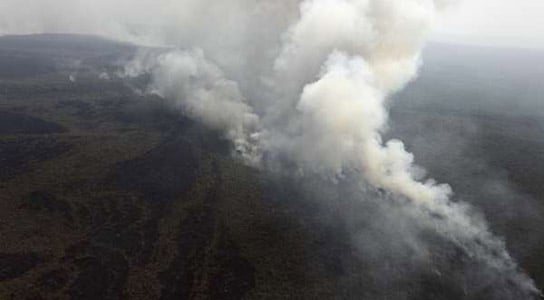
    Amazon wildfires 

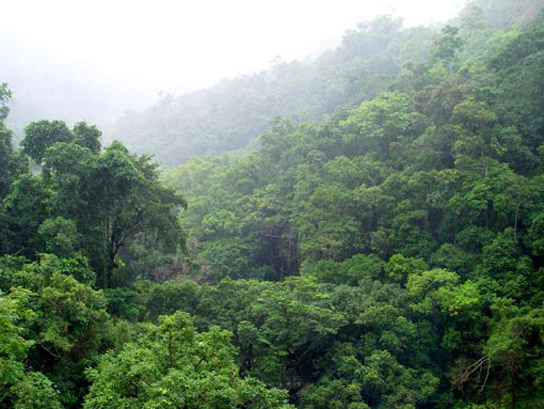
    Brazilian and British scientists have been examining the heavy smoke plumes from wildfires in the Amazon, gathering data, to understand how the burning of biomass in South America is affecting the local weather and air quality. This might help close crucial gaps in climate models about how the process changes the Earth’s radiation balance.

    The South American Biomass Burning Analysis (SAMBBA) mission uses a jet carrying a suite of sensor instruments to take measurements up to 12 km above the jungle’s canopy. Previous campaigns used smaller planes and flew lower, and were unable to observe some crucial processes. The Amazon is dominated by high-altitude convection clouds, and scientists aren’t sure how they process energy and how fire interferes with them, making weather predictions moot.
    brazilian-forest-burning

    The scientists are using a LiDAR, which is a laser that measures how much light is being blocked by aerosol particles of smoke at various altitudes. This local dimming of the atmosphere can hamper photosynthesis, possibly drastically. Local measurements have shown a decrease of plant productivity of around 30%. There is no estimate for the Amazon in its entirety.

    Aerosols might also produce a cooling effect at the surface, as well as warming mid-altitudes. Current climate models cannot account for such complex interactions, and therefore can’t predict how increasing carbon dioxide concentrations and burning biomass will affect the radiation balance of the Amazon.

    Information on these aerosols is also important for global weather forecasts. SAMBBA will also allow scientists to measure the air quality in Amazonian cities. Concentrations of nitrogen oxides and other compounds that react to form polluting ozone at low altitudes are higher during the burning season in the Amazon than in heavily polluted areas of São Paulo. However, ozone-forming compounds have never been measured across the whole Amazon.

    Never miss a breakthrough: Join the SciTechDaily newsletter.
    Follow us on Google and Google News.

    Amazon Brazil Climatology Conservation Modeling Pollution
    Share. Facebook Twitter Pinterest LinkedIn Email Reddit

    Related Articles

    Gold Mining Unleashes a Carbon Time Bomb in the Amazon

    Global Warming Is Changing Plants’ Pollination Patterns – and It Could Have Disastrous Consequences for Food Stability

    Operation Mercury vs. Gold Fever: Peru’s Tug-of-War in the Amazon With a Pandemic Twist

    New Machine Learning Model Can Accurately Predict Events Like Tornadoes and Hail Eight Days in Advance

    “Irreversible Degradation” – Existential Threats to the Iconic Nile River Delta Identified

    Illegal Gold Mining in Peruvian Amazon Turns Pristine Rainforests Into Heavily Polluted Mercury Sinks

    Hundreds of Cape Fur Seals Entangled in Fishing Lines and Nets Every Year – Causing Horrific Injuries and Painful Deaths

    Data Shows 2010 Amazon Megadrought Caused Serious Devastation

    Survey of Brazil’s Atlantic Forests Reveals Loss of Key Species

    Leave A Reply Cancel Reply

    • Facebook
    • Twitter
    • Pinterest
    • YouTube

    Don't Miss a Discovery

    Subscribe for the Latest in Science & Tech!

    Trending News

    Your Blood Pressure Reading Could Be Wrong Because of One Simple Mistake

    Astronomers Stunned by Ancient Galaxy With No Spin

    Physicists May Be on the Verge of Discovering “New Physics” at CERN

    Scientists Solve 320-Million-Year Mystery of Reptile Skin Armor

    Scientists Say This Daily Walking Habit May Be the Secret to Keeping Weight Off After Dieting

    New Therapy Rewires the Brain To Restore Joy in Depression Patients

    Giant Squid Detected off Western Australia in Stunning Deep-Sea Discovery

    Popular Sugar-Free Sweetener Linked to Liver Disease, Study Warns

    Follow SciTechDaily
    • Facebook
    • Twitter
    • YouTube
    • Pinterest
    • Newsletter
    • RSS
    SciTech News
    • Biology News
    • Chemistry News
    • Earth News
    • Health News
    • Physics News
    • Science News
    • Space News
    • Technology News
    Recent Posts
    • Hidden Warm Water Beneath Antarctica Could Rapidly Raise Global Sea Levels
    • Scientists Revive Ancient Chemistry Trick To Engineer Next-Generation Glass
    • Scientists Use AI To Supercharge Ultrafast Laser Simulations by More Than 250x
    • Scientists Just Found a Surprising Way To Destroy “Forever Chemicals”
    • Popular Supplement Ingredient Linked to Shorter Lifespan in Men
    Copyright © 1998 - 2026 SciTechDaily. All Rights Reserved.
    • Science News
    • About
    • Contact
    • Editorial Board
    • Privacy Policy
    • Terms of Use

    Type above and press Enter to search. Press Esc to cancel.