
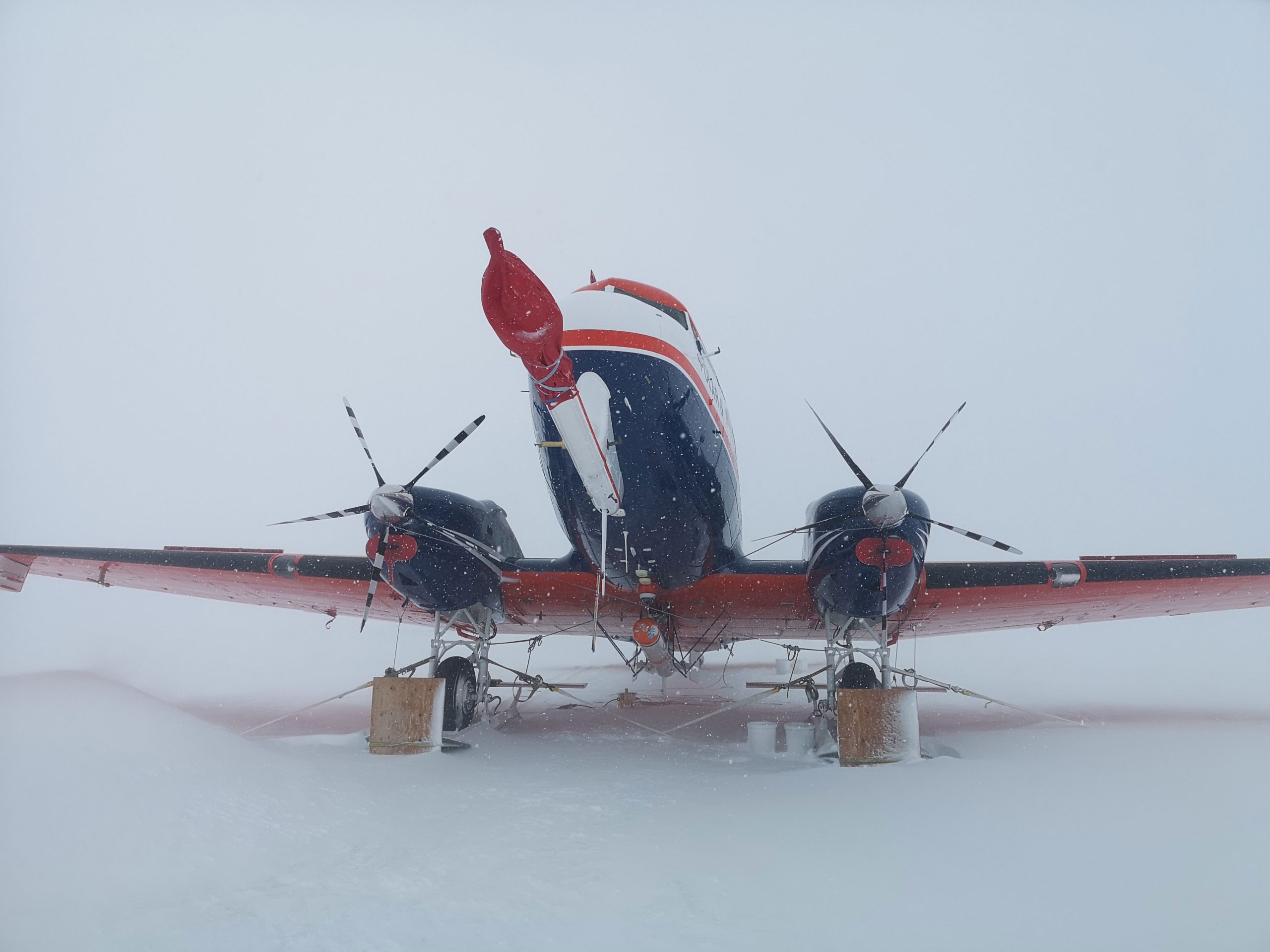
A rare deep-field Antarctic flight campaign has uncovered unexpected aerosol concentrations over the continent’s interior.
Antarctica is a key driver of Earth’s climate because it reflects a large share of the Sun’s energy back into space. Its vast ice sheets and persistent cloud cover are central to that cooling effect. Yet scientists still do not fully understand how clouds develop over the continent, how they behave in the polar atmosphere, or how airborne particles known as aerosols influence these processes.
To address these unanswered questions, researchers from the Alfred Wegener Institute, the Leibniz Institute for Tropospheric Research, and the Max Planck Institute for Chemistry launched the SANAT flight campaign. Their aircraft-based aerosol measurements are the first conducted in Antarctica in two decades and the first to extend deep into the continent’s interior.
Clouds begin to form when water vapor condenses onto microscopic particles suspended in the air. These particles, called aerosols, can consist of sea salt, dust, soot, or other substances that provide a surface on which water droplets or ice crystals can develop. Compared with most parts of the world, Antarctica’s atmosphere contains far fewer aerosols. Even small shifts in their number or chemical makeup can significantly affect cloud formation and, in turn, the planet’s ability to reflect solar radiation back into space.
Scientists are still working to clarify how aerosols and clouds interact under Antarctic conditions.
“In order to close this knowledge gap, we are investigating the natural and anthropogenic sources of aerosols, the conditions under which new particles form, and how their properties change when they float at different altitudes in the atmosphere or are transported over oceans, ice shelves and the Antarctic continent,” as Dr. Zsófia Jurányi from the Alfred Wegener Institute, Helmholtz Centre for Polar and Marine Research (AWI) outlines.
The SANAT Flight Campaign
Dr. Jurányi is leading the SANAT (Spatial distribution of ANtarctic Aerosol and Trace gases) campaign in collaboration with Dr. Frank Stratmann of the Leibniz Institute for Tropospheric Research (TROPOS) and Prof. Stephan Borrmann of the Max Planck Institute for Chemistry (MPIC). The team is examining where Antarctic aerosols originate and how they move through the atmosphere.
“We are particularly interested in particles that act as condensation nuclei or ice nuclei, as these ultimately lead to the formation of liquid phase, mixed phase, or ice clouds.”
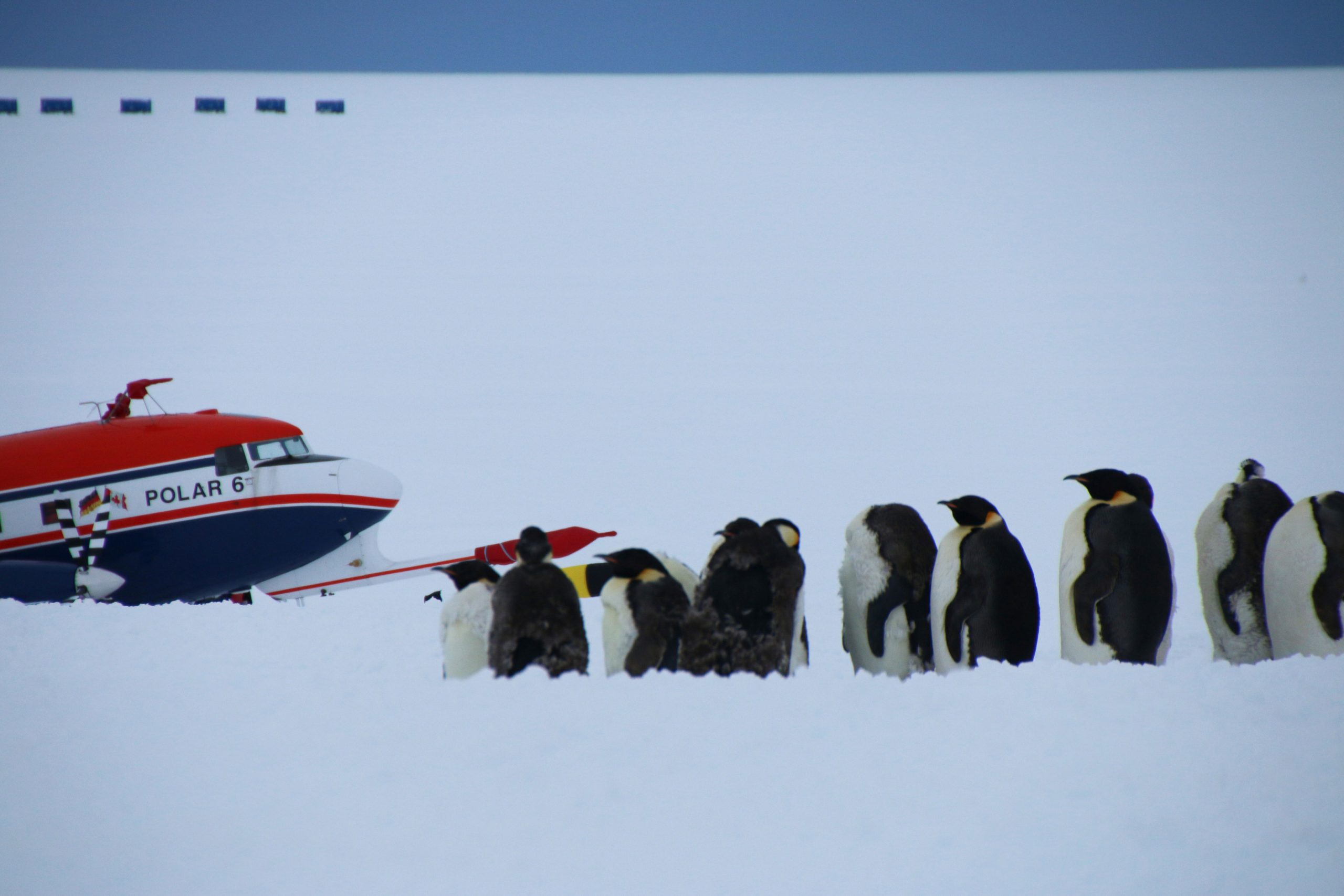
During January and February, the team carried out ten research flights aboard the AWI aircraft Polar 6. Operating in harsh polar conditions, they flew from Germany’s Neumayer Station III as far south as the 80th parallel.
“The last comparable measurements took place 20 years ago, and the campaign at that time focused only on the spatial distribution of aerosols in the Antarctic coastal region,” says Dr. Frank Stratmann from TROPOS. “We have now measured aerosols far to the south over the Antarctic Plateau for the first time, in some cases using techniques and methods that have been newly developed.”
New Instruments and Surprising Findings
One of the campaign’s specialized tools is the “T-Bird,” a probe towed behind the aircraft on a 60 meter long cable. Operating independently from the plane, it gathers detailed measurements during flight. Combined with onboard instruments on Polar 6 and ground observations at Neumayer Station III, the system allowed scientists to document aerosol abundance, fine scale transport processes, and chemical composition. The researchers also recorded key atmospheric conditions, including air pressure, temperature, and water vapor levels.
In the course of their flights, they were able to collect extensive data, which they are now aiming to evaluate over the coming months. An initial assessment has already revealed something surprising: “In the interior, we observed an unexpectedly high aerosol concentration as well as interesting chemical compositions,” reports Prof. Stephan Borrmann from the MPIC.
“Antarctica and its surroundings are crucial components of the global Earth and climate system, which react to climate change and its effects, while also influencing them at the same time,” as Zsófia Jurányi explains. “With this unique data, our campaign not only helps to improve weather forecasts and climate simulations. We are also contributing to a better understanding of the interaction of clouds with aerosols and assessing their influence on future climate conditions.”
Never miss a breakthrough: Join the SciTechDaily newsletter.
Follow us on Google and Google News.
1 Comment
“Its vast ice sheets and persistent cloud cover are central to that cooling effect.”
“Even small shifts in their number or chemical makeup can significantly affect cloud formation and, in turn, the planet’s ability to reflect solar radiation back into space.”
It isn’t just the “ability” (reflectivity) that is affected. Clouds are nearly uniform in their reflectance in all directions (~Lambertian). While snow has a diffuse reflectance spread out by its Bi-Reflectance Distribution Function (BRDF), which varies with the degree of compaction (ageing) and angle of incidence of the incident sunlight; it invariably has a strong forward reflectance lobe resulting from the sub-parallel alignment of individual snowflakes . While open water reflects sunlight specularly (mirror-like), with the reflectance varying with with the angle of incidence, in a narrow sheaf of rays with the reflectivity reaching 100% at the terminator.
Aerosols are important. However, the situation is more complex than this press release suggests.