
Close Menu
    Facebook X (Twitter) Instagram
    SciTechDaily
    • Biology
    • Chemistry
    • Earth
    • Health
    • Physics
    • Science
    • Space
    • Technology
    Facebook X (Twitter) Pinterest YouTube RSS
    SciTechDaily
    Home»Science»Aphids Use Rudimentary Sunlight Harvesting Similar to Photosynthesis
    Science

    Aphids Use Rudimentary Sunlight Harvesting Similar to Photosynthesis

    By SciTechDailyAugust 21, 2012No Comments2 Mins Read
    Facebook Twitter Pinterest Telegram LinkedIn WhatsApp Email Reddit
    Share
    Facebook Twitter LinkedIn Pinterest Telegram Email Reddit
    aphids-photosynthesis
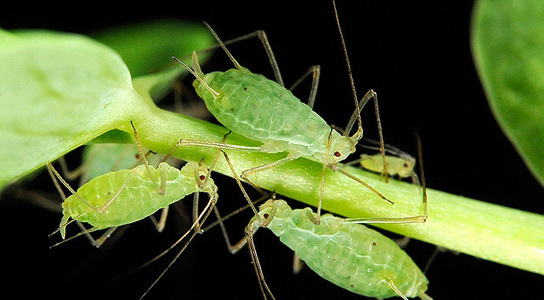
    Aphids capture sunlight for metabolic purposes, similar to photosynthesis in plants.

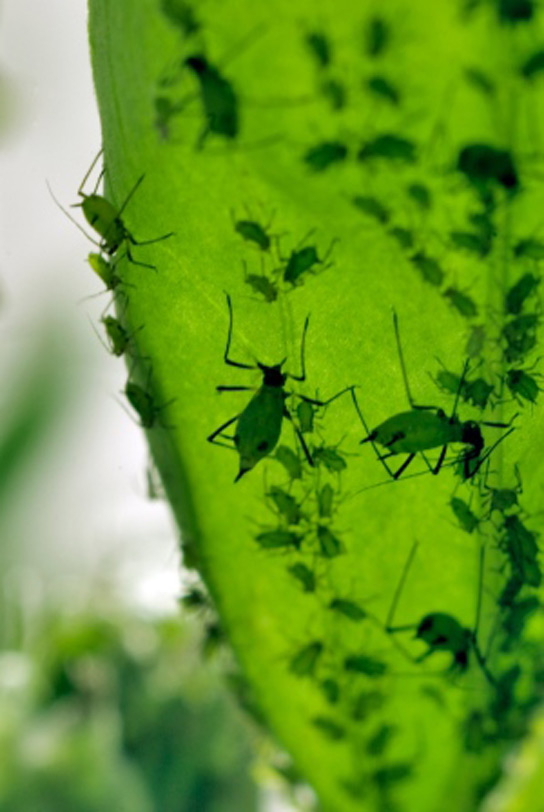
    Aphids can be born pregnant and males sometimes lack mouths, causing them to die after mating. New work indicates that they might also capture sunlight and use it for metabolic purposes, akin to what plants accomplish with photosynthesis.

    The researchers published their findings in the journal Scientific Reports. Aphids have the unique ability, not just among insects but among animals, to synthesize pigments called carotenoids. These are used by animals and insects to maintain healthy immune systems, making certain vitamins. Unlike other creatures, which need to obtain carotenoids through their diets, aphids absorb energy from the sun and transfer it to the cellular machinery involved in energy production.
    white-aphid

    Entomologist Alain Robichon, from the Sophia Agrobiotech Institute in Sophia Antipolis, France, and his colleagues state that this unprecedented ability in animals is common in other kingdoms such as plants and algae. Fungi and bacteria can also synthesize carotenoids. Robichon took cues from a 2010 finding that there were high levels of carotenoids in aphids, his team decided to study how the insects make such metabolically expensive chemicals.

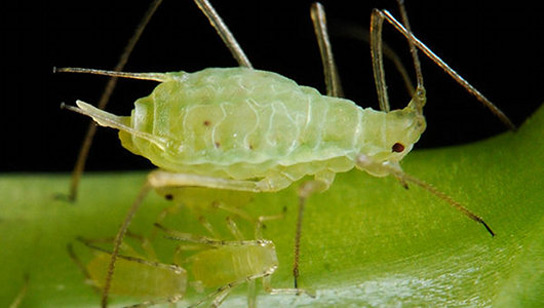
    Carotenoids are responsible for aphid pigmentation, and this pigmentation determines what kind of predators can see it. When aphids’ levels of ATP were measured, the researchers discovered that green aphids made significantly more ATP than white ones, which were devoid of pigments. ATP production rose when the orange ones, which have an intermediate level of carotenoids, were placed into light, and fell when they were moved into darkness.

    The aphids were crushed to demonstrate that these extracts could absorb light and pass the energy onwards. For now, much more work is needed before scientists can state that aphids photosynthesize, but the findings certainly indicate the possibility of this.
    aphids-green-leaf

    Reference: “Light-induced electron transfer and ATP synthesis in a carotene synthesizing insect” by Jean Christophe Valmalette, Aviv Dombrovsky, Pierre Brat, Christian Mertz, Maria Capovilla and Alain Robichon, 16 August 2012, Scientific Reports.
    DOI: 10.1038/srep00579

    Never miss a breakthrough: Join the SciTechDaily newsletter.
    Follow us on Google and Google News.

    Aphids ATP Entomology Insect Photosynthesis Popular
    Share. Facebook Twitter Pinterest LinkedIn Email Reddit

    Related Articles

    “Little to No Value” – Study Finds Insecticide Sprays Fail To Control Cockroaches

    95% Success Rate: Scientists Develop New, More Effective, and Non-Toxic Way To Kill Termites

    Moths to a Flame: Millennia-Old Mystery About Insects and Light at Night Solved at Last

    Why Are There So Few Insects in the Ocean? Japanese Scientists May Have Solved the Mystery

    Physics of Superpropulsion: Super-Fast Sharpshooter Insect Urination Using a “Butt Flicker”

    Giant Jurassic-Era Insect Discovered at Arkansas Walmart Sets Historic Record

    Organic Insecticides More Damaging to Beneficial Insects Than Synthetic Alternatives

    Study of More Than 1,400 Protein-Coding Genes Resolves Long Standing Mystery in the Evolution of Insects

    Jurassic Period Super-Sized Fleas Had Armored Mouthparts to Attack the Thick Hide of Dinosaurs

    Leave A Reply Cancel Reply

    • Facebook
    • Twitter
    • Pinterest
    • YouTube

    Don't Miss a Discovery

    Subscribe for the Latest in Science & Tech!

    Trending News

    Breakthrough Bowel Cancer Trial Leaves Patients Cancer-Free for Nearly 3 Years

    Natural Compound Shows Powerful Potential Against Rheumatoid Arthritis

    100,000-Year-Old Neanderthal Fossils in Poland Reveal Unexpected Genetic Connections

    Simple “Gut Reset” May Prevent Weight Gain After Ozempic or Wegovy

    2.8 Days to Disaster: Scientists Warn Low Earth Orbit Could Suddenly Collapse

    Common Food Compound Shows Surprising Power Against Superbugs

    5 Simple Ways To Remember More and Forget Less

    The Atomic Gap That Could Cost the Semiconductor Industry Billions

    Follow SciTechDaily
    • Facebook
    • Twitter
    • YouTube
    • Pinterest
    • Newsletter
    • RSS
    SciTech News
    • Biology News
    • Chemistry News
    • Earth News
    • Health News
    • Physics News
    • Science News
    • Space News
    • Technology News
    Recent Posts
    • After 37 Years, the World’s Longest-Running Soil Warming Experiment Uncovers a Startling Climate Secret
    • NASA Satellite Captures First-Ever High-Res View of Massive Pacific Tsunami
    • ADHD Isn’t Just a Deficit: Study Reveals Powerful Hidden Strengths
    • Scientists Uncover “Astonishing” Hidden Property of Light
    • Scientists Discover Stem Cells That Could Regrow Teeth and Bone
    Copyright © 1998 - 2026 SciTechDaily. All Rights Reserved.
    • Science News
    • About
    • Contact
    • Editorial Board
    • Privacy Policy
    • Terms of Use

    Type above and press Enter to search. Press Esc to cancel.