
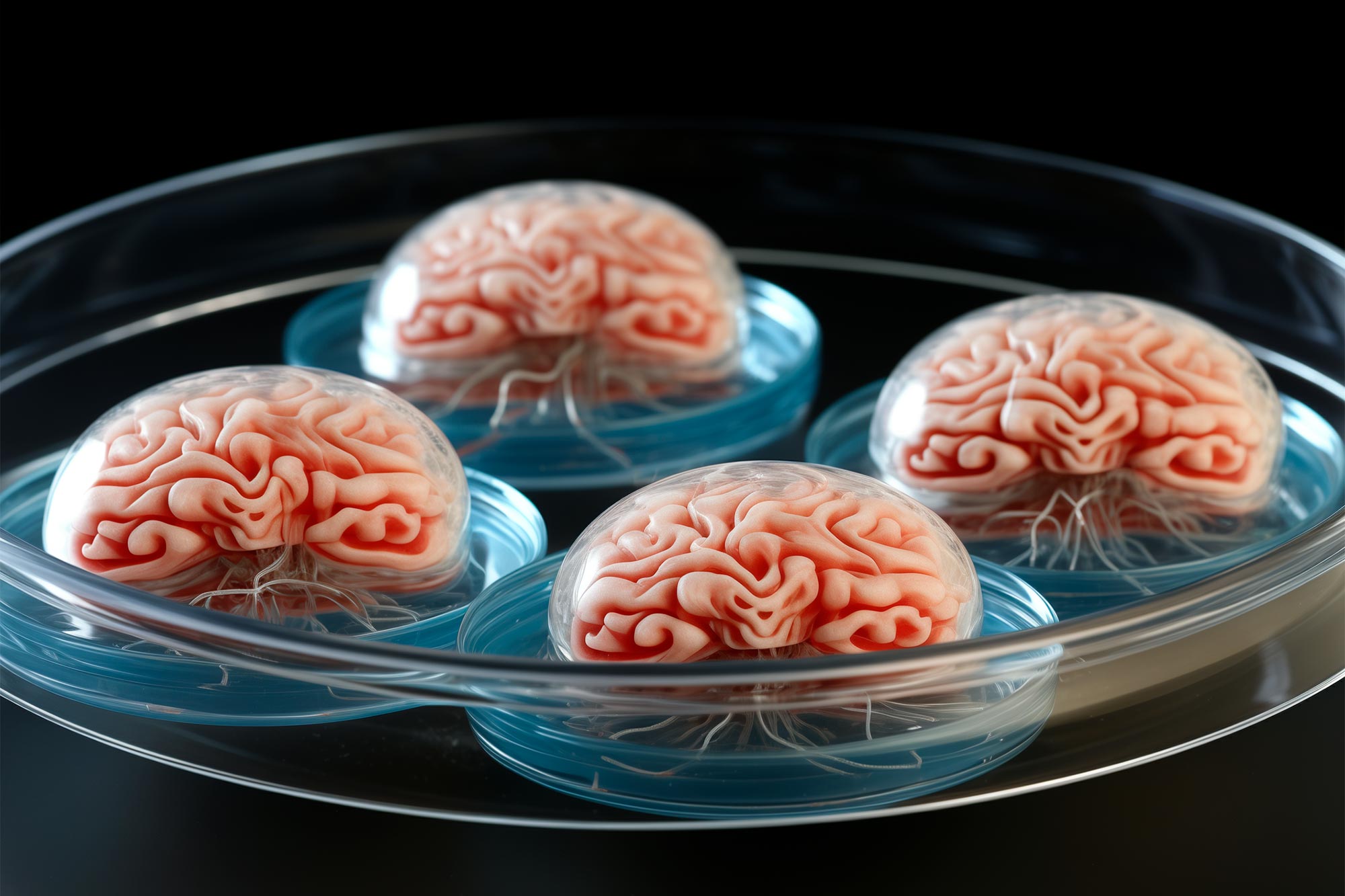
Exploring the ethical and legal implications of developing brain organoids from human fetal brain tissue.
Brain organoids, commonly called “mini brains,” are not actual human brains. However, ethical concerns surrounding these lab-grown brain tissues, particularly when derived from human fetal tissues, can be very human indeed.
Researchers from the Graduate School of Humanities and Social Sciences at Hiroshima University offer valuable insights into the complexities inherent in brain organoid research, making significant contributions to the ongoing discourse surrounding this innovative biotechnology and paving the way for informed decision-making and legal and ethical stewardship in the pursuit of scientific advancement.
Their paper was published on March 4 in EMBO Reports.
Brain organoids are three-dimensional human brain tissues derived from stem cells, which are capable of developing into many different cell types. They replicate the complexity of the human brain in a laboratory setting, allowing researchers to study brain development and diseases in the hopes of acquiring vital insights and making innovative medical advancements.
Ethical and Legal Challenges
Traditionally, brain organoids are grown from pluripotent stem cells, an especially potent sub-type that is typical of early embryonic development, but new technologies now make it possible to generate these organoids from human fetal brain cells. This method comes, however, with even more heated legal and ethical debates about brain organoids — debates that are already intense in conventional organoid research.
“Our research seeks to illuminate previously often-overlooked ethical dilemmas and legal complexities that arise at the intersection of advanced organoid research and the use of fetal tissue, which is predominantly obtained through elective abortions,” said Tsutomu Sawai, an associate professor at Hiroshima University and lead author of the study.
The study highlights the urgent need for a sophisticated and globally harmonized regulatory framework tailored to navigate the complex ethical and legal landscape of fetal brain organoid (FeBO) research. The paper emphasizes the importance of informed consent protocols, ethical considerations surrounding organoid consciousness, transplantation of organoids into animals, integration with computational systems, and broader debates related to embryo research and the ethics of abortion.
“Our plan is to vigorously advocate for the development of thorough ethical and regulatory frameworks for brain organoid research, including FeBO research, at both national and international levels,” said Masanori Kataoka, a fellow researcher at Hiroshima University.
“Rather than being limited to issues of consciousness, it’s imperative, now more than ever, to systematically advance the ethical and regulatory discussion in order to responsibly and ethically advance scientific and medical progress,” Sawai said.
Moving forward, the research duo plans to continue supporting the advancement of ethical and regulatory discussions surrounding brain organoid research. By promoting responsible and ethical progress in science and medicine, they aim to ensure that all research involving brain organoids, including FeBOs, is conducted within a framework that prioritizes human dignity and ethical integrity.
Reference: “The ethical and legal challenges of human foetal brain tissue-derived organoids” by Tsutomu Sawai and Masanori Kataoka, 4 March 2024, EMBO Reports.
DOI: 10.1038/s44319-024-00099-5
The study was funded by the Japan Agency for Medical Research and Development, the Japan Society for the Promotion of Science, the Research Institute of Science and Technology for Society, and the Uehiro Foundation on Ethics and Education.
Never miss a breakthrough: Join the SciTechDaily newsletter.
Follow us on Google and Google News.