
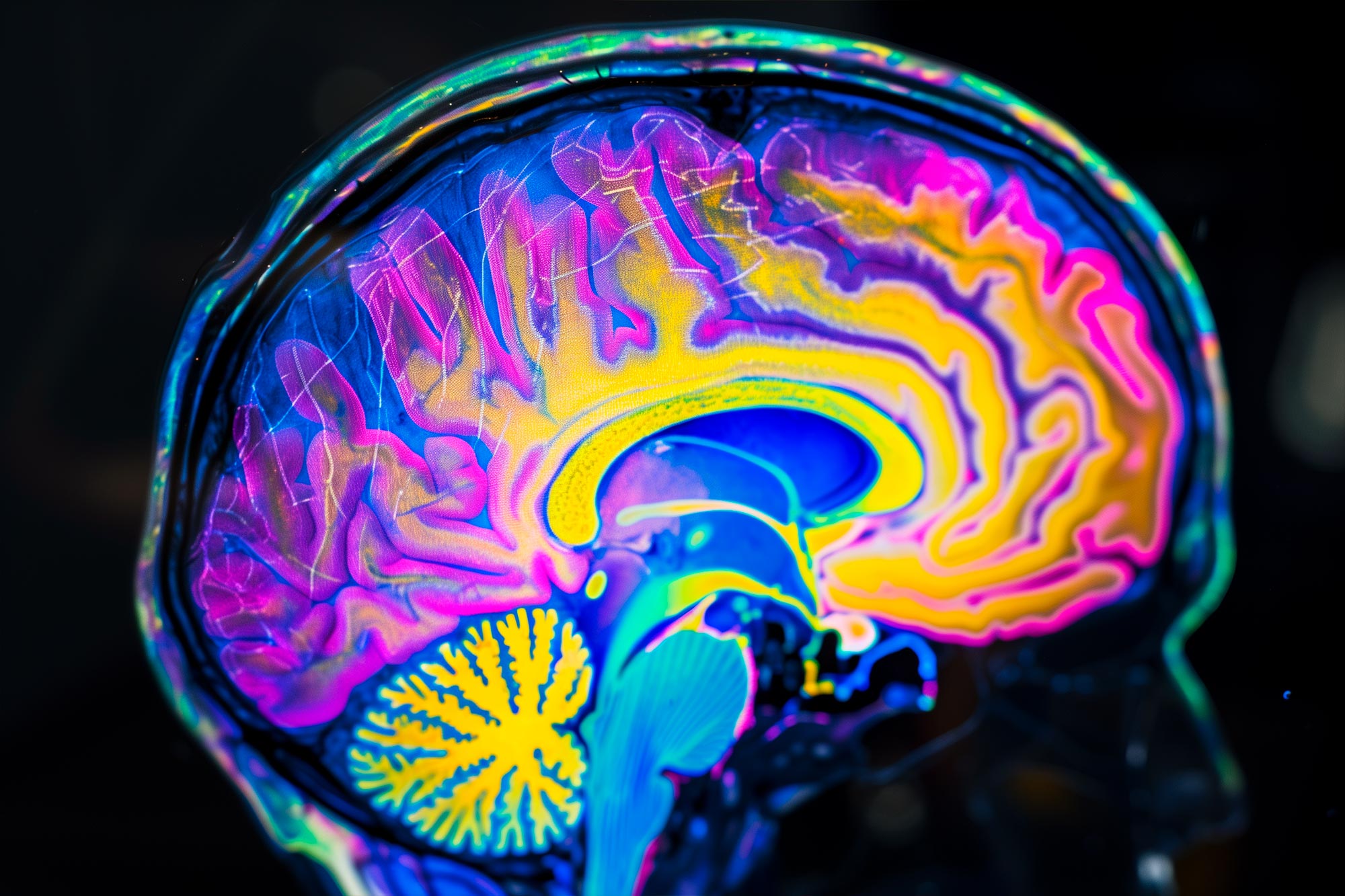
Brain overgrowth in children with autism is linked to more severe symptoms, potentially influenced by the enzyme Ndel1.
A team of researchers from Brazil and the United States have identified a link between brain overgrowth and the severity of social and communication symptoms in children with autism spectrum disorder (ASD).
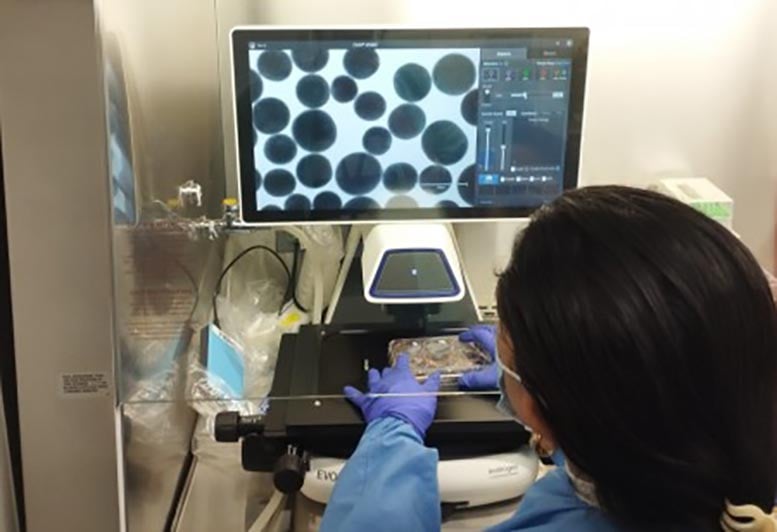
The findings, published in the journal Molecular Autism, are based on an analysis of magnetic resonance images of the brains of more than 900 children with ASD (conducted in a 2017 study by the group) and on recent experiments with brain organoids – “mini-brains” that mimic structural and functional features of full-size brains. The organoids were grown in the laboratory from induced plenipotentiary stem cells (iPSCs) derived from blood donated by children who took part in the earlier study.
Link Between Brain Size and ASD Symptom Severity
Brain enlargement correlated with symptom severity in both the MRI and organoid analyses. According to the article, the mini-brains derived from cells donated by children with the most severe symptoms were up to 41% larger than the controls.
“Not all children with ASD and severe symptoms will have an enlarged brain, but the symptoms are more severe when the brain is enlarged,” said Mirian Hayashi, penultimate author of the article and a professor in the Department of Pharmacology at the Federal University of São Paulo’s Medical School (EPM-UNIFESP) in Brazil.
Enzymatic Influence on Neuron Development
This brain enlargement appears to be associated with alterations in the activity of Ndel1, an enzyme that plays an important role in embryonic neuron differentiation and migration. An equivalent phenomenon was previously observed by the UNIFESP group in children with microcephaly induced by the Zika virus. Ndel1 is associated with several neurological disorders, such as schizophrenia, a first psychotic episode, and bipolar disorder, as well as Zika congenital syndrome.
As the researchers point out, social and communication symptoms are common among individuals on the autistic spectrum, but the severity differs from one person to another. Although the biological mechanism that determines the intensity of the symptoms remains unknown, the findings of this research open up new avenues for understanding ASD.
Research Methodology
The study was divided into two stages. The first involved an analysis of MRI brain images and diagnostic data for more than 900 children with ASD assessed in a cohort study by Eric Courchesne, one of the world’s leading experts on the neurobiology of autism. Professor Courchesne is the overall director and principal investigator of the Autism Center of Excellence at the University of California San Diego (UCSD) in the United States and heads the UCSD Autism Center’s MRI Project on early brain development in autism.
The second stage consisted of experiments with mini-brains developed at the laboratory led by Alysson R. Muotri, a professor in UCSD’s Departments of Pediatrics and Cellular & Molecular Medicine. The experiments showed that issues relating to cell migration and neuron formation are already present during brain formation, potentially affecting brain size.
In particular, Ndel1 plays a key role in brain enlargement in children with ASD. “Neuronal alterations had previously been detected in people with autism. Analysis of the mini-brains confirmed that the number of neural progenitors [multipotent neural stem cells that can differentiate into neurons, astrocytes, and oligodendrocytes] increased when brain enlargement occurred. Our experiments suggested that brain enlargement in these cases may have been due to a large number of neural progenitors that were unable to differentiate during embryogenesis,” said João Nani, who conducted the analysis at Prof. Muotri’s lab with FAPESP’s support.
Many neural cells were not behaving as they should or creating connections (synapses) as expected. “The number of connections is more important than the number of neurons. That’s why having more neurons [as in brain overgrowth] and having fewer neurons [as in microcephaly] are both harmful,” Nani said.
Experimental Findings and Future Directions
The researchers also measured Ndel1 activity and expression in the mini-brains, detecting an imbalance in cases of brain enlargement. “Ndel1 is associated with cell division and neuron differentiation. These processes involve other proteins, of course, but the entire system is probably out of kilter in brain overgrowth, and Ndel1 can be a biomarker of an alteration. We found that this imbalance can lead to both brain enlargement and brain reduction. However, in the cases we analyzed, there were more mononuclear cells in the peripheral blood of children with autism and severity of communication and social symptoms,” Nani said.
The researchers plan to conduct further studies with the aim of identifying biomarkers associated with ASD severity in blood samples from patients.
Reference: “Embryonic origin of two ASD subtypes of social symptom severity: the larger the brain cortical organoid size, the more severe the social symptoms” by Eric Courchesne, Vani Taluja, Sanaz Nazari, Caitlin M. Aamodt, Karen Pierce, Kuaikuai Duan, Sunny Stophaeros, Linda Lopez, Cynthia Carter Barnes, Jaden Troxel, Kathleen Campbell, Tianyun Wang, Kendra Hoekzema, Evan E. Eichler, Joao V. Nani, Wirla Pontes, Sandra Sanchez Sanchez, Michael V. Lombardo, Janaina S. de Souza, Mirian A. F. Hayashi and Alysson R. Muotri, 25 May 2024, Molecular Autism.
DOI: 10.1186/s13229-024-00602-8
Never miss a breakthrough: Join the SciTechDaily newsletter.
Follow us on Google and Google News.