
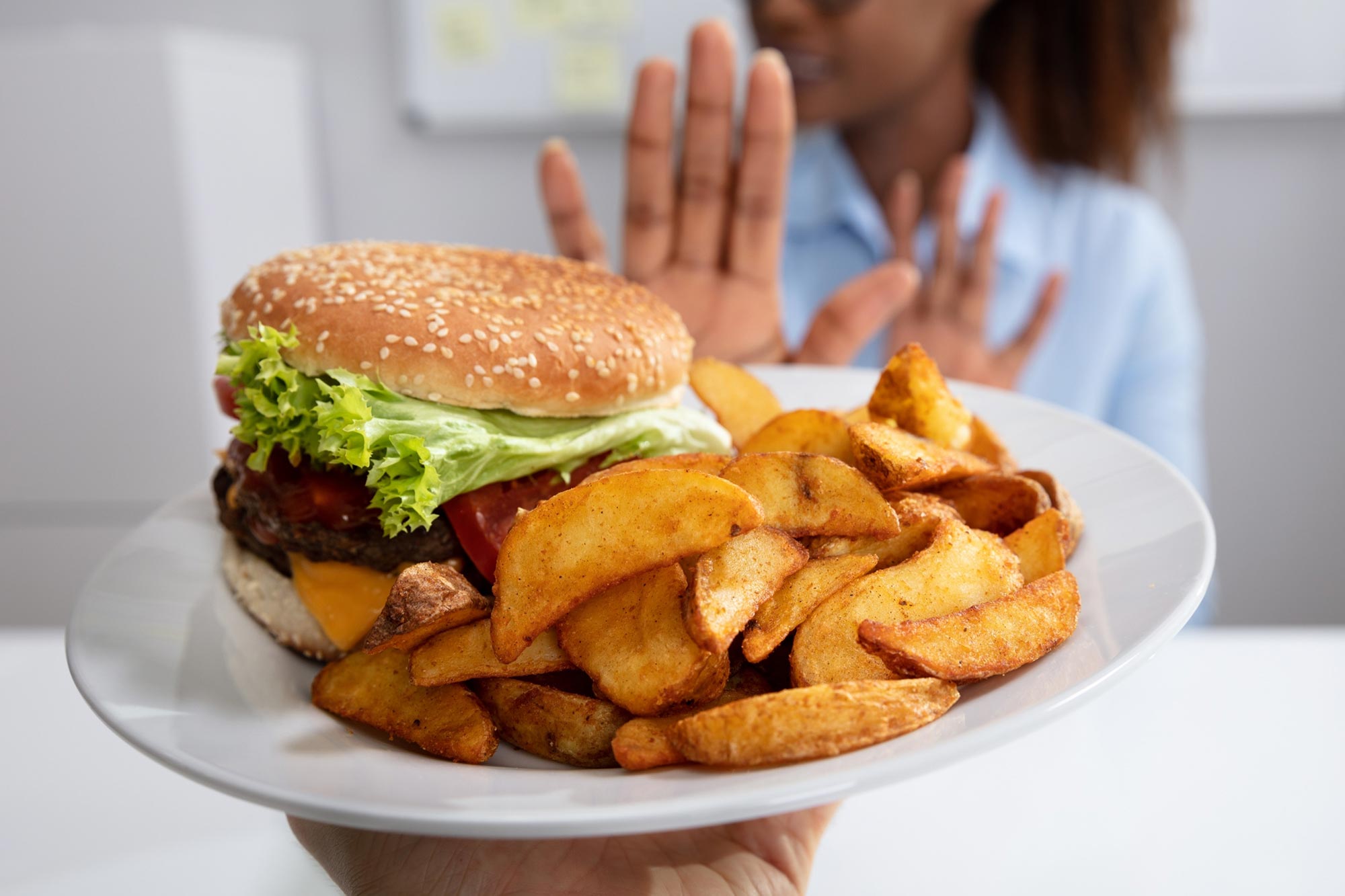
American Diets Have a Long Way To Go To Achieve Health Equity
American diets show slight improvements over two decades, according to a Tufts University study, yet significant dietary disparities persist. The economic and health impacts of poor diets continue to be substantial, particularly affecting underprivileged communities.
The Toll of Poor Nutrition on American Health
Poor diet continues to take a toll on American adults. It’s a major risk factor for obesity, type 2 diabetes, cardiovascular disease, and certain cancers, and more than one million Americans die every year from diet-related diseases, according to the Food and Drug Administration. Poor diet and food insecurity is also costly, attributing to an estimated $1.1 trillion in healthcare expenditures and lost productivity. These burdens also contribute to major health disparities by income, education, zip code, race, and ethnicity.
In a study from the Food is Medicine Institute at the Friedman School of Nutrition Science and Policy at Tufts University published today (June 17) in the Annals of Internal Medicine, researchers found that diet quality among U.S. adults improved modestly between 1999 and 2020. However, they also found that the number of Americans with poor diet quality remains stubbornly high. Most notably, disparities persist and, in some cases, are worsening.
Challenges in Achieving Nutritional Equity
“While we’ve seen some modest improvement in American diets in the last two decades, those improvements are not reaching everyone, and many Americans are eating worse,” says Dariush Mozaffarian, cardiologist and director of the Food is Medicine Institute. “Our new research shows that the nation can’t achieve nutritional and health equity until we address the barriers many Americans face when it comes to accessing and eating nourishing food.”
Comprehensive Analysis of Dietary Trends
In the study, scientists investigated data from 10 cycles of the National Health and Nutrition Examination Survey between 1999 and 2020, a nationally representative survey that includes repeated 24-hour dietary recalls, where people report all foods and beverages consumed during the prior day. The study analyzed 51,703 adults who completed at least one valid 24-hour recall, with 72.6% having done two recalls.
Incremental Dietary Changes Over Two Decades
Diet quality was measured using the American Heart Association diet score, a validated measure of a healthy diet that includes components like fruits, vegetables, beans and nuts, whole grains, sugary beverages, and processed meat. Researchers found that the proportion of adults with poor dietary quality decreased from 48.8% to 36.7% over these two decades, while those with intermediate diet quality increased from 50.6% to 61.1%. They also found that the proportion of adults with an ideal diet improved but remained starkly low, from 0.66% to 1.58%.
Specific changes contributed to these trends, including higher intakes of nuts/seeds, whole grains, poultry, cheese, and eggs. Researchers also found lower consumption of refined grains, drinks with added sugar, fruit juice and milk. Total intake of fruits and vegetables, fish/shellfish, processed meat, potassium, and sodium remained relatively stable.
Uneven Dietary Improvements Across Demographics
When the analysis focused on key subgroups, the research team found that these improvements were not universal. Gains in dietary quality were highest among younger adults, women, Hispanic adults, and people with higher levels of education, income, food security, and access to private health insurance. They were lower among older adults, men, black adults, and people with lower education, less income, food insecurity, or non-private health insurance. For example, the proportion of adults with poor diet quality decreased from 51.8% to 47.3% among individuals with lower income, decreased from 50.0% to 43.0% among individuals with middle income, and decreased from 45.7% to 29.9% among individuals with higher income.
“While some improvement, especially lower consumption of added sugar and fruit drinks, is encouraging to see, we still have a long way to go, especially for people from marginalized communities and backgrounds,” adds first author Junxiu Liu, a postdoctoral scholar at the Friedman School at the time of the study, now assistant professor at the Icahn School of Medicine at Mount Sinai.
Continued Challenges in Nutritional Health
“We face a national nutrition crisis, with continuing climbing rates of obesity and type 2 diabetes,” Mozaffarian said. “These diseases afflict all Americans, but especially those who are socioeconomically and geographically vulnerable. We must address nutrition security and other social determinants of health including housing, transportation, fair wages, and structural racism to address the human and economic costs of poor diets.”
Reference: “Trends in Diet Quality Among U.S. Adults From 1999 to 2020 by Race, Ethnicity, and Socioeconomic Disadvantage” by Junxiu Liu, PhD and Dariush Mozaffarian, MD, DrPH, 18 June 2024, Annals of Internal Medicine.
DOI: 10.7326/M24-0190
This research was supported by funding from the National Institutes of Health’s National Heart, Lung and Blood Institute under award R01HL115189. Complete information on authors, methodology, funders, and conflicts of interest is available in the published paper.
Dariush Mozaffarian reports research funding from the National Institutes of Health, Gates Foundation, Kaiser Permanente Fund, National Association of Chain Drug Stores Foundation, and Rockefeller Foundation; personal fees from Acasti Pharma (ended); scientific advisory board, Beren Therapeutics, Brightseed, Calibrate, Elysium Health, Filtricine, HumanCo, Instacart Health, January Inc., Season Health, Validation Institute, WndrHLTH (ended: Perfect Day, Tiny Organics); an unrestricted gift from Google; stock ownership in Calibrate and HumanCo; and chapter royalties from UpToDate.
Never miss a breakthrough: Join the SciTechDaily newsletter.
Follow us on Google and Google News.
3 Comments
You can have my hamburger and steak when you pry it out of my cold, dead hands.
The rest of us in the world know the American diet is a self-resolving problem. Go ahead and eat your burgers. We will wait, eating our veggies, for re-colonization of your nation.
I have changed my eating habits over the last 20 years to 90% fat and protein from meat and eggs. small amount of fruit and coffee. Lost 65 lbs and am now 81+ years old and kicking butt!