
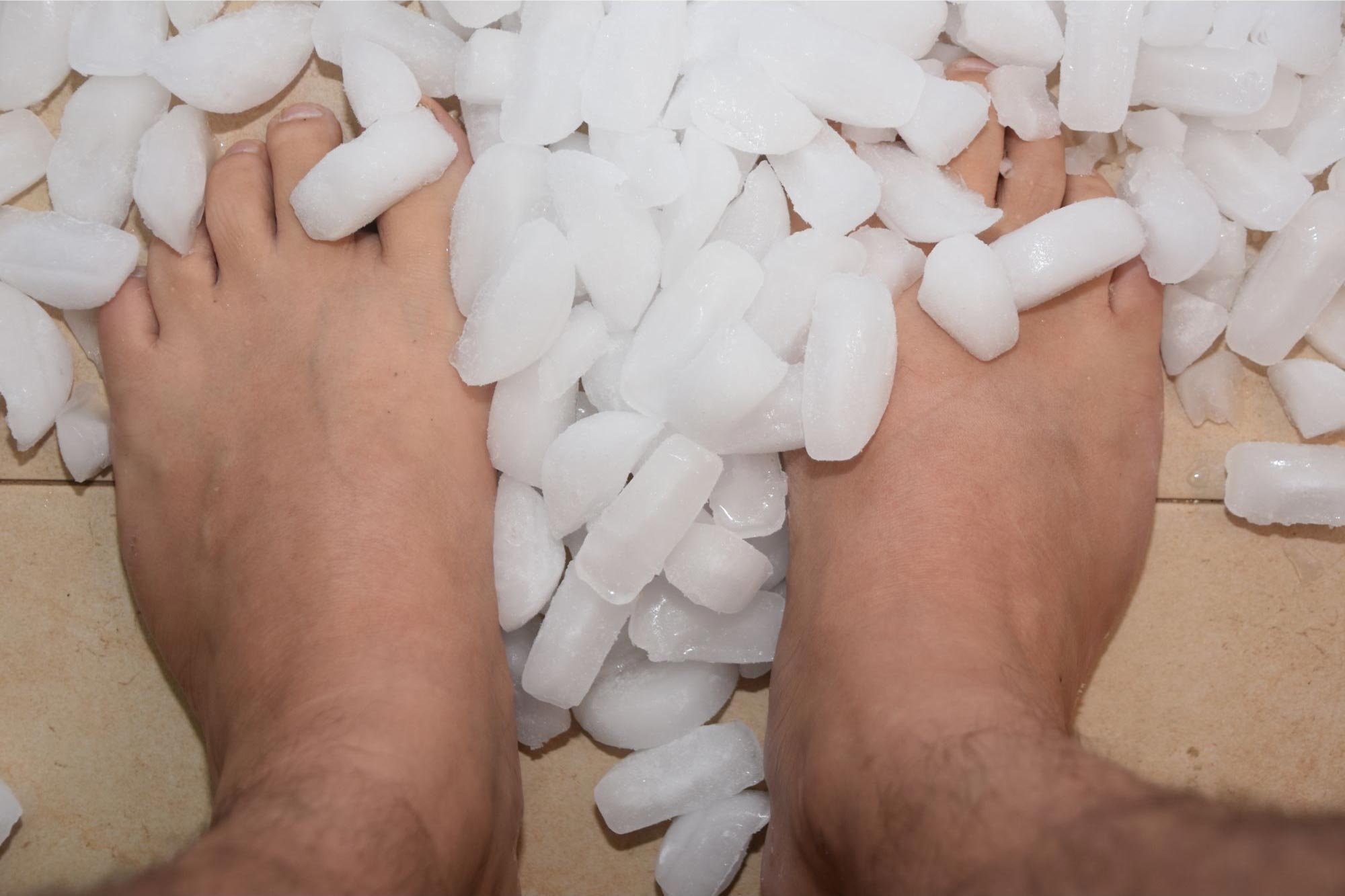
Researchers say that hypersensitivity to cold is often underestimated because it is viewed as a subjective symptom.
A large study published in the open-access journal Open Heart has found that cold hypersensitivity, particularly ice-cold feet, and a sensation of heaviness in the legs are associated with the presence of varicose veins.
Researchers note that cold sensitivity is often underestimated as a symptom, despite its potential significance. Varicose veins typically result from dysfunction in the deep or superficial veins, as well as the perforator veins, which connect the superficial and deep venous systems in the legs.
Varicose veins affect between 2% and 30% of adults, with women more commonly affected. Common symptoms include leg heaviness, aching, throbbing, itching, restlessness, swelling, fluid retention, muscle cramps, and, in more severe cases, leg ulcers.
Exploring the Cold Sensitivity Connection
Previously published research indicates that heightened sensitivity to cold may be associated with varicose veins, note the researchers. To explore this further, they mined data covering the period January 2008 to December 2020 inclusive, from the Taiwan Biobank, the largest genetic and population-based database in Taiwan.
In all, 8782 participants aged between 30 and 70 with moderate and severe varicose veins were included in the analysis. They were quizzed about their hypersensitivity to cold in their feet and the extent to which they felt heaviness in their legs.
And information on potentially influential factors was collected on sex, diet (vegetarian), age, cigarette smoking, alcohol intake, regular exercise, weight (BMI), education level, job type (predominantly standing or sedentary), and presence of diabetes and high blood pressure.
In all, 676 participants said they had moderate to severe varicose veins. Of the total number of participants, 5888 said they weren’t hypersensitive to the cold, just under 6% (340) of whom had varicose veins.
Of the remainder, 1535 participants said they were moderately hypersensitive to the cold, just over 9% (144) of whom had varicose veins; and 1359 said they were extremely hypersensitive to the cold, just over 14% (192) of whom had varicose veins.
Statistical analysis showed that moderate to severe cold hypersensitivity was associated with a 49%-89% heightened likelihood of varicose veins compared with no hypersensitivity.
Heaviness in the Legs: Another Key Indicator
Similarly, 4 times as many people with varicose veins had heavy legs as those without the condition. Job type was also an influential factor: jobs involving prolonged standing were associated with a 45% higher likelihood of varicose veins.
The association between cold hypersensitivity and heavy legs was significant. In the absence of cold hypersensitivity, the likelihood of varicose veins and heaviness in the legs was 7 times greater than in those who didn’t report leg heaviness.
Among those who did report this symptom, the likelihood of varicose veins was 90% higher for those with moderate cold hypersensitivity, and more than 3 times as high among those reporting extreme hypersensitivity to the cold.
And compared with those reporting neither cold hypersensitivity nor heaviness in the legs, moderate and severe cold hypersensitivities were associated with an 80% and more than doubling in the likelihood of varicose veins, respectively.
This is an observational study, and as such can’t establish causal factors. It also relied on subjectively assessed self-report rather than clinical assessment, added to which, no information was available on any forms of treatment for varicose veins.
But the researchers point out: “Healthcare providers frequently underestimate the gravity and implications of varicose veins, leading to their neglect, and there is usually a gap in understanding the comprehensive spectrum of linked symptoms.”
They add: “In clinical practice, the sensation of coldness is usually relegated to a secondary position among the many varicose vein symptoms. This relegation is attributed to its subjectivity and the consequent ease with which it can be overlooked.
“However, our study showed the presence of a moderate-to-severe degree of hypersensitivity to cold in the lower extremities, which has hitherto been underestimated as a subjective symptom associated with varicose veins.
“Of note is the significance of the concurrent symptoms of heaviness and cold feet. When these symptoms coexist, the likelihood of confirming the presence of varicose veins is notably amplified compared with individuals without such symptoms.”
Reference: “Cold hypersensitivity in the lower extremities: an underappreciated symptom in patients with varicose veins” by Cheng-Ken Tsai, Hsuan-Yin Wu, Oswald Ndi Nfor, Disline Manli Tantoh, Wen-Yu Lu and Yung-Po Liaw, 15 April 2025, Open Heart.
DOI: 10.1136/openhrt-2024-002909
Never miss a breakthrough: Join the SciTechDaily newsletter.
Follow us on Google and Google News.
3 Comments
I am a medical anthropologist researcher and author. When dealing with the legs and feet and their feelings of being cold or heavy, you need to consider what kind of clothing is being worn. Tight shoes and socks interfere with circulation in the feet and ankles, leading to lymphedema after a day of standing and clothing-caused constriction. Tight pants can also interfere with nerves in the legs and circulation, as with “tight pants syndrome”.
Medicine has a problem when it comes to clothing, which is ignored in research and clinical practice despite the profound impact tight and toxic clothing has on the body. See my article, Medicine’s Clothing Problem. https://www.academia.edu/121560525/Medicines_Clothing_Problem
Agreed. I had problems with my feet many years ago. Always aching. I went to a podiatrist. He said I needed an operation on my right foot. I said OK but the operation didn’t help.
Went to another podiatrist. I was told I needed orthodontics. OK, didn’t help.
Went to another. He told me I have nerve problems and shot alcohol into my toes to deaden the nerves. Didn’t help.
Eventually, I went to a shoe store to buy a new pair of shoes. I said I knew my size (10D). He suggested measuring anyway. Turns out my foot size was actually 10.5/EE. Once I got the right sized shoes, my foot problems cleared up!
You would think that this would be a something a podiatrist would check on the first visit! I think podiatrists, like chiropractors are mostly charlatans.
Jojo said, “I think podiatrists, like chiropractors are mostly charlatans.” Just podiatrists and chiropractors? Add MD’s and animal researchers. Healthcare is expensive and people have little choice when they need help, so these fields attract predators and charlatans, as well as a few true healers, although true healers often quit medicine due to the corruption, like I did.