
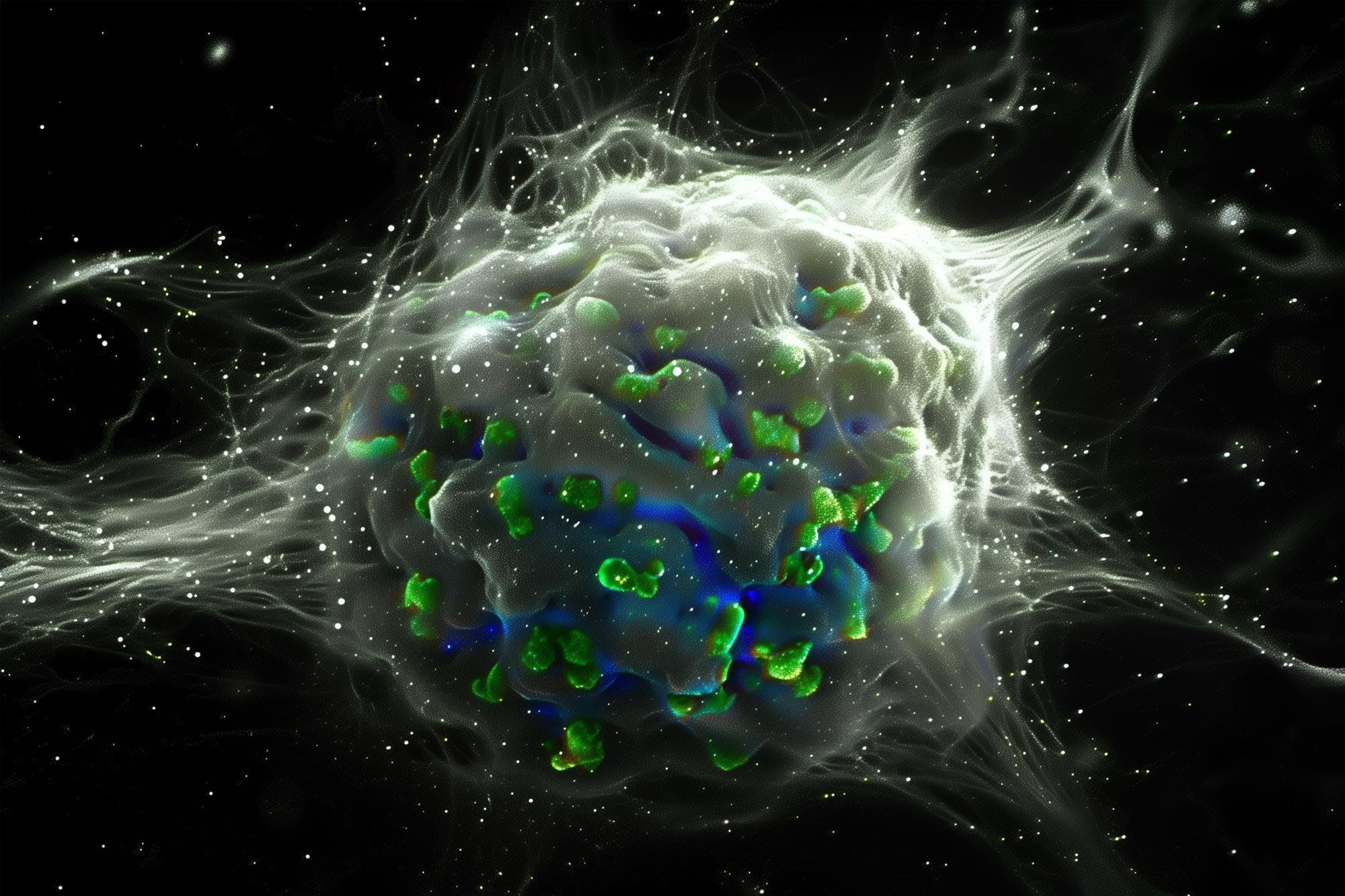
Scientists have discovered that the way cancer cells die from chemotherapy appears to be different than previously understood. New research highlights the Schlafen11 gene’s role in cancer cell death, providing a fresh approach to chemotherapy and cancer treatment strategies.
Chemotherapy kills cancer cells. But the way these cells die appears to be different than previously understood. Researchers from the Netherlands Cancer Institute, led by Thijn Brummelkamp, have uncovered a completely new way in which cancer cells die: due to the Schlafen11 gene. “This is a very unexpected finding. Cancer patients have been treated with chemotherapy for almost a century, but this route to cell death has never been observed before. Where and when this occurs in patients will need to be further investigated. This discovery could ultimately have implications for the treatment of cancer patients.” They published their findings in the journal Science.
The Role of DNA Damage in Cancer Treatment
Many cancer treatments damage cell DNA. After too much irreparable damage, cells can initiate their own death. High school biology teaches us that the protein p53 takes charge of this process. p53 ensures repair of damaged DNA, but initiates cell suicide when the damage becomes too severe. This prevents uncontrolled cell division and cancer formation.
Surprise: Unanswered Question
That sounds like a foolproof system, but reality is more complex. “In more than half of tumors, p53 no longer functions,” says Thijn Brummelkamp. “The key player p53 plays no role there. So why do cancer cells without p53 still die when you damage their DNA with chemotherapy or radiation? To my surprise, that turned out to be an unanswered question.”
His research group then discovered, together with the group of colleague Reuven Agami, a previously unknown way in which cells die after DNA damage. In the lab, they administered chemotherapy to cells in which they carefully modified the DNA. Thijn: “We were looking for a genetic change that would allow cells to survive chemotherapy. Our group has a lot of experience in selectively disabling genes, which we could perfectly apply here.”
Turning Off Genes, One by One
People have thousands of genes, many of which have functions that are unclear to us. To determine the roles of our genes, researcher Thijn Brummelkamp developed a method using haploid cells. These cells contain only one copy of each gene, unlike the regular cells in our bodies that contain two copies. Handling two copies can be challenging in genetic experiments, because changes (mutations) often occur in just one of them. This makes it difficult to observe the effects of these mutations.
Together with other researchers, Brummelkamp has been unraveling processes that are crucial in disease for years using this versatile method. For example, his group recently discovered that cells can make lipids in a different way than previously known. They uncovered how certain viruses, including the deadly Ebola virus, manage to enter human cells. They delved into cancer cell resistance against specific therapies and identified proteins that act as brakes on the immune system, which is relevant to cancer immunotherapy. Over the last years, his team discovered two enzymes that had remained elusive for four decades, and that turned out to be vital for muscle function and brain development.
New Key Player in Cell Death
By switching off genes, the research group found a new pathway to cell death headed by the gene Schlafen11 (SLFN11). Principle investigator Nicolaas Boon: “In the event of DNA damage, SLFN11 shuts down the protein factories of cells: the ribosomes. This causes immense stress in these cells, which leads to their death. The new route we discovered completely bypasses p53.”
The SLFN11 gene is not unfamiliar in cancer research. It is often inactive in tumors of patients who do not respond to chemotherapy, says Thijn. “We can now explain this link. When cells lack SLFN11 they will not die in this manner in response to DNA damage. The cells will survive and the cancer persist.”
Impact on Cancer Treatment
“This discovery uncovers many new research questions, which is usually the case in fundamental research,” says Thijn. “We have demonstrated our discovery in lab-grown cancer cells, but many important questions remain: Where and when does this pathway occur in patients? How does it affect immunotherapy or chemotherapy? Does it affect the side effects of cancer therapy? If this form of cell death also proves to play a significant role in patients, this finding will have implications for cancer treatments. These are important questions to investigate further.”
Reference: “DNA damage induces p53-independent apoptosis through ribosome stalling” by Nicolaas J. Boon, Rafaela A. Oliveira, Pierré-René Körner, Adva Kochavi, Sander Mertens, Yuval Malka, Rhianne Voogd, Suzanne E. M. van der Horst, Maarten A. Huismans, Lidwien P. Smabers, Jonne M. Draper, Lodewyk F. A. Wessels, Peter Haahr, Jeanine M. L. Roodhart, Ton N. M. Schumacher, Hugo J. Snippert, Reuven Agami and Thijn R. Brummelkamp, 16 May 2024, Science.
DOI: 10.1126/science.adh7950
This research was financially supported by KWF Dutch Cancer Society, Oncode Institute, and Health Holland.
Never miss a breakthrough: Join the SciTechDaily newsletter.
Follow us on Google and Google News.