
Close Menu
    Facebook X (Twitter) Instagram
    SciTechDaily
    • Biology
    • Chemistry
    • Earth
    • Health
    • Physics
    • Science
    • Space
    • Technology
    Facebook X (Twitter) Pinterest YouTube RSS
    SciTechDaily
    Home»Science»Salt Might Be the Key to Extraterrestrial Life
    Science

    Salt Might Be the Key to Extraterrestrial Life

    By Purdue UniversityAugust 7, 2022No Comments2 Mins Read
    Facebook Twitter Pinterest Telegram LinkedIn WhatsApp Email Reddit
    Share
    Facebook Twitter LinkedIn Pinterest Telegram Email Reddit
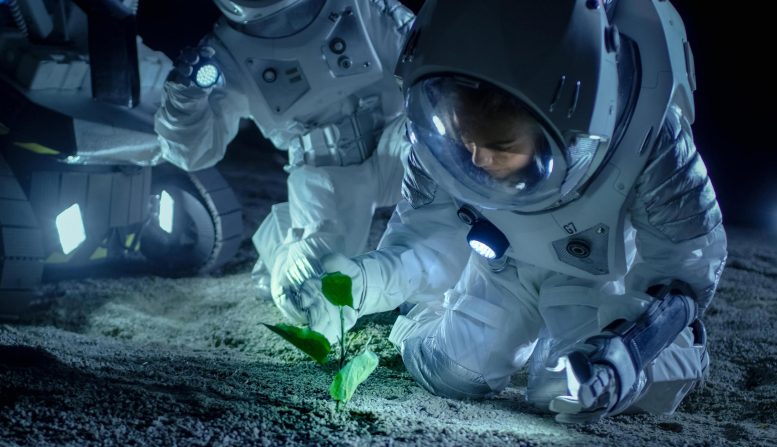
    Astronauts Plant Life
    According to the findings, the presence of salt in the ocean may also significantly influence the habitability of Earth and other worlds.

    New Research Suggests That Salt Might Be Critical to Life on Earth and Beyond

    The composition of the atmosphere, particularly the abundance of greenhouse gases, has an impact on the Earth’s climate. Purdue University researchers led by Stephanie Olson, assistant professor of earth, atmospheric, and planetary sciences, have discovered that the presence of salt in seawater can also have a significant impact on the habitability of Earth and other planets.

    The researchers utilized a climate model to analyze the climates of planets with varying quantities of salt dissolved in seawater in order to predict that saltier oceans result in warmer climates, which may help a planet’s ability to sustain life.

    Their findings were published in the journal Geophysical Research Letters.

    This study concentrated on how the quantity of salt dissolved in seawater impacts global climate. The scientists discovered that saltier waters resulted in warmer climates. This salt might have been a key factor in early Earth’s habitability when the sun was less bright.

    This discovery might have implications for the habitability of other planets, perhaps enabling life to survive farther from its host star than previously thought.

    Reference: “The Effect of Ocean Salinity on Climate and Its Implications for Earth’s Habitability” by Stephanie Olson, Malte F. Jansen, Dorian S. Abbot, Itay Halevy and Colin Goldblatt, 24 May 2022, Geophysical Research Letters.
    DOI: 10.1029/2021GL095748

    The study was funded by NASA Habitable Worlds and NASA Interdisciplinary Consortia for Astrobiology Research.

    Never miss a breakthrough: Join the SciTechDaily newsletter.
    Follow us on Google and Google News.

    Habitable Life Popular Purdue University
    Share. Facebook Twitter Pinterest LinkedIn Email Reddit

    Related Articles

    Earth’s Water Mystery Deepens With New Meteorite Evidence

    Rethinking Earth’s Timeline: New Research Reveals That Fresh Water Emerged 500 Million Years Sooner Than Previously Thought

    Human Ancestor Fossils in the “Cradle of Humankind” May Be More Than a Million Years Older Than Thought

    Diabolical Ironclad Beetle: Design Secrets of Insect That Can Survive Getting Run Over by a Car

    Evidence That Organic Material Can Survive the Impact of a Meteorite

    Lava Fingerprinting Reveals Differences Between Hawaiian Volcanoes

    Lightning Foundry: World’s Largest Tesla Coils To Research Lightning

    Scientists Rank Most Livable Alien Worlds

    New Spray Lights Up Cancer Cells

    Leave A Reply Cancel Reply

    • Facebook
    • Twitter
    • Pinterest
    • YouTube

    Don't Miss a Discovery

    Subscribe for the Latest in Science & Tech!

    Trending News

    Beyond Pain Relief: Scientists Discover a Protein That Could Stop Osteoarthritis in Its Tracks

    Scientists Discover Why Alcohol Prevents the Liver From Healing, Even After You Quit

    Scientists Stunned As Volcano Removes Methane From the Air

    Scientists Discover Signs Africa May Be Splitting Apart Beneath Zambia

    Common Blood Pressure Drug Supercharges Cancer Treatment in Surprising New Study

    540-Million-Year-Old Fossils Reveal a Huge Surprise About Early Life on Earth

    Scientists Reverse Stroke Damage Using Stem Cells in Breakthrough Study

    Eating One Egg a Day Could Cut Alzheimer’s Risk by 27%

    Follow SciTechDaily
    • Facebook
    • Twitter
    • YouTube
    • Pinterest
    • Newsletter
    • RSS
    SciTech News
    • Biology News
    • Chemistry News
    • Earth News
    • Health News
    • Physics News
    • Science News
    • Space News
    • Technology News
    Recent Posts
    • Physicists Observe Strange Quantum Rotation Effect That Defies Intuition
    • Europe Was Never a Giant Dark Forest, New 20-Million-Year Study Reveals
    • Scientists Discover Bizarre 100-Million-Year-Old Insect With Giant Claws
    • New Study Challenges What We Know About Consciousness and the Brain
    • Scientists Discover Ancient “Language Switches” Hidden in Human DNA
    Copyright © 1998 - 2026 SciTechDaily. All Rights Reserved.
    • Science News
    • About
    • Contact
    • Editorial Board
    • Privacy Policy
    • Terms of Use

    Type above and press Enter to search. Press Esc to cancel.