

Fermenting miso on the ISS worked, showing microbes can thrive and create flavorful food even in space conditions.
Miso is a traditional Japanese condiment made by fermenting cooked soybeans with salt. In a study published on April 2 in the Cell Press journal iScience, researchers successfully produced miso aboard the International Space Station (ISS). The space-fermented miso had a flavor and aroma similar to Earth-made miso, though with a slightly nuttier, more roasted taste. The researchers hope this work will expand culinary options for astronauts and improve the quality of life during long-term space missions.
“There are some features of the space environment in low earth orbit—in particular microgravity and increased radiation—that could have impacts on how microbes grow and metabolize and thus how fermentation works,” says co-lead author Joshua D. Evans of the Technical University of Denmark. “We wanted to explore the effects of these conditions.”
Preparing for fermentation in space
Driven by curiosity about what astronauts eat and how microbial communities behave in space, the researchers set out to test whether food fermentation could work in orbit and how space-fermented foods might compare in taste to those made on Earth.
The researchers sent a small container of “miso-to-be” to the ISS in March 2020, where it stayed for 30 days to ferment before returning to Earth as miso. Two other miso batches were fermented on Earth: one in Cambridge, MA, and the other in Copenhagen, Denmark. Environmental sensing boxes kept tabs on the fermentation environment, closely monitoring temperature, humidity, pressure, and radiation.
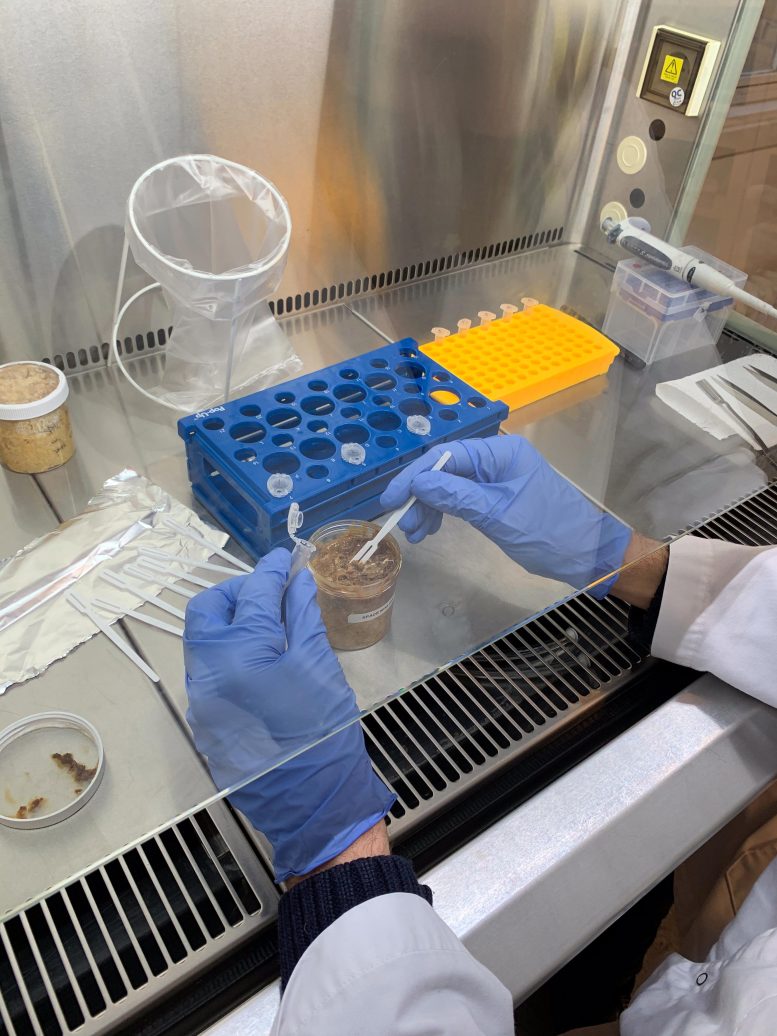
Once the ISS miso was back on Earth, the team analyzed its microbial communities, flavor compounds, and sensory properties. They found that the ISS miso fermented successfully, but that there were notable differences in the bacterial communities present in the misos.
“Fermentation [on the ISS] illustrates how a living system at the microbial scale can thrive through the diversity of its microbial community, emphasizing the potential for life to exist in space,” says co-lead author Maggie Coblentz of the Massachusetts Institute of Technology. “While the ISS is often seen as a sterile environment, our research shows that microbes and non-human life have agency in space, raising significant bioethical questions about removing plants and microbes from their home planet and introducing them to extraterrestrial environments.”
Flavor, aroma, and sensory results
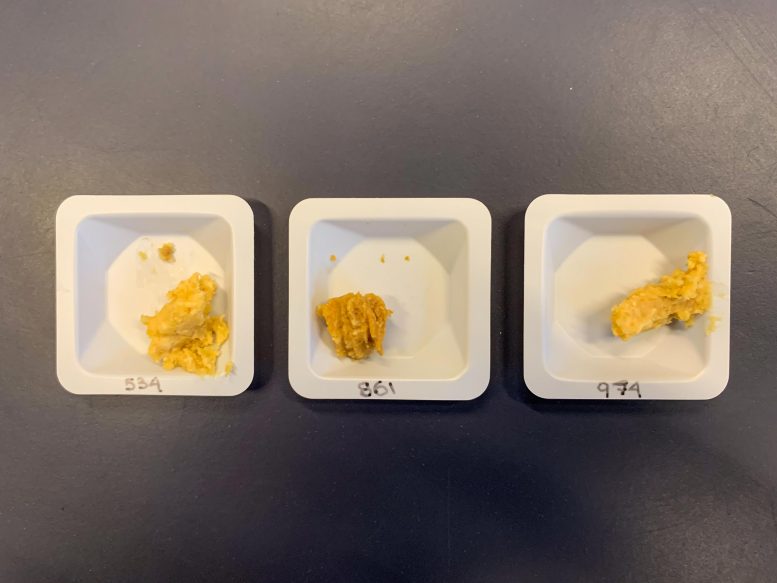
The team also compared the flavor and scent of the ISS miso with that of the Earth misos. They found that the samples mostly contained the same aroma compounds and similar amino acid profiles. Also, the researchers who tasted the misos reported that all the samples tasted good, with similar salty umami flavor profiles that were recognizable as miso. However, they noted that the ISS miso had more of a roasted, nutty flavor than the Earth misos.
“By bringing together microbiology, flavor chemistry, sensory science, and larger social and cultural considerations, our study opens up new directions to explore how life changes when it travels to new environments like space,” Evans says. “It could enhance astronaut well-being and performance, especially on future long-term space missions. More broadly, it could invite new forms of culinary expression, expanding and diversifying culinary and cultural representation in space exploration as the field grows.”
Ultimately, Coblentz says she foresees the impact of this research extending far beyond a single jar of miso made in space. “We’ve used something as fundamental as food as a starting point to spark conversations about social structures in space and the value of domestic roles within scientific and engineering fields,” she says.
“The way we design systems in space sends a powerful message about who belongs there, who is invited, and how those people will experience space,” says Coblentz.
Reference: “Food fermentation in space: Opportunities and challenges” by Maggie Coblentz, Joshua D. Evans, Caroline Isabel Kothe, Tiffany Mak, Nabila Rodríguez Valerón, Patrick Chwalek, Kim Wejendorp, Shilpa Garg, Louisa Pless, Sarah Mak, Pia M. Sörensen, Leonie Johanna Jahn and Ariel Ekblaw, 2 April 2025, iScience.
DOI: 10.1016/j.isci.2025.112189
This research was supported by funding from the MIT Media Lab Space Exploration Initiative and The Novo Nordisk Foundation.
Never miss a breakthrough: Join the SciTechDaily newsletter.
Follow us on Google and Google News.