
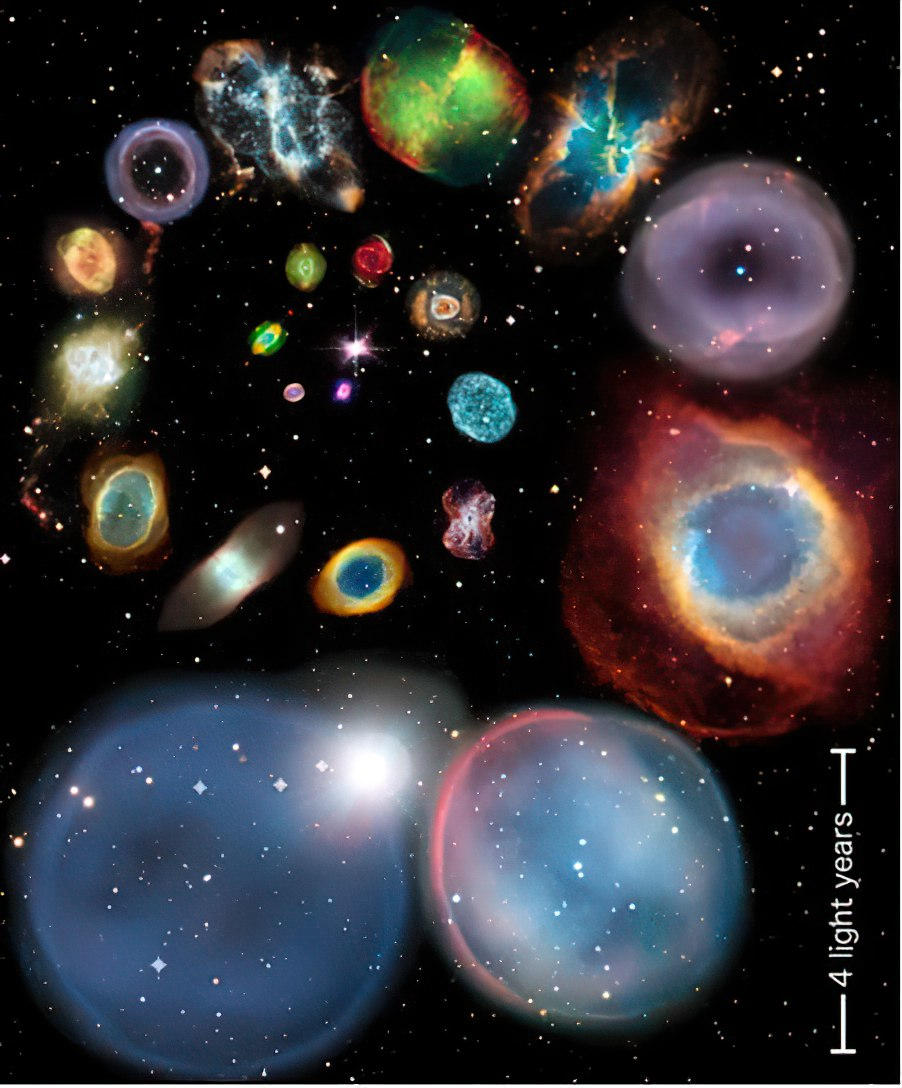
Two astrophysicists from the Laboratory for Space Research (LSR) at The University of Hong Kong (HKU) have finally solved a 20-year-old astrophysical puzzle concerning the lower-than-expected amounts of the element sulfur found in Planetary Nebulae (PNe) in comparison to expectations and measurements of other elements and other types of astrophysical objects.
The expected levels of sulfur have long appeared to be “missing in action”. However, they have now finally reported for duty after hiding in plain sight, as a result of leveraging highly accurate and reliable data. The team has recently reported their findings in Astrophysical Journal Letters.
Background
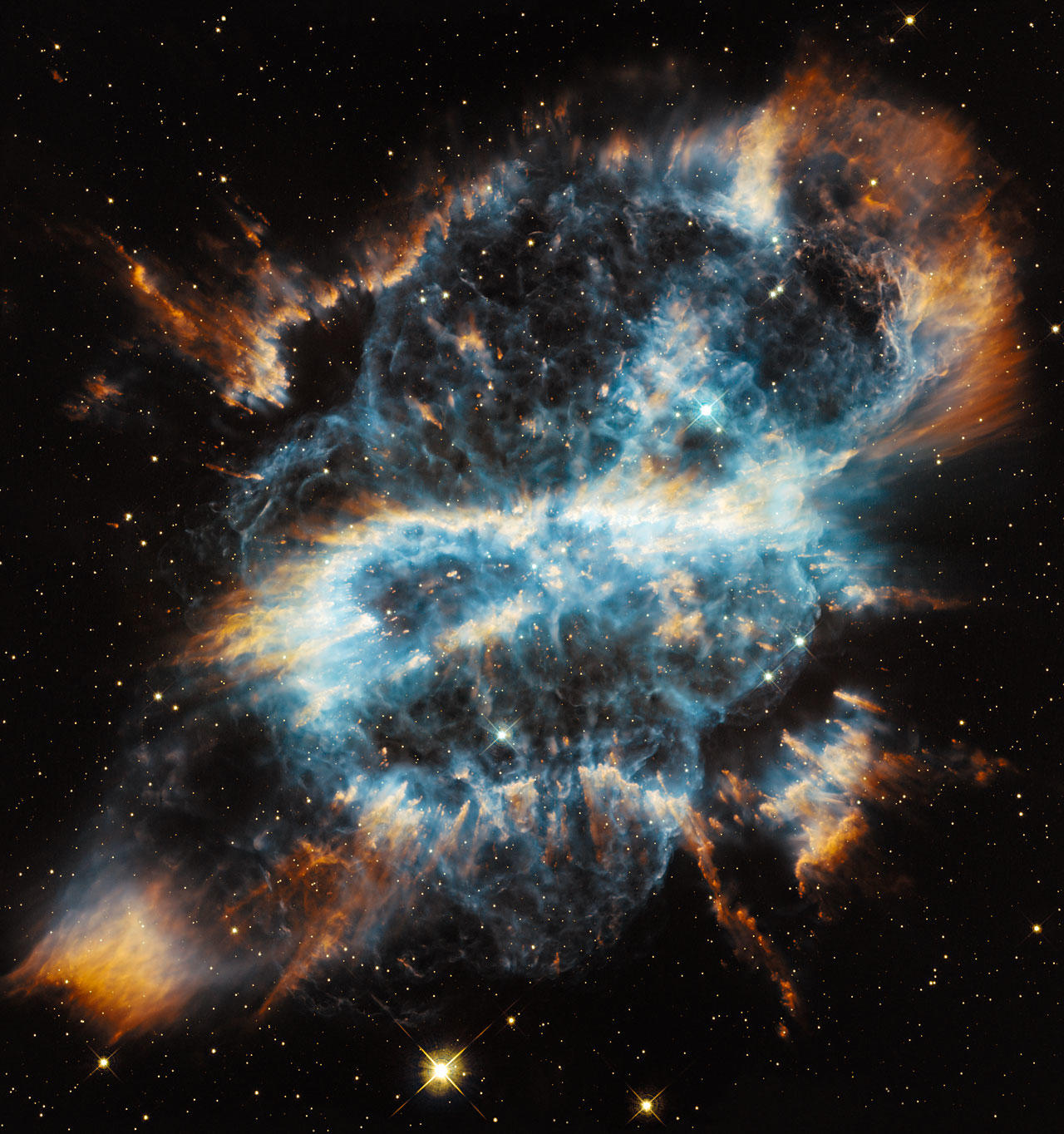
PNe are the short-lived glowing, ejected, gaseous shrouds of dying stars that have long fascinated and enthused professional and amateur astronomers alike with their colorful and varied shapes. PNe lives for only a few tens of thousands of years compared to their host stars, which can take billions of years before they pass through the PN phase on the way to becoming “white dwarfs”.
Consequently, PNe provides an almost instantaneous snapshot of stellar death throes. They are a vital, scientific window into late-stage stellar evolution as their rich emission line spectra enable detailed studies of their chemical compositions.
The Enigmatic Sulfur Anomaly
Past studies showed that PNe optical spectra appeared to have a varying deficit of the element sulfur. This deficit was difficult to explain because sulfur, known as an “α element”, should be produced in lockstep with other elements like oxygen, neon, argon, and chlorine in more massive stars. As a result, its cosmic abundance should also be directly proportional.
Surprisingly, while strong correlations between sulfur and oxygen abundances have been observed in H II regions (Hydrogen ionized region) and blue compact galaxies (see figure 2), PNe originating from low- to intermediate-mass stars consistently exhibit lower Sulfur levels, giving rise to the so-called mysterious “sulfur anomaly” that has perplexed and annoyed astronomers for decades.
Our Work Solving the Mystery
Ms. Shuyu Tan, a graduate of HKU MPhil in Physics and Research Assistant at HKU LSR, along with her supervisor Professor Quentin PARKER, the Director of LSR, utilized an unprecedented sample of exceptional high signal to noise (S/N) optical spectra for approximately 130 PNe located in the center of our Galaxy. This exceptional dataset had minimal background noise, allowing for a clear and detailed examination of the spectral features, helping the team effectively tackle and solve the mystery.
These PNe were observed using the world-leading European Southern Observatory (ESO) 8m Very Large Telescope in Chile. It turns out the anomaly was essentially a result of poor data quality for sulfur emission lines in PNe spectra. It was found that using oxygen as the base metallicity comparator to other elements was not accurate, and instead, Argon demonstrated a stronger correlation with oxygen for sulfur and has been suggested as a more reliable indicator of metallicity and a suitable comparison element.
So, when a large, carefully selected sample of PNe are spectroscopically observed at high S/N on a large telescope, not only did the data reveal a strong “lock-step” behavior or sulfur in PNe for the first time, as seen and expected for other types of astrophysical objects, but the anomaly itself effectively went away.
The authors have effectively disproven previous claims suggesting that the sulfur anomaly in Planetary Nebulae was a result of underestimated higher sulfur ionization stages or weak sulfur line fluxes. This finding underscores the critical importance of high-quality data in unraveling scientific mysteries.
Reference: “Whither or Wither the Sulfur Anomaly in Planetary Nebulae?” by Shuyu Tan and Quentin A. Parker, 31 January 2024, The Astrophysical Journal Letters.
DOI: 10.3847/2041-8213/ad1ed9
Never miss a breakthrough: Join the SciTechDaily newsletter.
Follow us on Google and Google News.