
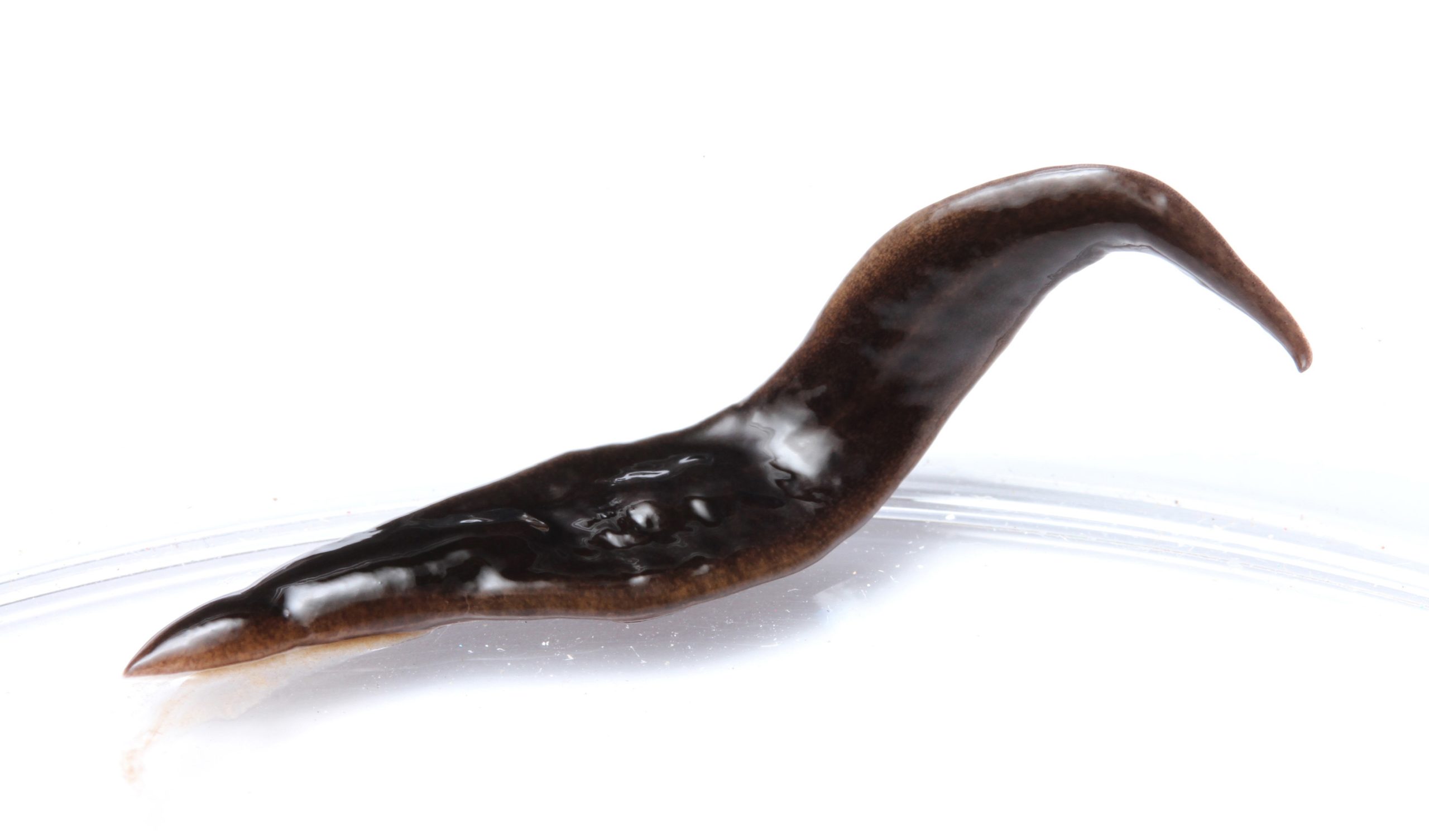
Scientists discovered a new flatworm species, Amaga pseudobama, in North Carolina and Florida. It was initially misidentified, and little is known about its ecology or potential threat to native ecosystems. Further research is needed to understand its distribution and impact.
Scientists have discovered a new species of predatory flatworm in North Carolina. After identifying the species, researchers found it has also been spotted in Florida – but have no idea where the species originated.
“There are many types of flatworms, but most of them are aquatic,” says Matt Bertone, co-author of a paper on the discovery and director of the Plant Disease and Insect Clinic at North Carolina State University. “Most of the flatworms that you do find on land exist in tropical ecosystems, so it was somewhat surprising to find a terrestrial flatworm species in North Carolina that was unknown to science.
Flatworms: Predators and Potential Threats
“Free-living flatworms – the ones that aren’t parasites – are predators that feed on other soft-bodied organisms, such as earthworms and slugs,” Bertone says. “And people are often concerned that unidentified flatworms may be toxic, may be carrying parasites, or may be invasive species that pose a threat to native ecosystems.”
As a result, when a commercial nursery in North Carolina found unidentified flatworms in some flowerpots, they sent it to Bertone to find out what they were. The flatworms in question are brownish-black and just under an inch long. Bertone sent photos of the flatworms to an expert to get a preliminary identification, as well as sending physical specimens to get a definitive diagnosis of the species.
Based on photos, flatworm experts thought the flatworm was a known species, Obama nungara, that is native to South America. However, after molecular and histological analysis, researchers in France and Australia found that this was not only a different species, it was not even in the same genus.
Meanwhile, Bertone was sent more of these unidentified flatworms from two other locations in North Carolina – hundreds of miles away from where the first flatworms were found. In addition, these new samples were found in residential landscapes, not a commercial nursery.
The Newly Identified Species: Amaga pseudobama
“The new species is called Amaga pseudobama and we know very little about it,” Bertone says. “It has not been observed in the wild or native habitats, so we don’t know much about how it interacts with its environment. We can infer from what we know about related species, but we don’t know precisely what it preys on, how quickly it reproduces, and so on.”
Once the new species was officially identified, researchers found that samples of the species had been collected before – but nobody knew what they had. There were multiple samples that had been collected in Florida in 2015.
“This, coupled with the fact that the initial North Carolina samples were found in plants that had been shipped from Georgia, suggests that A. pseudobama may be found across the Southeast,” Bertone says. “It’s also possible that these were merely isolated instances. We just don’t know. Until we have more confirmed observations of this species, we won’t know how established they are.
“Finding a new flatworm species is not necessarily a surprise – these animals are so little studied that there are likely many species awaiting discovery,” Bertone says. “However, the fact that we know so little about them is one reason they are worth paying attention to. Do they pose a risk to native worms and, by extension, native ecosystems? We have to study these species to find out. And the first step in that process is clearly identifying a species and naming it.”
Reference: “A new species of alien land flatworm in the Southern United States” by Jean-Lou Justine, Romain Gastineau, Delphine Gey, David G. Robinson, Matthew A. Bertone and Leigh Winsor, 24 September 2024, PeerJ.
DOI: 10.7717/peerj.17904
Never miss a breakthrough: Join the SciTechDaily newsletter.
Follow us on Google and Google News.
4 Comments
This article is very interesting. I enjoyed reading it.
Kill it with fire!
Space is full of mysteries but planet earth is as exciting with so many new discoveries, the yet-to-be discovered and the endless possibilities.
We got a new flatworm named ‘A MAGA sued Obama’ before GTA6